Michelangelo Morlaiter portretas

Michelangelo Morlaiter tapiai: 35 garsiausi πίναšiai, galerijos akimis

Atnaujinta lapkritis 2026 · pagal mūsų populiarumumo koeficientą (paieškos, lankytojai ir užsakymai kiekvienam kūriniui) · 93 Michelangelo Morlaiter darbai mūsų kataloge

Trumpai tariant

Galerijos akimais, garsiausias Michelangelo Morlaiter tapas yra Pieta (1499), kurio originalas eksponuojamas Bazilika Švento Petro, Roma. Study for Haman (1508) ir Design for a statue of Henry II of France (1559) užbaia trio, kurį atpažįsta kiekvienas ž)/\ Iš 93 Michelangelo Morlaiter darbų mūsų kataloge, galerija žemiau pristato 35 garsiausius – kiekvienas yra originalus, su nurodytu metais, muziejumi bei unikaliu aprašymu.

High renaissance Daugiausia darbų: British Museum

10 geriausių galerijos Michelangelo Morlaiter paveikslų

1
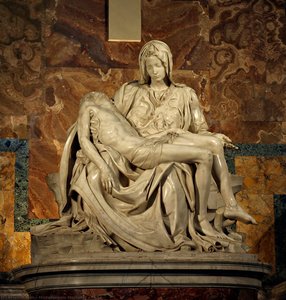
Pieta (1499) aut. Michelangelo Morlaiter

Pieta

1499 · Marble · Bazilika Švento Petro, Roma

The composition centers on the intimate, physical connection between Mary and her son. In this close-up view, the focus remains entirely on the Virgin Mary as she cradles the body of Jesus in her arms. The arrangement of the figures emphasizes a quiet moment of maternal comfort, capturing the weight of the body against her form. This central grouping is elevated upon a pedestal, which provides a sense of prominence…

2
Study for Haman (1508) aut. Michelangelo Morlaiter

Study for Haman

1508 · Drawing · British Museum, Londonas

To gaze upon this preparatory study is to step directly into the intense, focused crucible of artistic genius. It is not a finished narrative, but rather a profound meditation—a skeleton rendered in pigment—that speaks volumes about the mind wrestling with form and divine proportion. The subject matter itself, though titled Study for Haman, transcends any single story; it becomes an exhaustive exploration of the human vessel. Here, the artist has…

3
Design for a statue of Henry II of France (1559) aut. Michelangelo Morlaiter

Design for a statue of Henry II of France

1559 · Ink On Paper · Rijksmuseum, Amsterdamas

In this exquisite pen and ink drawing, we are transported back to the mid-16th century, witnessing a moment of profound artistic preparation. The work, titled Design for a statue of Henry II of France, serves as a meticulous blueprint for a monument intended to immortalize a monarch. At its heart lies an equestrian figure, a powerful composition of horse and rider that commands the viewer's attention through sheer anatomical precision.…

Michelangelo Morlaiter tapiai, rangos nuo 11 iki 35

Temos, kurios domino Michelangelo Morlaiter

Ketverios temos, dažniausiai pasikrausto originaluose, kiekvienos su savo puikiausiu pavyzdžiu.

Muziejai, kuriuose saugomi Michelangelo Morlaiter originalūs darbai

8 muziejai, kuriuose saugoma daugiausia šioje pusėje esamų paveikslų.

Muzejaus Miestas Michelangelo Morlaiter darbai Šiojo sąrašo paveikslai
British Museum, LondonasBritish Museum Londonas 9 Study for Haman, Sketch of a Nude Man (study for the "Battle of Cascina"), Ideal head of a woman
Liuvro muziejus, ParyžiusLiuvro muziejus Paryžius 4 Male nude and arm of bearded man, Study of ^quot;Christ on the Cross between the Virgin and St. John the Evangelist^quot;, Švietimo eskizas „Kristaus Resurrecija“
Palazzo Grassi, VenecijaPalazzo Grassi Venecija 2 Decoration of the grand staircase, Venetian Reception (detail)
Bazilika Švento Petro, RomaBazilika Švento Petro Roma 1 Pieta
Rijksmuseum, AmsterdamasRijksmuseum Amsterdamas 1 Design for a statue of Henry II of France
San Pietro in Vincoli, RomaSan Pietro in Vincoli Roma 1 Moses
Ašmoliano muziejus, OksfordasAšmoliano muziejus Oksfordas 1 Portrait of Andrea Quaratesi
Galleria degli Uffizi, FlorencijaGalleria degli Uffizi Florencija 1 Design for Julius II tomb (first version)

Michelangelo Morlaiter, po vieno ikoninio paveikslio kiekvienam dešimtmenės laikotarpiui

Darbai pagal dešimtmečius

Pasirinkite dešimtmetį, kad pamatytėte jį apibrėžusį originalą.

Michelangelo Morlaiter tapyiniai: galerijos atsakymai

Kuris Michelangelo Morlaiter paveikslas yra pats garsiausias iš visų?Atsakymas

Pieta (1499), Bazilika Švento Petro, Roma. Toliau seka Study for Haman (1508) ir Design for a statue of Henry II of France (1559).

Kuriose yra 10 geriausių Michelangelo Morlaiter paveikslų?Atsakymas

Pieta, Study for Haman, Design for a statue of Henry II of France, Battle of Cascina (Copy by Michelangelo's pupil Aristotele da Sangallo), The Study of Adam, Sistine Chapel Ceiling: God Dividing Land and Water, Male nude and arm of bearded man, Sistine Chapel Ceiling: God Dividing Light from Darkness, Sketch of a Nude Man (study for the "Battle of Cascina") ir Sistine Chapel Ceiling. Viršuje esančioje reitingo sąraše nurodyta kiekvieno kūrinio metis ir muziejus.

Kiek kūrinių sukūrė Michelangelo Morlaiter?Atsakymas

Mūsų kataloge yra 93 Michelangelo Morlaiter darbų, skirtų laikotarpiui nuo 1499 iki 1766.

Kur kabinami garsiausi Michelangelo Morlaiter originalūs darbai?Atsakymas

Daugiausia – British Museum (Londonas), Liuvro muziejus (Paryžius) ir Palazzo Grassi (Venecija). Viršuje esančiame muziejų sąraše yra visi jie.

Kada Michelangelo Morlaiter sukūrė savo garsiausias paveikslus?Atsakymas

1500s laikotarpiu: 11 iš 35 šioje pusėje esančių darbų buvo sukurtos tada, iš jų Study for Haman.

Kokie yra ankstyviausi ir vėliausi garsieji Michelangelo Morlaiter kūriniai?Atsakymas

Šioje pusėje seniausias darbas yra Pieta (1499), o naujausias – Decoration of the grand staircase (1766).

Kurią temą Michelangelo Morlaiter kūrė dažniausiai?Atsakymas

Human form (3), Human anatomy (2) ir Religious art (2) iš 35 šioje pusėje esamų darbų.

Kurią techniką Michelangelo Morlaiter naudojo dažniausiai?Atsakymas

Ink On Paper, iš 35 šios puslapio darbų – 2.

Su kokiu kierliu siejama Michelangelo Morlaiter?Atsakymas

High renaissance ir Renaissance, vadovaujantis šios puslapio originalais kūriniais.

Kurių Michelangelo Morlaiter originalų turi British Museum?Atsakymas

Study for Haman, Sketch of a Nude Man (study for the "Battle of Cascina") ir Ideal head of a woman: British Museum, Londonas kolekcijoje yra 9 šioje pusėje esančių darbų.

Michelangelo Morlaiter: menininkas

Michelangelo Morlaiter: Venetian Sculptor and Fresco Artist

Michelangelo Morlaiter (1766 – Present) stands as a testament to the enduring legacy of Venetian artistic tradition, particularly within the School of Athens. Born into a family steeped in sculpture—his father, Giovanni Maria Morlaiter, was himself a celebrated sculptor—Michelangelo inherited not only talent but also an unwavering dedication to mastering the craft of disegno, the foundational principles of Renaissance art. His formative years were spent absorbing the artistic atmosphere of Venice, a city renowned for its patronage of the arts and its commitment to preserving classical ideals.
  • Early Life & Training:
  • Giovanni Maria Morlaiter’s influence was paramount in shaping Michelangelo's early artistic sensibilities. He honed his skills under Giovanni Battista Falconetti, a master sculptor known for his meticulous attention to detail and anatomical accuracy. This rigorous training instilled in Morlaiter a profound understanding of sculptural technique—a skill he would later translate into breathtaking frescoes that adorn prominent Venetian churches.

The Accademia di Scoltura, Pittura, ed Architettura Civile: A Crucible of Artistic Innovation

Michelangelo Morlaiter’s contribution to Venetian art extends far beyond individual masterpieces. He was a founding member and professor at the Accademia di Scoltura, Pittura, ed Architettura Civile in Venice (established 1766), an institution dedicated to reviving classical artistic ideals and fostering excellence in sculpture, painting, and architecture. This academy served as a vital hub for disseminating knowledge and nurturing talent—producing generations of artists who would shape the visual landscape of Venice and beyond. Morlaiter’s role as educator ensured that Venetian artistic traditions continued to flourish into the 19th century.
  • Notable Commissions & Artistic Style:
  • Morlaiter gained renown for his monumental sculptures, notably ‘Ignudo,’ a stunning nude study reflecting the influence of Michelangelo Buonarroti and embodying the humanist spirit of the Renaissance. His frescoes within Chiesa dell'Angelo Raffaele—particularly “The Study of Adam”—demonstrate masterful fresco technique, characterized by layering pigments onto wet plaster to achieve luminous colors and unparalleled textural depth. These works exemplify Venetian Rococo art’s elegance and grace.

Influences & Artistic Legacy

Morlaiter's artistic vision was deeply rooted in the humanist ideals of the Renaissance, mirroring the broader cultural movement that championed reason, observation, and human dignity. He drew inspiration from Michelangelo Buonarroti’s sculptural achievements—particularly his David—and embraced the stylistic conventions of Venetian Rococo art, prioritizing decorative splendor and emotional expression alongside technical virtuosity. His enduring legacy resides in his contribution to Venetian artistic heritage and his role as a pivotal figure in shaping the aesthetic sensibilities of his time.
  • Major Achievements:
  • Morlaiter’s sculptures are celebrated for their anatomical precision and expressive dynamism, capturing the human form with remarkable realism. His frescoes—particularly “The Study of Adam”—are considered masterpieces of Venetian fresco painting, showcasing unparalleled color palettes and textural nuances. He cemented his place in art history as a champion of classical ideals and a pivotal voice within Venice’s artistic community.

Historical Significance

Michelangelo Morlaiter's work represents more than just aesthetic beauty; it embodies the spirit of Venetian Renaissance culture—a commitment to reviving classical art forms and upholding humanist values. His influence extended beyond his immediate circle, shaping artistic trends throughout Venice and contributing to the preservation of Venetian artistic traditions for centuries to come. He stands as a symbol of Venetian artistic excellence and a testament to the enduring power of disegno.