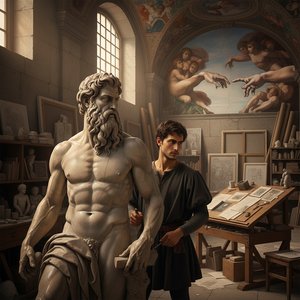
St. Peter's Basilica: An Exploration of Christendom’s Heart
Rising from the very heart of Vatican City, St. Peter’s Basilica isn’t merely a building; it’s an experience woven through millennia of faith, ambition, and breathtaking artistic innovation. More than just a place of worship, it stands as a monumental synthesis – a harmonious blend of Roman grandeur, Renaissance ideals, and Baroque exuberance, all converging to create one of the most profoundly moving spaces on Earth. Walking within its vast interior is akin to stepping directly into the narrative of Western art itself, encountering echoes of emperors, popes, and masters who have shaped not only this sacred space but also the very trajectory of human creativity.
The basilica’s story isn't one of sudden creation, but rather a gradual, layered unfolding, mirroring the tumultuous history of the Papacy and the evolving tastes of generations. It began with a humble chapel erected over what was believed to be the burial site of Saint Peter himself – an assertion rooted in tradition and solidified by centuries of pilgrimage. From this modest beginning, the basilica has grown into a colossal testament to human aspiration, a tangible representation of our enduring yearning for transcendence. The sheer scale of the structure is humbling, yet it’s the intricate details—the mosaics, the sculptures, the soaring dome—that truly capture the imagination and invite contemplation.
Early Foundations (4th Century):
The initial structure, a modest church built by Emperor Constantine, served as a place of veneration for Saint Peter. It represents the earliest expression of Christian devotion in Rome and embodies the desire to honor the apostle’s legacy.
Renaissance Transformation (15th-16th Centuries):
The basilica underwent a radical transformation during the Renaissance, spearheaded by architects like Bramante, Michelangelo, and Bernini. Each contributed their unique vision to its evolving design, resulting in a harmonious blend of classical proportions and humanist ideals—a pivotal moment in architectural history.
Baroque Flourishes (17th Century):
Gian Lorenzo Bernini’s masterful additions – particularly the façade and the colonnade surrounding St. Peter's Square – injected a dramatic dynamism into the basilica’s appearance, creating an unforgettable spectacle of light and shadow. This Baroque embellishment elevated the basilica to unparalleled artistic heights.
Michelangelo’s Masterpieces: A Journey Through Divine Beauty
At the heart of St. Peter’s Basilica lies a collection of artistic treasures that are nothing short of extraordinary. Michelangelo's contributions stand as particularly poignant examples of human genius, capturing both physical and spiritual realities with unparalleled skill. The *Pietà*, a sculpture depicting Mary cradling the lifeless body of Christ, is arguably the most iconic work within the basilica’s walls.
Its exquisite detail, its palpable sense of grief, and its profound emotional resonance have captivated viewers for centuries. The sheer tenderness of the figures, the delicate folds of Mary's robes, and the serene expression on Christ’s face combine to create a moment of breathtaking beauty and sorrow. It exemplifies Michelangelo’s ability to convey complex emotions through sculptural form.
Beyond the *Pietà*, Michelangelo’s Crucifixion fresco in the Sistine Chapel (though technically located within the Vatican Museums, its proximity and influence are undeniable) is another essential element of the basilica's artistic legacy. This monumental work showcases his mastery of light, shadow, and human anatomy, conveying both the physical agony of Christ’s sacrifice and the spiritual significance of his redemption.
The fresco’s vibrant colors and dynamic composition draw viewers into a visceral experience of faith and suffering—a testament to Michelangelo's artistic vision and enduring impact on Western art.
Notable Highlights:
- Michelangelo's *Pietà* – A poignant depiction of Mary cradling Christ’s lifeless body.
- Michelangelo’s Crucifixion Fresco – A dramatic masterpiece showcasing his command of light and shadow.
- Bernini’s Statue of St. Peter – A monumental representation of papal authority, radiating power and dignity.
Architectural Evolution: Layers of History and Style
St. Peter's Basilica is not a static monument; it’s a living testament to architectural evolution—a layered narrative etched in stone over centuries. The initial plan, conceived by Bramante, was a revolutionary departure from traditional Roman forms, prioritizing geometric precision and symmetry as expressions of divine harmony.
However, Michelangelo’s intervention dramatically reshaped the basilica, introducing elements of classical restraint and proportion that tempered the original's radical geometry. This shift reflected a broader trend in Renaissance art—a renewed interest in classical ideals balanced with a desire for spiritual depth.
Subsequent Popes continued to shape the basilica’s appearance through renovations and embellishments, each leaving their mark on its evolving design. The dome itself, designed by Michelangelo, is an engineering marvel – a testament to human ingenuity and a symbol of faith reaching towards the heavens.
A Living Legacy: Symbolism and Ongoing Significance
St. Peter’s Basilica remains an active center for artistic and religious expression today. Regularly hosting exhibitions exploring themes of faith, art history, and papal patronage, the basilica fosters dialogue between scholarship and artistic appreciation. The building itself is laden with symbolism—from its layout and ornamentation to its artworks—representing Christian theology, papal authority, and the enduring quest for spiritual enlightenment.