
() ·
A painting made for you, by hand
Rankų darbo aliejinės reprodukcijos
Rankiniu būdu tapytas aliejus ant droblio jūsų pageidaujamame dydį ir rėmuose – tai mūsų menininkų pagal užsakymą sukurtas darbas. ( Perjungti į spausdinamus版作品 Perejti prie skaitmeninių vaizdų)
Kolekcinio objekto aprašas
A striking modernist cityscape of Vilnius featuring vibrant red brick architecture by Lithuanian master Vincas Kisarauskas from 1965, offering a poignant glimpse into Soviet-era art for your private collection.
Autoriaus biografija
Discover Vincas Kisarauskas: Lithuanian modernist painter & graphic artist. Bold experiments, radical style, & poignant Vilnius scenes. A key figure in Soviet-era art.
 Skaityti daugiau
from ·
Chapter 1
How large should it be?
Slide to change the size; the picture on the left shows the frame at its real width. The proportions of the original are kept.
Pasirinkite iš mūsų nustatytų dydžių, atitinkančių originalaus meno kūrinio proporcijas.

Įveskite jums reikiamą plotį ir aukštį, kad paveikslas atitiktų jūsų rėmą ar sieną. Kadangi šis darbas yra rankinio darbo, siekiant išgauti kitokios formos dydį, paveikslas gali būti šiek tiek didesnis (nuo kraštų bus palikta daugiau erdvės) arba mažesnis – pasirinkite jums patogiausią variantą. Prieš pradedant tapyti, atsiųsime jums skaitmeninį maketą patvirtinimui. Šioje puslapio nuotraukoje matomas vaizdas nėra galutinis rezultatas – jį parodys tik sukurtas maketas.
Chapter 2
How should it arrive?
Choose the edges of the stretched canvas
Choose your frame

White €1

Blurside €1

Extended €1

P118B €10

P118H €10

P118W €10

P438Z €10

P508JH €12

P508YH €12

P805H €10

P805Z €10

P919BZ €10

P919G €10

P919XJ €10

P959ZH €10

P968JZ €12

W106C €8

W218G €10

W218JH €8

W218Y €10

W307PJ €10

W316G €10

W316PJ €8

W316Y €10

W398PJ €8

W4111J €10

W500HY €15

W500JH €15

W692G €12

W849H €8

W940BG €15

W953PJ €8

H24-GOLD €30

H24-SILVER €30

H36-GOLD €45

H36-SILVER €45
Įrėmintas
Moulding: . Overall size with the frame: .
Chapter 3
Who paints it, and should anything change?
After order, OriginalUniqueArt.com team will email client for instructions and provide a mockup preview
Pristatymas visame pasaulyje () per 3–4 savaites, o ne įprastai – per 5 savaites. (30 spalis). Kokybė lieka nepakeičiama.
Chapter 4
The finishing touches
A nameplate, as in a museum?
Išgraviruotos bronzinės plokštelės detalės
This elegant plaque features the artist's name and the title of the artwork, finely engraved for a timeless presentation.
It is made from bronze with a refined, elegant finish. The text is precisely laser-engraved for a sharp and permanent result. Measuring 9x2 cm, the plaque is compact yet easy to read. It's built to be durable and scratch-resistant, offering a professional, museum-quality look. Mounting is simple thanks to the included adhesive backing.
Skaidrios akrilo plokštelės informacija
The plaque includes essential engraved details such as the artist's name, the title of the artwork, the date it was created, the type of media used-like oil on canvas or watercolor-a brief description of the piece, and a QR code that links to the complete artwork information.
It is crafted from clear acrylic, offering a sleek, modern appearance. The text is UV-engraved in black to ensure strong visual contrast. With a size of 10x15 cm, it ensures optimal readability. It comes equipped with two metal hooks for secure wall mounting. The plaque is designed to be weather-resistant, making it suitable for various environments, and it includes interactive features that work seamlessly with smartphone scanning.
Juodos akrilo plokštelės informacija
This elegant plaque includes engraved information such as the artist's name, the title of the artwork, the date it was created, the type of media used (like oil on canvas or watercolor), a short description of the artwork, and a QR code for quick access to more information.
The plaque itself is made from refined black acrylic with a premium finish. The text is laser-engraved in white for high contrast and readability. Its size is 10x15 cm, designed to be easy to read. It comes with two metal hooks for professional mounting. The design is sleek and fits any interior style. It is also weather-resistant and durable, with built-in digital integration for mobile compatibility.
A protective varnish?
When do you need it?
Chapter 5
Your painting, as you ordered it

Vilnius
Reprodukcijos technika
Reprodukcijos matmenys
-

Aukščiausios klasės meistras
Daugiau detalių, meistriškumo ir papildomo gamybos laiko
-

Reprodukcijos rėmėjimo parinktys
-
-
Dėl meno kūrinių ar reprodukcijų, kurių bet kuri pusė yra didesnė nei 105 cm (apie 41 inch), rėmas bus siunčiamas kaip išskaidytas surinkimo rinkinys. Šis metodas užtikrina saugų pristatymą ir apsaugo nuo transportavimo metu galimos žalos.
Reikalingas profesionalus surinkimas – tai nėra „pasidaryk pats“ (DIY) produktas.
Rinkinys turi būti surinktas, o drobė išplėsta naudojant patyrį profesionalų rėmininką, medžio klijus (nėra įtraukti į rinkinį), drobės plėšimo kleslę bei presas, kad rėmo rėžiai išliktų tiesūs, kol klijai išdžiūvus. Netinkamas surinkimas arba netolydus drobės įtampa gali negrįžtamai sugadinti meno kūrinį, todėl šie atvejai nėra užtraukiami mūsų garantijos.
 Dėl meno kūrinių ar reprodukcijų, kurių bet kuri pusė yra didesnė nei 105 cm (apie 41 inch), rėmas bus siunčiamas kaip išskaidytas surinkimo rinkinys. Šis metodas užtikrina saugų pristatymą ir apsaugo nuo transportavimo metu galimos žalos.
Į komplektą įeina visi vientisos medienos elementai, tiksliai išpjauti pagal dydį.
Surmontinama naudojant pridėtus varžtus bei papildomai reikalingą medžio kliją kampų jungtims, kuris nėra pridėtas ir turi būti parinktas rėmininkui.
Reikalingi profesionalūs įrankiai, kurie nėra įtraukti į rinkinį: drobės kėlimo plytelės (stiprintuvai) ir klemiai, laikantys rėmo strygius tiesiu kampu, kol džiūsta lipas.
Svarbu:
Kampų jungtims reikalingi medžio klijai, barams reikia laikyti naudojant presas, kol klijai visiškai išdžiūvės, o surinktam rėmui įtempiamai privilgti būtinos drobės įtempimo plytযুক্ত. Šios priemonės į rinkinį neįtrauktos. Prieš užsakydami šio dydžio rinkinį, rekomenduojame pasimalkoti patyrusiu rėmų meistru.

Pavadinimo lentelė
-
-

Apsauginis lakas
Blizgus lakas (ryškina spalvas, saugo nuo šviesos ir drėgmės)
-

Personalizuoti kūrinį
Ką galima pakeisti (pavyzdžiui): pakeisti veidą klientui skirta nuotrauka; pridėti augintinį (pvz., katę pakeisti šuniu); įtraukti paslėptą žinutę fone; pakeisti fono kraštovaizdį ar elementus.
-

Skubiai
Pristatymas visame pasaulyje () per 3–4 savaites, o ne įprastai – per 5 savaites. (30 spalis). Kokybė lieka nepakeičiama.
-
Skubus pristatymas
Pristatymas visame pasaulyje () per 5 weeks. (6 lapkritis).
Įskaičiuota
Bendroji kaina
€ 266
Stiklo variantas prieinamas tik pasirinkus dydį iki 110 cm
Included with every order
- Nemokamas greitasis pristatymas visame pasaulyje
- Aukštos kokybės lininis drobė
- Pilnas siuntimo draudimas
- Muitinės mokesčių grąžinimo garantija
- Tikro spalvų atitikimo garantija
- 100 dienų grąžinimo politika (tik esant įtaigoms)
- 100% pinigų grąžinimo garantija
- Nuolaida dideliems užsakymams


 Peržiūrėti realaus dydžio版
 Pasidalinti
 Dalintis
 Išsamiau
 Vadovas

 Atsisiųsti
 Panašūs eksponatai
 Rentgeno spindulių nuotrauka
 Automatinė diorama
 Q&A
Q&A Statistika
In numbers
- 1965the year it was painted
- 29frames to choose from
- standard sizes, in its own proportions
- 5weeks to paint and deliver it
About the original
 Oil On Canvas
- WallArt
- Modernism
 1965
1965- Modern
 70.0 x 70.0 cm
 Lithuanian Art Centre TARTLE
Šis kūrinys yra saugomas autorinės teisės
Šiame puslapyje rodomas meno kūrinys yra saugomas autorių teisių įstatymais, todėl neturime teisės legaliai kurti ar parduoti jo identiškos reprodukcijos. Ši apsauga užtikrinama remiantis tokiais tarptautiniais susitarimais kaip Bernės konvencija ir pagal nacionalines įstatymų nuostatas, įskaitant tas, kurias nurodo JAV autoriškos teisės įstatymas – 17-asis skyrius.
Kaip pagarbią ir teisėtą alternatyvą, mes siūlome pagal užsakymą rankomis dažytus paveikslus, įkvėptus originalo. Mūsų įgudę ir profesionalūs menininkai kruopščiai tiria originalo stilių, nuotaiką ir meninę esmę, kad sukurtų naują, unikalią kūrinį, kuris sukelia tą paties jausmą – išlikdamas tuo tarciau originaliu, savarankišku kūrybiniu darbu.
Šis metodas visiškai atitinka autorių teises, nes jame nėra saugomo kūrinio kopijavimo ar dubliavimo. Tai yra kūrybinė reinterpretacija – naujas paveikslas, kurį įkvėpė originalas, tačiau kuris nėra jo identiškas.

Vincas Kisarauskas
1934 - 1988, Lithuania
Quick facts about Vincas Kisarauskas
- Full Name: Vincas Kisarauskas
- Nationality: Lithuanian
- Date Of Birth: 1934
- Date Of Death: 1988
- Place Of Birth: Augiemanių, Lithuania
- Notable Artworks:
- Christ at Emmaus
- Illuminated Window III
- April Space
- Tilting towards Zanavykai
- Six Figures...
- Artistic Movement Or Style: Radical Modernism
- Artists Who Influenced This Artist: ['Abstract Expressionism']
- Artists Or Movements Influenced By This Artist: ['Contemporary Lithuanian art']
Autoriaus biografija
Vincas Kisarauskas: A Radical Voice in Soviet Lithuania
Born in Augiemanių, Lithuania, in 1934, Vincas Kisarauskas’s life and art were inextricably linked to the turbulent currents of Soviet-era Lithuania. He emerged as a pivotal figure in the country's burgeoning modernist scene – a bold experimenter who defied official constraints while simultaneously pushing the boundaries of artistic expression. Often described as one of the most progressive artists of his time, Kisarauskas’s work is characterized by its raw emotion, unsettling imagery, and a deliberate rejection of prevailing ideological norms. His legacy lies not just in the paintings he created but also in his courageous stance against censorship and his profound influence on subsequent generations of Lithuanian artists.
Early Years and Artistic Training
Kisarauskas’s artistic journey began with a practical grounding in ceramics at the Telšiai Trade School of Applied Arts. This early exposure to tactile materials and functional design subtly shaped his later approach, influencing his use of texture and form. He then transitioned to Vilnius Art Institute, initially studying textiles before transferring to the Painting Department in 1959. It was here that he truly began to develop his distinctive style – a potent blend of abstraction, expressionism, and a deeply personal vision. His graduation marked the beginning of a period where his work would be largely marginalized by the state’s rigid artistic controls.
A Style Defined by Disruption and Emotion
Kisarauskas's art is immediately arresting. He wasn’t interested in creating pleasant, easily digestible images; instead, he sought to confront viewers with uncomfortable truths about the human condition. His paintings are often characterized by fragmented figures, distorted perspectives, and a palpable sense of unease. He frequently employed stark contrasts between light and shadow, utilizing bold colors – particularly reds and blacks – to amplify the emotional intensity of his scenes. Kisarauskas’s work can be seen as a direct response to the psychological pressures of living under Soviet rule, reflecting the anxieties, frustrations, and suppressed desires of ordinary Lithuanians. He was a pioneer in combining painting with photography and assemblage, creating multi-layered works that challenged traditional artistic conventions.
Recognition After Censorship: A Late Flowering
For much of his career, Kisarauskas’s work remained largely unseen by the public. The Soviet authorities actively suppressed any art deemed “formalist” or subversive, and his innovative style was considered a threat to ideological orthodoxy. Despite this censorship, he continued to create prolifically, often working in secret and distributing his art through informal channels. It wasn't until after his death in 1988 in New York that his work began to receive wider recognition. The lifting of restrictions on artistic expression following the collapse of the Soviet Union allowed Kisarauskas’s legacy to finally emerge, solidifying his place as a key figure in Lithuanian modernism and a courageous voice against oppression.
Key Works and Lasting Influence
Several works stand out as particularly significant examples of Kisarauskas's artistic vision. “Christ at Emmaus” (1988), painted shortly before his death, is a powerful depiction of faith and suffering, rendered in a raw and emotionally charged style. "Illuminated Window III" (1987) showcases his exploration of light and shadow, while "April Space" (XX Century. V) reflects the anxieties of the era. His smaller-format works, including diary-like sketchbooks and ex-libris designs, offer a glimpse into his creative process and reveal a remarkable versatility. Kisarauskas’s influence extends beyond his own creations; he inspired countless artists in Lithuania to challenge conventions and explore new forms of expression. He remains a potent symbol of artistic freedom and a testament to the enduring power of art to resist oppression.
Useful Links:
Susiję straipsniai

Crimson Threads of Narrative: Exploring Symbolism & Representation in Artworks Featuring the Red Dress
Explore the rich symbolism of the red dress in art history! From ancient power displays to iconic portraits like Cézanne’s 'Madame Cezanne', discover the cultural and artistic significance behind this captivating color. Expert analysis & insights.

Concrete Visions: Exploring the Urban Landscape in Painting – From Realism to Contemporary Art
Explore the evolution of cityscape painting from Realism to contemporary art with OriginalUniqueArt. Discover key artists & invest in timeless urban visions. Expert guidance, museum-quality reproductions.
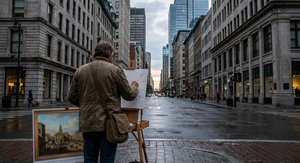
Urban Visions: A Historical & Artistic Exploration of the Cityscape in Painting
Explore the evolution of cityscape painting from historical maps to Impressionist masterpieces. Discover artists like Caillebotte & Utrillo. Find museum-quality reproductions at OriginalUniqueArt.

Mark Rothko: 25 Šedevrai, Apibūdinantys Spalvų Ir Jaustmo Gylį | OriginalUniqueArt
Atraskite 25 įspūdingiausius Mark Rothko kūrinius! Gilinkitės į abstraktaus meno spalvų laukus, ekspresionizmą ir jaustmingas tapybas. Meno reprodukcijos aukščiausia kokybe – OriginalUniqueArt.com