 Ecsalių versija
 Viskas apie St. Jerome







































 Dėl meno kūrinių ar reprodukcijų, kurių bet kuri pusė yra didesnė nei 105 cm (apie 41 inch), rėmas bus siunčiamas kaip išskaidytas surinkimo rinkinys. Šis metodas užtikrina saugų pristatymą ir apsaugo nuo transportavimo metu galimos žalos.


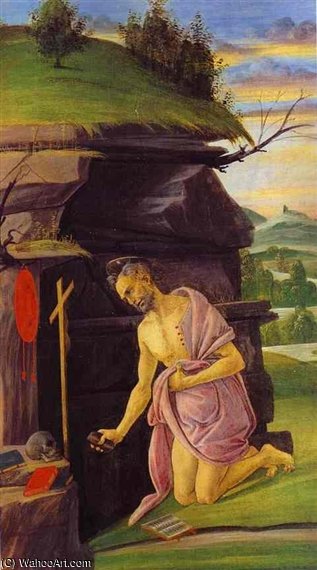
A Moment of Profound Grief: Exploring Botticelli’s *St. Jerome*
Sandro Botticelli's *St. Jerome*, a poignant depiction of sorrow and contemplation, offers a captivating glimpse into the artistic sensibilities of the Early Renaissance. While often overshadowed by his more celebrated mythological works like *The Birth of Venus*, this painting reveals Botticelli’s mastery of religious iconography and emotional depth.
Subject & Narrative
- A Scene of Lamentation: Though initially identified as the Lamentation, recent scholarship suggests this work depicts St. Jerome in his final moments, receiving communion before death. The central figure, surrounded by mourners, is likely not Joseph of Arimathea but figures expressing grief over the saint’s impending passing.
- St. Jerome – A Scholar and Ascetic: Saint Jerome (c. 347–420 AD) was a prominent theologian and translator of the Bible into Latin (the Vulgate). His life, marked by both scholarly pursuits and periods of intense asceticism, makes him a compelling subject for artistic representation.
- Setting the Stage: The rocky, cave-like setting evokes a sense of seclusion and spiritual retreat. This isolated location emphasizes the solemnity of the occasion and invites contemplation on mortality.
Artistic Style & Technique
- Renaissance Linearity: Botticelli’s style is characterized by elegant, flowing lines that define forms with precision. This linearity bridges the gap between the late Gothic and Early Renaissance aesthetics.
- Oil on Panel – A Flourishing Medium: Executed in oil on panel, the technique allows for subtle gradations of color and a smooth application of paint, enhancing the realism of the figures and drapery.
- Subdued Palette & Dramatic Lighting: The painting employs a subdued color palette, dominated by earth tones and muted hues. This is contrasted with dramatic lighting that highlights the central figure and casts shadows, intensifying the emotional impact.
- Perspective & Composition: While perspective isn’t fully developed as in later Renaissance works, Botticelli utilizes layering and overlapping forms to create a sense of depth within the confined space. The composition draws the viewer's eye towards St. Jerome through strategic arrangement and contrast.
Symbolism & Iconography
- Mortality & Remembrance: Symbolic elements, such as a skull (a *memento mori*), serve as reminders of human mortality and the transient nature of life.
- Religious Devotion: The act of receiving communion underscores St. Jerome’s unwavering faith and devotion to God in his final moments.
- The Mourners: The surrounding figures represent the grief and sorrow felt by those witnessing the saint's passing, emphasizing the human cost of spiritual dedication.
Historical Context & Legacy
- Florentine Renaissance: Created during the vibrant artistic climate of Florence in the late 15th century, *St. Jerome* reflects the humanist ideals and religious fervor of the period.
- Botticelli’s Diverse Oeuvre: While renowned for his mythological paintings, Botticelli also produced numerous religious works, demonstrating his versatility as an artist.
- Rediscovery & Appreciation: Like many Renaissance masters, Botticelli's work experienced a period of relative obscurity before being rediscovered and celebrated by the Pre-Raphaelites in the 19th century.
Emotional Impact & Interpretation
St. Jerome* evokes feelings of profound sadness, reverence, and contemplation. The painting invites viewers to reflect on themes of mortality, faith, and the human condition. Its quiet intensity and masterful execution make it a compelling work of art that continues to resonate with audiences today.
Klausimai ir atsakymai
Ar šis kūrinys St. Jerome yra sukeitintas rankiniu būdu ar atspausdintas?
Ranko darbas: profesionalus pavežėjas rankiniu būdu nukopijuoja St. Jerome aliejuje ant lino drobės.
Kokią dydį turėčiau pasirinkti darbui St. Jerome?
Dydviai svyra nuo 42.4 x 23.6 cm (€223) iki 248.1 x 138.0 cm (€1208); šioje pusėje pateiktoje lentelėje nurodyti pagrindiniai etapai ir jų kainos.
Kiek trunka pristatymas?
Pristatymas užtruks nuo 4 iki 5 savaičių, naudojant nemokamą ekspresinį siuntimą visame pasaulyje; šioje pusėje taip pat galite rinktis skubios gamybos variantą. Jūs galite grąžinti prekę per 100 dienų ir gauti visą sumokėtą sumą atgal, nepriklausomai nuo bet kokių sąlygų.
Kur yra originalas kūrinio St. Jerome?
Originalas yra Ermitažas kolekcijoje, Šv. Peterburgas.
Kokia technika buvo naudojama kūriniui St. Jerome autoriu Sandro Botticelli?
Oil On Panel
 Peržiūrėti realaus dydžio版

 Pasidalinti
 Dalintis
 Išsamiau
 Informacinė l lapelė


 Atsisiųsti
 Panašūs eksponatai
 Rentgeno spindulių nuotrauka
 Automatinė diorama
 问答

 Statistika