
 Pasidalinti
 Dalintis
 Išsamiau

 Atsisiųsti
 Panašūs eksponatai
 Automatinė diorama
Anis al-Dowleh


 Skaityti daugiau
Rankų darbo aliejinės reprodukcijos
Rankiniu būdu tapytas aliejus ant droblio jūsų pageidaujamame dydį ir rėmuose – mūsų menininkų darbas pagal užsakymą. ( Pirkti spaudinį Pirkti vaizdą)




































Pasirinkite iš mūsų nustatytų dydžių, atitinkančių originalaus meno kūrinio proporcijas.

Galite įvesti savo matmenis, kad jie atitiktų konkretų rėmą ar erdvę. Jei pasirinktas dydis neatitinka originalaus paveikslėlio proporcijų, mes arba apkropsime meno kūrinį, arba papildysime tapybą rankomis dažytい elementais. Prieš pradėdami gamybą, jūsų patvirtinimui atsiųsime skaitmeninį maketą.
Atkreipkite dėmesį, kad ekrane rodomas vaizdas neatspindi tikrojo apkarpymo ar papildymo. Tik maketas tiksliai parodys galutinę kompoziciją.
Nors galima rinktis ir individualius dydžius, rekomenduojame pasirinkti matmenis iš nustatytos sąrašo, kad būtų išlaikytos originalios proporcijos.
Gavus užsakymą, OriginalUniqueArt.com komanda susisieks su klientu el. paštu dėl instrukcijų ir pateiks maketo pavyzdį.
Pristatymas visame pasaulyje () per 3–4 savaites, o ne įprastai – per 5 savaites. (21 rugpjūtis). Kokybė lieka nepakeičiama.

Nemokamas greitasis pristatymas visame pasaulyje

Aukštos kokybės lininis drobė

Pilnas siuntimo draudimas

Muitinės mokesčių grąžinimo garantija

Tikro spalvų atitikimo garantija

60 dienų grąžinimo politika (tik esant gamyklinėms defektams)

100% pinigų grąžinimo garantija

Nuolaida už kelias reprodukcijas
 Stiklo variantas prieinamas tik pasirinkus dydį iki 110 cm

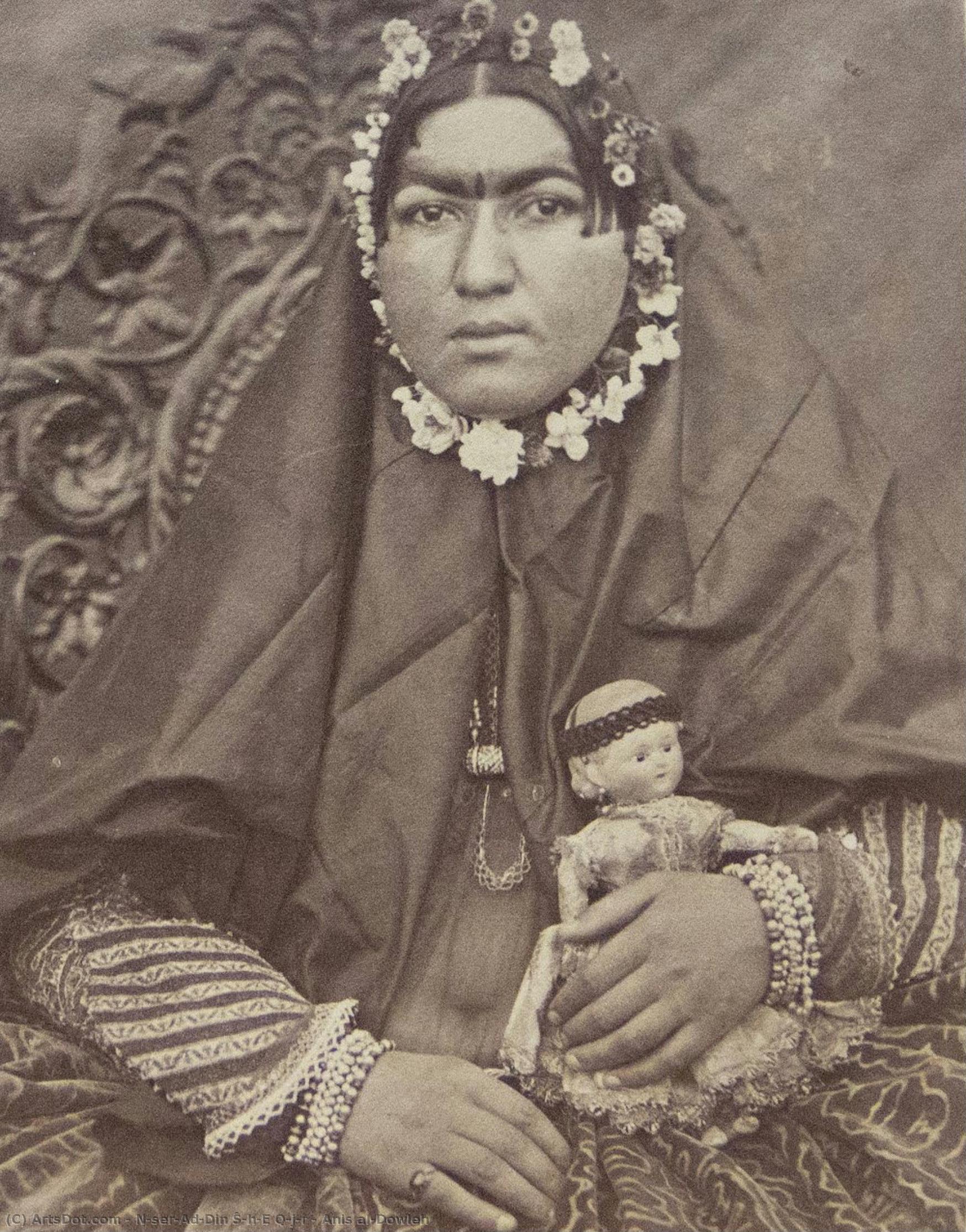
Anis al-Dowleh
Reprodukcijos technika
Reprodukcijos matmenys
-


Galutinė kaina
$ 300
Kūrinio aprašymas
Anis al-Dowleh: A Portrait of Mughal Influence in Modern Persia
The painting “Anis al-Dowleh,” executed by Nāser al-Din Shah Qajar, stands as a remarkable testament to the confluence of artistic traditions during Iran’s transformative 19th century. More than just a depiction of a royal consort—the beloved Anis al-Dawla—it embodies the emperor's fascination with Mughal aesthetics while simultaneously reflecting his embrace of European advancements in portraiture and photography, creating an image that is both timeless and historically significant.Subject Matter and Composition
The artwork portrays Anis al-Dowla seated gracefully on a cushion, her gaze directed towards the viewer—a posture typical of royal portraits at the time. She wears opulent attire characteristic of Persian noblewomen, adorned with intricate embroidery and jewels – a deliberate nod to the grandeur of Mughal courts where similar garments were favored. Alongside her is a doll, positioned close to her chest, symbolizing motherhood and domestic tranquility—themes prevalent in Persian art throughout history. The background reveals glimpses of other figures engaged in activities within the royal harem, providing context for Anis al-Dowla’s role as a prominent member of the imperial family.Style and Technique: Photogravure Reproduction
“Anis al-Dowleh” is reproduced using photogravure—a printing technique that achieved exceptional detail and tonal range. This method involved transferring an image from a silver nitrate plate onto a copper cylinder, which was then inked and pressed onto paper multiple times to produce a high-quality print. Photogravure allowed for nuanced shading and texture, capturing the subtleties of Anis al-Dowla’s facial expression and the richness of her clothing—a technique championed by European artists during this period and adopted by Nāser al-Din Shah to elevate Iranian art standards. The resulting image possesses a velvety smoothness that enhances its visual impact.Historical Context: Reformer's Vision
Nāser al-Din Shah’s reign marked a pivotal moment in Iranian history, characterized by ambitious reforms aimed at modernizing the nation—initiatives fueled by his exposure to European intellectual currents and artistic innovations. The painting reflects this spirit of progressiveness, demonstrating his desire to portray Iran as a sophisticated kingdom worthy of international recognition. Simultaneously, it underscores the enduring influence of Mughal art on Persian culture—a legacy that Nāser al-Din Shah consciously sought to celebrate through stylistic choices and compositional elements.Symbolism: Dignity and Domestic Tranquility
The seated posture of Anis al-Dowleh conveys dignity and composure—qualities considered essential for royal representation. The doll symbolizes motherhood, reflecting the emperor’s concern for securing the dynasty's future and upholding traditional values amidst rapid societal change. Furthermore, the inclusion of other figures in the background serves as a reminder of the complexities inherent in governing a nation undergoing modernization—a visual narrative that encapsulates Nāser al-Din Shah’s multifaceted vision for Iran’s destiny.Emotional Impact: Elegance and Remembrance
“Anis al-Dowleh” evokes a sense of serenity and refinement, transporting viewers back to a bygone era of imperial splendor. The meticulous detail of the portrait captures Anis al-Dowla's beauty and grace—a testament to Persian artistic skill—while simultaneously prompting contemplation on themes of family, tradition, and royal authority. It remains an enduring symbol of Nāser al-Din Shah’s reign and his unwavering commitment to preserving Iran’s cultural heritage amidst the pressures of globalization.Susiję straipsniai

White on Canvas: 10 Masterpieces & Timeless Elegance for Your Home Decor
Explore 10 iconic white paintings by Monet, Whistler & Rothko! Discover the stories behind these serene masterpieces and their impact on art history. Find museum-quality reproductions for your home decor at .

Dark Masterpieces: 10 Iconic Paintings Dominated by Black Tones |
Explore 10 iconic paintings dominated by black tones, from Rembrandt’s chiaroscuro to Goya's dark expressions. Discover the stories behind these masterpieces & find museum-quality art reproductions for your home at .

Monochrome Visions: Exploring the Aesthetic & Historical Significance of Black & White Photography
Explore the rich history & artistic power of black and white photography. From early techniques to iconic masters like Ansel Adams, discover why monochrome continues to captivate art lovers today. Expert insights for collectors.
Shadow & Soul: Why Black & White Photography Remains the Ultimate Power Move in Modern Art
Discover why black & white photography remains a powerful force in contemporary art. Explore the impact of light, shadow, and texture through a visual journey of monochrome mastery and learn how to elevate your space with timeless grayscale aesthetics.

The Art of Monochrome: Transforming Personal Memories into Timeless Black & White Fine Art Masterpieces
Elevate your most cherished memories with OriginalUniqueArt’s bespoke service. We transform your personal photos into breathtaking, hand-painted black & white oil masterpieces. Experience museum-quality craftsmanship and timeless elegance for your private collection. Discover the art of legacy.

