

 Peržiūrėti realaus dydžio版
 Pasidalinti
 Dalintis
 Išsamiau
 Vadovas

 Atsisiųsti
 Panašūs eksponatai
 Rentgeno spindulių nuotrauka
 Automatinė diorama
 Q&A
Q&A Statistika
Saint Jerome in His Study
 Oil
Oil- WallArt
- Northern Renaissance
 Renaissance
 82.0 x 84.0 cm
 Skaityti daugiau
Gaukite spausdinimui paruoštą failą, kurio kokybė gerokai viršija internetinę peržiūrą. Kiekvienas mūsų parduodamas skaitmeninis vaizdas yra ištrauktas iš aukštos raiškos pagrindinio failo mūsų duomenų bazėje — paprastai jis siekia nuo 5 000 iki 15 000 pikselių plotio — todėl galite drąsiai spausdinti didelius formatus, apkirpti vaizdą ar reprodukcija užtikrins visas smulkias detales.
Mūsų studijoje nė viena kopija nelieka neapdorota. Skaitmeninio vaizdo ekspertas, lygiu su originaliu paveikslu, patikrina spalvas ir, jei reikia, jas koreguoja, o tada profesionaliais retušavimo įrankiais padidina aiškumą bei detales — visada išlaikydamas ištikimybę autoriaus teptuko traukoms ir stiliui. Rezultatas – vaizdas, kuris atrodo kaip tikras paveikslas, o ne kaip su filtrais apdorotas skenavimas.
Patvirtinate prieš užsakymo pabaigą: mūsų ekspertas per 72 valandas el. laišku atsiųsta vaizdą jūsų peržiūrai. Nepasitenkinate rezultatu? Paprašykite patobulinimų ar pataisymų arba prašykite pinigų grąžinimo, jei kokybė neatitinka jūsų lūkesčių.
Ši kokybė yra patikima leidybos įstaigoms, dizaino studijoms, galerijoms ir spaudos įmonėms.
Skaitmeninis vaizdas
Atsisiųskite didelės raiškos failą asmeniniam naudojimui, spausdinimui ir kūrybiniams projektams. ( Perjungti į spausdinamus版作品 Pirkti rankų darbo tapybą)
Kiekvieną skaitinio vaizdo užsakymą papildė
Profesionalus skaitmeninis vaizdų pristatymas, garantuotas
Pasirinkę OriginalUniqueArt.com, jūs ne tik gaunate paveikslėlį – jūs gaunate profesionaliai patobudintą skaitmeninį kūrinį, sukurtą itin tikniai ir užtikrinantį pasitenkinimą. Štai viską, kas automatiškai pritékia jūsų užsakymui:

Greitas pristatymas el. paštu
Jūsų aukštos raiškos skaitmeninis vaizdo failas bus išsiųstas el. paštu per 72 valandas nuo užsakymo – jis bus paruoštas naudoti be jokių papildomų veiksmų.

Dirbtiniu intelektu tobulintas skaitmeninis failas
Jūsų meno kūrinys profesionaliai optimizuojamas naudojant pažangius dirbtinio intelekto įrankius ir rankinį redagavimą, užtikrinant maksimalią detalę, aiškumą ir spalvų tikslumą.

Nemokamas visam laikui pakartotinis siuntimas
Atsitiktinai ištrytikote ar praradote savo failą? Nebijokite – bet kuriuo metu atsiųsime jį jums vėl nemokamai.

Jokio importo mokesčio – niekada
Mėgaukitės savo meno kūrynu be jokių muitinės mokesčių, įkainų ar pristatymo išlaidų – skaitiniai failai visada yra neapmokestinami.

Spalvų tikslumo garantija
Naudodami profesionalią įrangą ir spalvų valdymo sistemas, užtikriname, kad jūsų skaitmeninis vaizdas kuo tiksliau atspindėtų originalias spalvas.

100 dienų patikimumo garantija
Jei nebuvosite patenkinti įsigyto skaitmeninio vaizdo, mes jį tališkai koreguosime arba grąžinsime 100% sumą per 100 dienų – be jokių klausimų.

100% pinigų grąžinimo garantija
Nesitenkinate? Gaukite visą sumokėtą sumą per 100 dienų nuo skaitmeninio failo gavimo – be jokių papildomų klausimų.

Nuolaidos dideliems užsakymams
Pirkti 3 nuotraukas – 10% nuolaida – Pirkti 5 – 15% nuolaida – Pirkti 10 ir daugiau – 20% nuolaida. Puikiai tinka kūrybiniams projektams, galerijoms bei agentūroms.
Klausimai ir atsakymai
Kokia yra „Saint Jerome in His Study“ – Marinus Van Reymerswaele švytėjimo intensyvumas?
„Saint Jerome in His Study“ spalvos pasižymi Dark šviesos intensyvumu.
Kokia technika panaudota kūriniui „Saint Jerome in His Study"]?
„Saint Jerome in His Study“ technika – Oil.
Kokia erdvė rekomenduojama kūriniui „Saint Jerome in His Study“ – Marinus Van Reymerswaele?
„Saint Jerome in His Study“ reprodukcija puikiai tinka į Office.
Autoriaus biografija
The Enigmatic Master of Antwerp's Shadows
In the bustling, mercantile heart of the sixteenth-century Low Countries, a painter emerged whose brush captured the profound tension between spiritual devotion and worldly greed. Marinus van Reymerswaele, an artist whose very name evokes the coastal town of Reimerswaal where he was born, remains one of the most fascinating enigmas of the Dutch Renaissance. His life followed the typical trajectory of a skilled craftsman; after studying in Leuven, he found professional footing within the prestigious Antwerp Guild of Saint Luke. Registered as a pupil of the glass painter Symon van Daele, Reymerswaele possessed an eye for detail and light that would later define his mastery of texture and atmosphere.
As he established himself in Antwerp, the epicenter of European trade, his work began to mirror the city's own complex identity. He operated a prolific workshop, a bustling studio capable of producing numerous versions of his most celebrated themes. This industriousness allowed his specific visual language—a blend of meticulous realism and biting social commentary—to permeate the collections of the era. His paintings did not merely depict scenes; they staged moral dramas that reflected the anxieties of an era caught between medieval piety and the rising tide of capitalism.
A Gallery of Greed and Grace
To look upon a work attributed to Reymerswaele is to enter a space where the sacred and the profane collide. He was a master of a very specific, recurring iconography that captured the imagination of the sixteenth-century public. His compositions often centered on four pivotal themes that explored the human condition through various lenses:
- The intense study of St. Jerome, representing scholarly devotion and religious contemplation.
- The bustling activity of tax collectors, serving as a satirical commentary on greed and corruption.
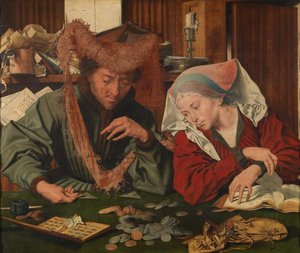
- A money changer and his wife, capturing the intersection of domestic life and commerce.
- The legal world, such as a lawyer in his office, reflecting the growing complexity of civic bureaucracy.
His masterpiece, Two Tax Gatherers, stands as a striking example of Northern Renaissance art. Through the use of oil on oak wood, he achieved a sense of depth and texture that brought his subjects to life. The painting serves as a vivid commentary on the corruption of tax officials, using the detailed depiction of clothing and surroundings to ground his satire in a recognizable reality. In these works, the heavy, old-fashioned garments of his characters add a layer of social critique, reminding the viewer of the era's shifting moral landscape.
Legacy and Artistic Influence
The stylistic development of Marinus van Reymerswaele shows the profound influence of the Antwerp painter Quentin Matsys. This connection helped shape his ability to blend elements of realism with a sharp, often caricatural sense of humor. His work is characterized by an attention to detail that allows the viewer to witness the minute textures of manuscripts, legal documents, and coins, all of which serve as symbols of the era's preoccupation with wealth and law.
While he worked extensively in Antwerp, his journey eventually led him back to the Northern Netherlands. After working in Antwerp until at least 1540, he moved to Goes, where his life reached its conclusion. Though many of his panels are known through attribution rather than signature, his impact on the genre scene remains undeniable. He left behind a visual legacy that continues to captivate, offering a profound glimpse into the mind of an artist grappling with faith, scholarship, and the ever-present shadows of human avarice.
Marinus Van Reymerswaele
1490 - 1546