

 Peržiūrėti realaus dydžio版
 Siųsti
 Dalintis
 Išsamiau
 Vadovas

 Atsisiųsti
 Panašūs eksponatai
 Rentgeno spindulių nuotrauka
 Diaporama
 Statistika
Fortune-Teller with a Fool
 Oil On Canvas
- WallArt
- Northern Renaissance
 1508
1508 24.0 x 30.0 cm
 Liuvro muziejus
 Rodyti daugiau
Rankų darbo aliejinės reprodukcijos
Rankiniu būdu tapytas aliejus ant droblio jūsų pageidaujamame dydį ir rėmuose – mūsų menininkų darbas pagal užsakymą. ( Perjungti į spausdinimą Perejti prie skaitmeninių vaizdų)




P118B €10

P118H €10

P118W €10

P438Z €10

P508JH €12

P508YH €12

P805H €10

P805Z €10

P919BZ €10

P919G €10

P919XJ €10

P959ZH €10

P968JZ €12

W106C €8

W218G €10

W218JH €8

W218Y €10

W307PJ €10

W316G €10

W316PJ €8

W316Y €10

W398PJ €8

W4111J €10

W500HY €15

W500JH €15

W692G €12

W849H €8

W940BG €15

W953PJ €8




Pasirinkite iš mūsų nustatytų dydžių, atitinkančių originalaus meno kūrinio proporcijas.

Įveskite jums reikiamą plotį ir aukštį, kad paveikslas atitiktų jūsų rėmą ar sieną. Kadangi šis darbas yra rankinio darbo, siekiant išgauti kitokio formos dydį, paveikslas gali būti šiek tiek didesnis (nuo kraštų bus palikta daugiau erdvės) arba mažesnis – pasirinkite jums patogiausią variantą. Prieš pradedant tapyti, atsiųsime jums skaitmeninį maketą patvirtinimui. Šioje puslapio nuotraukoje matomas vaizdas nėra galutinis rezultatas – jį parodys tik sukurtas maketas.
Gavus užsakymą, OriginalUniqueArt.com komanda susisieks su klientu el. paštu dėl instrukcijų ir pateiks maketo pavyzdį
Pristatymas visame pasaulyje () per 3–4 savaites, o ne įprastai – per 5 savaites. (26 spalis). Kokybė lieka nepakeičiama.

Nemokamas greitasis pristatymas visame pasaulyje

Aukštos kokybės lininis drobė

Pilnas siuntimo draudimas

Muitinės mokesčių grąžinimo garantija

Tikro spalvų atitikimo garantija

100 dienų grąžinimo politika (tik esant įtaigoms)

100% pinigų grąžinimo garantija

Nuolaida dideliems užsakymams
 Stiklo variantas prieinamas tik pasirinkus dydį iki 110 cm

Fortune-Teller with a Fool
Reprodukcijos technika
Reprodukcijos dydis
-


Visų pasirinktų variantų kaina
€ 263
The Enigmatic Fortune Teller: A Window into Renaissance Intrigue
Lucas van Leyden’s “Fortune-Teller with a Fool,” painted in 1508, is more than just a portrait; it's a meticulously crafted tableau of social observation and subtle psychological drama. Born in Leiden during a period of burgeoning artistic innovation, Lucas was already demonstrating an exceptional talent for capturing the nuances of human interaction – a skill he honed under his father’s guidance before joining the workshop of Cornelis Engelbrechtsz. This particular painting, executed in oil on panel, exemplifies his early mastery of half-length figures and his growing interest in genre scenes, offering a rare glimpse into the social dynamics of 16th-century Netherlands. The scene unfolds within a dimly lit interior, dominated by a woman – likely Margarethe of Austria and Savoy, a figure steeped in political intrigue and royal lineage – seated on the ground amidst a gathering of onlookers. Her posture, turned slightly to the side, conveys an air of quiet contemplation, while her attire suggests both wealth and a certain detachment from the proceedings around her. The inclusion of a fool, positioned prominently near her feet, immediately introduces an element of playful disruption, hinting at the complexities of power, perception, and perhaps even deception.A Symphony of Detail: Technique and Artistic Influences
Van Leyden’s technical prowess is immediately apparent in the painting's remarkable detail. The artist masterfully renders textures – from the folds of the woman’s veil to the rough fabric of the fool’s clothing – creating a palpable sense of realism. His use of light and shadow, particularly evident in the faces of the onlookers, adds depth and drama to the composition. Notably, the painting showcases elements influenced by both Italian Renaissance art and Flemish traditions. The influence of Italian masters like Raphael is visible in the careful attention to anatomy and the idealized beauty of Margarethe’s face. Simultaneously, Van Leyden retains a distinctly Northern European sensibility, evident in his meticulous rendering of textures and his focus on capturing the subtle expressions of his subjects. The painting's composition—a carefully arranged group of figures within a confined space—reflects the artistic trends of the time, where artists sought to create scenes that were both visually engaging and psychologically insightful. The use of perspective, though not entirely rigorous by Renaissance standards, contributes to the overall sense of realism and depth.Symbolism and Intrigue: Unraveling the Narrative
The “Fortune-Teller with a Fool” is rich in symbolic meaning, inviting multiple interpretations. The woman herself represents power – specifically, the considerable influence wielded by Margarethe of Austria and Savoy, a politically astute figure who navigated the treacherous currents of European diplomacy. Her presence alongside the fool suggests a critical examination of societal roles and expectations. The fool, traditionally associated with wisdom and insight, here serves as a counterpoint to the woman’s authority, perhaps hinting at the limitations of power or the potential for deception. The various figures surrounding her – some closer, others further away – represent different perspectives on her situation, creating a dynamic interplay of social relationships. The cat nestled at the woman's feet is another intriguing element, often associated with intuition and prophecy in Renaissance symbolism. It could be interpreted as a symbol of wisdom or simply as an element of domesticity within this otherwise formal scene. The painting’s very title—"Fortune-Teller"—suggests a preoccupation with fate, destiny, and the uncertainties of life.A Legacy of Innovation: Van Leyden's Place in Art History
Lucas van Leyden stands as a pivotal figure in the development of Northern Renaissance art. His early work, characterized by half-length figures and innovative use of perspective, laid the groundwork for subsequent generations of artists. He was among the first Dutch exponents of genre painting, capturing everyday life with remarkable realism and psychological insight. His pioneering skills in engraving—demonstrated in works like “Mohammed and the Murdered Monk”—established him as a leading printmaker of his time. The "Fortune-Teller with a Fool" is a testament to his artistic versatility and his ability to seamlessly blend technical skill with expressive storytelling. It’s a painting that continues to fascinate art historians and collectors alike, offering a compelling glimpse into the social and cultural landscape of 16th-century Netherlands—a world brimming with intrigue, power, and the enduring human fascination with fate.问答 (or more naturally for a website heading): Klausimai ir atsakymai
Ar „Fortune-Teller with a Fool“ yra būdingas tam, ką Lukass Van Leidens paprastai kūrė?
Dažniausios Lukass Van Leidens temas apima dürer, bosch, italian influence, social commentary, everyday life, religious allegory, moral themes, genre painting; kūrinys „Fortune-Teller with a Fool“ susitelkia į fortune-telling, fool, woman, gathering, observation, card reading, dutch painting, renaissance.
Kada buvo sukurta „Fortune-Teller with a Fool“?
„Fortune-Teller with a Fool“, autorius – Lukass Van Leidens sukurtas 1508 m.
Kokio Lukass Van Leidens kūrybos laikotarpio priklauso „Fortune-Teller with a Fool“?
„Fortune-Teller with a Fool“ priklauso Lukass Van Leidens kūrybos karjeros Early Netherlandish etapui. Ši klasifikacija susietas su kūrinio ryšiu su menininko evoliucija.
Autoriaus biografija
Ankstyvas gyvenimas ir mokymasis
Lucas van Leyden, o tiksliau Lucas Hugensz van Leyden, gimė 1494 metais Leideno mieste, Nyderlanduose – laikotarpiu, kai šiaurės renesanso menas jau įgavo pagreitį. Būdamas jaunas, Lucas turėjo išskirtinę galimybę mokytis pas savo tėvą, Huygh Jacobsz, kuris irgi buvo tapytojas. Ši ankstyva patirtis padėjo jam įsisavinti meno pagrindus ir ugdyti pirmąsias menines įgūdžius. Tačiau Lucas neapsiribojo vien tėvo pamokomis; 1508 metais jis prisijungė prie Cornelis Engelbrechtsz dirbtuvės, kur toliau gilino savo žinias ir patobulino techniką. Šis etapas buvo itin svarbus jo artistinės karjeros formavimuisi.
Meninis brendimas ir naujieji horizontai
Lucas van Leyden greitai išsiskyrė kaip vienas pirmųjų olandų žanrinio tapybos atstovų, tačiau didžiausią įspūdį paliko jo talentas grafikos srityje. Jo ankstyvieji darbai (apie 1506–1512 metus) pasižymėjo pusės figūros portretais, kuriuose jau buvo juntamas ryškus individualumas ir originalumas. Kartu su tapybos tobulėjimu Lucas ėmėsi graviūros meno, kuriame pasiekė išskirtinių rezultatų labai jauname amžiuje. Pirmasis žinomas jo darbas – Mohamedas ir nužudytas vienuolis (1508) – puikiai iliustruoja jo meistriškumą šioje srityje, demonstruodamas tikslų linijų vedimą ir detalių perteikimą. Lucas van Leyden neapsiribojo vien portretais; jis ėmė kurti kraštovaizdžius, kuriuose atsispindėjo jo nuolat kintantis meninis stilius.
Svarbiausi darbai ir savitas stilius
Išlikę septyniolika paveikslų, kurie neabejotinai priskiriami Lucas van Leyden tepteliui. Tarp jų ypač išsiskiria Aklųjų vyro pasveikinimas, kuris laikomas jo šedevru – jame puikiai suderintos figūros ir miško kraštovaizdžiai, perteikiantys gilų emocinį turinį. Šv. Paulius (graviūra) atspindi Lucas meistriškumą grafikos srityje, o Pienininkė (1510 m., graviūra) – jo ankstyvuosius pasiekimus šioje meno formoje. Lucas van Leyden stilių apibūdina šviežios spalvos ir perspektyvės iliuzija, kurią itin vertino Albrecht Dürer. Jo darbuose galima pastebėti subtilų šviesos žaidimą ir detalumą, kurie suteikia jiems gyvybingumo ir realizmo.
Paveldo reikšmė ir įtaka
Lucas van Leyden indėlis olandų žanrinei tapybai ir graviūrai yra neįkainojamas. Jo novatoriškas stilius ir techninis meistriškumas padarė jį garsia figūra meno pasaulyje. Kaip vienas pirmųjų olandų menininkų, jis atvėrė kelią naujoms idėjoms ir technikoms, įkvėpdamas kitus kūrėjus. Lucas van Leyden paliko ryškų pėdsaką Nyderlandų meno istorijoje, o jo darbai iki šiol žavi ir inspiruoja menininkus bei meno mėgėjus visame pasaulyje.
- Susipažinkite su Lucas van Leyden kūriniais OriginalUniqueArt.com svetainėje
- Atraskite Van Gogho muziejaus (Nyderlandai) kolekciją internete
- Daugiau informacijos apie olandų meną ir jo pradininkus rasite OriginalUniqueArt.com tinklaraštyje

Lukass Van Leidens
1494 - 1533 , Nyderlandai
Trumpa informacija apie kūrėją
- Gimimo Data: Leiden, Nyderlandai (1494)
- Gimimo Vieta: Leiden, Nyderlandai
- Meninis Stilius: Ankstyvas renesansas
- Mirties Data: 1533
- Pilietybė: Olandas
- Pilnas Vardas: Lucas Hugensz van Leyden
- Įtakoję Menininkai: ['Albrecht Dürer']
- Įtakoti Judėjimai: ['Vokiečių renesansas']
- Žymiausi Darbai:
- The Healing of the Blind Man...
- Saint Paul
- The Milkmaid
Susiję straipsniai

Rembrandto van Rijn šedevrai: 25 paveikslai, įkvėpę amžius | OriginalUniqueArt
Atraskite 25 įspūdingiausius Rembrandto paveikslus! Išsami istorija, meno technikos ir simbolika. Olandų baroko šedevrai jūsų interjerui – aukštos kokybės reprodukcijos OriginalUniqueArt.com. Explore the full collection online!

Early Netherlandish Masters: 10 Paintings That Revolutionized Art & Decor
Journey into the world of Early Netherlandish painting! Explore 10 masterpieces by Jan van Eyck, Rogier van der Weyden & more. Discover stunning detail, symbolism & Renaissance art for your home decor. Find museum-quality reproductions on OriginalUniqueArt.com

Lucas van Leyden: Innovation & Intimacy in Early Netherlandish Printmaking
Explore the groundbreaking prints of Lucas van Leyden, a Dutch master bridging Gothic detail & Renaissance innovation. Discover his rare works, investment potential, and legacy for discerning collectors.
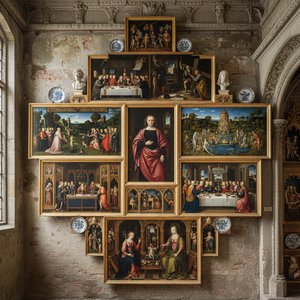
Early Netherlandish Masters: 10 Paintings That Revolutionized Art & Decor
Journey into the Early Netherlandish Renaissance! Explore 10 iconic paintings by Jan van Eyck, Rogier van der Weyden & more. Discover stunning detail, symbolism, and oil painting techniques. Find museum-quality art reproductions for your home at OriginalUniqueArt.com.

Hugo van der Goes: Devotion, Innovation & the Psychological Depth of Early Netherlandish Painting
Explore the revolutionary art of Hugo van der Goes – a master of Early Netherlandish painting renowned for his dramatic realism, psychological depth & profound influence on Renaissance artists. Discover his iconic works and lasting legacy.
