Peržiūrėti realybėje
 Pasidalinti
 Dalintis
 Išsamiau

 Atsisiųsti
 Panašūs eksponatai
 Rentgeno nuotrauka
 Automatinė diorama
Reval
 Oil On Canvas
- WallArt
- Romanticism
 19th Century
 59.0 x 81.0 cm
 Skaityti daugiau
Giclée / Meno spausdinimas
Muziejų lygio „giclée“ arba drobos spausdinimas: greita gamyba ir lankstios apdailos parinktys. ( Pirkti rankomis tapytą paveikslą Pirkti vaizdą)




P118B $10

P118H $10

P118W $10

P438Z $10

P508JH $12

P508YH $12

P805H $10

P805Z $10

P919BZ $10

P919G $10

P919XJ $10

P959ZH $10

P968JZ $12

W106C $8

W218G $10

W218JH $8

W218Y $10

W307PJ $10

W316G $10

W316PJ $8

W316Y $10

W398PJ $8

W4111J $10

W500HY $15

W500JH $15

W692G $12

W849H $8

W940BG $15

W953PJ $8




Pasirinkite iš mūsų nustatytų dydžių, atitinkančių originalaus meno kūrinio proporcijas.

Galite nurodyti savo matmenis, kad vaizdas atitiktų konkretų rėmą ar erdvę. Jei pasirinktas dydis nesutaps su originalaus paveikslėlio proporcijomis, mes arba apkirpsime kūrinį, arba išplėsime vaizdą naudojant veideliu atspindėtą arba vientisą šoną. Skaitmeninis maketas bus išsiųstas jums patvirtinti prieš pradedant gamybą.
Atkreipkite dėmesį, kad ekrane matomas vaizdinys neatspindi tikrojo apkirpimo ar išplėtimo. Tik maketas tiksliai parodytų galutinę kompoziciją.
Nors galima rinktis ir individualius dydžius, rekomenduojame pasirinkti vieną iš išanksti nustatytų matmenų, kad būtų išlaikytos originalios proporcijos.
Pristatymas visame pasaulyje () per 2 weeks, o ne įprastas 4/5 savaičių laikotarpis. (29 rugpjūtis)

Nemokamas greitasis pristatymas visame pasaulyje

Aukštos kokybės lininis drobė

Pilnas siuntimo draudimas

Muitinės mokesčių grąžinimo garantija

Tikro spalvų atitikimo garantija

60 dienų grąžinimo politika (tik esant gamyklinėms defektams)

100% pinigų grąžinimo garantija

Nuolaida už kelias reprodukcijas
 Stiklo variantas prieinamas tik pasirinkus dydį iki 110 cm

Reval
Giclée / Meno spausdinimas
Reprodukcijos matmenys
-


Galutinė kaina
$ 80
A Symphony of Salt and Stone
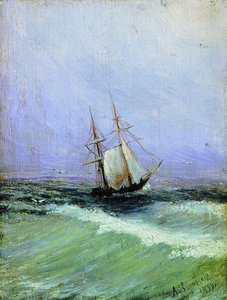
In the luminous masterpiece Reval, Ivan Konstantinovich Aivazovsky invites us to witness a moment where the maritime pulse of history meets the tranquil beauty of the Baltic coast. The painting presents a breathtaking panoramic view of the port city, capturing a delicate balance between the bustling human endeavor and the eternal rhythm of the sea. As the eye wanders across the canvas, it encounters a fleet of sailboats—at least thirteen vessels in total—drifting gracefully upon the water. Some boats linger near the shoreline, their hulls catching the soft light, while others venture further into the hazy distance, appearing as ghostly silhouettes against the horizon. This layering of maritime elements creates a profound sense of depth, drawing the viewer into a world where every wave and sail tells a story of commerce, travel, and the quiet majesty of the sea.
Aivazovsky, a master of the Romantic movement, utilizes his unparalleled command of light to breathe life into this coastal scene. His technique is nothing short of miraculous; he does not merely paint water, but rather captures its very translucency and movement. Through subtle gradations of color and masterful brushwork, he renders the interplay of sunlight reflecting off the undulating surface, creating a shimmering effect that feels almost tactile. The cityscape of Reval (modern-day Tallinn) rises from the shore with an architectural dignity, its buildings serving as a grounded, terrestrial counterpoint to the fluid, ever-changing nature of the ocean. A solitary figure stands near one of the vessels, a small but poignant reminder of the human connection to this vast expanse, embodying the quiet contemplation that often accompanies the sight of a boundless horizon.
The Soul of the Sea and the Collector's Vision
Beyond its technical brilliance, Reval serves as an emotional gateway to the Romantic era’s fascination with the sublime. Aivazovsky’s ability to evoke the "soul" of the ocean allows the viewer to feel the salt-laced air and hear the gentle lapping of waves against wooden hulls. For the discerning collector or interior designer, this piece offers more than just a decorative element; it provides an atmospheric anchor for any space. The painting’s palette—a harmonious blend of maritime blues, soft ochres, and ethereal whites—possesses a calming yet commanding presence that can transform a room into a sanctuary of reflection.
Integrating a high-quality reproduction of this work into a curated collection allows one to preserve the legacy of a master who lived and breathed the waves. Whether placed in a grand library, a sophisticated coastal estate, or a contemporary living space, Reval acts as a window into a bygone era of maritime splendor. It is an investment in emotion and history, offering a timeless aesthetic that celebrates the enduring beauty of our relationship with the sea. To possess such a work is to hold a fragment of Aivazovsky’s vision—a vision where the strength of the shore and the freedom of the sail exist in perfect, eternal harmony.
Autoriaus biografija
Ivan Konstantinovich Aivazovsky – Hovhannes Aivazian: Embracing the Ocean’s Soul
Ivan Konstantinovich Aivazovsky, born Hovhannes Aivazian in 1817, was more than just a painter of seascapes; he embodied the very spirit of Romanticism—a profound connection to nature and an unwavering belief in its sublime power. His existence seemed inextricably intertwined with the Black Sea—that vast expanse of turbulent waters which would forever dominate his artistic vision and propel him to unparalleled fame throughout his lifetime. Born into a modest Armenian family in Feodosia, Crimea, Aivazovsky’s formative years were steeped in the salty air and rhythmic crashing waves of the harbor city – experiences that profoundly shaped his artistic sensibility and fueled an extraordinary creative journey spanning nearly six decades.Early Influences and Artistic Training
From a young age, Jacob Koch recognized Aivazovsky's exceptional talent—Koch, a prominent architect who instilled in him a love for observation and meticulous detail—saw potential beyond mere technical skill. Recognizing this innate aptitude, Koch encouraged Aivazovsky to pursue formal artistic training at the Imperial Academy of Arts in Saint Petersburg – a pivotal step that would propel him into the epicenter of Russian art’s intellectual and stylistic currents. Despite the rigorous academic environment, Aivazovsky's artistic understanding transcended mere instruction; it was the constant immersion in the sea’s elemental forces—its unpredictable surges, its mesmerizing sunsets, and its brooding depths—that truly nurtured his creative spirit. This early exposure to maritime life would become a cornerstone of his artistic worldview and inform every subsequent painting he undertook.The Rise of a Marine Master: Saint Petersburg and Naval Commissions
Aivazovsky’s artistic trajectory took an extraordinary turn upon his appointment as the main painter of the Russian Navy in 1845 – a position that granted him unparalleled access to naval vessels, sailors, and firsthand observation of maritime battles. This wasn't merely a prestigious title; it was a gateway to experiencing the dynamism of naval life—a realm brimming with raw energy and dramatic spectacle. He became intimately acquainted with the practical realities of seafaring—the challenges faced by navigators, the camaraderie among crew members, and the visceral thrill of confronting formidable storms at sea – elements that infused his paintings with an authenticity unmatched by many contemporaries. The patronage afforded by the Imperial Navy allowed him to hone his skills and explore ambitious themes, cementing his reputation as Russia’s foremost marine artist.A Painter Defined By Emotion and Technique
Aivazovsky's artistic style—characterized by dramatic compositions, masterful use of color, and a remarkable ability to convey emotion—became synonymous with Romanticism itself. He eschewed the polished elegance favored by some of his peers, opting instead for expressive brushstrokes and bold palettes that captured the turbulent beauty of the sea. His paintings weren’t simply representations of landscapes; they were attempts to evoke feeling – awe, terror, wonder – mirroring the profound impact that nature had on the human psyche. Works like *Chaos (The Creation)* and *A Ship in a Stormy Sea* exemplify this artistic ethos—demonstrating his technical prowess while simultaneously conveying an overwhelming sense of drama and emotion. He skillfully employed atmospheric perspective to create luminous textures and capture fleeting light effects, techniques honed through countless hours spent observing the sea firsthand.Legacy and Enduring Influence
Ivan Konstantinovich Aivazovsky’s prolific output – approximately 6,000 paintings—established him as one of Russia's most productive artists of his era. His enduring legacy extends far beyond the realm of art history; he profoundly influenced generations of painters who sought to emulate his stylistic innovations and capture the sublime grandeur of nature. Today, Aivazovsky’s masterpieces continue to captivate audiences worldwide – exhibited in museums across Europe and America—serving as a testament to his unparalleled artistic vision and unwavering dedication to his craft. He remains an icon of Romanticism, embodying its core tenets: emotion, imagination, and reverence for the untamed beauty of the natural world. His paintings stand as timeless reminders of humanity’s relationship with the ocean – a connection that continues to inspire artists and viewers alike.
Ivanas Konstantinas Aivazovskis
1817 - 1900 , Rusija
Trumpa informacija
- Artistic Movement Or Style: Romantizmas, Jūrų meno meistras
- Artists Or Movements Influenced By This Artist: ['Rusų krajobudžio meno meistrai']
- Artists Who Influenced This Artist: ['Ž.M.W. Turner']
- Date Of Birth: 1817 m.
- Date Of Death: 1900 m.
- Full Name: Ivan Konstantinovich Aivazovsky
- Nationality: Rusų-Armėnų
- Notable Artworks:
- Devynios bangos
- Jūra šviesoje mėnulį
- Laivybė buriuojantis į audrą
- Place Of Birth: Feodosia, Rusija
Susiję straipsniai

Boats on Canvas: 10 Masterpieces of Maritime Art for Your Home Decor
Sail away with 10 iconic boat paintings! Explore masterpieces by Monet, Van Gogh & Turner. Discover the stories behind these timeless seascapes and find museum-quality art reproductions for your home decor at OriginalUniqueArt.com.
The Allure of the Horizon: A Comprehensive Exploration of Seascape Art Through History & Emotion
Explore the captivating world of seascape art! Discover its history, key artists & movements – from Dutch Masters to Impressionism. Expert insights for collectors and enthusiasts at OriginalUniqueArt.
Evoking the Horizon: A Historical & Artistic Exploration of Coastal Scenes in Painting
Explore the rich history of coastal scenes in painting! Discover Impressionist masterpieces, American realism & contemporary visions. Learn about renowned artists and find your perfect seascape at OriginalUniqueArt.
Navigating Symbolism & Sentiment: A Comprehensive Exploration of Boats in Art History
Explore the rich history of boats in art! Discover symbolism & style from ancient myths to Impressionist masterpieces. Expert insights for collectors at OriginalUniqueArt.
Navigating Symbolism & Style: A Comprehensive Exploration of Boats in Art History
Explore the rich history of boats in art! From ancient symbolism to Impressionist masterpieces & modern visions, discover renowned artists & collecting tips at OriginalUniqueArt.