Ivan Konstantinovich Aivazovsky – Hovhannes Aivazian: Embracing the Ocean’s Soul
Ivan Konstantinovich Aivazovsky, born Hovhannes Aivazian in 1817, was more than just a painter of seascapes; he embodied the very spirit of Romanticism—a profound connection to nature and an unwavering belief in its sublime power. His existence seemed inextricably intertwined with the Black Sea—that vast expanse of turbulent waters which would forever dominate his artistic vision and propel him to unparalleled fame throughout his lifetime. Born into a modest Armenian family in Feodosia, Crimea, Aivazovsky’s formative years were steeped in the salty air and rhythmic crashing waves of the harbor city – experiences that profoundly shaped his artistic sensibility and fueled an extraordinary creative journey spanning nearly six decades.Early Influences and Artistic Training
From a young age, Jacob Koch recognized Aivazovsky's exceptional talent—Koch, a prominent architect who instilled in him a love for observation and meticulous detail—saw potential beyond mere technical skill. Recognizing this innate aptitude, Koch encouraged Aivazovsky to pursue formal artistic training at the Imperial Academy of Arts in Saint Petersburg – a pivotal step that would propel him into the epicenter of Russian art’s intellectual and stylistic currents. Despite the rigorous academic environment, Aivazovsky's artistic understanding transcended mere instruction; it was the constant immersion in the sea’s elemental forces—its unpredictable surges, its mesmerizing sunsets, and its brooding depths—that truly nurtured his creative spirit. This early exposure to maritime life would become a cornerstone of his artistic worldview and inform every subsequent painting he undertook.The Rise of a Marine Master: Saint Petersburg and Naval Commissions
Aivazovsky’s artistic trajectory took an extraordinary turn upon his appointment as the main painter of the Russian Navy in 1845 – a position that granted him unparalleled access to naval vessels, sailors, and firsthand observation of maritime battles. This wasn't merely a prestigious title; it was a gateway to experiencing the dynamism of naval life—a realm brimming with raw energy and dramatic spectacle. He became intimately acquainted with the practical realities of seafaring—the challenges faced by navigators, the camaraderie among crew members, and the visceral thrill of confronting formidable storms at sea – elements that infused his paintings with an authenticity unmatched by many contemporaries. The patronage afforded by the Imperial Navy allowed him to hone his skills and explore ambitious themes, cementing his reputation as Russia’s foremost marine artist.A Painter Defined By Emotion and Technique
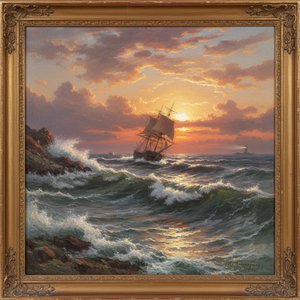
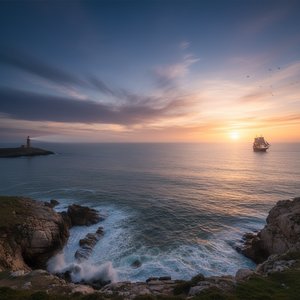
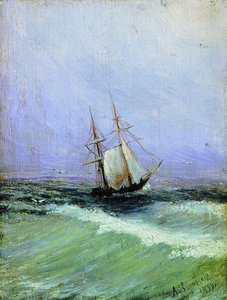
Aivazovsky's artistic style—characterized by dramatic compositions, masterful use of color, and a remarkable ability to convey emotion—became synonymous with Romanticism itself. He eschewed the polished elegance favored by some of his peers, opting instead for expressive brushstrokes and bold palettes that captured the turbulent beauty of the sea. His paintings weren’t simply representations of landscapes; they were attempts to evoke feeling – awe, terror, wonder – mirroring the profound impact that nature had on the human psyche. Works like *Chaos (The Creation)* and *A Ship in a Stormy Sea* exemplify this artistic ethos—demonstrating his technical prowess while simultaneously conveying an overwhelming sense of drama and emotion. He skillfully employed atmospheric perspective to create luminous textures and capture fleeting light effects, techniques honed through countless hours spent observing the sea firsthand.Legacy and Enduring Influence
Ivan Konstantinovich Aivazovsky’s prolific output – approximately 6,000 paintings—established him as one of Russia's most productive artists of his era. His enduring legacy extends far beyond the realm of art history; he profoundly influenced generations of painters who sought to emulate his stylistic innovations and capture the sublime grandeur of nature. Today, Aivazovsky’s masterpieces continue to captivate audiences worldwide – exhibited in museums across Europe and America—serving as a testament to his unparalleled artistic vision and unwavering dedication to his craft. He remains an icon of Romanticism, embodying its core tenets: emotion, imagination, and reverence for the untamed beauty of the natural world. His paintings stand as timeless reminders of humanity’s relationship with the ocean – a connection that continues to inspire artists and viewers alike.问答环节
Kur galiu rasti statistiką apie Ivanas Konstantinas Aivazovskis kūrybinį veiklą?
Ivanas Konstantinas Aivazovskis puslapio Statistika statistika yra suformuota remiantis kūriniais, nurodytais šis internetinis svetainė.
Ar galiu ieškoti Ivanas Konstantinas Aivazovskis kūrinių pagal raktažodžius?
Ivanas Konstantinas Aivazovskis puslapio Pagrįsta raktažodžiais skiltyje kūriniai suskirstyti pagal raktinius žodžius.
Ar galiu peržiūrėti Ivanas Konstantinas Aivazovskis kūrybą pagal stilių?
Kurių stiliais dirbo Ivanas Konstantinas Aivazovskis, galima rasti puslapio Visi stiliai, kuriame kūriniai sugrupuoti pagal meno kryptis.