Peržiūrėti realaus dydžio版
 Pasidalinti
 Dalintis
 Išsamiau
 Vadovas

 Atsisiųsti
 Panašūs eksponatai
 Rentgeno spindulių nuotrauka
 Automatinė diorama
 Q&A
Q&A Statistika
Ocean


 Skaityti daugiau
Giclée / Meno spausdinimas
Muziejų lygio „giclée“ arba drobos spausdinimas: greita gamyba ir lankstios apdailos parinktys. ( Pirkti rankų darbo tapybą Perejti prie skaitmeninių vaizdų)




P118B €10

P118H €10

P118W €10

P438Z €10

P508JH €12

P508YH €12

P805H €10

P805Z €10

P919BZ €10

P919G €10

P919XJ €10

P959ZH €10

P968JZ €12

W106C €8

W218G €10

W218JH €8

W218Y €10

W307PJ €10

W316G €10

W316PJ €8

W316Y €10

W398PJ €8

W4111J €10

W500HY €15

W500JH €15

W692G €12

W849H €8

W940BG €15

W953PJ €8




Pasirinkite iš mūsų nustatytų dydžių, atitinkančių originalaus meno kūrinio proporcijas.

Įveskite jums reikiamą plotį ir aukštį, kad atvaizdas derėtų prie jūsų rėmo ar sienos. Spausdiną galima tik sumažinti, bet nepadidinti virš originalaus paveikslėlio dydžio, todėl keičiant proporcijas, dalis vaizdo prarandama. Prieš spausdinimą atsiųsime jums skaitmeninį maketą patvirtinimui. Šioje puslapio nuotraukoje matomas pjūvis nėra tikslus – jį rodo tik maketas.
Pristatymas visame pasaulyje () per 2 weeks, o ne įprastas 4/5 savaičių laikotarpis. (29 spalis)

Nemokamas greitasis pristatymas visame pasaulyje

Aukštos kokybės lininis drobė

Pilnas siuntimo draudimas

Muitinės mokesčių grąžinimo garantija

Tikro spalvų atitikimo garantija

100 dienų grąžinimo politika (tik esant įtaigoms)

100% pinigų grąžinimo garantija

Nuolaida dideliems užsakymams
 Stiklo variantas prieinamas tik pasirinkus dydį iki 110 cm

Ocean
Giclée / Meno spausdinimas
Reprodukcijos matmenys
-


Bendroji kaina
€ 71
The Sublime Struggle: A Symphony of Salt and Shadow
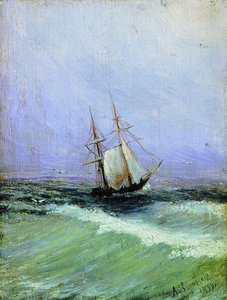
In the hauntingly beautiful masterpiece Ocean, painted in 1896, Ivan Konstantinovich Aivazovsky invites the viewer into a realm where the boundary between the heavens and the abyss dissolves. This work is not merely a depiction of a maritime scene; it is a visceral encounter with the sublime. The canvas captures a moment of profound tension, as a large vessel navigates the treacherous, churning waters of a tempestuous sea. Through his unparalleled ability to render the translucency of water and the weight of storm-laden clouds, Aivazovsky transforms a scene of potential catastrophe into a poetic meditation on the eternal struggle between human ambition and the indomitable forces of nature.
The composition is anchored by the dramatic interplay of light and shadow. As the ship battles through the choppy, dark waves, the artist utilizes a masterful technique to create depth and movement. One can almost feel the spray of the salt-laced air and hear the rhythmic roar of the crashing surf. The figures on board, clinging desperately to ropes and bracing against the tilting deck, serve as poignant symbols of human vulnerability. Their smallness in comparison to the towering waves and the vast, brooding sky emphasizes a central theme of Aivazovsky’s oeuvre: the fragility of life when confronted by the overwhelming majesty of the natural world.
A Legacy of Light and Motion
To understand the emotional gravity of Ocean, one must consider the soul of its creator. Born in the Crimean port of Feodosia, Aivazovsky lived a life shaped by the rhythms of the Black Sea. His brushwork carries the DNA of the tides; he possessed a rare, almost supernatural ability to capture the way light penetrates a cresting wave or reflects off a turbulent surface. In this late-career work from 1896, we see the culmination of decades of mastery. The technique is characterized by fluid, energetic strokes that suggest the very motion of the water, making the painting feel less like a static image and more like a living, breathing entity.
For the discerning collector or interior designer, this piece offers much more than mere decoration. It serves as a powerful focal point that commands attention and evokes deep contemplation. The dark, moody palette of deep blues, slate greys, and frothy whites provides a sophisticated anchor for a room, offering a sense of drama and grandeur. Whether placed in a quiet study or a large-scale gallery setting, a high-quality reproduction of this work brings with it an atmosphere of historical significance and romantic intensity. It is an invitation to lose oneself in the depths of the sea and to find beauty within the heart of the storm.
Klausimai ir atsakymai
Kokia „Ocean“ – Ivanas Konstantinas Aivazovskis orientacija?
„Ocean“ formatas yra Landscape. Tai padeda planuojant, kur būtų patalpinta reprodukcija.
Ar „Ocean“ yra garsus Romanticism kūrinys?
Kataloge kūrinys „Ocean“ vertinamas kaip Iconic tarp Romanticism stiliaus darbų.
Į kokį meno kryžminę ir kokį laikotarpį priskiriama „Ocean“ – Ivanas Konstantinas Aivazovskis?
„Ocean“ priklauso Romanticism krypčiai, o jo kūrėjas dirbo XIX amžius laikotarpiu.
Autoriaus biografija
Ivan Konstantinovich Aivazovsky – Hovhannes Aivazian: Embracing the Ocean’s Soul
Ivan Konstantinovich Aivazovsky, born Hovhannes Aivazian in 1817, was more than just a painter of seascapes; he embodied the very spirit of Romanticism—a profound connection to nature and an unwavering belief in its sublime power. His existence seemed inextricably intertwined with the Black Sea—that vast expanse of turbulent waters which would forever dominate his artistic vision and propel him to unparalleled fame throughout his lifetime. Born into a modest Armenian family in Feodosia, Crimea, Aivazovsky’s formative years were steeped in the salty air and rhythmic crashing waves of the harbor city – experiences that profoundly shaped his artistic sensibility and fueled an extraordinary creative journey spanning nearly six decades.Early Influences and Artistic Training
From a young age, Jacob Koch recognized Aivazovsky's exceptional talent—Koch, a prominent architect who instilled in him a love for observation and meticulous detail—saw potential beyond mere technical skill. Recognizing this innate aptitude, Koch encouraged Aivazovsky to pursue formal artistic training at the Imperial Academy of Arts in Saint Petersburg – a pivotal step that would propel him into the epicenter of Russian art’s intellectual and stylistic currents. Despite the rigorous academic environment, Aivazovsky's artistic understanding transcended mere instruction; it was the constant immersion in the sea’s elemental forces—its unpredictable surges, its mesmerizing sunsets, and its brooding depths—that truly nurtured his creative spirit. This early exposure to maritime life would become a cornerstone of his artistic worldview and inform every subsequent painting he undertook.The Rise of a Marine Master: Saint Petersburg and Naval Commissions
Aivazovsky’s artistic trajectory took an extraordinary turn upon his appointment as the main painter of the Russian Navy in 1845 – a position that granted him unparalleled access to naval vessels, sailors, and firsthand observation of maritime battles. This wasn't merely a prestigious title; it was a gateway to experiencing the dynamism of naval life—a realm brimming with raw energy and dramatic spectacle. He became intimately acquainted with the practical realities of seafaring—the challenges faced by navigators, the camaraderie among crew members, and the visceral thrill of confronting formidable storms at sea – elements that infused his paintings with an authenticity unmatched by many contemporaries. The patronage afforded by the Imperial Navy allowed him to hone his skills and explore ambitious themes, cementing his reputation as Russia’s foremost marine artist.A Painter Defined By Emotion and Technique
Aivazovsky's artistic style—characterized by dramatic compositions, masterful use of color, and a remarkable ability to convey emotion—became synonymous with Romanticism itself. He eschewed the polished elegance favored by some of his peers, opting instead for expressive brushstrokes and bold palettes that captured the turbulent beauty of the sea. His paintings weren’t simply representations of landscapes; they were attempts to evoke feeling – awe, terror, wonder – mirroring the profound impact that nature had on the human psyche. Works like *Chaos (The Creation)* and *A Ship in a Stormy Sea* exemplify this artistic ethos—demonstrating his technical prowess while simultaneously conveying an overwhelming sense of drama and emotion. He skillfully employed atmospheric perspective to create luminous textures and capture fleeting light effects, techniques honed through countless hours spent observing the sea firsthand.Legacy and Enduring Influence
Ivan Konstantinovich Aivazovsky’s prolific output – approximately 6,000 paintings—established him as one of Russia's most productive artists of his era. His enduring legacy extends far beyond the realm of art history; he profoundly influenced generations of painters who sought to emulate his stylistic innovations and capture the sublime grandeur of nature. Today, Aivazovsky’s masterpieces continue to captivate audiences worldwide – exhibited in museums across Europe and America—serving as a testament to his unparalleled artistic vision and unwavering dedication to his craft. He remains an icon of Romanticism, embodying its core tenets: emotion, imagination, and reverence for the untamed beauty of the natural world. His paintings stand as timeless reminders of humanity’s relationship with the ocean – a connection that continues to inspire artists and viewers alike.
Ivanas Konstantinas Aivazovskis
1817 - 1900 , Rusija
Trumpa informacija
- Artistic Movement Or Style: Romantizmas, Jūrų meno meistras
- Artists Or Movements Influenced By This Artist: ['Rusų krajobudžio meno meistrai']
- Artists Who Influenced This Artist: ['Ž.M.W. Turner']
- Date Of Birth: 1817 m.
- Date Of Death: 1900 m.
- Full Name: Ivan Konstantinovich Aivazovsky
- Nationality: Rusų-Armėnų
- Notable Artworks:
- Devynios bangos
- Jūra šviesoje mėnulį
- Laivybė buriuojantis į audrą
- Place Of Birth: Feodosia, Rusija
Susiję straipsniai
Roliuotas kanvas: aukščiausios klasės, patikimas ir ekonomiškas sprendimas viešbučių interjero menui
Pasitinkite OriginalUniqueArt – patikimą partnerį, siūlantį roliuotus kanvatus viešbučių interjerui. Aukštos kokybės, ekonomiški sprendimai, profesionali konsultacija ir garantija užtikrina investicijų vertę bei estetinį išskirtinumą.

OriginalUniqueArt.com F.A.Q.: Nemokamas pasaulinis pristatymas – ekskluzivios rankų tapytos meno kūriniai visame pasaulyje
OriginalUniqueArt.com – ekspertai rankų tapytose meno reprodukcijose su nemokamu pasaulinio pristatymu. Pasitikėkite aukščiausios kokybės medžiagomis, individualiomis paslaugomis ir 100% patenkinimo garantija. Kiekvienas kūrinys – investicija.

Pristatymas ir grąžinimas
APS teikia profesionalų viso pasaulio meno siuntų gabenimą su muziejinei kokybei prilygstančia priežiūra, pilnu sekimu ir 100 dienų pinigų grąžinimo garantija. Nuo muitų palaikymo iki Priority Production, pasitikėkite skaidriu aptarnavimu, saugiu pakavimu ir patikimu pristatymu kolekcionieriams, dizaineriams ir galerijoms.

Katsushika Hokusai: 25 Šedevrai Japonų Meno Istorijoje | OriginalUniqueArt.com
Atraskite 25 įspūdingiausius Katsushika Hokusai kūrinius! Žiūrėkite *Didžiąją bangą*, *Fuji kalną* ir kitus Ukiyo-e stiliaus šedevrus. Meno reprodukcijos jūsų interjerui – OriginalUniqueArt.com
The Allure of the Horizon: A Comprehensive Exploration of Seascape Art Through History & Emotion
Explore the captivating world of seascape art! Discover its history, key artists & movements – from Dutch Masters to Impressionism. Expert insights for collectors and enthusiasts at OriginalUniqueArt.