Peržiūrėti realaus dydžio版
 Siųsti
 Dalintis
 Išsamiau
 Vadovas

 Atsisiųsti
 Panašūs eksponatai
 Rentgeno spindulių nuotrauka
 Diaporama
 Statistika
Принц Григорий Григорьевич Гагарин
 Akrilas ant drobės
- Sieninis menas
- Romanticism
 1855
1855 59.0 x 42.0 cm
 Sakovos meno rūmai – kultūros istorijos muziejus
 Rodyti daugiau
Giclée / Meno spausdinimas
Muziejų lygio „giclée“ arba drobos spausdinimas: greita gamyba ir lankstios apdailos parinktys. ( Pirkti rankomis tapytą reprodukciją Perejti prie skaitmeninių vaizdų)




P118B €10

P118H €10

P118W €10

P438Z €10

P508JH €12

P508YH €12

P805H €10

P805Z €10

P919BZ €10

P919G €10

P919XJ €10

P959ZH €10

P968JZ €12

W106C €8

W218G €10

W218JH €8

W218Y €10

W307PJ €10

W316G €10

W316PJ €8

W316Y €10

W398PJ €8

W4111J €10

W500HY €15

W500JH €15

W692G €12

W849H €8

W940BG €15

W953PJ €8




Pasirinkite iš mūsų nustatytų dydžių, atitinkančių originalaus meno kūrinio proporcijas.

Įveskite jums reikiamą plotį ir aukštį, kad atvaizdas derėtų prie jūsų rėmo ar sienos. Spausdiną galima tik sumažinti, bet nepadidinti virš originalaus paveikslėlio dydžio, todėl keičiant proporcijas, dalis vaizdo prarandama. Prieš spausdinimą atsiųsime jums skaitmeninį maketą patvirtinimui. Šioje puslapio nuotraukoje matomas pjūvis nėra tikslus – jį rodo tik maketas.
Pristatymas visame pasaulyje () per 2 weeks, o ne įprastas 4/5 savaičių laikotarpis. (25 spalis)

Nemokamas greitasis pristatymas visame pasaulyje

Aukštos kokybės lininis drobė

Pilnas siuntimo draudimas

Muitinės mokesčių grąžinimo garantija

Tikro spalvų atitikimo garantija

100 dienų grąžinimo politika (tik esant įtaigoms)

100% pinigų grąžinimo garantija

Nuolaida dideliems užsakymams
 Stiklo variantas prieinamas tik pasirinkus dydį iki 110 cm

Принц Григорий Григорьевич Гагарин
Giclée / Meno spausdinimas
Reprodukcijos dydis
-


Visų pasirinktų variantų kaina
€ 70
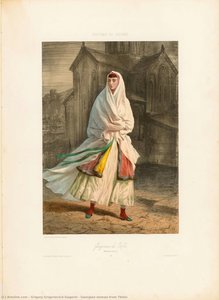
Grigory Gagarin: A Vision of Caucasus Beauty
Grigory Grigorievich Gagarin (1810–1893) stands as one of Russia’s most distinguished artists of the Romantic era, a painter whose legacy extends far beyond his canvases. Born into the noble Rurikid family amidst turbulent political currents—his father, Prince Grigory Ivanovich Gagarin, served as ambassador to Italy during Napoleon's reign—Grigory’s early life was marked by exposure to European culture and artistic influences. Crucially, he benefited from the patronage of Karl Briullov, a titan of Russian painting whose guidance honed his talent and instilled in him an appreciation for meticulous observation and expressive color palettes. This formative period shaped Gagarin's artistic sensibilities profoundly, preparing him for a career dedicated to capturing the grandeur and spirit of Russia’s landscapes and people.- Early Artistic Training: Briullov’s influence was paramount, fostering Gagarin’s mastery of watercolor and oil painting techniques—skills he would later employ with remarkable precision in his depictions of Caucasian scenery.
- Literary Connections: Gagarin cultivated friendships with luminaries like Alexander Pushkin and Mikhail Lermontov, whose poetic visions fueled his artistic imagination and inspired him to explore themes of heroism, melancholy, and the sublime.
- Illustrator of Literary Classics: He notably illustrated Pushkin’s “The Queen of Spades” and “The Tale of Tsar Saltan,” demonstrating an ability to translate literary narratives into visual splendor—a hallmark of Romantic art itself.
“Caucasian Prince with Father”: A Celebration of Tradition
“Caucasian Prince with Father” exemplifies Gagarin’s distinctive style – a blend of realism and lyrical idealism. Painted in 1855, this monumental artwork showcases two figures standing on a hillside against the backdrop of towering mountains—a scene steeped in symbolism reflecting the artist's fascination with the Caucasus region during Mikhail Vorontsov’s governorship. The composition is deliberately balanced, emphasizing dignity and serenity amidst the rugged landscape. Gagarin skillfully utilizes color to convey mood; muted hues dominate, creating an atmosphere of contemplative grandeur. Detailed brushstrokes capture the textures of clothing and stone—a testament to his meticulous attention to detail.- Technique: Gagarin’s masterful use of watercolor and oil paints combined to achieve a luminous effect that captures the essence of the Caucasus landscape.
- Symbolism: The figures represent not only royalty but also continuity—the father embodying tradition and wisdom, while the son embodies youthful vigor and aspiration.
- Historical Context: The painting reflects Vorontsov’s ambitious project to transform Tbilisi into a European capital, highlighting Gagarin's engagement with contemporary social and cultural developments.
Influence Beyond Tbilisi
The Art Palace of Georgia holds a treasured collection of Gagarin’s sketches and drawings—a visual record of his explorations of Caucasian culture and topography. Duma’s observation about the theatre building mirroring Pompey Theatre underscores Gagarin's artistic ambition—he sought to elevate Georgian art through innovative architectural designs and monumental frescoes. His work served as inspiration for subsequent generations of artists, cementing his place among Russia’s most celebrated Romantic painters. Gagarin’s legacy continues to resonate today, reminding us of the power of art to capture beauty, convey emotion, and illuminate the spirit of an era.A Legacy Enduring Beauty
“Caucasian Prince with Father” remains a captivating testament to Gagarin's artistic vision—a masterpiece that embodies Romantic ideals while grounding itself in meticulous observation and skillful technique. Its enduring appeal lies not only in its aesthetic qualities but also in its ability to transport viewers back to 1855, inviting contemplation on themes of heritage, nobility, and the sublime grandeur of nature.问答 (or more naturally for a website heading): Klausimai ir atsakymai
Kas sukūrė „Принц Григорий Григорьевич Гагарин“ ir kada?
Grigorijus Grigorievičius Gagarinas sukūrė „Принц Григорий Григорьевич Гагарин“ 1855 m.
Į kokį meno kryžminę ir kokį laikotarpį priskiriama „Принц Григорий Григорьевич Гагарин“, autorius – Grigorijus Grigorievičius Gagarinas?
„Принц Григорий Григорьевич Гагарин“ priklauso Romanticism krypčiai, o jo kūrėjas dirbo XIX amžius laikotarpiu.
Kiek metų buvo Grigorijus Grigorievičius Gagarinas, kai sukūrė „Принц Григорий Григорьевич Гагарин“ 1855 m.?
Grigorijus Grigorievičius Gagarinas sukūrė „Принц Григорий Григорьевич Гагарин“ būdamas 45 metų amžiaus.ت Artistas gimė 1810, o kūrinys datuojamas 1855 metais.
Susiję straipsniai

Discover Russian Realism: Soulful Masterpieces and the Timeless Spirit of the Peredvizhniki for Your Modern Home
Elevate your home with the soulful beauty of Russian Realism. Discover exquisite hand-painted reproductions of Peredvizhniki masterpieces, from lyrical landscapes to profound portraits, curated to bring historical depth and timeless elegance to your modern interior design.

Victor Vasnetsov: Myth, Nationalism & the Revival of Russian Fairy Tale Painting
Explore the captivating world of Victor Vasnetsov, a co-founder of Russian folklorist painting. Discover his iconic works, influence on national identity, and lasting legacy in this expert guide.

Ivan Bilibin: A Synthesis of Folklore, Modernism & National Identity in Russian Illustration
Explore the enchanting world of Ivan Bilibin, a master Russian illustrator who synthesized folklore, Art Nouveau & national identity. Discover his iconic fairy tale illustrations and legacy with OriginalUniqueArt.

Mikhail Nesterov: Spiritual Quests & Symbolic Landscapes of Russian Symbolism
Explore the captivating world of Mikhail Nesterov, a pioneer of Russian Symbolism. Discover his spiritual themes, iconic paintings like 'The Hermit,' and lasting influence on Russian art history. Learn more at OriginalUniqueArt.

Vladimir Makovsky: Realism, Social Commentary & Russian Life in Late 19th-Century Painting
Explore the captivating world of Vladimir Makovsky, a leading Russian realist painter. Discover his insightful depictions of 19th-century life, social commentary & legacy with OriginalUniqueArt.