Perjungti į spausdinamus版作品
 Skaityti daugiau







































 Dėl meno kūrinių ar reprodukcijų, kurių bet kuri pusė yra didesnė nei 105 cm (apie 41 inch), rėmas bus siunčiamas kaip išskaidytas surinkimo rinkinys. Šis metodas užtikrina saugų pristatymą ir apsaugo nuo transportavimo metu galimos žalos.


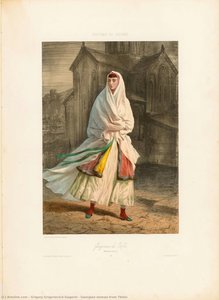
Grigory Gagarin: A Vision of Caucasus Beauty
Grigory Grigorievich Gagarin (1810–1893) stands as one of Russia’s most distinguished artists of the Romantic era, a painter whose legacy extends far beyond his canvases. Born into the noble Rurikid family amidst turbulent political currents—his father, Prince Grigory Ivanovich Gagarin, served as ambassador to Italy during Napoleon's reign—Grigory’s early life was marked by exposure to European culture and artistic influences. Crucially, he benefited from the patronage of Karl Briullov, a titan of Russian painting whose guidance honed his talent and instilled in him an appreciation for meticulous observation and expressive color palettes. This formative period shaped Gagarin's artistic sensibilities profoundly, preparing him for a career dedicated to capturing the grandeur and spirit of Russia’s landscapes and people.- Early Artistic Training: Briullov’s influence was paramount, fostering Gagarin’s mastery of watercolor and oil painting techniques—skills he would later employ with remarkable precision in his depictions of Caucasian scenery.
- Literary Connections: Gagarin cultivated friendships with luminaries like Alexander Pushkin and Mikhail Lermontov, whose poetic visions fueled his artistic imagination and inspired him to explore themes of heroism, melancholy, and the sublime.
- Illustrator of Literary Classics: He notably illustrated Pushkin’s “The Queen of Spades” and “The Tale of Tsar Saltan,” demonstrating an ability to translate literary narratives into visual splendor—a hallmark of Romantic art itself.
“Caucasian Prince with Father”: A Celebration of Tradition
“Caucasian Prince with Father” exemplifies Gagarin’s distinctive style – a blend of realism and lyrical idealism. Painted in 1855, this monumental artwork showcases two figures standing on a hillside against the backdrop of towering mountains—a scene steeped in symbolism reflecting the artist's fascination with the Caucasus region during Mikhail Vorontsov’s governorship. The composition is deliberately balanced, emphasizing dignity and serenity amidst the rugged landscape. Gagarin skillfully utilizes color to convey mood; muted hues dominate, creating an atmosphere of contemplative grandeur. Detailed brushstrokes capture the textures of clothing and stone—a testament to his meticulous attention to detail.- Technique: Gagarin’s masterful use of watercolor and oil paints combined to achieve a luminous effect that captures the essence of the Caucasus landscape.
- Symbolism: The figures represent not only royalty but also continuity—the father embodying tradition and wisdom, while the son embodies youthful vigor and aspiration.
- Historical Context: The painting reflects Vorontsov’s ambitious project to transform Tbilisi into a European capital, highlighting Gagarin's engagement with contemporary social and cultural developments.
Influence Beyond Tbilisi
The Art Palace of Georgia holds a treasured collection of Gagarin’s sketches and drawings—a visual record of his explorations of Caucasian culture and topography. Duma’s observation about the theatre building mirroring Pompey Theatre underscores Gagarin's artistic ambition—he sought to elevate Georgian art through innovative architectural designs and monumental frescoes. His work served as inspiration for subsequent generations of artists, cementing his place among Russia’s most celebrated Romantic painters. Gagarin’s legacy continues to resonate today, reminding us of the power of art to capture beauty, convey emotion, and illuminate the spirit of an era.A Legacy Enduring Beauty
“Caucasian Prince with Father” remains a captivating testament to Gagarin's artistic vision—a masterpiece that embodies Romantic ideals while grounding itself in meticulous observation and skillful technique. Its enduring appeal lies not only in its aesthetic qualities but also in its ability to transport viewers back to 1855, inviting contemplation on themes of heritage, nobility, and the sublime grandeur of nature.Klausimai ir atsakymai
Kaip „Принц Григорий Григорьевич Гагарин“ subalansuoja šviesą ir tamsą?
Įrašytos „Принц Григорий Григорьевич Гагарин“ – Grigorijus Grigorievičius Gagarinas reikšmės: šviesos intensyvumas – žirkus, luminansas – Šviesus.
Ką vaizduoja „Принц Григорий Григорьевич Гагарин“ – Grigorijus Grigorievičius Gagarinas ir kokią nuota sukelia?
„Принц Григорий Григорьевич Гагарин“ vaizduoja caucasian landscape, georgian architecture, religious art, prince family portrait, theatre building, romantic painting, russian culture, fine arts revival, o jo perteikiama nuotaika yra Elegantiška.
Kokią vietą Grigorijus Grigorievičius Gagarinas kūrybos ešėlyje užima „Принц Григорий Григорьевич Гагарин“?
„Принц Григорий Григорьевич Гагарин“ priklauso Grigorijus Grigorievičius Gagarinas Romanticism kūrybai, kurios įrašytoms temoms priskiriamas pushkin inspiration, romantic vision, georgian identity, artistic revival, religious faith, spiritual reflection, theatre patronage, public service.
Daugiau informacijos apie šį paveikslą
 Peržiūrėti realaus dydžio版
 Pasidalinti
 Dalintis
 Išsamiau
 Vadovas

 Atsisiųsti
 Panašūs eksponatai
 Rentgeno spindulių nuotrauka
 Automatinė diorama
 问答
问答 Statistika