

 Peržiūrėti realaus dydžio版
 Siųsti
 Dalintis
 Išsamiau
 Vadovas

 Atsisiųsti
 Panašūs eksponatai
 Rentgeno spindulių nuotrauka
 Diaporama
 Statistika
Little Slave
 Tempera
- WallArt
- Art Deco
 Modern
 65.0 x 53.0 cm
 Labirinto della Masone
 Rodyti daugiau
Šiame puslapyje rodomas meno kūrinys yra saugomas autorių teisių įstatymais, todėl neturime teisės legaliai kurti ar parduoti jo identiškos reprodukcijos. Ši apsauga užtikrinama remiantis tokiais tarptautiniais susitarimais kaip Bernės konvencija ir pagal nacionalines įstatymų nuostatas, įskaitant tas, kurias nurodo JAV autoriškos teisės įstatymas – 17-asis skyrius.
Šis metodas visiškai atitinka autorių teises, nes jame nėra kūrinio kopijavimo ar dubliavimo. Tai yra kūrybinė reinterpretacija – naujas paveikslas, kurį įkvėpė originalas, tačiau kuris nėra jo identiškas.
Giclée / Meno spausdinimas
Muziejų lygio „giclée“ arba drobos spausdinimas: greita gamyba ir lankstios apdailos parinktys. ( Pirkti rankomis tapytą reprodukciją Perejti prie skaitmeninių vaizdų)




P118B €10

P118H €10

P118W €10

P438Z €10

P508JH €12

P508YH €12

P805H €10

P805Z €10

P919BZ €10

P919G €10

P919XJ €10

P959ZH €10

P968JZ €12

W106C €8

W218G €10

W218JH €8

W218Y €10

W307PJ €10

W316G €10

W316PJ €8

W316Y €10

W398PJ €8

W4111J €10

W500HY €15

W500JH €15

W692G €12

W849H €8

W940BG €15

W953PJ €8




Pasirinkite iš mūsų nustatytų dydžių, atitinkančių originalaus meno kūrinio proporcijas.

Įveskite jums reikiamą plotį ir aukštį, kad atvaizdas derėtų prie jūsų rėmo ar sienos. Spausdiną galima tik sumažinti, bet nepadidinti virš originalaus paveikslėlio dydžio, todėl keičiant proporcijas, dalis vaizdo prarandama. Prieš spausdinimą atsiųsime jums skaitmeninį maketą patvirtinimui. Šioje puslapio nuotraukoje matomas pjūvis nėra tikslus – jį rodo tik maketas.
Pristatymas visame pasaulyje () per 2 weeks, o ne įprastas 4/5 savaičių laikotarpis. (24 spalis)

Nemokamas greitasis pristatymas visame pasaulyje

Aukštos kokybės lininis drobė

Pilnas siuntimo draudimas

Muitinės mokesčių grąžinimo garantija

Tikro spalvų atitikimo garantija

100 dienų grąžinimo politika (tik esant įtaigoms)

100% pinigų grąžinimo garantija

Nuolaida dideliems užsakymams
 Stiklo variantas prieinamas tik pasirinkus dydį iki 110 cm

Little Slave
Giclée / Meno spausdinimas
Reprodukcijos dydis
-


Visų pasirinktų variantų kaina
€ 70
The Essence of Art Deco Elegance
In the pantheon of twentieth-century visual culture, few names evoke the shimmering allure of the Jazz Age quite like Erté. His masterpiece, Little Slave, serves as a breathtaking window into an era defined by unparalleled glamour and sophisticated design. The artwork presents a stylized, ethereal depiction of a woman caught in a moment of theatrical grace, embodying the very soul of the Art Deco movement. Through elongated forms and meticulous ornamentation, Erté invites the viewer into a world where fashion, movement, and geometry converge to create something truly transcendent. This piece is not merely an illustration; it is a rhythmic dance of lines that captures the pulse of a modernizing world.
The composition is masterfully centered around a singular female figure who commands the frame with an effortless, poised energy. Positioned slightly off-center to suggest a dynamic, mid-motion state, she holds a broom that cuts a diagonal path across the canvas, injecting a sense of kinetic vitality into the stillness. The background, rendered in a deep, solid darkness, acts as a velvet stage, pushing the subject forward and ensuring that every intricate detail of her attire is illuminated. This deliberate use of negative space creates a focused intimacy, making the viewer feel as though they are witnessing a private, fleeting moment of performance.
A Symphony of Line and Texture
Technically, Little Slave is a triumph of tempera on canvas, showcasing Erté’s legendary precision. The artist utilizes strong, clean lines to define the silhouette of the figure, contrasting the fluid, organic curves of her pose with the more structured, geometric motifs found within her costume. There is a palpable sense of texture achieved through delicate brushwork; one can almost feel the weight of the patterned fabric and the soft, feathery touch of the broom. The color palette is a masterclass in restrained luxury, relying on a sophisticated harmony of creams, whites, browns, and subtle glints of gold to evoke an atmosphere of timeless opulence.
The lighting within the piece is soft and diffused, casting a gentle glow that smooths the transitions between form and shadow. This lack of harsh contrast contributes to the artwork's polished, almost dreamlike quality. By flattening the perspective—a hallmark of the Art Deco aesthetic—Erté emphasizes the decorative nature of the work, transforming the canvas into a luxurious tapestry of design. For the discerning collector or interior designer, this piece offers a sophisticated focal point that brings a sense of historical depth and rhythmic elegance to any curated space.
Symbolism and Emotional Resonance
Beyond its aesthetic brilliance, Little Slave carries a profound emotional weight. The title introduces a compelling layer of complexity, inviting us to contemplate the juxtaposition between the subject's refined, aristocratic appearance and the symbolic implications of her role. The broom, an instrument of labor and service, stands in stark contrast to the lavishness of her costume, perhaps hinting at a narrative of hidden strength or the theatricality of social roles. This tension between elegance and toil creates a hauntingly beautiful melancholy that lingers in the mind long after the first viewing.
For those seeking to infuse their surroundings with inspiration, this reproduction offers more than just decoration; it offers an encounter with history. It is a piece that speaks to the enduring power of beauty and the intricate dance between grace and reality. Whether placed in a contemporary gallery setting or a classic study, Little Slave remains a captivating testament to Erté’s vision—a vision that continues to define the very meaning of modern luxury.
问答 (or more naturally for a website heading): Klausimai ir atsakymai
Kiek šviesos, kaip atrodo, atspindi „Little Slave“ spalvos?
Įrašytas kūrinio „Little Slave“, autorius – Erté šviesumas yra Dark.
Kaip galima panaudoti „Little Slave“, autorius – Erté namų interjere?
„Little Slave“ siūloma naudoti Accent, o rekomenduojama erdvė – Living Room.
Kokia „Little Slave“, autorius – Erté technika ir matmenys?
Originalus kūrinys „Little Slave“, autorius – Erté – tai Tempera darbas, kurio matmenys yra 65 x 53 cm. Technika ir dydis aprašo originalų objektą.
Autoriaus biografija
Early Life and Artistic Awakening
Romain de Tirtoff, universally recognized as Erté, was born into a world of aristocratic privilege and unwavering tradition in Saint Petersburg, Russia, on November 23, 1892. His lineage traced back centuries to Tatar khans—a heritage that instilled within him a profound appreciation for history and artistic grandeur. His father, Admiral Nikolai Tirtoff, served with distinction in the Imperial Russian Navy, shaping young Romain’s understanding of discipline and ambition. Yet, amidst these expectations of naval service, a fervent passion ignited – a love affair with art that would irrevocably define his life's trajectory. This fascination wasn’t merely aesthetic; it stemmed from an innate sensitivity to beauty and form, nurtured by his mother’s unwavering affection and the mesmerizing allure of Persian miniatures housed within his father’s expansive library. These intricate designs—characterized by flowing lines and vibrant colors—would subtly permeate Erté’s artistic sensibilities throughout his career, imbuing his creations with a distinctive sense of opulent detail and stylized elegance. Legend recounts that at just five years old, Romain sketched an evening gown for his mother – a feat that astonished seamstresses and solidified his extraordinary talent for design.Parisian Flourishing and the Birth of an Art Deco Icon
Driven by this internal conviction—a yearning to express himself creatively—Romain defied societal norms and embarked on a transformative journey toward Paris, France, in 1910 at eighteen years old. Leaving behind the familiar comforts of Russia, he embraced the exhilarating dynamism of the Parisian artistic milieu with unwavering determination. Initially securing employment as a draughtsman, Erté swiftly ascended beyond mere technical proficiency, fueled by an ambition that soared towards artistic excellence. Fate intervened decisively when he presented his portfolio to Paul Poiret—the celebrated “King of Fashion”—who immediately recognized Erté’s unparalleled gift for visual storytelling. This serendipitous encounter proved pivotal, providing him with invaluable experience in costume and accessory design and propelling him into the heart of Parisian haute couture. However, it was his association with Harper's Bazaar that cemented Erté’s reputation as an artistic visionary. From 1915 to 1936, he graced over 240 covers with breathtaking illustrations—a remarkable accomplishment reflecting his unwavering dedication and stylistic mastery. These weren’t simply fashion plates; they were exquisite works of art—celebrating the glamour and sophistication of the Art Deco era. Erté didn't merely depict fashion; he *defined* it, capturing the spirit of an epoch characterized by boldness and innovation.Beyond Fashion: Theater, Hollywood, and Artistic Evolution
Erté’s artistic prowess transcended the boundaries of haute couture, extending into diverse creative pursuits. He demonstrated remarkable versatility as a designer for theatrical productions—creating costumes and sets that transported audiences to fantastical realms. His designs weren't merely garments; they were transformative creations imbued with symbolic meaning and designed to amplify the dramatic impact of each performance. This foray into theater allowed him to explore his artistic vision on a grand scale, experimenting with color palettes and textural contrasts—further refining his distinctive aesthetic. Simultaneously, Erté ventured westward in 1925 accepting a contract with Metro-Goldwyn-Mayer Studios in Hollywood—expanding his creative horizons and introducing his art to a wider global audience. He continued to exhibit his work, holding his first solo exhibition at the Madison Hotel in New York City that same year—a momentous occasion marking the recognition of his artistic contributions. Throughout this period Erté’s style evolved subtly yet profoundly – initially influenced by Art Nouveau's graceful curves and organic forms, he increasingly embraced the geometric precision and luxurious aesthetic emblematic of Art Deco.Legacy and Enduring Influence
Erté’s influence reverberates throughout the annals of art history—recognized as a pioneer of Art Deco, shaping its visual language and inspiring generations of artists and designers. His designs have permeated fashion trends, interior design aesthetics, and graphic arts across decades – maintaining an undeniable resonance with contemporary creatives. Erté received numerous accolades honoring his artistic legacy—including Chevalier du Mérite Artistique et Culturel from the French government—a testament to his unwavering commitment to artistic excellence. Romain de Tirtoff passed away peacefully in Paris on April 21, 1990, at the age of 97 – leaving behind a timeless masterpiece that continues to captivate audiences worldwide. His enduring vision—characterized by elegance and stylistic innovation—remains an inspiration for artists striving to capture beauty and grandeur.
Erté
1892 - 1990 , Rusija
Trumpa informacija apie kūrėją
- Artistic Movement Or Style: Dekoro stilas
- Artists Or Movements Influenced By This Artist: ['Mados tendencijos']
- Artists Who Influenced This Artist: ['Arta Nuovienė']
- Date Of Birth: November 23, 1892
- Date Of Death: April 21, 1990
- Full Name: Romain de Tirtoff
- Nationality: Rusų-Prancūzė
- Notable Artworks:
- Kostiumų dizainas
- Žieminiai sezonai
- Rytinė princesė
- Alfabeto ciklas
- Place Of Birth: Saint Petersburg, Russia
Susiję straipsniai
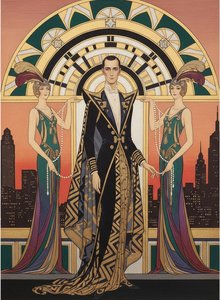
Erté: The Art Deco Visionary Who Defined Modern Glamour
Explore the glamorous world of Erté, the 'Father of Art Deco'. Discover his iconic fashion illustrations, stunning sculptures & enduring legacy. Expert insights for art collectors.

The Glamour of Erté: Discovering the Art Deco Elegance and Geometric Mastery of Romain de Tirtoff
Step into a realm of perpetual elegance. Discover the visionary world of Erté, the high priest of Art Deco, and explore how his mastery of line and symmetry defined an era of unparalleled glamour and fashion sophistication through expert art history insights.

Giclée Prints: Archival Quality & Aesthetic Nuances for the Discerning Collector
Explore the world of giclée prints with OriginalUniqueArt. Learn about archival quality, aesthetic nuances & investment potential. Expert guidance for discerning art collectors seeking museum-quality reproductions and lasting value.

The Theatrical Elegance of Art Deco: The Line Work and Fashion Genius of Erté
Discover the unparalleled elegance of Art Deco through the lens of Erté. Explore a masterclass in linear precision, theatrical costume design, and high-fashion illustration that continues to define modern luxury and sophisticated interior aesthetics.
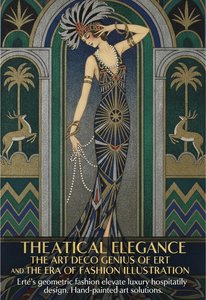
Theatrical Elegance: The Art Deco Genius of Erté and the Era of Fashion Illustration
Explore the theatrical elegance of Erté and the Art Deco era. Discover how his mastery of geometric line and fashion illustration can elevate luxury hospitality design through premium, hand-painted reproductions and bespoke architectural art solutions.