Art Deco
Little Slave (Erté)
Erté (1892–1990) sukūrė Little Slave. Šis kūrinys priklauso Art Deco kieruliui. Pagaminta naudojant Tempera. Eksponatas saugomas Labirinto della Masone Fontanellato, Italija. Matmenys – 65 × 53 cm.
- Tempera
- 65 × 53 cm
- Labirinto della Masone, Fontanellato

 Peržiūrėti

 Rankinio darbo aliejinės imitacijos paveikslas
 Pasidalinti
 Dalintis
 Informacinė lLapelė


 Atsisiųsti
 Panašūs eksponatai
 Rentgeno spindulių nuotrauka
 Automatinė diorama
 Klausimai ir atsakymai

 Statistika
Little Slave, trumpai
- Pavadinimas
- Little Slave
- Autorius
- Erté (1892–1990)
- Autorius gimęs
- Sankt Peterburgas, Rusija
- Technika
- Tempera
- Dalių matmenys
- 65 × 53 cm
- Kur galima pamatyti
- Labirinto della Masone, Fontanellato, Italija
- Judėjimas
- Art Deco
- Laikotarpis
- Modern
- Tema
- woman, fashion, performance, elegant, stylized, geometric
Ką vaizduoja Little Slave?
The Essence of Art Deco Elegance
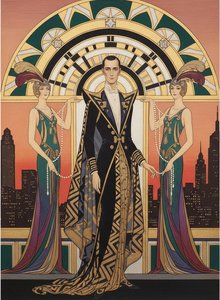
In the pantheon of twentieth-century visual culture, few names evoke the shimmering allure of the Jazz Age quite like Erté. His masterpiece, Little Slave, serves as a breathtaking window into an era defined by unparalleled glamour and sophisticated design. The artwork presents a stylized, ethereal depiction of a woman caught in a moment of theatrical grace, embodying the very soul of the Art Deco movement. Through elongated forms and meticulous ornamentation, Erté invites the viewer into a world where fashion, movement, and geometry converge to create something truly transcendent. This piece is not merely an illustration; it is a rhythmic dance of lines that captures the pulse of a modernizing world.
The composition is masterfully centered around a singular female figure who commands the frame with an effortless, poised energy. Positioned slightly off-center to suggest a dynamic, mid-motion state, she holds a broom that cuts a diagonal path across the canvas, injecting a sense of kinetic vitality into the stillness. The background, rendered in a deep, solid darkness, acts as a velvet stage, pushing the subject forward and ensuring that every intricate detail of her attire is illuminated. This deliberate use of negative space creates a focused intimacy, making the viewer feel as though they are witnessing a private, fleeting moment of performance.
A Symphony of Line and Texture
Technically, Little Slave is a triumph of tempera on canvas, showcasing Erté’s legendary precision. The artist utilizes strong, clean lines to define the silhouette of the figure, contrasting the fluid, organic curves of her pose with the more structured, geometric motifs found within her costume. There is a palpable sense of texture achieved through delicate brushwork; one can almost feel the weight of the patterned fabric and the soft, feathery touch of the broom. The color palette is a masterclass in restrained luxury, relying on a sophisticated harmony of creams, whites, browns, and subtle glints of gold to evoke an atmosphere of timeless opulence.
The lighting within the piece is soft and diffused, casting a gentle glow that smooths the transitions between form and shadow. This lack of harsh contrast contributes to the artwork's polished, almost dreamlike quality. By flattening the perspective—a hallmark of the Art Deco aesthetic—Erté emphasizes the decorative nature of the work, transforming the canvas into a luxurious tapestry of design. For the discerning collector or interior designer, this piece offers a sophisticated focal point that brings a sense of historical depth and rhythmic elegance to any curated space.
Symbolism and Emotional Resonance
Beyond its aesthetic brilliance, Little Slave carries a profound emotional weight. The title introduces a compelling layer of complexity, inviting us to contemplate the juxtaposition between the subject's refined, aristocratic appearance and the symbolic implications of her role. The broom, an instrument of labor and service, stands in stark contrast to the lavishness of her costume, perhaps hinting at a narrative of hidden strength or the theatricality of social roles. This tension between elegance and toil creates a hauntingly beautiful melancholy that lingers in the mind long after the first viewing.
For those seeking to infuse their surroundings with inspiration, this reproduction offers more than just decoration; it offers an encounter with history. It is a piece that speaks to the enduring power of beauty and the intricate dance between grace and reality. Whether placed in a contemporary gallery setting or a classic study, Little Slave remains a captivating testament to Erté’s vision—a vision that continues to define the very meaning of modern luxury.
Kuriame muziejuje eksponuojama karya Little Slave?
Labirinto della Masone
Fontanellato, Italija
A Verdant Odyssey: Labirinto della Masone siela Fontanellato ramyjos, kurioje, kur Po upė sraunuoja tyliai, o istorinės Parma dūkijos atmeisms, slypi šventovė, kurios neįmanoma apibūdinti paprastai. Labirinto della Masone yra ne tik tikslas keliautojui; tai gili pojūčių patirtis, gyvas tapetų audinys, supintas iš literatūros, gamtos ir grynosios dailės siūlų. Sugalvotas vizionieriško mokslo žmogaus Franco Maria Ricci, šis išskirtinis kompleksas yra fizinis svajonės, dalintos su jo artimu draugu, Argentinos meistru Jorge Luis Borges, ištrypimas.


Little Slave dididraudžios kokybės vaizdai

Apsaugotas autoriškomis teisėmis: šie failai skirti asmeniniam peržiūrėjimui, o ne perraštiniam naudojimui.
Erté, Little Slave, Labirinto della Masone.
Atsakimai į klausimus apie Little Slave
Kuriam muziejui priklauso originalus „Little Slave“?
Kūrinys „Little Slave“ – Erté rodomas Labirinto della Masone, Fontanellato, Italija. Muziejaus informacija nuoroda į originalą, o ne į reprodukciją.
Kokia technika buvo panaudota kūriniam darbui „Little Slave“ – Erté?
„Little Slave“ – Erté technika – Tempera. Kopijos siekia atkartoti šios technikos vaizdą.
Kokie yra originalaus „Little Slave“ – Erté matmenys?
Įrašyti kūrinio „Little Slave“ – Erté matmenys yra 65 x 53 cm. Kopijas galima užsisakyti kitais dydžiais, išlaikant tą pačius proporcijas.
Kas yra „Little Slave“?
„Little Slave“ – Erté temos apima woman, fashion, performance, elegant, stylized, geometric, dark. Kartu jie apibendrina šio kūrinio tematiką.
Ar „Little Slave“ – Erté priklauso viešosios teisės domenui?
„Little Slave“ – Erté yra vis dar saugoma autorineje teisėje. Šis statusas nustato, kaip galima reprodukcijaus šio kūrinio vaizdą.
Kas yra „Little Slave“ kūrybos autorius?
Kūrinį „Little Slave“ sukūrė Erté. Darbas katalogizuojamas Erté vardu.
Kokiam meno stiliui priklauso „Little Slave“ – Erté?
„Little Slave“ – Erté priklauso Art Deco stiliui. Ši dailės kryptis suteikia kūriniui stilistinį kontekstą.
Kokio Erté kūrybos laikotarpio priklauso „Little Slave“?
Erté kūrybos enceklopedijoje kūrinys „Little Slave“ priskiriamas Mature Period laikotarpiui. Šis etapas leidžia palyginti jį su kitais šio autoriaus kūriniais.
Ar Erté kūrinys „Little Slave“ yra viešosios nuoslegos ir kodėl?
„Little Slave“, kurį sukūrė Erté, yra vis dar saugoma autorineje teisėje. Autorinės teisės apsaugos terminai skaičiuojami nuo autoriaus mirties, o Erté mirė 1990 m.
Apie menininką Erté

1892–1990, Rusija
Erté
Early Life and Artistic Awakening Romain de Tirtoff, universally recognized as Erté, was born into a world of aristocratic privilege and unwavering tradition in Saint Petersburg, Russia, on November 23, 1892. His lineage traced back centuries to Tatar khans—a heritage that instilled within him a profound appreciation for history and artistic grandeur. His father, Admiral Nikolai Tirtoff, served with distinction in the Imperial Russian Navy, shaping young Romain’s understanding of discipline and ambition. Yet, amidst these expectations of naval service, a fervent passion ignited – a love affair with art that would irrevocably define his life's trajectory.
Taip pat Erté darbai
 Evening Night
 At the Theatre, Trapeze
 Fantasia
 At the Theatre, Golden Calf
Esdai apie Little Slave
 Erté: The Art Deco Visionary Who Defined Modern GlamourExplore the glamorous world of Erté, the 'Father of Art Deco'. Discover his iconic fashion illustrations, stunning sculptures & enduring le…
 The Triadic Resonance of Artistic Choice: Exploring Emotional Response to Multiple Interpretations of a Singular ConceptExplore the emotional power of art & discover how skilled artists create lasting masterpieces. Custom paintings, expert consultations, & mu…
 The Theatrical Elegance of Art Deco: The Line Work and Fashion Genius of ErtéDiscover the unparalleled elegance of Art Deco through the lens of Erté. Explore a masterclass in linear precision, theatrical costume desi…