Peržiūrėti realybėje
 Pasidalinti
 Dalintis
 Išsamiau

 Atsisiųsti
 Panašūs eksponatai
 Rentgeno nuotrauka
 Automatinė diorama
untitled (5687)

 Skaityti daugiau
Giclée / Meno spausdinimas
Muziejų lygio „giclée“ arba drobos spausdinimas: greita gamyba ir lankstios apdailos parinktys. ( Pirkti rankomis tapytą paveikslą Pirkti vaizdą)




P118B $10

P118H $10

P118W $10

P438Z $10

P508JH $12

P508YH $12

P805H $10

P805Z $10

P919BZ $10

P919G $10

P919XJ $10

P959ZH $10

P968JZ $12

W106C $8

W218G $10

W218JH $8

W218Y $10

W307PJ $10

W316G $10

W316PJ $8

W316Y $10

W398PJ $8

W4111J $10

W500HY $15

W500JH $15

W692G $12

W849H $8

W940BG $15

W953PJ $8




Pasirinkite iš mūsų nustatytų dydžių, atitinkančių originalaus meno kūrinio proporcijas.

Galite nurodyti savo matmenis, kad vaizdas atitiktų konkretų rėmą ar erdvę. Jei pasirinktas dydis nesutaps su originalaus paveikslėlio proporcijomis, mes arba apkirpsime kūrinį, arba išplėsime vaizdą naudojant veideliu atspindėtą arba vientisą šoną. Skaitmeninis maketas bus išsiųstas jums patvirtinti prieš pradedant gamybą.
Atkreipkite dėmesį, kad ekrane matomas vaizdinys neatspindi tikrojo apkirpimo ar išplėtimo. Tik maketas tiksliai parodytų galutinę kompoziciją.
Nors galima rinktis ir individualius dydžius, rekomenduojame pasirinkti vieną iš išanksti nustatytų matmenų, kad būtų išlaikytos originalios proporcijos.
Pristatymas visame pasaulyje () per 2 weeks, o ne įprastas 4/5 savaičių laikotarpis. (6 rugsėjis)

Nemokamas greitasis pristatymas visame pasaulyje

Aukštos kokybės lininis drobė

Pilnas siuntimo draudimas

Muitinės mokesčių grąžinimo garantija

Tikro spalvų atitikimo garantija

60 dienų grąžinimo politika (tik esant gamyklinėms defektams)

100% pinigų grąžinimo garantija

Nuolaida už kelias reprodukcijas
 Stiklo variantas prieinamas tik pasirinkus dydį iki 110 cm

untitled (5687)
Giclée / Meno spausdinimas
Reprodukcijos matmenys
-


Galutinė kaina
$ 80
A Fragmented Portrait of Modern Anxiety
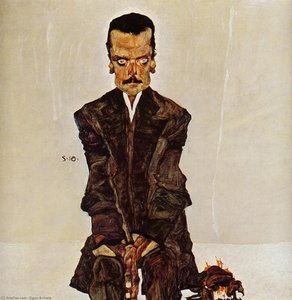
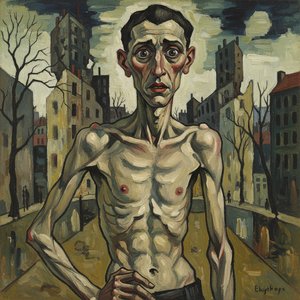
Egon Schiele’s untitled work from 1918 – designated as ‘5687’ within his catalogue – is not merely a depiction of a man, but a visceral embodiment of the anxieties and fragmentation that defined early 20th-century Vienna. Rendered in stark black and white, the piece presents a torso, partially obscured by a jacket seemingly shed rather than removed, surrounded by an unsettling collection of objects: bags, an umbrella, all contributing to a sense of displacement and psychological turmoil. The figure isn’t presented with dignity or composure; instead, he appears vulnerable, almost overwhelmed by his surroundings. This is characteristic of Schiele's oeuvre, which consistently eschewed traditional notions of beauty in favor of raw emotional honesty.
The Expressionist Language of the Body
Schiele was a master of line, and here it’s employed with an almost violent energy. The lines aren’t used to define form in a classical sense; rather, they writhe and twist, mirroring the inner turmoil of his subject. This is quintessential Expressionism – a movement that sought not to depict the external world objectively, but to convey subjective emotion and experience. The monochrome palette intensifies this effect, stripping away any distraction from the stark contrast between light and shadow, emphasizing the figure’s gauntness and the unsettling arrangement of objects around him. The technique itself—likely executed with charcoal or a similar medium—allows for a textural quality that adds to the sense of unease; it feels almost as if the image is dissolving before our eyes.
Vienna's Shadow: Context and Symbolism
To understand this work, one must consider the context in which it was created. Vienna at the turn of the century was a city grappling with profound social and political change. The Austro-Hungarian Empire was crumbling, traditional values were being questioned, and Freudian psychology was beginning to unlock the hidden depths of the human psyche. Schiele’s art reflects this era of uncertainty and introspection. The bags scattered around the figure could symbolize burdens – emotional baggage, societal expectations, or perhaps even the weight of mortality. The umbrella, a symbol of protection, is positioned almost as an afterthought, offering little solace in the face of overwhelming chaos. It's worth noting that 1918 was also the year of Schiele’s own untimely death during the Spanish Flu pandemic, adding another layer of poignancy to this image of vulnerability and precarity.
A Legacy of Emotional Intensity
Schiele’s impact on modern art is undeniable. He pushed boundaries, challenged conventions, and dared to explore the darker aspects of human experience with unflinching honesty. His work continues to resonate today because it speaks to universal themes of alienation, anxiety, and the search for meaning in a chaotic world. ‘Untitled (5687)’ isn’t simply a historical artifact; it's a powerful emotional statement that invites viewers to confront their own vulnerabilities and contemplate the complexities of the human condition. A reproduction of this piece would serve not just as a decorative element, but as a compelling focal point—a conversation starter and a testament to the enduring power of Expressionist art.
Autoriaus biografija
Egon Schiele
Austrijos pozicija dviejų pasaulinio karo horizonte buvo labai abejojanti: vienu metu ji buvo šiek tiek iš Šiaurės į rytus, lengvai įsitikinusi veiksmų vyrai. Mažėjęs šalis po 1918 m., beveik visiškai neišplitusi tarptautiniu pasauliu buvo lengvai įvykdinta Hitlerio Reichui 1938 m.; meno srityje tai reiškė kad modernizmo istorija buvo išvykstanti nuo Šiaurės iki pietų, su pagrindiniu dėmesiu į formą. Vokelių šiek tiek pripažino ekspresionizmą kaip svarbų meno srovę; jis buvo vienas iš žymiausius austrių artistas XX amžiaus pradžioje – kartu su Gustavu Klimtu ir Oskar Kokoschka išvykę į Vieną buvo laikomas vienu iš Žyduvo šimtmečio svarbiausių vizualinių menininkų.
Gyvenimas
Egonas Šylė gimė 1890 m. vasario 3 d. Tulne, Austrijoje. Jo tėvas Adolfas Šylė buvo Tulno geležinkelio stoties direktorius ir gimė 1851 m. Vienoje Adolfo Šyly tevai turėjo tris jaunesnes seseris: Elvirą, Melaniją ir Gertrūdą. Elvira mirė vaikyste dėl gimtinių sifiliso. Jo tėvas buvo užsikrėtęs sifiliu įsimėlynėje savo jaunystės metais po vienos jo naujosios žmonos išėjimo iš kambario.
Meno vystymasis
Šylė mokytojo Christian Griepenkerl įtaką išgyveno Vienoje 1907 m. ir G. Klimtas tapo jo svarbiu rėmėju. Šylė paliko akademiją 1906 m., nes jos mokymo metodai buvo labai konservatyvus, ir įkūrė Naują austrių dailės grupę 1909 m. Grupėje vyravo ekspresionistinė estetika, kuri iššūkiant šiuolaikinėms kultūros normas.
Žymūs kūriniai
Šylė buvo vienas iš žymiausius austrių artistas XX amžiaus pradžioje – kartu su Gustavu Klimtu ir Oskar Kokoschka išvykę į Vieną buvo laikomas vienu iš Žyduvo šimtmečio svarbiausių vizualinių menininkų. Šylė buvo ekspresionizmo meno srovės atstovas.
Žymūs veiksniai
Šylė buvo žinomas dėl savo iššūkiantį įžiūrą į pasaulio problemas ir šiuolaikinę estetika, kuri iššūkiant šiuolaikinėms kultūros normas. Šylė buvo ekspresionizmo meno srovės atstovas.

Egon Šylė
1890 - 1918 , Austrija
Trumpa informacija
- Artistic Movement Or Style: Ekspresionizmas
- Artists Who Influenced This Artist: ['Gustavas Klimtas']
- Date Of Birth: 1890 m.
- Date Of Death: 1918 m.
- Full Name: Egon Schiele
- Nationality: Austras
- Notable Artworks:
- Savęs portretas su fizižalis
- Porą įemčianti
- Žemės apėjimų kraštovaizdis
- Place Of Birth: Tulnas, Austrija
Susiję straipsniai
Egon Schiele: 25 Šedevrai, Atspindintys Menininko Sielą | OriginalUniqueArt.lt
Atraskite 25 įspūdingiausius Egon Schiele šedevrus! Gilinkitės į ekspresionizmo pasaulį, portretų istorijas ir unikalią menininko spalvų paletę. Aukštos kokybės reprodukcijos interjerui – OriginalUniqueArt.lt

White on Canvas: 10 Masterpieces & Timeless Elegance for Your Home Decor
Explore 10 iconic white paintings by Monet, Whistler & Rothko! Discover the stories behind these serene masterpieces and their impact on art history. Find museum-quality reproductions for your home decor at .
Egon Schiele: Expressionism, Anxiety & the Modern Condition – A Comprehensive Exploration
Explore the emotionally charged world of Egon Schiele (1890-1918). Discover his Expressionist masterpieces, psychological themes, and lasting impact on modern art. A comprehensive guide for collectors & enthusiasts.

Dark Masterpieces: 10 Iconic Paintings Dominated by Black Tones |
Explore 10 iconic paintings dominated by black tones, from Rembrandt’s chiaroscuro to Goya's dark expressions. Discover the stories behind these masterpieces & find museum-quality art reproductions for your home at .

Monochrome Visions: Exploring the Aesthetic & Historical Significance of Black & White Photography
Explore the rich history & artistic power of black and white photography. From early techniques to iconic masters like Ansel Adams, discover why monochrome continues to captivate art lovers today. Expert insights for collectors.