Peržiūrėti realaus dydžio版
 Pasidalinti
 Dalintis
 Išsamiau
 Vadovas

 Atsisiųsti
 Panašūs eksponatai
 Rentgeno spindulių nuotrauka
 Automatinė diorama
 Statistika
self-portrait


 Skaityti daugiau
Rankų darbo aliejinės reprodukcijos
Rankiniu būdu tapytas aliejus ant droblio jūsų pageidaujamame dydį ir rėmuose – tai mūsų menininkų pagal užsakymą sukurtas darbas. ( Perjungti į spausdinamus版作品 Perejti prie skaitmeninių vaizdų)




P118B €10

P118H €10

P118W €10

P438Z €10

P508JH €12

P508YH €12

P805H €10

P805Z €10

P919BZ €10

P919G €10

P919XJ €10

P959ZH €10

P968JZ €12

W106C €8

W218G €10

W218JH €8

W218Y €10

W307PJ €10

W316G €10

W316PJ €8

W316Y €10

W398PJ €8

W4111J €10

W500HY €15

W500JH €15

W692G €12

W849H €8

W940BG €15

W953PJ €8




Pasirinkite iš mūsų nustatytų dydžių, atitinkančių originalaus meno kūrinio proporcijas.

Įveskite jums reikiamą plotį ir aukštį, kad paveikslas atitiktų jūsų rėmą ar sieną. Kadangi šis darbas yra rankinio darbo, siekiant išgauti kitokios formos dydį, paveikslas gali būti šiek tiek didesnis (nuo kraštų bus palikta daugiau erdvės) arba mažesnis – pasirinkite jums patogiausią variantą. Prieš pradedant tapyti, atsiųsime jums skaitmeninį maketą patvirtinimui. Šioje puslapio nuotraukoje matomas vaizdas nėra galutinis rezultatas – jį parodys tik sukurtas maketas.
Gavus užsakymą, OriginalUniqueArt.com komanda susisieks su klientu el. paštu dėl instrukcijų ir pateiks maketo pavyzdį
Pristatymas visame pasaulyje () per 3–4 savaites, o ne įprastai – per 5 savaites. (28 spalis). Kokybė lieka nepakeičiama.

Nemokamas greitasis pristatymas visame pasaulyje

Aukštos kokybės lininis drobė

Pilnas siuntimo draudimas

Muitinės mokesčių grąžinimo garantija

Tikro spalvų atitikimo garantija

100 dienų grąžinimo politika (tik esant įtaigoms)

100% pinigų grąžinimo garantija

Nuolaida dideliems užsakymams
 Stiklo variantas prieinamas tik pasirinkus dydį iki 110 cm

self-portrait
Reprodukcijos technika
Reprodukcijos matmenys
-


Bendroji kaina
€ 264
A Raw Examination of the Soul: Unpacking Egon Schiele's Self-Portrait
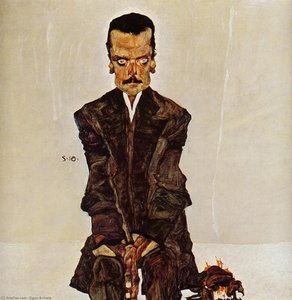
Egon Schiele’s 1913 self-portrait is not a comfortable image. It’s a visceral, almost brutal depiction of an interior world grappling with uncertainty and perhaps even despair. Rendered in stark black and white charcoal or graphite on paper – the exact medium remains debated by scholars – this drawing transcends mere likeness; it becomes a profound exploration of psychological states. The composition is relentlessly focused: the subject's face dominates the frame, cropped tightly to amplify the intensity of his gaze. There’s no softening, no attempt at romanticization—only an unflinching confrontation with vulnerability. The slight turn of the head, a subtle tilt that suggests both defiance and apprehension, immediately draws the viewer into this intensely personal space.
Schiele was a pivotal figure in the Expressionist movement, a period characterized by its rejection of objective representation in favor of subjective experience. This self-portrait is a quintessential example of his style – a deliberate distortion of reality to convey inner turmoil. The lines aren’t clean or precise; they writhe and twist with agitated energy, mirroring the emotional state of the artist himself. Notice how the hatching and cross-hatching create a palpable sense of texture, mimicking the roughness of skin and the tangled messiness of hair – elements that contribute to the overall feeling of unease.
The Language of Line: Technique and Expression
What truly sets this self-portrait apart is Schiele’s masterful manipulation of line. It's not simply a tool for outlining form; it *is* the form, the emotion. The lines are frenetic, almost frantic, suggesting a mind racing with thoughts and anxieties. The varying density of the lines creates a dynamic tonal range – areas of deep shadow punctuated by sharp, angular edges. This technique isn’t accidental; it's a deliberate strategy to heighten the sense of drama and psychological intensity. The artist employed rapid sketching techniques, capturing a fleeting moment of raw emotion with remarkable speed and urgency.
The limited color palette – solely black and white – further amplifies this effect. It’s a classic Expressionist choice, stripping away any distractions and forcing the viewer to confront the stark reality of the subject's emotional state. The absence of color allows the lines themselves to carry all the weight of meaning, becoming symbols of anxiety, vulnerability, and perhaps even a defiant spirit.
Symbolism and Context: Mortality and the Human Condition
The wide, slightly distorted eyes are undeniably unsettling – they seem to pierce through the viewer, demanding attention. They’re not simply windows to the soul; they're portals into a world of profound introspection. The small bird depicted in the upper left corner adds another layer of complexity. Birds often symbolize freedom and hope, but within Schiele’s work, it can also represent fragility and mortality – themes that were deeply ingrained in his artistic vision.
Born in Vienna in 1890, Schiele's life was tragically cut short during World War I at the age of 28. His father’s death from syphilis when he was just fourteen profoundly shaped his worldview, instilling a preoccupation with illness, mortality, and the darker aspects of human existence. This self-portrait can be interpreted as a reflection on these themes – a raw and honest exploration of the anxieties that plagued him throughout his life. It's a testament to Schiele’s ability to transform personal suffering into powerful and enduring art.
Bringing Schiele Home: Reproductions for Your Space
OriginalUniqueArt offers meticulously crafted, hand-painted reproductions of Egon Schiele’s ‘Self-Portrait,’ allowing you to bring this iconic work into your home or office. Our artists replicate the artist's distinctive style and technique with exceptional precision, capturing the emotional intensity and textural nuances of the original drawing. Choose from a range of sizes and framing options to perfectly complement your décor. Explore our collection today and experience the power of Schiele’s art firsthand.
Klausimai ir atsakymai
Kokia buvo „self-portrait“ kūrimo metai ir kokiam stiliui jis priklauso?
„self-portrait“ – Egon Šylė sukurta 1913 m. ir priklauso Expressionistic Distortion stiliui.
Ar „self-portrait“ – Egon Šylė vaizdą galima laisvai reprodukcijaoti?
Kalbant apie autorišką teisę, „self-portrait“ yra yra viešosios erdvės dalis – jo autorinė teisė pasibaigusi.
Ar yra panašių darbų kaip „self-portrait“?
Darbai, panašūs į „self-portrait“, pateikiami kūrinio Panašūs kūriniai puslapyje.
Autoriaus biografija
Egon Schiele
Austrijos pozicija dviejų pasaulinio karo horizonte buvo labai abejojanti: vienu metu ji buvo šiek tiek iš Šiaurės į rytus, lengvai įsitikinusi veiksmų vyrai. Mažėjęs šalis po 1918 m., beveik visiškai neišplitusi tarptautiniu pasauliu buvo lengvai įvykdinta Hitlerio Reichui 1938 m.; meno srityje tai reiškė kad modernizmo istorija buvo išvykstanti nuo Šiaurės iki pietų, su pagrindiniu dėmesiu į formą. Vokelių šiek tiek pripažino ekspresionizmą kaip svarbų meno srovę; jis buvo vienas iš žymiausius austrių artistas XX amžiaus pradžioje – kartu su Gustavu Klimtu ir Oskar Kokoschka išvykę į Vieną buvo laikomas vienu iš Žyduvo šimtmečio svarbiausių vizualinių menininkų.
Gyvenimas
Egonas Šylė gimė 1890 m. vasario 3 d. Tulne, Austrijoje. Jo tėvas Adolfas Šylė buvo Tulno geležinkelio stoties direktorius ir gimė 1851 m. Vienoje Adolfo Šyly tevai turėjo tris jaunesnes seseris: Elvirą, Melaniją ir Gertrūdą. Elvira mirė vaikyste dėl gimtinių sifiliso. Jo tėvas buvo užsikrėtęs sifiliu įsimėlynėje savo jaunystės metais po vienos jo naujosios žmonos išėjimo iš kambario.
Meno vystymasis
Šylė mokytojo Christian Griepenkerl įtaką išgyveno Vienoje 1907 m. ir G. Klimtas tapo jo svarbiu rėmėju. Šylė paliko akademiją 1906 m., nes jos mokymo metodai buvo labai konservatyvus, ir įkūrė Naują austrių dailės grupę 1909 m. Grupėje vyravo ekspresionistinė estetika, kuri iššūkiant šiuolaikinėms kultūros normas.
Žymūs kūriniai
Šylė buvo vienas iš žymiausius austrių artistas XX amžiaus pradžioje – kartu su Gustavu Klimtu ir Oskar Kokoschka išvykę į Vieną buvo laikomas vienu iš Žyduvo šimtmečio svarbiausių vizualinių menininkų. Šylė buvo ekspresionizmo meno srovės atstovas.
Žymūs veiksniai
Šylė buvo žinomas dėl savo iššūkiantį įžiūrą į pasaulio problemas ir šiuolaikinę estetika, kuri iššūkiant šiuolaikinėms kultūros normas. Šylė buvo ekspresionizmo meno srovės atstovas.

Egon Šylė
1890 - 1918 , Austrija
Trumpa informacija
- Artistic Movement Or Style: Ekspresionizmas
- Artists Who Influenced This Artist: ['Gustavas Klimtas']
- Date Of Birth: 1890 m.
- Date Of Death: 1918 m.
- Full Name: Egon Schiele
- Nationality: Austras
- Notable Artworks:
- Savęs portretas su fizižalis
- Porą įemčianti
- Žemės apėjimų kraštovaizdis
- Place Of Birth: Tulnas, Austrija
Susiję straipsniai
Egon Schiele: Expressionism, Anxiety & the Modern Condition – A Comprehensive Exploration
Explore the emotionally charged world of Egon Schiele (1890-1918). Discover his Expressionist masterpieces, psychological themes, and lasting impact on modern art. A comprehensive guide for collectors & enthusiasts.

Dark Masterpieces: 10 Iconic Paintings Dominated by Black Tones |
Explore 10 iconic paintings dominated by black tones, from Rembrandt’s chiaroscuro to Goya's dark expressions. Discover the stories behind these masterpieces & find museum-quality art reproductions for your home at .

Mastering Charcoal: The History, Technique, and Chiaroscuro Power of Black and White Art
Explore the profound history and technical mastery of charcoal art. From prehistoric origins to Renaissance chiaroscuro, learn the essential additive and subtractive techniques used by masters to capture light, shadow, and raw emotional depth in monochrome fine art.
Egon Schiele: 25 Šedevrai, Atspindintys Menininko Sielą | OriginalUniqueArt.lt
Atraskite 25 įspūdingiausius Egon Schiele šedevrus! Gilinkitės į ekspresionizmo pasaulį, portretų istorijas ir unikalią menininko spalvų paletę. Aukštos kokybės reprodukcijos interjerui – OriginalUniqueArt.lt

Mastering Charcoal: The Definitive Expert Guide to Capturing Profound Depth, Texture, and Shadow
Elevate your artistry with this definitive expert guide to mastering charcoal. Designed for art students, learn professional techniques for capturing profound depth, intricate textures, and dramatic shadows through advanced blending and chiaroscuro methods.