

 Peržiūrėti realaus dydžio版
 Siųsti
 Dalintis
 Išsamiau
 Vadovas

 Atsisiųsti
 Panašūs eksponatai
 Rentgeno spindulių nuotrauka
 Diaporama
 Statistika
Self-Portrait
 Acrylic On Canvas
- WallArt
- Atonal Expressionism
 1922
1922- 19th Century
 9.0 x 10.0 cm
 Arnold Schönberg Center
 Rodyti daugiau
Giclée / Meno spausdinimas
Muziejų lygio „giclée“ arba drobos spausdinimas: greita gamyba ir lankstios apdailos parinktys. ( Pirkti rankomis tapytą reprodukciją Perejti prie skaitmeninių vaizdų)




P118B €10

P118H €10

P118W €10

P438Z €10

P508JH €12

P508YH €12

P805H €10

P805Z €10

P919BZ €10

P919G €10

P919XJ €10

P959ZH €10

P968JZ €12

W106C €8

W218G €10

W218JH €8

W218Y €10

W307PJ €10

W316G €10

W316PJ €8

W316Y €10

W398PJ €8

W4111J €10

W500HY €15

W500JH €15

W692G €12

W849H €8

W940BG €15

W953PJ €8




Pasirinkite iš mūsų nustatytų dydžių, atitinkančių originalaus meno kūrinio proporcijas.

Įveskite jums reikiamą plotį ir aukštį, kad atvaizdas derėtų prie jūsų rėmo ar sienos. Spausdiną galima tik sumažinti, bet nepadidinti virš originalaus paveikslėlio dydžio, todėl keičiant proporcijas, dalis vaizdo prarandama. Prieš spausdinimą atsiųsime jums skaitmeninį maketą patvirtinimui. Šioje puslapio nuotraukoje matomas pjūvis nėra tikslus – jį rodo tik maketas.
Pristatymas visame pasaulyje () per 2 weeks, o ne įprastas 4/5 savaičių laikotarpis. (21 spalis)

Nemokamas greitasis pristatymas visame pasaulyje

Aukštos kokybės lininis drobė

Pilnas siuntimo draudimas

Muitinės mokesčių grąžinimo garantija

Tikro spalvų atitikimo garantija

100 dienų grąžinimo politika (tik esant įtaigoms)

100% pinigų grąžinimo garantija

Nuolaida dideliems užsakymams
 Stiklo variantas prieinamas tik pasirinkus dydį iki 110 cm

Self-Portrait
Giclée / Meno spausdinimas
Reprodukcijos dydis
-


Visų pasirinktų variantų kaina
€ 70
A Study in Yellow and Green: Arnold Schoenberg's Self-Portrait (1922)
This intimate drawing, measuring just 9 x 10 cm, offers an arresting glimpse into the mind of one of the 20th century’s most revolutionary composers – Arnold Schoenberg. Executed in 1922, a pivotal year in his artistic development, the work transcends a simple portrait; it's a concentrated distillation of intellectual intensity and perhaps, a subtle self-examination rendered with remarkable precision. The stark palette of yellow and green immediately draws the viewer in, colors that would become increasingly significant within Schoenberg’s musical explorations of atonality and dissonance.
- Subject & Composition: The central focus is undeniably the artist himself – a man with a neatly trimmed mustache, his gaze direct and unwavering. The simplified rendering emphasizes key features: the piercing green eyes, a hallmark of Schoenberg’s artistic vision, and the strong jawline hinting at an unyielding intellect.
- Technique & Materials: Crafted in black and yellow tones, the drawing utilizes a technique that suggests both meticulous observation and a deliberate departure from representational realism. The use of shading creates depth and volume, while the limited color palette contributes to a sense of austerity and focused contemplation.
The Second Viennese School & Atonality
To fully appreciate this self-portrait, it’s crucial to understand Schoenberg's place within the artistic landscape of early 20th-century Vienna. He was at the heart of the “Second Viennese School,” a group of composers – including Alban Berg and Anton Webern – who radically challenged traditional harmonic structures. Schoenberg pioneered atonality, rejecting the established rules of key signatures and chord progressions, believing that music should be free from conventional constraints. This drawing can be seen as a visual manifestation of this intellectual shift; the deliberate use of color and simplified form reflects a desire to break away from established artistic conventions.
The year 1922 was particularly significant for Schoenberg, marking a period of intense experimentation with serialism – a compositional technique based on mathematical series that further explored the possibilities of atonality. This self-portrait isn’t merely a likeness; it's a visual echo of his groundbreaking musical ideas.
Symbolic Resonance & Emotional Impact
While seemingly straightforward, the drawing possesses a subtle emotional depth. The intense gaze suggests introspection and perhaps a sense of isolation – feelings that likely accompanied Schoenberg as he navigated the turbulent waters of artistic innovation. The yellow and green hues, often associated with envy and growth respectively, could symbolize his ambition and relentless pursuit of new musical frontiers. The starkness of the image evokes a feeling of quiet contemplation, inviting the viewer to engage in their own thoughts about creativity, genius, and the challenges of pushing boundaries.
A Collector’s Piece – Reproduction & Legacy
This hand-painted reproduction captures not only the visual details of Schoenberg's self-portrait but also the spirit of a revolutionary artist. Each reproduction is meticulously crafted by skilled artisans, ensuring an authentic representation of this significant work. Perfect for interior design projects seeking a touch of intellectual sophistication or as a unique addition to any art collection, this piece offers a tangible connection to one of music’s most influential figures. Its small size makes it ideal for display in intimate settings, while its powerful imagery ensures that it will remain a captivating subject of contemplation for years to come.
问答 (or more naturally for a website heading): Klausimai ir atsakymai
Iš kokio laikotarpio yra „Self-Portrait“?
Istorinis laikotarpis kūriniam „Self-Portrait“, autorius – Arnoldas Šēnbergas yra 19th Century. Ši klasifikacija priskiria šį kūrinį konkrečiam meno istorijos etapui.
Ar „Self-Portrait“ saugoma kūrijasio šalyje?
Taip – kūrinys saugomas originalaus autoriaus šality. Arnoldas Šēnbergas gimtoji šalis yra Austrija, o kūrinio „Self-Portrait“ originalas saugomas muziejuje, esančiame Austrija.
Kiek šviesos, kaip atrodo, atspindi „Self-Portrait“ spalvos?
Kūrinys „Self-Portrait“, autorius – Arnoldas Šēnbergas pasižymi Luminous šviesos intensyvumu. Šviesos intensyvumas apibūdina, kiek šviesos, kaip atrodo, atspindi spalvos.
Autoriaus biografija
ankstyvasis gyvenimas ir muzikiniai pradžiai
arnoldas schoenbergas, austro-amerikos kompozitorius, gimė 1874 m. gruodžio 13 d. Vienoje, Austrijoje. Jo ankstyvasis gyvenimas prasidėjo skaudžiai paprastai – jo tėvas buvo suvienukų parduotuvės savininkas. Nepaisant to, prigimta aistra muzikai paskatino schoenbergą daugosi로 savikurti savo žinias šioje srityje.muzikinė evoliucija ir iškilę darbai
schoenbergo ankstyvieji kūriniai, tokie kaip verklärte nacht (1899), rodė brahmsizmo ir wagneriško stiliaus sintezę. Tobulėdamas, jis tapo antrosios vienosios mokyklos pagrindine figūra kartu su antonu webernu ir albanu bergą. Jo kompozicijos, įskaitant strykų kvartetą nr. 2 (1907–1908), erwartung (1909) ir pierrot lunaire (1912), atskleidė jo inovatyvų požiūrį į atonalumą.mokymas, emigracija ir vėlesnio gyvenimo metai
1933 m., nazių prie šios valdžios pakilimo dėl, schoenbergas nusitraukė iš Prusijos meno akademijos, nes jo muzika buvo pavadata „degeneratyva“. Vėliau jis mokė JAV, įskaitant Kalifornijos universiteto Los Angeluose (1936–1944), kurios patalpos įvardijamos jo garbei. [https://OriginalUniqueArt.com/@/arnold-serdenberg](atraskite daugiau apie schoenbergo gyvenimą ir kūrybą OriginalUniqueArt).- schoenbergas tyrinėjo filmų muziką ir rašė daugiau tonalinės muzikos, baigdamas savo kamarinę simfoniją nr. 2 1939 m.
- jis farsavo fašistus tiranus Byrono stiliaus odele napoleonui (1942).
- poatremsio Viena jam suteikė garbės piliebystę, tačiau jis buvo ligas, kaip tai atspindima jo strykų trio (194ng).
palikimas ir įtaka
pasaukui sužinojus apie holokaustą, schoenbergas įamžino jo aukas kūrybinėje a survivor from warsaw (1947). Izraelio konservatorija ir muzikos akademija 1951 m. paskyrė jį garbės prezidentu. [https://OriginalUniqueArt.com/@@/a@d3bqc7-the-museum-destroyed-by-fire-(united-states)](sužinokite daugiau apie jo kūrybos poveikį OriginalUniqueArt). pagrindiniai akcentai:- schoenbergo inovatyvi muzika buvo viena įtakingiausių ir daugiausiai debatuojamų 20-osios amžiaus klasikinės muzikos kūrybos.
- bent trys kompozorių kartos išplėtė jos kiek formalius principus.
- jo estetiniai ir muzikos istoriniai požiūri įtakos muzikologams theodorui w. adornui ir carliui dahlhausui.

Arnoldas Šēnbergas
1874 - 1951 , Austrija
Trumpa informacija apie kūrėją
- Gimimo Data: 1874 m. rugsėjo 13 d.
- Gimimo Vieta: Viena, Austrija
- Meningus Įkvėlusios Šį Artistą Asmenybės:
- Johannes Brahms
- Richard Wagner
- MenなさInis Kryptis Ar Stilius: Dvylika tono technika; Ekspresionizmas
- Mirties Data: 1951 m.
- Tautybė: Austrijo-amerikietis
- Visas Vardas Ir Pavardė: Arnold Schoenberg
- Šį Artistą Įkvėlusios MenなさIniai Kryptys Arba Menininkai:
- Anton Webern
- Alban Berg
- Žinomos Kūriniai:
- Suite, op. 29
- Music Typewriter
- Staffliner
Susiję straipsniai

Dark Masterpieces: 10 Iconic Paintings Dominated by Black Tones |
Explore 10 iconic paintings dominated by black tones, from Rembrandt’s chiaroscuro to Goya's dark expressions. Discover the stories behind these masterpieces & find museum-quality art reproductions for your home at .
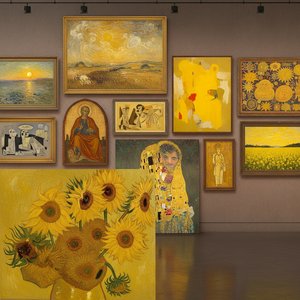
Golden Hues: 10 Masterpieces Dominated by Chrome Yellow | OriginalUniqueArt
Immerse yourself in golden light! Explore 10 famous paintings dominated by 'Chrome Yellow', from Van Gogh’s Sunflowers to Monet's Haystacks. Discover the stories behind these iconic Impressionist & Post-Impressionist masterpieces and find museum-quality art reproductions at OriginalUniqueArt.com.

Echoes of Time: Exploring the Enduring Appeal & Historical Context of Vintage Art Prints
Explore the captivating world of vintage art prints! Discover their history, collecting tips & enduring appeal. Expert insights on chromolithography and building a legacy collection with OriginalUniqueArt.

Giclée Prints: Archival Quality & Aesthetic Nuances for the Discerning Collector
Explore the world of giclée prints with OriginalUniqueArt. Learn about archival quality, aesthetic nuances & investment potential. Expert guidance for discerning art collectors seeking museum-quality reproductions and lasting value.

The Enduring Legacy of Fine Art Prints: Technique, History & Aesthetic Impact
Explore the rich history & techniques of fine art prints. Discover investment potential, assess authenticity, and learn how to preserve your collection with expert guidance. Trusted insights for discerning collectors.


