Early Renaissance
SAINT JULIEN (비토레 크리벨리)
비토레 크리벨리 (1440–1501) 작가의 SAINT JULIEN Early Renaissance 운동에 속합니다. Tempera On Panel(으)로 제작되었습니다. 아비뇽, 프랑스에 위치한 Musée du Petit Palais에 소장되어 있습니다.
- Tempera On Panel
- Musée du Petit Palais, 아비뇽

 미리보기

 수작업 유화 작품
 공유하기
 공유하기
 학습용 요약본


 다운로드
 유사 작품 더 보기
 X-레이
 슬라이드 쇼 보기
 질의응답

 통계 정보
SAINT JULIEN 요약
- 제목
- SAINT JULIEN
- 작가
- 비토레 크리벨리 (1440–1501)
- 작가 출생지
- 베네치아, 이탈리아
- 매체
- Tempera On Panel
- 전시 장소
- Musée du Petit Palais, 아비뇽, 프랑스
- 제작 시기
- Renaissance
- 주제
- saint, man, staff, grass, gold, red
SAINT JULIEN은(는) 무엇을 묘사하고 있나요?
Identification of the Portrait of Saint Julien
SAINT JULIEN is a portrait-like representation of an Italian saint, executed by the Early Renaissance painter Vittore Crivelli. The work focuses on the figure of the saint, presenting him in a manner that emphasizes his individual presence against a dark, minimalist background.
The subject is identified through specific iconographic attributes. He is depicted holding a staff and a bundle of grass, objects that characterize his traditional representation. These elements provide the primary visual cues for his identity within the devotional tradition.
Composition and Visual Elements
The vertical panel arrangement centers the figure of the saint against a dark, receding background. This placement creates a portrait-like focus, isolating the subject to emphasize his presence. A simple landscape provides the setting, featuring stylized foliage that suggests a natural environment without requiring deep perspectival complexity. The saint is identified by specific attributes: a staff held in one hand and a bundle of grass in the other.
The color palette relies on a series of warm tones. Gold, red, blue, and brown dominate the visual field, creating a devotional atmosphere. These colors define the figure's form and the folds of the drapery. The use of gold leaf adds a sense of opulence to the composition, contrasting with the darker, more muted tones of the background. Light appears diffused, as if emanating from a single, steady source like candlelight.
Technique and Material Composition
The work is executed in tempera on a wood panel. The artist employed a binding medium of egg tempera to achieve a precise, controlled application of pigment. This method requires meticulous layering of colors to build depth and form, particularly within the drapery and the figure's anatomy. Such technical rigor ensures a smooth surface texture, though subtle variations in the application suggest the deliberate movement of the brush.
The palette relies on high-quality pigments to establish a sense of divine luminosity. Notable materials include ultramarine blue and red lake, which provide deep, saturated tones. To enhance the visual impact and create a sense of sacred space, the panel is likely gilded. This use of gold leaf contributes to the opulent atmosphere characteristic of the period's devotional objects.
Artistic Style and Visual Characteristics
The work is characteristic of Early Renaissance Venetian art, maintaining a balance between decorative tradition and emerging naturalism. A prominent feature is the meticulous rendering of clothing, where precise lines define the figure's form and the complex folds of the drapery. These linear details provide a sense of structure to the saint's silhouette against the dark background. The application of gold leaf adds a layer of material opulence, typical of the period's devotional aesthetic.
Lighting is handled with a certain flatness, simulating a diffused light source similar to candlelight. This approach avoids dramatic shadows, instead creating a steady, even illumination across the subject. Such lighting, combined with the centered composition, produces an atmosphere of solemnity and reverence. The visual language relies on these controlled elements to direct the viewer's focus toward the saint's attributes, specifically the staff and the bundle of grass.
SAINT JULIEN은(는) 어느 미술관에 소장되어 있나요?
Musée du Petit Palais
아비뇽, 프랑스
프로방스 미술사의 보석 교황의 역사와 예술적 후원이 깊게 스며든 아비뇽의 심장부, 그곳에는 유럽 예술의 초기 개화기에 매료된 이들을 위한 보물창好인 Musée du Petit Palais 가 자리하고 있습니다. 미술관의 문을 열고 들어서는 순간, 관람객은 중세의 메아리와 르네상스의 찬란한 여명이 만나는 성소로 초대됩니다. 이곳은 단순히 회화 작품을 모아둔 저장소를 넘어, 잔피에트로 캄파나(Giampietro Campana) 의 유산과 아비뇽 학파의 전통이라는 두 가지 놀라운 컬렉션이 교차하는 역사적 증거로서 그 존재감을 드러냅니다.


SAINT JULIEN의 고해상도 이미지
비토레 크리벨리, SAINT JULIEN, Musée du Petit Palais. 퍼블릭 도메인
SAINT JULIEN에 관한 질문과 답변
비토레 크리벨리의 "SAINT JULIEN"의 원화는 어디에서 감상할 수 있나요?
비토레 크리벨리의 "SAINT JULIEN"의 원작은 Musée du Petit Palais, 아비뇽, 프랑스에 소장되어 있습니다. 복제화를 통해 이 작품을 집에서도 감상하실 수 있습니다.
비토레 크리벨리의 "SAINT JULIEN"의 기법은 무엇인가요?
비토레 크리벨리의 "SAINT JULIEN"의 재료는 Tempera On Panel입니다. 복제화는 이 기법 특유의 질감을 그대로 구현하는 것을 목표로 합니다.
"SAINT JULIEN"은(는) 어떤 내용을 담고 있나요?
비토레 크리벨리의 "SAINT JULIEN"에 나타난 주제로는 saint, man, staff, grass, gold, red, blue, cloak 등이 있습니다. 이들은 모여 작품의 소재를 요약해 보여줍니다.
비토레 크리벨리의 "SAINT JULIEN"은(는) 퍼블릭 도메인인가요?
저작권과 관련하여, "SAINT JULIEN"은(는) 퍼블릭 도메인 - 저작권 보호 기간이 만료되었습니다 상태입니다.
"SAINT JULIEN"을(를) 만든 작가는 누구인가요?
"SAINT JULIEN"의 작가는 비토레 크리벨리입니다.
비토레 크리벨리의 "SAINT JULIEN"은(는) 어떤 미술 사조에 속하나요?
비토레 크리벨리의 "SAINT JULIEN"과(와) 관련된 미술 사조는 Early Renaissance입니다. 이러한 분류를 통해 해당 작품을 관련 작가 및 예술 작품들과 함께 파악할 수 있습니다.
비토레 크리벨리의 "SAINT JULIEN"의 저작권 상태는 어떻게 되나요?
"SAINT JULIEN"의 저작권 상태(퍼블릭 도메인 - 저작권 보호 기간이 만료되었습니다)는 작가의 1501년 사망 시점을 기준으로 결정됩니다.
"SAINT JULIEN"은(는) 작가의 모국에 남아 있나요?
아니요 - 해당 작품은 해외에 보관되어 있습니다. 비토레 크리벨리의 출생국은 이탈리아이며, "SAINT JULIEN"의 원작을 소장하고 있는 미술관은 프랑스에 있습니다.
"SAINT JULIEN"은(는) 비토레 크리벨리의 작품 세계에서 어떤 위치를 차지하고 있나요?
비토레 크리벨리의 작품 세계에서 "SAINT JULIEN"은 gothic and renaissance synthesis, venetian and flemish influences, religious devotional work, part of venetian renaissance라는 주제와 더불어 Early Renaissance 양식을 보여줍니다.
아티스트 비토레 크리벨리 소개

1440–1501, 이탈리아
비토레 크리벨리
비토레 크리벨리: 고딕 신비주의의 베네치아적 메아리 비토레 크리벨리(1440년경 베네치아 출생, 1501/2년 베네치아 사망)는 베네치아 르네상스 시대의 매혹적인 인물입니다. 그는 당대의 웅장함을 수용하는 동시에 고딕 예술 특유의 표현적 열정을 간직한 화가였습니다. 1440년경 베네치아에서 태어난 그는 예술적 전통이 깊은 가문 출신으로, 특히 그의 형인 카를로 크리벨리의 독특한 화풍은 비토레의 작품 세계를 형성하는 데 깊은 영향을 미쳤습니다. 카를로의 작품이 천상에서 내려온 듯한 빛을 받는 성인들과 성경 속 인물들을 묘사하며 상징적 깊이가 투영된 극적인 서사에 치중했다면, 비토레는 보다 절제된 미학을 추구하며 세밀한 묘사와 심리적 사실주의를 우선시했습니다.
비토레 크리벨리의 다른 작품들
 Saint Jerome (panel from an altarpiece)1481
 Madonna and Child with Two Angels1481
 Madonna and Child Enthroned with Two Angels and a Donor1481
 Madonna and Child with a clove.1450
SAINT JULIEN 관련 에세이
 25 Iconic Piero di Cosimo Paintings: A Visual Journey Through His Mythical and Realistic ArtExplore 25 iconic Piero di Cosimo paintings from the Florentine Renaissance. Discover the full collection online at OriginalUniqueArt.com.
 25 Essential Works by Sebastiano del Piombo: A Visual GuideExplore 25 iconic works by Sebastiano del Piombo. Trace his High Renaissance journey and explore the full collection online at OriginalUniq…
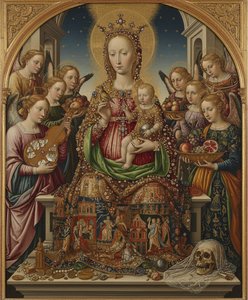 Carlo Crivelli: Mysticism & Materiality in Renaissance VeniceExplore the captivating world of Carlo Crivelli, a Renaissance master blending Gothic detail with profound symbolism. Discover his unique s…