

 실제 크기로 보기
 보내기
보내기 공유하기
공유하기
 상세 보기
상세 보기 가이드 보기

 이미지 다운로드
 유사 작품 더 보기
 X-레이
X-레이 슬라이드 쇼 보기
 통계 정보
통계 정보Rolling Eye Clock


 상세 보기
상세 보기
이 페이지에 표시된 작품은 저작권법의 보호를 받으며, 이에 따라 동일한 복제품을 제작하거나 판매하는 것은 법으로 금지되어 있습니다. 이러한 권리 보호는 다음과 같은 국제 협약에 따라 시행됩니다. 베른 협약 또한 다음에서 명시하는 법률을 포함한 국내법에 의해 보호됩니다. 미국 저작권법 제17조.
저희는 존중을 담은 합법적인 대안으로서, 원작에서 영감을 받은 맞춤형 수제 유화 작품을 제공합니다. 저희의 숙련된 전문 화가들은 원작의 스타일, 분위기, 예술적 정수를 면밀히 연구하여, 그 자체로 독창적인 창작물이면서도 원작과 동일한 감동을 불러일으키는 새로운 작품을 만들어냅니다.
이 방식은 저작권 보호를 받는 예술 작품을 복제하거나 그대로 재현하는 것이 아니기에 저작권 규정을 완벽히 준수합니다. 대신, 이는 창의적인 재해석의 과정을 거칩니다. 즉, 원작에서 영감을 받되 원작과 동일하지 않은 새로운 회화 작품을 의미합니다.
핸드메이드 유화 복제화
작가가 직접 캔버스에 손으로 그린 유화 작품으로, 원하는 크기와 액자로 맞춤 제작해 드립니다. ( 프린트 판매로 전환 디지털 이미지 판매 채널로 전환)




P118B ₩10

P118H ₩10

P118W ₩10

P438Z ₩10

P508JH ₩12

P508YH ₩12

P805H ₩10

P805Z ₩10

P919BZ ₩10

P919G ₩10

P919XJ ₩10

P959ZH ₩10

P968JZ ₩12

W106C ₩8

W218G ₩10

W218JH ₩8

W218Y ₩10

W307PJ ₩10

W316G ₩10

W316PJ ₩8

W316Y ₩10

W398PJ ₩8

W4111J ₩10

W500HY ₩15

W500JH ₩15

W692G ₩12

W849H ₩8

W940BG ₩15

W953PJ ₩8




작품의 원본 비율을 그대로 유지하는 프리셋 사이즈 중에서 선택해 보세요.

특정 프레임이나 공간에 맞춰 원하는 크기를 직접 입력하실 수 있습니다. 선택하신 크기가 원본 이미지의 비율과 일치하지 않을 경우, 작품을 자르거나 추가적인 수작업 요소를 더해 그림을 확장하여 제작합니다. 제작 시작 전, 최종 확인을 위해 디지털 목업을 보내드립니다.
화면상의 미리 보기는 실제 크롭(자르기)이나 확장된 상태를 완벽히 반영하지 않을 수 있습니다. 최종 구도는 오직 목업을 통해서만 정확하게 확인하실 수 있습니다.
맞춤 크기 제작도 가능하지만, 원본의 비율을 그대로 유지하기 위해서는 미리 정의된 목록에서 크기를 선택하시는 것을 권장합니다.
주문 완료 후 OriginalUniqueArt.com 팀에서 상세 안내를 위해 고객님께 이메일을 보내드리며, 미리보기 시안을 함께 제공해 드립니다.


 유리 옵션은 110cm 미만 크기에서만 선택 가능합니다.

Rolling Eye Clock
재현 매체
복제본 규격
-


총 결제 금액
₩ 402337
작가 소개
Oswald Moser: Weaver of Macabre Beauty
Oswald Moser (1874-1953) wasn’t merely an artist; he was a chronicler of the unsettling, a painter who wrestled with mortality and decay, translating their spectral presence onto canvas and into haunting sculptures. Born in London amidst personal tragedy – the early deaths of his brothers casting a long shadow over his childhood – Moser’s artistic journey became inextricably linked to themes of loss, memory, and the inevitable decline of Western civilization. His work, often described as surrealist before the term fully coalesced, possesses an arresting power that continues to resonate with viewers drawn to its melancholic beauty and unsettling realism.
Moser’s early life was marked by a rigorous classical education, culminating in studies at St John's Wood Art School. However, it wasn’t within the confines of traditional academic training that his distinctive style truly took root. Instead, he found himself profoundly influenced by the writings of Friedrich Nietzsche and the philosophical currents of his time, particularly the burgeoning interest in the cyclical nature of history – a concept that would later inform his grand, sweeping theories about the decline of Western culture. His military service during World War I, witnessing firsthand the horrors of conflict and the suffering of wounded soldiers, undoubtedly shaped his artistic sensibility, imbuing his work with a palpable sense of grief and disillusionment.
A Palette of Shadows: Artistic Style and Technique
Moser’s artistic style is immediately recognizable for its meticulous realism combined with an unsettling undercurrent of the macabre. He was a master of capturing subtle details – the wrinkles on a face, the texture of decaying fabric, the glint in a single eye – yet he employed these observations not to celebrate life but to expose its fragility and transience. His use of color is particularly noteworthy; he favored muted tones—ochres, browns, grays, and deep blues—creating an atmosphere of somber contemplation. He often utilized a technique reminiscent of Impressionism, employing broken brushstrokes and layering colors to suggest depth and movement, but always with a deliberate sense of unease.
His sculptures, most famously the “Rolling Eye Clock,” exemplify this duality perfectly. The clock itself is rendered in painstaking detail, yet its single, perpetually rolling eye evokes a profound sense of surveillance and paranoia. The work isn’t simply a mechanical device; it's a meditation on time, memory, and the ever-present gaze of observation. Similarly, his paintings frequently feature recurring motifs: decaying figures, solitary landscapes, and symbolic objects—a broken mirror, a wilting flower, a skeletal hand—each laden with layers of meaning.
The Decline of the West: Philosophical Influences
Moser’s artistic vision was deeply informed by his philosophical explorations, particularly his development of the concept of “cultural cycles.” Drawing heavily from the ideas of Oswald Spengler, a German philosopher who posited that all civilizations inevitably rise and fall in predictable patterns, Moser believed that Western civilization was approaching its terminal phase. This belief permeated his art, manifesting as a recurring preoccupation with themes of decline, decay, and the loss of spiritual values. His paintings and sculptures weren’t merely depictions of physical reality; they were allegorical representations of a larger historical process.
Spengler's theories, which predicted the emergence of “Caesars” – powerful, authoritarian figures who would attempt to halt the inevitable decline—found a visual echo in Moser’s work. The "Rolling Eye Clock," for instance, can be interpreted as a symbol of this impending Caesarism, constantly watching and controlling, yet ultimately unable to prevent the inexorable march of time. Moser's art served as both a warning and a lament – a poignant reflection on the beauty and tragedy of a civilization nearing its end.
Legacy and Recognition
Despite his considerable talent and distinctive vision, Oswald Moser’s work remained largely outside the mainstream during his lifetime. He exhibited primarily in smaller galleries and institutions, and his art was often viewed as unsettling or even disturbing. However, in recent decades, there has been a growing appreciation for his unique contribution to 20th-century art. His works are now held by prestigious collections such as the Wellcome Collection, the Imperial War Museum, and Rye Art Gallery, testament to their enduring power and significance.
Moser’s legacy extends beyond his individual artworks; he represents a pivotal figure in the development of surrealism and a profound observer of the human condition. His haunting images continue to challenge viewers to confront uncomfortable truths about mortality, memory, and the cyclical nature of history—a testament to the enduring relevance of an artist who dared to explore the darkest corners of the human psyche.

작가 정보 요약
- Artistic Movement Or Style: Philosopher, cultural critic
- Artists Or Movements Influenced By This Artist:
- Cultural determinism
- Civilization theory
- Artists Who Influenced This Artist:
- Goethe
- Nietzsche
- Date Of Birth: May 29, 1880
- Date Of Death: May 8, 1936
- Full Name: Oswald Arnold Gottfried Spengler
- Nationality: German
- Notable Artworks: ['The Decline of the West']
- Place Of Birth: Blankenburg, Germany
관련 기사
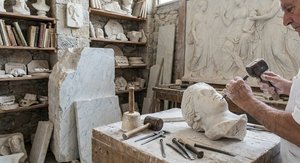
The Enduring Legacy of Marble: A Comprehensive Exploration of Technique, Symbolism & Artistic Expression
Explore the rich history of marble sculpture from antiquity to the Renaissance! Discover key techniques, influential artists & enduring themes in classical art. Expert insights for collectors and enthusiasts at OriginalUniqueArt.

Beyond the Canvas: Why Marble is the Ultimate Power Move for Modern Interiors
Discover why marble is the ultimate power move for modern luxury interiors. Explore how to pair premium natural stone with bold contemporary art to create high-impact, sophisticated spaces that define architectural excellence and timeless design authority.
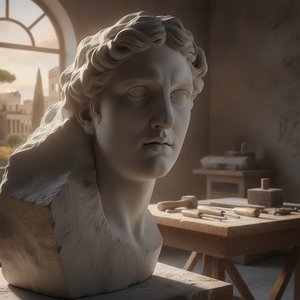
The Eternal Beauty of Marble: A Guide to Sculpting Light, Stone, and the Soul of Art History
Explore the sublime artistry of marble sculpture. From Greek antiquity to the masters of light, discover how stone captures the eternal essence of human beauty and emotion through expert craftsmanship and historical mastery.

The Enduring Allure of Marble in Art History: From Classical Sculpture to Modern Abstraction
Explore the captivating history of marble sculpture from ancient Greece to modern art. Discover renowned artists like Canova & Michelangelo, carving techniques, and investment insights at OriginalUniqueArt.

Timeless Elegance: A Complete Guide to the Sublime Beauty and Artistry of Marble Sculpture
Discover the sublime beauty of marble art through an expert exploration of Renaissance and Neoclassical masterpieces. From the delicate textures of Carpeaux to the grandeur of Sansovino, immerse yourself in a guide to timeless elegance and sculptural perfection.