
 미리보기
미리보기
 프린트 구매
 공유하기
공유하기 공유하기
공유하기
 상세 정보
상세 정보

 다운로드
다운로드
 유사 작품
유사 작품 X-레이
X-레이 슬라이드 쇼
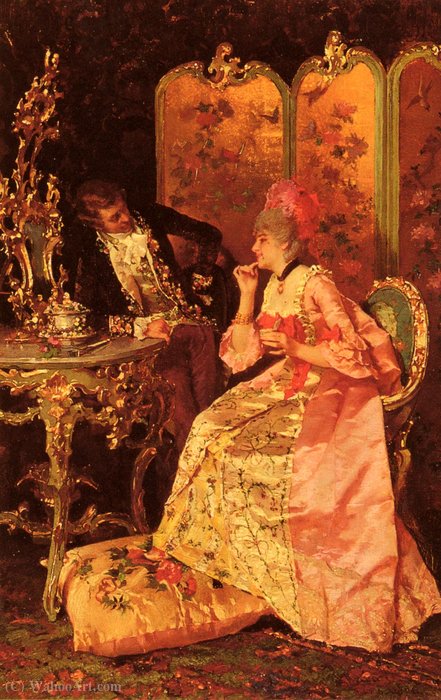
The flirtation
 더 보기
더 보기




































작품의 원본 비율을 유지하는 미리 설정된 크기 중에서 선택하세요.

특정 프레임이나 공간에 맞도록 직접 크기를 입력할 수 있습니다. 선택하신 크기가 원본 이미지의 비율과 일치하지 않는 경우, 작품을 자르거나 추가적인 손으로 그린 요소를 사용하여 그림을 확장합니다. 제작 시작 전 승인을 위해 디지털 목업을 보내드립니다.
화면 미리 보기는 실제 자르기 또는 확장을 반영하지 않습니다. 최종 구성은 목업을 통해서만 정확하게 확인하실 수 있습니다.
맞춤 크기 제작도 가능하지만, 원본 비율을 유지하기 위해 사전 정의된 목록에서 크기를 선택하시는 것을 권장합니다.
주문 후 OriginalUniqueArt.com 팀에서 상세 안내를 위해 고객님께 이메일을 보내드리며, 미리보기 시안을 제공해 드립니다.


 유리 옵션은 110cm 미만 크기에서만 선택 가능합니다.

The flirtation
재현 기법
복제본 크기
-


최종 결제 금액
$ 300
작가 약력
A Painter of Northern Spain’s Soul
Luis Álvarez Catalá, a name etched into the golden era of nineteenth-century Spanish art, possessed a rare ability to capture the very essence of his heritage. Born on January 22, 1836, to an Asturian family, his early years were shaped by the rugged beauty and cultural richness of Northern Spain. Though he is believed to have been born in Madrid, the summers spent in Cangas de Narcea left an indelible mark on his artistic psyche. These formative landscapes, filled with the traditions of Asturias and León, would later serve as the emotional wellspring for much of his most poignant work. His journey from a student in Oviedo to a master of the academic tradition is a testament to a life dedicated to the pursuit of visual truth.
Catalá’s formal education was marked by rigorous discipline and the guidance of masters. After studying at the Escuela Especial de Pintura, Escultura y Grabado, he entered the prestigious Real Academia de Bellas Artes de San Fernando in Madrid. Under the influential tutelage of Federico de Madrazo, Catalá refined his technique, absorbing the elegance and precision of the academic style. However, it was his departure for Rome in 1857 that truly ignited his creative spirit. Supported by a generous scholarship alongside contemporaries like Eduardo Rosales, he immersed himself in the vibrant Roman artistic milieu. This period of international exposure allowed him to blend Spanish sentiment with European sophistication, leading to his first major triumph: winning a gold medal at the First National Exposition of Florence for Calpurnia’s Dream.
Mastery of Genre and Historical Grandeur
The evolution of Catalá’s oeuvre is a fascinating study in the balance between historical narrative and the intimate charm of costumbrismo. In his early career, he gained immense prestige through large-scale historical scenes that commanded attention in the great salons of Europe. The success of Calpurity's Dream was so profound that it caught the eye of Queen Isabel II, who purchased the work, further elevating his status within the Spanish court. His ability to breathe life into antiquity and legend demonstrated a technical mastery over light, shadow, and human emotion that resonated with the romantic sensibilities of his age.
As his career matured, Catalá turned his gaze toward the everyday—the quiet, unvarnished moments of Spanish life. This shift toward costumbrista painting allowed him to explore the textures of rural existence and the subtle nuances of social interaction. Works such as The Flirtation and The Suitor showcase a delicate touch, where the warmth of the palette and the meticulous detail of costume and setting invite the viewer into a private, domestic world. Whether depicting an opulent studio scene in Admiring the Picture or the rustic simplicity of his youth, Catalá maintained a profound respect for the dignity of his subjects, ensuring that even the most mundane moment felt monumental.
Legacy and the Stewardship of Art
Beyond the canvas, Luis Álvarez Catalá played a monumental role in the preservation of Spanish artistic heritage. His appointment as Director of the Museo del Prado from 1898 to 1901 was not merely a professional milestone but a period of significant cultural stewardship. During his tenure, he worked tirelessly to enhance the museum's collection, most notably through the acquisition of several works by Francisco de Goya. His scholarly dedication even led him to produce an illustrated catalog of the Velázquez collection, a contribution that remains vital to the study of Spanish masters. He was a man who understood that the greatness of the past must be carefully curated to inspire the future.
In his final years, Catalá returned to his roots, finding inspiration once more in the landscapes and people of Northern Spain. This nostalgic period produced works that are now cherished within the Museum of Fine Arts of Asturias, completing a beautiful artistic circle that began in those same verdant hills. When he passed away in Madrid on October 4, 1901, he left behind a legacy defined by both grandeur and intimacy. His life remains a bridge between the rigid traditions of the academy and the soulful, lived experience of the Spanish people, ensuring his place as a pivotal figure in the history of European painting.

luis alvarez catala
1836 - 1901
주요 정보
- Artistic Movement Or Style: Costumbrista
- Artists Or Movements Influenced By This Artist: ['Diego Velázquez']
- Artists Who Influenced This Artist: ['Federico de Madrazo']
- Date Of Birth: January 22, 1836
- Date Of Death: October 4, 1901
- Full Name: Luis Álvarez Catalá
- Nationality: Spanish
- Notable Artworks:
- The Filandón
- The Suitor
- Calpurnia's Dream
- Place Of Birth: Madrid, Spain

