Analytical Cubism · 1929
The Round Table (조르주 브라크, 1929)
조르주 브라크 (1882–1963) 작가의 The Round Table 1929년에 제작되었습니다. Analytical Cubism 운동에 속합니다. Acrylic(으)로 제작되었습니다. 크기는 144 × 114 cm입니다.
- 1929
- Acrylic
- 144 × 114 cm

 미리보기

 수작업 유화 작품
 공유하기
 공유하기
 학습용 요약본


 다운로드
 유사 작품 더 보기
 X-레이
 슬라이드 쇼 보기
 질의응답

 통계 정보
The Round Table 요약
- 제목
- The Round Table
- 작가
- 조르주 브라크 (1882–1963)
- 작가 출생지
- 아르장퇴유, 프랑스
- 제작 연도
- 1929
- 매체
- Acrylic
- 크기
- 144 × 114 cm
- 주제
- bookshelf composition, table setting, fruit symbolism, geometric forms, artist's gesture, spatial illusion
The Round Table은(는) 무엇을 묘사하고 있나요?
Georges Braque’s “The Round Table”: A Dialogue Between Tradition and Innovation
- Subject Matter and Composition:
- Cubist Style and Technique:
- Historical Context – The Birth of Cubism:
- Symbolic Resonance – Apples, Books, and Spatial Illusion:
- Emotional Impact – Quiet Contemplation and Artistic Exploration
Cubist Style and Technique
Braque, alongside Pablo Picasso, spearheaded the development of Analytical Cubism, characterized by its radical fragmentation of form and simultaneous depiction of multiple viewpoints. Unlike Impressionists who sought to capture fleeting moments of light and color, Cubists aimed to represent objects as they appear to the eye when viewed from various angles simultaneously. In “The Round Table,” this is achieved through meticulous geometric reduction—the table surface and books are broken down into interlocking planes that overlap and intersect, creating a disconcerting yet captivating illusion of depth. The artist’s use of muted earthy tones – browns, ochres, and creams – reinforces the sense of stillness and contemplation inherent in the scene. Careful layering of paint contributes to textural richness without resorting to overtly expressive brushstrokes; Braque prioritizes precision and intellectual rigor over emotive gesture.Historical Context – The Birth of Cubism
The genesis of Cubism can be traced back to Picasso’s groundbreaking “Les Demoiselles d'Avignon” (1907), which shattered established artistic norms by depicting figures rendered in fractured planes and incorporating influences from African sculpture. Braque responded swiftly, furthering the exploration of spatial ambiguity and geometric abstraction. The painting emerged during a period of intense intellectual ferment—the burgeoning influence of Einstein’s theory of relativity challenged Newtonian conceptions of space and time, mirroring the Cubists' desire to dismantle traditional perspectival representations. This artistic rebellion was fueled by a broader cultural shift toward questioning accepted truths and embracing new modes of perception.Symbolic Resonance – Apples, Books, and Spatial Illusion
The inclusion of an apple—a motif frequently revisited in Surrealist art—introduces a subtle element of visual paradox. Traditionally associated with knowledge, temptation, and immortality, the apple’s placement on the table subtly disrupts the geometric order established by Braque's technique. Simultaneously, the books symbolize intellectual pursuit and contemplation – mirroring the figure’s posture and gaze. More importantly, the overall spatial arrangement contributes to a feeling of disorientation—the viewer is invited to consider multiple perspectives simultaneously, reflecting the Cubist preoccupation with challenging conventional visual experience. The careful positioning of objects reinforces the idea that reality itself is multifaceted and elusive.Emotional Impact – Quiet Contemplation and Artistic Exploration
Ultimately, “The Round Table” transcends mere formal innovation; it communicates a profound sense of quiet contemplation. Despite its complex geometric structure, the painting exudes an atmosphere of stillness—suggesting a moment of introspection rather than dramatic action. Braque’s masterful control over color and texture invites viewers to engage in a dialogue with the artwork itself, prompting reflection on themes of knowledge, perception, and artistic endeavor. It stands as a testament to Braque's ability to distill complex ideas into a deceptively simple visual form—a lasting legacy of Cubist artistry that continues to inspire admiration and contemplation today.The Round Table의 고해상도 이미지
Protected by copyright: these files are for personal reference, not a licence to republish.
조르주 브라크, The Round Table (1929).
The Round Table에 관한 질문과 답변
조르주 브라크의 "The Round Table"은(는) 언제 제작되었나요?
"The Round Table"은(는) 1929년에 제작되었습니다. 이 시기는 조르주 브라크의 예술적 경력과 당시의 시대상을 잘 보여줍니다.
조르주 브라크의 "The Round Table"의 기법은 무엇인가요?
"The Round Table"은(는) Acrylic 기법으로 제작되었습니다.
원작 조르주 브라크의 "The Round Table"의 크기는 어떻게 되나요?
조르주 브라크의 "The Round Table"의 원작 크기는 144 x 114 cm입니다. 복제화는 동일한 비율을 유지하면서 다른 크기로도 주문 가능합니다.
"The Round Table"은(는) 어떤 내용을 담고 있나요?
조르주 브라크의 "The Round Table"에 나타난 주제로는 bookshelf composition, table setting, fruit symbolism, geometric forms, artist's gesture, spatial illusion, color palette 등이 있습니다. 이들은 모여 작품의 소재를 요약해 보여줍니다.
조르주 브라크의 "The Round Table"은(는) 퍼블릭 도메인인가요?
조르주 브라크의 "The Round Table"은(는) 저작권 보호 대상입니다 상태입니다. 이 상태에 따라 해당 작품 이미지의 복제 가능 여부가 결정됩니다.
"The Round Table"은(는) 어느 작가의 작품인가요?
"The Round Table"은(는) 조르주 브라크의 작품입니다. 이 페이지의 정보는 조르주 브라크의 원작에 대해 설명합니다.
"The Round Table"은(는) 어떤 화풍에 속하나요?
조르주 브라크의 "The Round Table"과(와) 관련된 미술 사조는 Analytical Cubism입니다. 이러한 분류를 통해 해당 작품을 관련 작가 및 예술 작품들과 함께 파악할 수 있습니다.
The Round Table은(는) 조르주 브라크의 예술적 여정 중 어느 시기의 작품인가요?
조르주 브라크의 작품 세계에서 "The Round Table"은(는) Analytical Cubism 시기의 작품입니다. 이 시기는 작가의 다른 작품들과 비교해 보는 데 유용한 지표가 됩니다.
조르주 브라크은(는) 몇 세에 "The Round Table"을(를) 제작했을까요?
조르주 브라크은(는) 47세에 "The Round Table"을(를) 제작했습니다. 작가는 1882년에 태어났으며, 이 작품의 제작 연도는 1929년입니다.
아티스트 조르주 브라크 소개
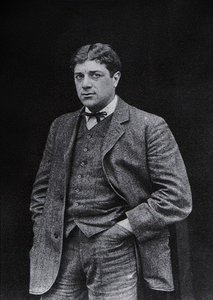
1882–1963, 프랑스
조르주 브라크
유년 시절과 가족, 그리고 예술적 훈련 조르주 브라크는 1882년 프랑스 아르젠트빌에서 태어났습니다. 그의 어린 시절은 프랑스 르아브르에서 보냈는데, 그가 자라온 가정환경은 장식과 색채라는 실용적인 예술의 세계로 정의될 수 있었습니다. 집수리 화가와 장식가들로 이루어진 가족의 일원으로 성장하며, 그는 아주 어린 나이부터 직업적 기술이 지닌 촉각적 실재감에 깊이 몰입되었습니다. 이러한 성장 배경은 훗날 그가 캔버스에 접근하는 방식에 있어 기술적 숙련도라는 단단한 토대를 마련해 주었습니다.
조르주 브라크의 다른 작품들
 만돌라 (1910)1910
 기타를 든 남자1914
 레스타크의 집들
 노르망디 항구1909
The Round Table 관련 에세이
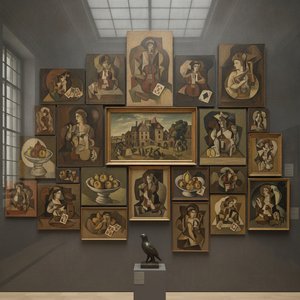 Mastering Cubism: The Top 25 Georges Braque ArtworksJourney through the revolutionary world of Georges Braque. Explore 25 iconic Cubist masterpieces, from geometric abstractions to timeless s…
 Deconstructing Reality: Cubism's Revolutionary Impact on 20th-Century ArtExplore the revolutionary world of Cubism with OriginalUniqueArt. Discover Picasso & Braque's groundbreaking techniques, its philosophical …
 Understanding the Difference Between Analytical and Synthetic CubismMaster the differences between Analytical and Synthetic Cubism with our expert guide. Learn to identify these iconic art movements now.