 미리보기
미리보기
 공유하기
공유하기 공유하기
공유하기
 상세 정보
상세 정보 가이드 보기

 다운로드
다운로드
 유사 작품 더 보기
 X-레이
X-레이 슬라이드 쇼 보기
 질의응답
질의응답 통계 정보
통계 정보Peaceable Kingdom (22)


 더 보기
더 보기
웹 미리보기 화면을 훨씬 뛰어넘는 인쇄용 파일을 만나보세요. 저희가 판매하는 모든 디지털 이미지는 스톡 데이터베이스 내의 고해상도 마스터 파일(일반적으로 가로 5,000~15,000픽셀)을 기반으로 합니다. 따라서 대형 인쇄나 정밀한 크롭 작업 시에도 세밀한 디테일을 자신 있게 구현할 수 있습니다.
저희 스튜디오를 거치는 모든 파일은 정교한 손길을 거칩니다. 디지털 전문가가 원작과 대조하여 색상을 점검하고 필요 시 보정하며, 전문 리터칭 도구를 사용하여 선명도와 디테일을 높입니다. 이 과정에서 작가의 붓 터치와 화풍을 충실히 유지하는 것을 원칙으로 합니다. 그 결과, 단순한 스캔본에 필터를 입힌 듯한 느낌이 아닌, 마치 실제 회화 작품을 보는 듯한 이미지를 구현해냅니다.
최종 완료 전 확인 단계가 있습니다. 전문가가 검토하실 수 있도록 72시간 이내에 이미지를 이메일로 보내드립니다. 결과물이 만족스럽지 않으신가요? 수정이나 보완을 요청하시거나, 품질이 기대에 미치지 못할 경우 환불을 요청하실 수 있습니다.
출판사, 디자인 스튜디오, 갤러리 및 인쇄소가 신뢰하는 바로 그 품질입니다.
디지털 이미지
개인 소장 및 전시, 인쇄, 창작 프로젝트를 위한 고해상도 파일을 다운로드하세요. ( 프린트 판매로 전환 수작업 채색 복제본 주문하기)
모든 디지털 이미지 주문 시 포함되는 혜택
전문적인 디지털 이미지 전송 보장
OriginalUniqueArt.com를 선택하시면 단순히 이미지를 받는 것을 넘어, 정밀한 보정 과정을 거쳐 완성된 전문적인 디지털 예술 작품을 만나보실 수 있습니다. 모든 주문에는 만족 보장 서비스가 포함되어 있으며, 다음과 같은 사항들이 자동으로 제공됩니다:

빠른 이메일 전송
주문 후 72시간 이내에 고해상도 디지털 이미지 파일이 이메일로 발송되며, 즉시 사용하실 수 있습니다.

AI 기술로 최적화된 디지털 파일
귀하의 작품은 첨단 AI 기술과 정교한 수동 편집 과정을 거쳐 전문적으로 최적화되며, 이를 통해 디테일과 선명도, 색상의 정확도를 극대화합니다.

평생 무료 재전송 서비스
파일을 실수로 삭제하거나 분실하셨나요? 걱정 마세요. 언제든 무료로 다시 보내드립니다.

추가 수입 비용 없음 - 언제나
관세, 부가세, 배송비 부담 없이 작품을 즉시 소장하세요 - 디지털 다운로드는 언제나 면세 혜택이 적용됩니다.

정확한 색상 보장
전문적인 도구와 색상 관리 시스템을 통해 디지털 이미지가 원본의 색상을 최대한 정확하게 구현하도록 보장합니다.

100일 만족 보장제
구매하신 디지털 이미지에 만족하지 못하실 경우, 100일 이내에 별도의 조건 없이 수정 또는 100% 환불을 진행해 드립니다.

100% 환불 보장
만족스럽지 않으신가요? 디지털 파일을 받으신 후 100일 이내라면 어떤 이유로든 조건 없이 전액 환불해 드립니다.

대량 주문 할인
이미지 3매 구매 시 10% 할인 - 5매 구매 시 15% 할인 - 10매 이상 구매 시 20% 할인. 크리에이티브 프로젝트, 갤러리, 에이전시에 매우 유용합니다.
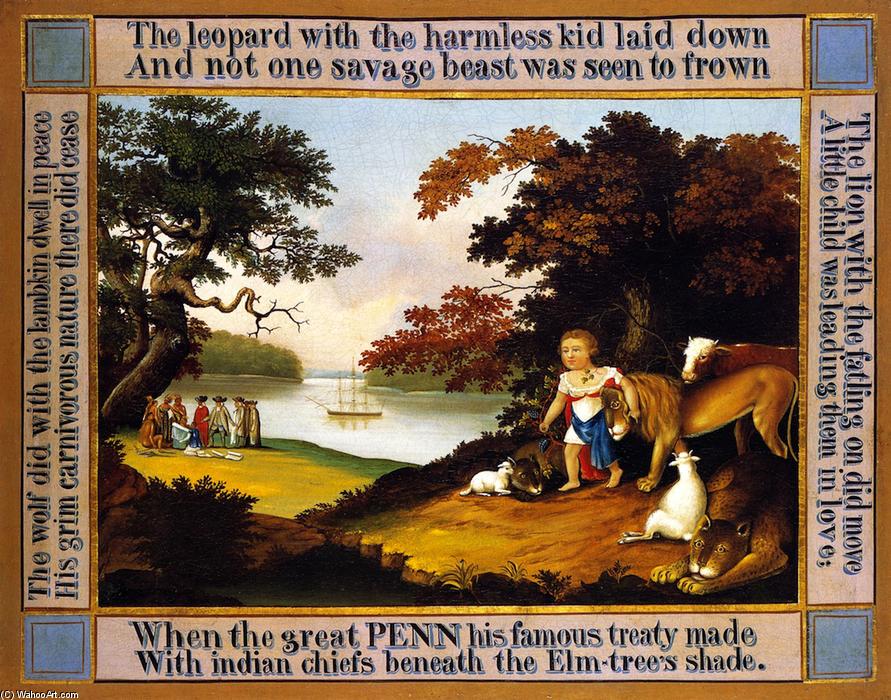
Peaceable Kingdom (22): A Quaker Vision of Harmony
Edward Hicks’ “Peaceable Kingdom (22)” transcends mere visual beauty; it embodies a profound philosophical statement rooted in the Quaker faith and meticulously executed with masterful artistic technique. Created in 1826, this monumental oil painting resides at the Philadelphia Museum of Art, serving as an enduring emblem of American folk art and its contribution to shaping national identity.The Artist and His Vision
Edward Hicks (1780-1849), born in Attleboro, Pennsylvania, was a self-taught Quaker minister whose unwavering belief in “the inner light” profoundly influenced his artistic endeavors. Initially apprenticed as a coach maker, Hicks honed his decorative painting skills—a craft considered somewhat unconventional for the time—allowing him to express his spiritual convictions through captivating imagery. His Quaker faith instilled within him a deep appreciation for simplicity and peace, values that permeate every brushstroke of his celebrated “Peaceable Kingdom” series. This particular canvas captures Hicks’s distinctive style: a blend of realism infused with symbolic representation intended to convey moral lessons about coexistence.A Detailed Examination of Composition and Technique
The painting depicts a serene tableau featuring a young boy standing before two lions and a tiger, accompanied by numerous figures engaged in various activities—a meeting place for Native Americans and settlers—and culminating in a sailboat gliding across the horizon beneath a dominant elm tree. Hicks’s meticulous attention to detail is evident throughout; the artist skillfully employs oil paint on canvas, layering glazes to achieve rich textures that bring forth an astonishing level of realism. Lighting is soft and diffused, guiding the viewer's eye through the complex spatial relationships established within the scene. Perspective leans toward a flattened style characteristic of the Dutch Golden Age, prioritizing clarity and conveying a sense of grandeur. The color palette—dominated by warm earth tones—accentuates blues and greens in the landscape, creating an atmosphere of tranquility and unity. Precise lines delineate forms, fostering order amidst the multitude of elements depicted. Organic shapes reflect the natural world at the heart of Hicks’s artistic vision.Symbolism: Lions, Tigers, and Quaker Beliefs
“Peaceable Kingdom (22)” is laden with symbolism reflecting Hicks's core Quaker convictions. The lions and tigers—typically symbols of predatory aggression—are portrayed as gentle creatures coexisting peacefully with humans, mirroring Isaiah 11:6’s prophetic vision of harmony between animals and humankind. This deliberate juxtaposition underscores the artist’s desire for universal reconciliation and embodies the Quaker belief in divine compassion. Furthermore, the inclusion of Native Americans negotiating treaties symbolizes a commitment to justice and understanding across cultures—a crucial element within Hicks's broader philosophical framework. The elm tree represents steadfastness and spiritual resilience, anchoring the scene in a landscape imbued with symbolic significance.Legacy and Enduring Inspiration
“Peaceable Kingdom (22)” continues to inspire audiences worldwide with its timeless message of peace and unity. As a handmade oil painting reproduction, it offers an opportunity to experience this iconic artwork firsthand—a testament to Edward Hicks’s artistic genius and his enduring contribution to American art history. Its serene beauty and profound symbolism resonate deeply within the viewer, prompting contemplation on themes of compassion, harmony, and the importance of fostering dialogue between diverse perspectives.질의응답
"Peaceable Kingdom (22)"은(는) Folk Art 사조를 대표하는 유명한 작품인가요?
Folk Art 사조 내에서, "Peaceable Kingdom (22)"은(는) Iconic 정도의 인지도를 보유하고 있습니다.
에드워드 힉스의 "Peaceable Kingdom (22)" 작품에 권장되는 인쇄 설정은 무엇인가요?
Large 크기, Landscape 방향: 에드워드 힉스의 "Peaceable Kingdom (22)" 작품에 가장 적합한 인쇄 설정입니다.
에드워드 힉스의 "Peaceable Kingdom (22)"에서 예술 사조와 시대상은 어떻게 맞닿아 있나요?
에드워드 힉스의 "Peaceable Kingdom (22)"은(는) 작가의 19세기 미술 시대 중 Folk Art 사조에 속합니다.
작가 소개
신앙과 비전에 뿌리 내린 삶
1780년 4월 4일, 펜실베이니아주 버크스 카운티의 평온한 풍경 속 애틀버러(현 랭혼)에서 태어난 에드워드 힉스는 종교적 신념과 예술적 표현이 만나는 독특한 지점에 서 있었던 인물입니다. 그의 이야기는 단순히 독학한 화가의 연대기가 아니라, 영적 여정이 자신만의 독창적인 시각 언어를 형성해 나간 한 헌신적인 퀘이커 목사의 기록입니다. 비록 성공회 부모 밑에서 태어났으나, 어린 에드워드의 삶은 경건한 퀘이커 신자인 엘리자베스 트위닝 수녀의 보살핌을 받게 되면서 결정적인 전환점을 맞이합니다. 그녀는 그에게 단순함과 평화, 그리고 "내면의 빛"에 대한 흔들리지 않는 믿음이라는 퀘이커 교리의 핵심 가치를 심어주었습니다. 이 어린 시절의 경험은 훗날 그의 예술적 비전이 세워질 단단한 토대가 되었습니다. 13세부터 힉스는 마차 제작자인 윌리엄과 헨리 톰린슨 밑에서 도제로 일하며, 초기 생계를 유지해 줄 화려한 장식 채색 기술을 익혔습니다. 그러나 마차 위에 정교한 문양을 그려 넣는 기술을 연마하는 와중에도 그의 내면에는 더 깊은 소명이 울려 퍼지고 있었습니다. 이는 결국 그를 남들이 가지 않는 길, 즉 신앙과 예술이 하나로 수렴되는 길로 인도했습니다. 1803년에 이르러 힉스는 퀘이커 교단인 친구 사회(Society of Friends)에 완전히 귀의하였고, 사라 워스톨과 결혼하여 필라델피아 전역을 다니는 순회 설교자의 삶을 시작했습니다. 그러면서도 그는 그림 실력을 통해 성장하는 가족을 부양하는 일을 멈추지 않았습니다.진화하는 캔버스: 마차 장식에서 영적 풍경화로
힉스의 예술적 발전 과정은 결코 전형적이지 않았습니다. 그는 당대의 학구적인 전통 교육을 받은 것이 아니라, 관찰과 필요, 그리고 깊은 신념으로부터 탄생한 독특한 미국 민속 예술 스타일을 스스로 일구어 나갔습니다. 초기 그의 작업은 주택 채색, 마차 장식, 선술집 간판, 심지어 가구나 농기구의 장식 작업 등 실용적인 목적을 띠고 있었습니다. 이러한 초기 의뢰들은 경제적 안정성을 제공했지만, 때로는 소박함과 세속적 허영을 멀리하려는 퀘이t커 교리의 가치와 충돌하기도 했습니다. 1815년의 시련기 동안 힉스는 장식화를 잠시 포기하고 농업에 뛰어들었으나, 이 시도는 성공하지 못했습니다. 다행히 친구들의 격려 덕분에 1816년 그는 다시 붓을 잡게 되었고, 이는 자신의 예술적 재능과 영적 소명을 화해시키는 결정적인 전환점이 되었습니다. 이 복귀는 단순히 이전 작업의 재개가 아니었습니다. 그것은 종교적 주제와 알레고리적 풍경에 대한 독창적인 탐구가 시작되었음을 의미했습니다. 그는 자신의 그림에 상징적 의미를 불어넣기 시작했으며, 이는 그의 퀘이커적 세계관과 성경에 대한 개인적 해석을 반영했습니다. 그의 캔버스는 평화와 조화, 그리고 신성하게 정해진 질서의 약속을 전달하는 매개체가 되었습니다었습니다.평화로운 왕국: 조화의 비전
오늘날 에드워드 힉스가 가장 찬사를 받는 이유는 평화로운 왕국(The Peaceable Kingdom)이라 불리는 연작 때문입니다. 평생에 걸쳐 제작된 60여 점의 변주곡들은 미국 민속 예술의 가장 상징적인 사례로 손꼽힙니다. 천적들이 평화롭게 공존할 미래를 예언하는 이사야서 11장 6절에서 9절의 구절에서 영감을 받은 힉스는, 야생 동물과 아이들이 목가적인 조화 속에서 살아가는 장면을 그려냈습니다. 그의 작품에는 원주민과 조약을 체결하는 윌리엄 펜과 같은 식민지 시대 펜실베이니아 역사의 인물들이 자주 등장하며, 이는 성경적 비전을 미국적 맥락 속에 더욱 깊게 뿌리내리게 합니다. 평화로운 왕국은 단순히 동물의 삶을 매력적으로 묘사한 것이 아닙니다. 그것은 펜실베이니아야말로 평화와 정의가 승리할 수 있는 곳, 즉 예언된 이상이 실현된 장소라는 힉스의 확고한 믿음을 보여주는 강력한 선언입니다. 이 연작의 각 버전은 구도, 색채, 세부 묘사에서 미묘한 차이를 보이는데, 이는 힉스의 진화하는 예술적 감각과 깊어지는 영적 이해를 반영합니다. 예일 대학교 미술관에 소장된 평화로운 왕국 (31)과 평온한 풍경 속에 노아의 방주를 그려낸 평화로운 왕국 (34)가 그 대표적인 예입니다.왕국을 넘어: 더 넓은 예술적 지평
평화로운 왕국이 그의 대표작으로 남아 있지만, 에드워드 힉스의 예술적 성취는 이 유명한 연작에만 국한되지 않습니다. 그는 풍경화, 초상화, 역사적 장면들을 그렸으며, 그 모든 작품에는 특유의 민속 예술 스타일과 퀘이커적 감수성이 깃들어 있습니다. 현재 애비 알드리치 록펠러 민속 예술 센터에 소장된 나이아가라 폭포(Falls of Niagara)는 단순함과 경외감을 유지하면서도 자연의 장엄함을 포착해내는 그의 능력을 잘 보여줍니다. 마찬가지로, 같은 센터에 있는 델라웨어 강을 건너는 조지 워싱턴과 그의 군대 묘사는 미국 역사의 이 상징적인 순간을 민속 예술가만의 독특한 시각으로 제시합니다. 심지어 영국의 조던스에 있는 윌리엄 펜의 묘(Grave of William Penn at Jordans in England)와 같이 언뜻 평범해 보이는 주제조차도, 퀘이커 유산에 대한 힉스의 깊은 유대감과 일상적인 장면에서 영적 의미를 찾아내는 그의 능력을 드러냅니다. 이러한 작품들을 종합해 볼 때, 우리는 힉스의 예술적 비전의 폭과 자신의 신앙과 가치를 표현하기 위해 예술을 도구로 삼았던 그의 헌신을 확인할 수 있습니다.영원한 유산: 민속 예술의 아이콘
에드워드 힉스는 1849년 8월 23일 펜실베이니아주 뉴타운에서 세상을 떠났지만, 그가 남긴 작품들은 오늘날까지도 관객들에게 깊은 울림을 주고 있습니다. 그는 이제 독창적인 화풍과 반복되는 주제, 그리고 심오한 영적 깊이로 인해 미국 민속 예술의 중추적인 인물로 인정받고 있습니다. 그의 그림은 19세기 친구 사회(Society of Friends)의 신념과 가치를 들여다볼 수 있는 귀중한 통찰을 제공하며, 평화와 단순함, 그리고 사회 정의를 향한 그들의 헌신을 시각적 기록으로 남겨주었습니다. 종교적 신앙과 예술적 표현을 결합한 힉스의 독보적인 능력은 시각적으로 매혹적이면서도 영적으로 의미 있는 작품군을 탄생시켰습니다. 그의 유산은 단순히 작품이 전시된 박물관이나 컬렉션을 넘어, 그의 예술에 대한 지속적인 찬사와 그가 꿈꿨던 비전의 영원한 힘 속에 살아 숨 쉬고 있습니다. 그것은 바로 인간과 자연, 그리고 신성 사이에서 조화가 지배하는 "평화로운 왕국"에 대한 비전입니다. 그는 독학한 예술가가 가진 힘, 그리고 신앙이 창조적 표현에 미칠 수 있는 심오한 영향력을 증명하는 살아있는 증거로 남아 있습니다.
에드워드 힉스
1780 - 1849 , 미국
주요 정보
- Artistic Movement Or Style: 민속 예술
- Date Of Birth: 1780년 4월 4일
- Date Of Death: 1849년 8월 23일
- Full Name: 에드워드 힉스
- Nationality: 미국인
- Notable Artworks:
- 평화로운 왕국 (31)
- 나이아가라 폭포
- 조지 워싱턴의 도하...
- 평화로운 왕국 (34)
- Place Of Birth: 미국 랭혼