 프린트 판매로 전환
 더 보기
더 보기







































 가로 또는 세로 중 어느 한 면이라도 105cm(약 41인치)를 초과하는 작품이나 복제화의 경우, 프레임은 분해된 키트 형태로 배송됩니다. 이는 안전한 배송을 보장하고 운송 중 발생할 수 있는 손상을 방지하기 위함입니다.


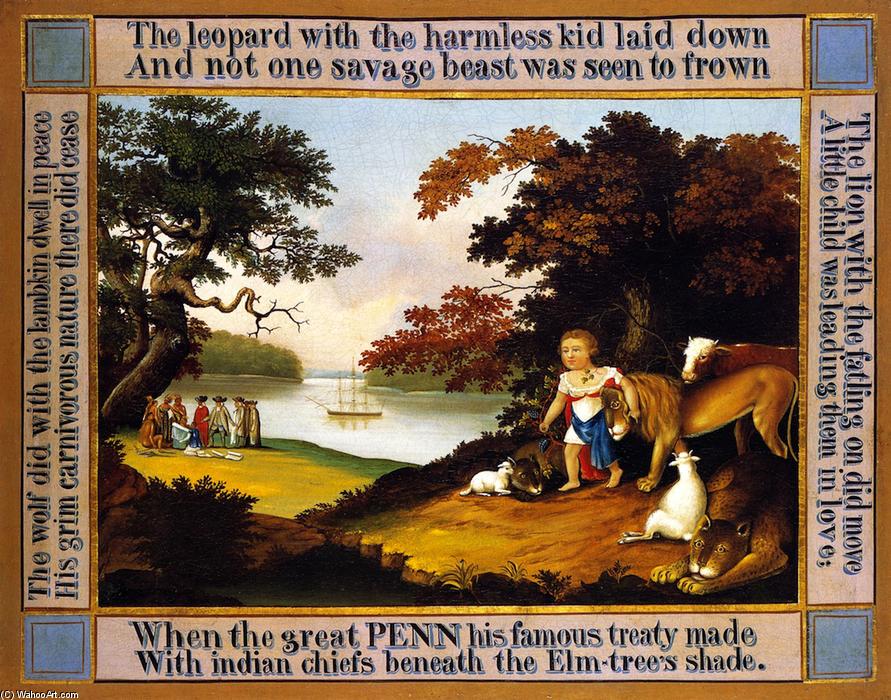
Peaceable Kingdom (22): A Quaker Vision of Harmony
Edward Hicks’ “Peaceable Kingdom (22)” transcends mere visual beauty; it embodies a profound philosophical statement rooted in the Quaker faith and meticulously executed with masterful artistic technique. Created in 1826, this monumental oil painting resides at the Philadelphia Museum of Art, serving as an enduring emblem of American folk art and its contribution to shaping national identity.The Artist and His Vision
Edward Hicks (1780-1849), born in Attleboro, Pennsylvania, was a self-taught Quaker minister whose unwavering belief in “the inner light” profoundly influenced his artistic endeavors. Initially apprenticed as a coach maker, Hicks honed his decorative painting skills—a craft considered somewhat unconventional for the time—allowing him to express his spiritual convictions through captivating imagery. His Quaker faith instilled within him a deep appreciation for simplicity and peace, values that permeate every brushstroke of his celebrated “Peaceable Kingdom” series. This particular canvas captures Hicks’s distinctive style: a blend of realism infused with symbolic representation intended to convey moral lessons about coexistence.A Detailed Examination of Composition and Technique
The painting depicts a serene tableau featuring a young boy standing before two lions and a tiger, accompanied by numerous figures engaged in various activities—a meeting place for Native Americans and settlers—and culminating in a sailboat gliding across the horizon beneath a dominant elm tree. Hicks’s meticulous attention to detail is evident throughout; the artist skillfully employs oil paint on canvas, layering glazes to achieve rich textures that bring forth an astonishing level of realism. Lighting is soft and diffused, guiding the viewer's eye through the complex spatial relationships established within the scene. Perspective leans toward a flattened style characteristic of the Dutch Golden Age, prioritizing clarity and conveying a sense of grandeur. The color palette—dominated by warm earth tones—accentuates blues and greens in the landscape, creating an atmosphere of tranquility and unity. Precise lines delineate forms, fostering order amidst the multitude of elements depicted. Organic shapes reflect the natural world at the heart of Hicks’s artistic vision.Symbolism: Lions, Tigers, and Quaker Beliefs
“Peaceable Kingdom (22)” is laden with symbolism reflecting Hicks's core Quaker convictions. The lions and tigers—typically symbols of predatory aggression—are portrayed as gentle creatures coexisting peacefully with humans, mirroring Isaiah 11:6’s prophetic vision of harmony between animals and humankind. This deliberate juxtaposition underscores the artist’s desire for universal reconciliation and embodies the Quaker belief in divine compassion. Furthermore, the inclusion of Native Americans negotiating treaties symbolizes a commitment to justice and understanding across cultures—a crucial element within Hicks's broader philosophical framework. The elm tree represents steadfastness and spiritual resilience, anchoring the scene in a landscape imbued with symbolic significance.Legacy and Enduring Inspiration
“Peaceable Kingdom (22)” continues to inspire audiences worldwide with its timeless message of peace and unity. As a handmade oil painting reproduction, it offers an opportunity to experience this iconic artwork firsthand—a testament to Edward Hicks’s artistic genius and his enduring contribution to American art history. Its serene beauty and profound symbolism resonate deeply within the viewer, prompting contemplation on themes of compassion, harmony, and the importance of fostering dialogue between diverse perspectives.질의응답
"Peaceable Kingdom (22)"은(는) Folk Art 사조를 대표하는 유명한 작품인가요?
Folk Art 사조 내에서, "Peaceable Kingdom (22)"은(는) Iconic 정도의 인지도를 보유하고 있습니다.
에드워드 힉스의 "Peaceable Kingdom (22)" 작품에 권장되는 인쇄 설정은 무엇인가요?
Large 크기, Landscape 방향: 에드워드 힉스의 "Peaceable Kingdom (22)" 작품에 가장 적합한 인쇄 설정입니다.
에드워드 힉스의 "Peaceable Kingdom (22)"에서 예술 사조와 시대상은 어떻게 맞닿아 있나요?
에드워드 힉스의 "Peaceable Kingdom (22)"은(는) 작가의 19세기 미술 시대 중 Folk Art 사조에 속합니다.
이 작품에 대해 더 알아보기
 미리보기
미리보기
 공유하기
공유하기 공유하기
공유하기
 상세 정보
상세 정보 가이드 보기

 다운로드
다운로드
 유사 작품 더 보기
 X-레이
X-레이 슬라이드 쇼 보기
 질의응답
질의응답 통계 정보
통계 정보