

 미리보기
미리보기
 공유하기
공유하기 공유하기
공유하기
 상세 정보
상세 정보

 다운로드
다운로드
 유사 작품
유사 작품 X-레이
X-레이 슬라이드 쇼
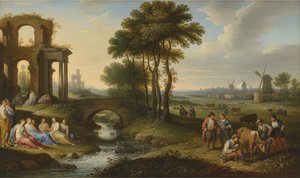
Untitled (843)

 더 보기
더 보기
지클레 / 아트 프린트
빠른 제작과 다양한 마감 옵션을 제공하는 박물관 품질의 지클레이 또는 캔버스 프린트. ( 손으로 그린 그림 구매 이미지 구매)




































작품의 원본 비율을 유지하는 미리 설정된 크기 중에서 선택하세요.

특정 프레임이나 공간에 맞춰 직접 치수를 입력하실 수 있습니다. 선택하신 사이즈가 원본 이미지의 비율과 일치하지 않을 경우, 작품을 크롭(자르기)하거나 이미지를 대칭 또는 단색 채우기로 확장하여 제작합니다. 제작 시작 전, 최종 확인을 위해 디지털 목업이 전송됩니다.
화면상의 미리보기는 실제 크롭이나 확장 상태를 반영하지 않으므로, 최종 구도는 오직 목업을 통해서만 정확하게 확인하실 수 있습니다.
맞춤 사이즈 제작도 가능하지만, 원본 비율을 유지하기 위해서는 사전 정의된 목록에서 치수를 선택하시는 것을 권장합니다.


 유리 옵션은 110cm 미만 크기에서만 선택 가능합니다.

Untitled (843)
지클레 / 아트 프린트
복제본 크기
-


최종 결제 금액
$ 80
작가 약력
Cornelis Huysmans: A Flemish Landscape Master
- Born: Antwerp, Belgium (1648)
- Died: 1727
Early Life and Training
- Cornelis Huysmans was baptized on April 2, 1648, in Antwerp. His parents were Hendrik Huysmans and Catharina van der Meyden.
- His father's profession is described as either a master builder or a craftsman in the mint.
- Following his parent’s early death, he was sent to study under the landscape painter Gaspar de Witte.
- He later moved to Brussels to further his studies and may have worked as an assistant in the studio of Jacques d'Arthois.
- Around 1675, he collaborated with Adam Frans van der Meulen in Maastricht.
Career and Artistic Development
- In 1675, Huysmans became an independent master of the Guild of Saint Luke in Brussels.
- He spent time in London from approximately 1686 to 1688, creating landscapes for prominent members of society.
- Around 1688, he settled in Mechelen and married Maria Anna Scheppers.
- In 1690, he created a significant altarpiece, "The Road to Emmaus," for the Onze-Lieve-Vrouw-over-de-Dijle church in Mechelen.
- He returned to Antwerp in 1706 and was admitted as a master in the local guild of Saint Luke.
- Huysmans eventually returned to Mechelen, where he continued working until his death in 1727.
Artistic Style and Influences
- Huysmans is primarily known for his landscape paintings, though he also created religious and history works.
- His style is characterized by detailed observations of nature, particularly forests and trees.
- He was significantly influenced by Jacques d'Arthois, evident in the decorative compositions depicting forest edges with sandy banks.
- Huysmans incorporated a "pseudo-Italianate" aesthetic, featuring mountains and vegetation reminiscent of Italy.
- His use of dramatic light contrasts between roads and tree shadows created a striking visual effect.
- He often employed diagonal lines within his compositions to create depth and perspective.
Legacy and Historical Significance
- Cornelis Huysmans held a prominent position in Flemish landscape painting during the late 17th and early 18th centuries.
- His works demonstrate a transition from earlier, more detailed styles towards a more decorative and atmospheric approach to landscape art.
- He influenced younger artists, including his son Pieter Balthasar Huysmans and his brother Jan Baptiste Huysmans.
- Huysmans's paintings are represented in numerous museum collections worldwide, including the Louvre, the Hermitage Museum, and various museums in Belgium and elsewhere.
- His ability to capture both the realism of nature and a sense of idealized beauty contributed to his lasting reputation as a significant Flemish landscape painter.

Cornelis Huysmans
1648 - 1727 , Belgium
주요 정보
- Artistic Movement Or Style: Pseudo-Italianate landscapes
- Artists Or Movements Influenced By This Artist:
- Pieter Balthasar Huysmans
- Jan Baptiste Huysmans
- Artists Who Influenced This Artist:
- Nicolas Poussin
- Jacques d'Arthois
- Date Of Birth: 1648
- Date Of Death: 1727
- Full Name: Cornelis Huysmans
- Nationality: Flemish
- Place Of Birth (City And Country): Antwerp, Belgium
관련 기사 더 보기
Cornelis van Poelenburch: Bridging Mannerism & the Dutch Baroque Landscape
Discover Cornelis van Poelenburch, a pivotal Dutch Baroque landscape painter bridging Mannerism & Italianate styles. Explore his life, key works, and lasting influence on 17th-century art with OriginalUniqueArt.

Drama in Nature: The Captivating Grandeur of Baroque Landscapes and the Art of Emotional Spectacle
Explore the breathtaking drama of Baroque landscapes. From Rubens's grand vistas to the mastery of chiaroscuro, discover how 17th-century artists transformed nature into a theatrical stage of emotion and light. A deep dive for true art enthusiasts.

Masterpieces of Light: A Definitive Guide to the Landscapes of the Dutch Golden Age
Discover the luminous mastery of Dutch Golden Age landscapes. Our expert guide explores the atmospheric realism of masters like Van Goyen and Cuyp. Elevate your space with museum-quality, hand-painted oil reproductions from OriginalUniqueArt.com. Art history, beautifully realized.

Golden Light & Dutch Skies: The Timeless Magic of Dutch Golden Age Landscapes
Discover the breathtaking beauty of Dutch Golden Age landscapes. Explore the mastery of light, chiaroscuro, and 17th-century realism through an expert art history lens, celebrating the enduring legacy of the Dutch Masters for discerning collectors and art lovers.

Dutch Baroque Masters: 10 Paintings That Shaped an Era | OriginalUniqueArt
Journey through the Golden Age with our guide to the Top 10 Dutch Baroque masterpieces! Explore iconic paintings by Rembrandt, Vermeer & Frans Hals. Find museum-quality art reproductions and elevate your home decor at OriginalUniqueArt.com.

