유화 원작 구매
 Pierrot에 관한 모든 것







































 가로 또는 세로 중 어느 한 면이라도 105cm(약 41인치)를 초과하는 작품이나 복제화의 경우, 프레임은 분해된 키트 형태로 배송됩니다. 이는 안전한 배송을 보장하고 운송 중 발생할 수 있는 손상을 방지하기 위함입니다.


August Macke’s Pierrot: A Fragment of Sunlight Amidst Melancholy
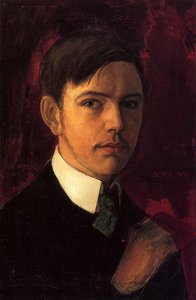
August Macke's "Pierrot," painted in 1913, stands as a poignant emblem of German Expressionism—a movement striving to capture the raw emotion and psychological depth beneath the surface of everyday life. Executed in oil on canvas measuring 75 x 90 cm, this artwork isn’t merely a depiction of a character from Commedia dell'arte; it’s an exploration of solitude, vulnerability, and the elusive beauty found within moments of quiet contemplation. Macke’s masterful use of color—primarily yellows and oranges—creates a luminous halo around Pierrot’s figure, juxtaposed against the darker hues of the streetscape, symbolizing hope battling despair.The Expressionist Style: Distortion as Revelation
Macke's stylistic approach firmly rooted in Expressionism distinguishes itself from Impressionistic realism. Rather than striving for photographic accuracy, he deliberately distorted forms and colors to convey inner feelings—a technique central to conveying emotion. Thick brushstrokes dominate the canvas, creating a textured surface that pulsates with energy while simultaneously hinting at underlying sadness. This expressive gesture wasn’t simply aesthetic; it was a conscious effort to bypass rational thought and tap into primal instincts, mirroring the anxieties of the era. The artist's intention was to communicate not what he *saw*, but what he *felt*.A Symbol of Isolation and Remembrance
The figure of Pierrot himself embodies themes of isolation and remembrance—a reflection of Macke’s own personal struggles during a period marked by profound artistic experimentation and impending tragedy. Pierrot's posture exudes stillness, conveying a sense of detachment from the bustling street scene around him. He clutches a pumpkin—a symbol of fertility and abundance—yet his gaze is averted downwards, suggesting introspection rather than engagement with the external world. This subtle gesture speaks volumes about the human condition: our yearning for connection tempered by inevitable solitude. Macke’s masterful portrayal captures this duality with remarkable sensitivity.Technique and Material Considerations
Macke's meticulous attention to detail—evident in the rendering of Pierrot’s mask and clothing—demonstrates his mastery over oil paint on canvas. He skillfully blended pigments to achieve subtle gradations of color, creating an illusionistic depth that enhances the painting’s emotional impact. The canvas surface itself is treated with considerable care, ensuring optimal adhesion of the pigment and preserving the artwork's vibrancy for generations to come. Macke’s dedication to craftmanship underscores his belief in art as a conduit for conveying profound psychological truths.A Legacy Preserved: Pierrot at Kunsthalle Bielefeld
Currently housed at Kunsthalle Bielefeld, Germany, "Pierrot" remains a cornerstone of Macke's oeuvre and a testament to the enduring power of Expressionist art. Its luminous palette and evocative composition continue to inspire viewers today—a reminder that beauty can coexist with melancholy and that art possesses the capacity to illuminate the complexities of human experience. Viewing this masterpiece offers an opportunity to engage directly with Macke’s artistic vision and appreciate his contribution to the history of modern art.질의응답
Pierrot은(는) 수작업으로 그린 작품인가요, 아니면 프린트된 작품인가요?
수작업 제작: 숙련된 화가가 Pierrot을(를) 리넨 캔버스 위에 유화로 재현합니다.
Pierrot의 사이즈는 어떤 것을 선택해야 하나요?
원작의 크기는 75 x 90 cm입니다. 사이즈는 28.7 x 34.8 cm (₩268034)부터 199.7 x 242.0 cm (₩2374779)까지 있으며, 이 페이지의 표에 주요 단계별 가격이 안내되어 있습니다.
배송은 얼마나 걸리나요?
배송은 전 세계 무료 특송으로 4~5주가 소요되며, 본 페이지에서 긴급 제작 옵션을 선택하실 수 있습니다. 제품은 조건 없이 100일 이내에 반품하여 전액 환불받으실 수 있습니다.
Pierrot 원본은 어디에 있나요?
원본은 빌레펠트에 위치한 Kunsthalle 소장품입니다.
아우구스트 마케 작가는 Pierrot 작품에 어떤 재료를 사용했나요?
Oil On Canvas
 미리보기

 공유하기
 공유하기
 상세 정보
 학습용 요약본


 다운로드
 유사 작품 더 보기
 X-레이
 슬라이드 쇼 보기
 질의응답

 통계 정보