メニュー
無料アート相談
PreviewPreview AR previewAR preview Switch to Print Switch to PrintSwitch to Image Switch to Image シェアするシェアする
詳細を見る詳細を見る お気に入りに追加 お気に入りに追加 ダウンロードダウンロード 似ている作品似ている作品 X線調査X線調査 スライドショースライドショー

Improvisation 26 (Rowing)

Experience the vibrant energy of Wassily Kandinsky's 'Improvisation 26 (Rowing)' – a monumental abstract painting exploring color and form with striking yellow circles and dynamic red & blue lines.

カンディンスキー(1866-1944)は、抽象芸術の先駆者! 鮮やかな表現主義、精神的なテーマ、バウハウスの遺産を、息を呑むような複製を通して探求。色彩と形態のシンフォニーが織りなす革新的な作品群に出会えます。

手描き油彩複製画

当社のアーティストが、お客様のご希望のサイズと額縁に合わせて、キャンバスに手描きで制作する油彩画です。 (Switch to Print Switch to PrintSwitch to Image Switch to Image)

P118B $10
P118H $10
P118W $10
P438Z $10
P508JH $12
P508YH $12
P805H $10
P805Z $10
P919BZ $10
P919G $10
P919XJ $10
P959ZH $10
P968JZ $12
W106C $8
W218G $10
W218JH $8
W218Y $10
W307PJ $10
W316G $10
W316PJ $8
W316Y $10
W398PJ $8
W4111J $10
W500HY $15
W500JH $15
W692G $12
W849H $8
W940BG $15
W953PJ $8

Standard
custom
CM
INCH

作品のオリジナル比率に合わせた、当店の規定サイズからお選びください。

高さ

特定のフレームやスペースに合わせて、ご希望のサイズをご入力いただけます。選択されたサイズが元の画像の比率と異なる場合、アートワークをトリミングするか、手描きで要素を追加して絵画を拡張いたします。デジタルモックアップ を制作し、制作開始前にご確認(承認)をいただきます。
画面上のプレビューは、実際のトリミングや拡張を正確に反映しているものではありません。最終的な構図は、モックアップによってのみ正確にご確認いただけます。
カスタムサイズもご利用いただけますが、元の比率を維持するためには、あらかじめ用意されたリストからサイズを選択することをお勧めいたします。

カスタマイズの例:顔をお客様の写真に置き換える、ペットを追加する(例:猫を犬に変更)、背景に隠れたメッセージを入れる、背景の風景や要素を変更するなど。
ご注文後、OriginalUniqueArt.com チームより詳細な指示をお送りするとともに、仕上がりイメージ(モックアップ)をご提供いたします。

世界中への配送()は、通常の5週間ではなく、3〜4週間でお届けいたします。(28 7月)。品質には一切妥協いたしません。

why_choose_icon
世界中へ無料エクスプレス配送
why_choose_icon
高品質なリネンキャンバス
why_choose_icon
配送時完全保険付
why_choose_icon
関税・輸入税の払い戻し保証
why_choose_icon
忠実な色彩再現保証
why_choose_icon
60日間返品保証(製造上の欠陥のみ)
why_choose_icon
100% 全額返金保証
why_choose_icon
まとめ買い割引のご案内

合計金額

$ 300

reproduction

Improvisation 26 (Rowing)

複製技法

複製画のサイズ

-

合計金額

$ 300

作品詳細

  • Dimensions: 107 x 97 cm
  • Artistic style: Color Field Painting
  • Subject or theme: Musical Inspiration
  • Movement: Abstract Expressionism
  • Title: Improvisation 26 (Rowing)
  • Location: Private Collection
  • Artist: Wassily Kandinsky

アート・クイズ

各質問の正解は1つだけです。

問題 1:
What artistic movement is Wassily Kandinsky's “Improvisation 26 (Rowing)” considered to be?
問題 2:
In what year was “Improvisation 26 (Rowing)” painted?
問題 3:
The painting prominently features geometric shapes, primarily circles and lines. What is the dominant color scheme employed by Kandinsky?
問題 4:
What influential musical composer inspired Kandinsky's artistic vision?
問題 5:
“Improvisation 26 (Rowing)” exemplifies Kandinsky’s belief in the expressive power of color and form. How does he utilize these elements to convey emotion?

作品解説

A Symphony in Color: Exploring Kandinsky’s Improvisation 26

Wassily Wassilyevich Kandinsky stands as an undeniable titan of modern art, a figure whose audacious embrace of abstraction fundamentally reshaped the artistic landscape and continues to inspire awe centuries later. His journey toward this groundbreaking vision wasn't paved with conventional academic pursuits; initially drawn to law and economics at Moscow University—a path deemed respectable by societal expectations—it was a transformative encounter with Claude Monet’s “Haystacks” that sparked his initial fascination with Impressionism, capturing the fleeting beauty of light and atmosphere. Yet, it was an even more profound experience witnessing Wagner's opera "Lohengrin" – a visceral immersion in music and drama – that truly unlocked Kandinsky’s inner artist, propelling him toward a radical departure from representational art. Around thirty years old, he abandoned his legal aspirations for the fervent pursuit of painting, embarking on a path marked by relentless experimentation and unwavering conviction.
  • Early Influences: Russian Folk Art
  • The Academy of Fine Arts in Munich
  • Franz von Stuck’s Guidance
Kandinsky's artistic evolution wasn’t simply about stylistic shifts; it represented a profound philosophical reimagining of art itself. He rejected the constraints of depicting observable reality, arguing that painting should strive to express inner spiritual states—a concept deeply rooted in Jungian psychology and reflecting his belief in the interconnectedness of consciousness and creativity. This conviction fueled his relocation to Munich, where he enrolled at the Academy of Fine Arts under Franz von Stuck, though even within the framework of formal training, Kandinsky’s spirit chafed against convention, constantly seeking new avenues for artistic exploration. He meticulously studied the works of Cézanne and Picasso, absorbing their innovative approaches to form and composition—artists who similarly challenged established aesthetic norms.

Analyzing Improvisation 26: Style and Technique

“Improvisation 26 (Rowing),” created in 1912, exemplifies Kandinsky’s signature style – Abstract Expressionism – characterized by its deliberate rejection of illusionistic representation. The painting abandons any attempt to mimic the visual world, instead prioritizing color and form as primary expressive elements. Kandinsky employed a technique he termed “Gesture Painting,” applying paint with energetic brushstrokes—often impulsive and spontaneous—to create textured surfaces that convey emotional intensity. He utilized a vibrant palette dominated by yellows, reds, and blues, meticulously layering colors to achieve luminous effects and conveying a sense of dynamism and movement. The concentric circles at the center – two prominent yellow discs surrounded by radiating red and blue lines – serve as focal points, drawing the viewer’s eye inward while simultaneously suggesting an outward expansion of energy.

Symbolism Within Abstraction

Beyond its formal qualities, “Improvisation 26” is laden with symbolic significance. The circles represent wholeness and unity—a concept central to Kandinsky's spiritual worldview—while the radiating lines symbolize aspiration and transcendence. The juxtaposition of yellow and red – traditionally associated with optimism and passion – underscores the painting’s emotional core, conveying a feeling of exhilaration and vitality. Kandinsky believed that colors possessed inherent psychological properties, capable of evoking specific moods and sensations; he meticulously selected hues to align with his intention to communicate profound spiritual truths.

Emotional Impact and Legacy

“Improvisation 26” transcends mere visual aesthetics, resonating deeply within the viewer’s psyche—a testament to Kandinsky's masterful ability to translate inner experience into tangible form. The painting captures a moment of spontaneous creativity—a celebration of color and gesture—that embodies the spirit of artistic liberation. Its influence extends far beyond its own time, shaping subsequent generations of artists who embraced abstraction as a means of conveying emotion and exploring spiritual dimensions. Today, “Improvisation 26” remains a cornerstone of Abstract Expressionism, serving as an enduring emblem of Kandinsky’s pioneering vision and his unwavering commitment to artistic innovation—a symphony in color that continues to captivate audiences worldwide.

アーティストの略歴

色彩と精神に浸された生涯

1866年にモスクワで生まれたワシリー・ワシーリエヴィチ・カンディンスキーは、近代美術の歩みを決定的に変えた革命的な人物です。彼の道のりは、最初から芸術への天啓に満ちたものではありませんでした。当初はモスクワ大学で法学と経済学のキャリアを歩む運命にありましたが、印象派の絵画、特にクロード・モネの「積みわら」との深い出会い、そしてワーグナーのオペラ「ローエングリン」を目の当たりにした感動的な体験が、彼の中に芸術を追求したいという抑えきれない情熱を燃え上がらせたのです。30歳前後で訪れたこの決定的な瞬間は、単なる職業の変更にとどまらず、世界観そのものの劇的な変容を意味しており、彼を先駆的な抽象表現へと突き動かすこととなりました。その後、彼はミュンヘンへと移り、名高い美術アカデミーに入学してフランツ・フォン・シュトゥックに師事しましたが、正規の教育課程の中にあっても、カンディンスキーの精神は既成の境界を超えた探求を渇望していました。

初期の彼に影響を与えたのは、1889年のヴォログダ地方への民族学調査を通じて得たロシアの民俗芸術でした。そこから得た鮮やかな色彩のパレットと象徴的なイメージは、彼の心に深い魅惑を植え付けました。この基盤は、彼が独自の芸術言語を構築していく上で極めて重要な役割を果たすことになります。こうした初期の探求は、単なる審美的な好みによるものではなく、深い文化的繋がりと、芸術がいかにして具象を超えて伝達し得るかという、芽生えつつあった理解に根ざしていたのです。

抽象の黎明:表現主義から「内なる必然性」へ

カンディンスキーの初期作品には、力強い色彩と感情的な激しさを特徴とする、強烈な表現主義的傾向が見て取れます。1902年の「ポプラ」などの作品が、この時期を象徴しています。しかし、彼は単に外的な世界を再現することに満足はしませんでした。彼は、視覚的な描写を超越した内面的な現実、すなわち精神的な真実を表現しようと試みたのです。この探求が、彼を具象芸術から徐々に遠ざけ、色彩、形態、そしてそれらがもたらす感情的な共鳴への革命的な探求へと導いていきました。

彼は、色彩には固有の心理的効果があり、鑑賞者の心に特定の感情や感覚を呼び起こす力があると信じるようになりました。この信念は、秘教的な知識と普遍的な友愛を強調する精神運動である「神智学」への関心の高まりと深く結びついていました。これらの思想を深めるにつれ、カンディンスキーの絵画はますます非対象的(ノン・オブジェクティブ)になり、認識可能な形態を脱ぎ捨て、「内なる必然性」によって駆動される抽象的な構成へと向かっていきました。これは単に具象を放棄したということではなく、感情や精神性という形のない領域を表現し得る、新しい視覚言語を発見するプロセスだったのです。彼は、色彩と形態が調和して深い感情的反応を引き起こす、音楽の視覚的な等価物を作り出そうとしたのでした。

幾何学的な調和と精神的な共鳴

1911年にミュンヘンで共同設立した影響力のある芸術家集団青騎士(デア・ブラウエ・ライター)への参画後の時期には、カンディンスキーのスタイルはさらなる進化を遂げました。初期の作品に見られた流動的で有機的な形状に代わり、彼は円、三角形、正方形の相互作用に焦点を当てた幾何学的抽象の探求を開始しました。「いくつかの円」(140 x 140 cm)はこの時期の代表的な例であり、色彩と形態が調和しながらもエネルギッシュなダンスを繰り広げるダイナミックな構成を見せています。

これは決して冷徹で無機質な幾何学ではありませんでした。むしろ、そこには精神的な意義が吹き込まれていたのです。カンディンスキーは、幾何学的な図形には固有の象徴的意味があり、キャンバス内での配置が特定の感情的反応を呼び起こすと信じていました。彼の理論書、とりわけ最も有名な『芸術における精神的なものについて』(1911年)では、これらの信念が明文化されており、深い精神的真実を伝える媒体としての抽象芸術という、新しい理解の基礎を築きました。彼は、芸術は自然を模倣することを目指すべきではなく、むしろ芸術家の内面世界を明らかにし、より深く直感的なレベルで鑑賞者と繋がるものであるべきだと主張したのです。

バウハウスの影響と不朽の遺産

第一次世界大戦の勃発により、1914年にカンディンスキーはロシアへの帰還を余儀なくされましたが、ロシア革命後、彼は当時の支配的な芸術的風潮との間に次第に隔たりを感じるようになります。1920年、彼はドイツのバウハウス校での教授職を引き受け、そこで色彩、形態、抽象に関する自身の理論を用いて、後世の芸術家たちに多大な影響を与えました。バウハウスは、カンディンスキーが自身の思想をさらに発展させ、新たな創造的道を切り拓くための理想的な環境となりました。

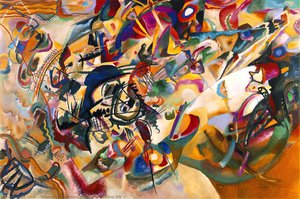
彼は幾何学的な形態と鮮やかな色彩を用いた実験を続け、しばしば厚塗りのインパスト技法を取り入れることで、構成に深みと複雑さを加える質感豊かな表面を作り出しました。これは「親密なパーティー」(1942年)のような後期の作品に見られる特徴です。1933年にナチス政権によってバウハウスが閉鎖された後、カンディンスキーはフランスへと移住し、その生涯の最期までそこで過ごしました。近代美術における彼の功績は計り知れません。彼は抽象表現主義の先駆者として、また非具象絵画の発展における重要人物として広く認められています。彼の作品は、モスクワのトレチャコフ美術館をはじめとする世界中の主要な美術館に収蔵されており、そこにある記念碑的な「コンポジション VII」は、彼の芸術的ビジョンと不朽の遺産の証となっています。

色彩、形態、そして精神性に対するカンディンスキーの探求は、今日においても芸術家たちにインスピレーションを与え続け、20世紀美術史における最も重要な人物の一人としての地位を確固たるものにしています。彼は単に絵を描いたのではありません。彼は感情を、思想を、そして人間精神の真髄そのものを描いたのです。

基本情報

  • Artistic Movement Or Style: 抽象芸術、表現主義
  • Artists Who Influenced This Artist:
    • クロード・モネ
    • リヒャルト・ヴァグナー
  • Date Of Birth: 1866年12月4日
  • Date Of Death: 1944年12月13日
  • Full Name: ワシリー・ワシーリエヴィチ・カンディンスキー
  • Nationality: ロシア
  • Notable Artworks:
    • いくつかの円
    • 構成作品IX
  • Place Of Birth: モスクワ、ロシア
テーマ、スタイル、特徴別に分類された作品を探索しましょう。