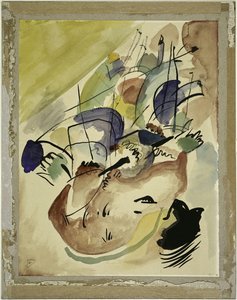
Wassily Kandinsky (1866-1944): The Pioneer of Abstract Art
Wassily Wassilyevich Kandinsky, born in Moscow on December 4th, 1866, stands as a monumental figure in the history of art—a visionary who irrevocably transformed artistic expression and ushered in an era dominated by pure abstraction. His journey wasn’t one of immediate artistic epiphany; initially destined for a legal career at Moscow University, it was a transformative encounter with Claude Monet's “Haystacks” – capturing the shimmering light and atmospheric perspective of Impressionism – and witnessing Richard Wagner’s opera "Lohengrin" that ignited within him an irresistible yearning to pursue art. This pivotal moment, occurring around age thirty, marked not merely a career change but a profound reshaping of worldview, propelling him toward pioneering abstraction.
Early influences resonated deeply with Russian culture. His family's ethnographic expedition to the Vologda region in 1889 exposed him to vibrant color palettes and symbolic imagery derived from folk art—a formative experience that instilled a fascination for communicating emotion beyond literal representation. These foundational explorations weren’t simply aesthetic preferences; they were rooted in a profound connection to cultural heritage and an emerging understanding of art's capacity to transcend visual perception.
Moscow, 1866-1896: Seeds of Artistic Vision
Kandinsky’s formative years were marked by rigorous academic training—studying law at Moscow University alongside mastering the piano and cello. However, it was his encounter with Impressionism that fundamentally altered his artistic trajectory. As he recounted in autobiographical writings, “I remember that drawing and a little bit later painting lifted me out of the reality,” reflecting the transformative power of art to transcend mundane experience.
His marriage to Anna Chimyakina brought him into contact with a supportive family environment—a nurturing backdrop for cultivating his artistic sensibilities. He continued teaching law at Moscow University, demonstrating intellectual curiosity alongside developing his burgeoning talent for visual expression.
Munich and Gabriele Münter: The Birth of Expressionism
In 1896 Kandinsky relocated to Munich, enrolling in Anton Azbe’s prestigious private painting school—where he honed his skills in image composition and experimented with color harmonies. Simultaneously, he embarked on a romantic relationship with Gabriele Münter, forging an artistic partnership that would endure for decades.
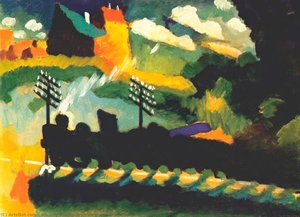
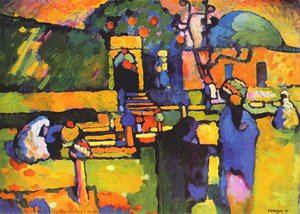
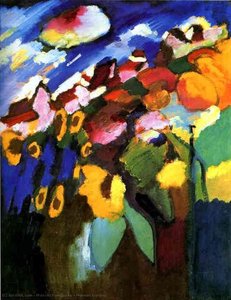
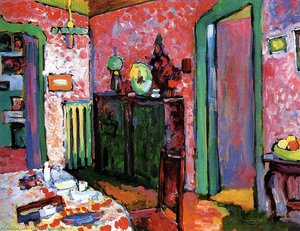
During this period, Kandinsky's canvases pulsed with emotional intensity—characterized by bold colors and expressive brushstrokes—reflecting the influence of Expressionism’s preoccupation with subjective experience. Works like “Papeln (Poplars)” exemplify this early stylistic phase—capturing the dynamism of nature through vibrant hues and textured surfaces.
The Blue Rider Group and Geometric Harmony
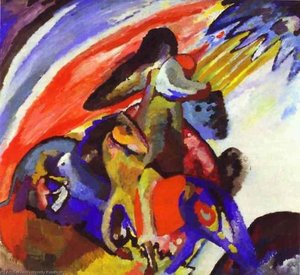
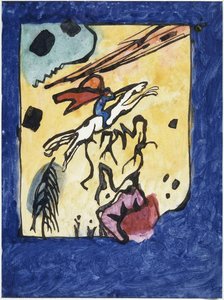
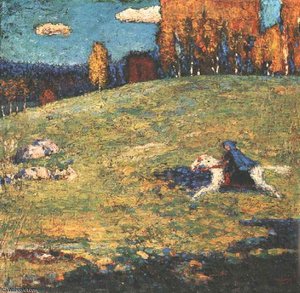
The formation of Der Blaue Reiter (The Blue Rider) in Munich in 1911 marked a crucial juncture in Kandinsky’s artistic evolution. Alongside Gabriele Münter, he established an influential avant-garde collective—embracing geometric abstraction as a means of conveying spiritual truths.
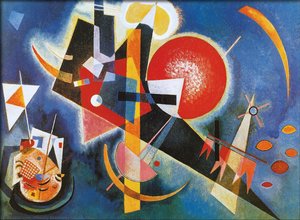
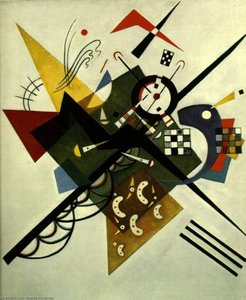
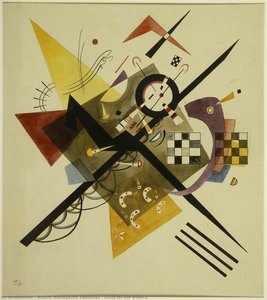
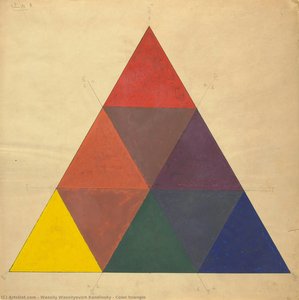
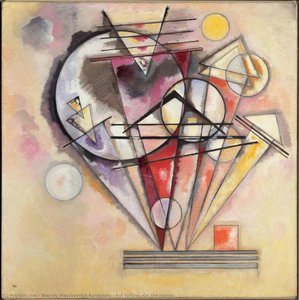
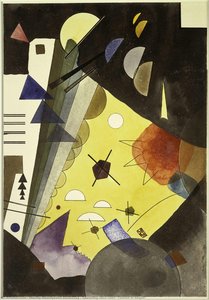
His theoretical writings, notably “Concerning the Spiritual in Art,” articulated his conviction that art should aspire to transcend mere imitation of nature—seeking instead to reveal the artist’s inner world and resonate with viewers on a deeper level. Kandinsky championed the use of geometric forms—circles, triangles, squares—to evoke specific emotional responses—believing they possessed inherent symbolic significance.
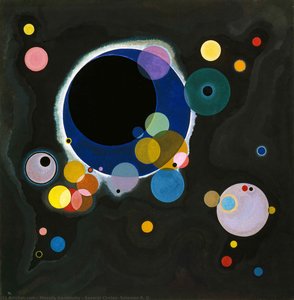
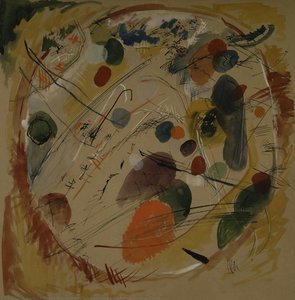
“Several Circles” (140 x 140 cm), created in 1923 exemplifies this phase—a dynamic composition where color and form intertwine harmoniously—reflecting Kandinsky’s unwavering commitment to exploring the expressive potential of abstraction. This stylistic shift signaled a decisive break from representational art—embracing instead a visual language rooted in spiritual contemplation.
Bauhaus Influence and Legacy
Kandinsky's involvement with the Bauhaus school in Germany from 1922 until its closure in 1933 profoundly impacted generations of artists—solidifying his role as a champion of geometric abstraction and fostering innovation within architectural design. He taught at Bauhaus, imparting his theories on color and form—inspiring students to pursue artistic experimentation.
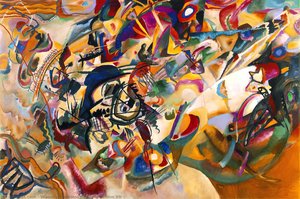
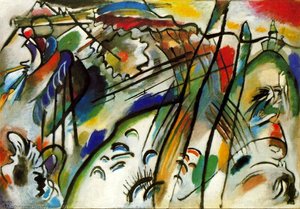
Following the Nazi regime’s seizure of power, Kandinsky emigrated to France in 1933—where he continued producing monumental canvases imbued with spiritual resonance—such as “Composition VII”—a testament to his enduring artistic vision. His legacy extends far beyond the realm of painting—influencing subsequent movements and shaping perceptions of abstract art worldwide.
Kandinsky’s unwavering belief in art's capacity to communicate transcendent truths—coupled with his pioneering exploration of geometric abstraction—continues to inspire artists today—affirming his place as one of the most transformative figures in 20th-century artistic history.