Cubism
Interior (スチュアート・デイヴィス)
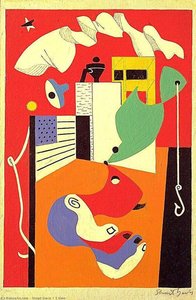
Interiorは、スチュアート・デイヴィス(1892–1964)による作品です。 Cubism運動に属しています。

 設置イメージを表示

 手描き油彩画
 シェアする
 シェアする
 ガイドを表示


 ダウンロード
 似ている作品
 X線調査
 スライドショーを表示
 Q&A

 統計情報
Interior:基本情報
- 作品名
- Interior
- 作家
- スチュアート・デイヴィス (1892–1964)
- 生年
- フィラデルフィア, アメリカ合衆国
- 技法
- Cubism
- 主題
- abstract, geometric, modernism, composition, lines, forms
Interiorを鑑賞する
A Dynamic Vision of Modernity: Exploring Stuart Davis’s “Interior”
Stuart Davis's “Interior” is a captivating example of American Modernism, pulsating with energy and reflecting the artist’s unique response to the burgeoning urban landscape and the rhythms of jazz. Created sometime during his prolific career (1892-1964), this work embodies Davis’s commitment to developing a distinctly American visual language, moving beyond European influences towards a bold, independent style.
Deconstructing Space: Style & Technique
- The artwork is immediately striking for its geometric abstraction. Davis employs fragmented forms and flattened perspectives – hallmarks of both Cubism and Constructivism – but infuses them with a uniquely American sensibility.
- A vibrant palette dominates, anchored by the stark contrast between the white background, bold reds, blues, and greys, and punctuated by energetic black lines. The orange border further intensifies this visual impact.
- Davis’s technique is evident in the visible brushstrokes and layering of paint, creating a subtle texture that adds depth despite the overall flattened composition. This suggests an active process of building up form and color on the canvas, likely using oil paints as his primary medium.
- The arrangement isn't simply random; it’s carefully orchestrated into distinct zones – a tower-like structure in blue-grey, a dynamic red section with a vertical ‘sail’ or flag element, and a central area of interwoven geometric shapes. This zoning creates a sense of controlled chaos.
Echoes of Jazz & the Machine Age: Context & Symbolism
Davis was deeply influenced by jazz music, which he saw as embodying the spirit of modern America – improvisational, energetic, and uniquely its own. While “Interior” isn’t a direct representation of musical notes, the dynamic interplay of shapes and colors evokes the same sense of rhythm and syncopation found in jazz compositions.
- The architectural elements, particularly the stylized tower, could be interpreted as representing aspiration or the burgeoning skyscrapers of American cities. Davis frequently engaged with urban themes throughout his career.
- The ‘sail’ or flag-like form introduces a sense of movement and direction, perhaps symbolizing progress or the forward momentum of modern life.
- His early exposure to the Armory Show in 1913 was pivotal. While his initial works reflected the Ashcan School style, he quickly absorbed and transformed European avant-garde ideas into something distinctly American.
Emotional Resonance & Lasting Impact
“Interior” is not a tranquil scene; it’s charged with energy and tension. The fragmented forms and bold colors create a sense of dynamism, while the lack of traditional perspective can be slightly unsettling. This emotional complexity reflects the anxieties and excitements of a rapidly changing world.
- The artwork invites viewers to actively engage with its abstract language, prompting individual interpretations and fostering a personal connection.
- As a pioneering figure in American Modernism, Stuart Davis paved the way for subsequent generations of artists. His work continues to inspire those seeking to break free from convention and explore new forms of visual expression.
高解像度版 Interior
スチュアート・デイヴィス, Interior.
Interiorに関するご質問
スチュアート・デイヴィス作「Interior」は、明るい色調の作品ですか、それとも暗い色調の作品ですか?
「Interior」の全体的な明るさはbrilliantで、輝度はBright Balanceです。
スチュアート・デイヴィス作「Interior」 の著作権状況の根拠を教えてください。
スチュアート・デイヴィス作「Interior」は著作権の保護対象ですです。著作権の保護期間は、1964年に亡くなった作家の没年から起算されます。
「Interior」のプレビューはどこで確認できますか?
スチュアート・デイヴィス作「Interior」の複製画をプレビューするには、作品の設置イメージページを開いてください。
学生向けのスチュアート・デイヴィス作「Interior」に関するファクトシートはありますか?
スチュアート・デイヴィス作「Interior」の解説資料ページでは、印刷して活用できる2枚構成のファクトシートを提供しています。これには、作品の詳細をまとめたデータテーブル、アーティストの生涯における時代背景を示す年代チャート、同アーティストによる他の作品、抽出されたカラーパレット、そしてそのままコピーして使用できる4つの形式の引用文献情報が含まれています。
スチュアート・デイヴィスには他にどのような名で知られているものがありますか?
「Interior」の作者であるスチュアート・デイヴィスには、他にスチュワート・デーヴィス, ステュワート・デイヴィス, スチュアート・デーヴィス, スチュワート・デイヴィス, ステュアート・デービスといった名称でも記録されています。
「Interior」全体の明るさはどの程度ですか?
スチュアート・デイヴィス作「Interior」の視覚的な明るさはbrilliantです。設置する空間の光の加減に合わせて調整することが可能です。
「Interior」の色使いは、鮮やかでしょうか、それとも淡い感じでしょうか?
スチュアート・デイヴィス作「Interior」は、Vividな色彩の強さを備えています。
スチュアート・デイヴィス作「Interior」 の全体を貫く基調となる色は何ですか?
スチュアート・デイヴィス作「Interior」の主要な色調はAmber to Saffronです。この色調が、パレット全体の基調となるトーンを形作っています。
アーティスト スチュアート・デイヴィス について

1892–1964, アメリカ合衆国
スチュアート・デイヴィス
スチュアート・デイビス:アメリカン・モダニズムの先駆者 1892年12月7日、ペンシルベニア州フィラデルフィアに生まれたスチュアート・デイビスは、幼少の頃から芸術的な環境の中で育ちました。彼の父、エドワード・ワイヤット・デイビスはフィラデルフィア・プレスの美術編集者であり、母、ヘレン・スチュアート・デイビスは彫刻家でした。この家族背景が、彼のかつてない視覚芸術への関心を育んだことは疑いありません。 デイビスは1909年から1912年まで、ニューヨーク市のロバート・ヘンリー・スクール・オブ・アートでロバート・ヘンリーの指導を受け、正式な訓練を受けました。この時期に、ジョン・スローン、グレン・コールマン、ヘンリー・グリントケンキャンプといった画家たちと永続的な友情を築きました。 初期キャリアとアームリー・ショー デイビスはすぐに、画期的なアームリー・ショー(1913年)で最も若い出展者の一人として認められました。彼はアッシュカン派の様式を反映した水彩画を5点発表し、彼の芸術的旅路における初期段階となりました。 芸術的発展とスタイル 1920年代を通して、デイビスは独特な成熟したスタイルを発展させました。彼は抽象的な静物画や風景画の制作を開始し、プロト・ポップアートの要素を特徴とし、タバコのパッケージやスパークプラグ広告などの現代的な主題を構成に取り入れました。 彼の作品は大胆で活気に満ちた性質で知られています。デイビスの芸術的表現は、彼が愛したジャズ音楽から大きな影響を受け、1940年代と1950年代の絵画においてますます顕著になりました。アッシュカン派運動もまた、彼の初期の美的感覚を形作る上で重要な役割を果たしました。 影響とインスピレーション ロバート・ヘンリー: 基礎的な訓練を提供し、生活の直接観察を奨励しました。 アッシュカン派: 都市リアリズムと日常の主題への彼の初期の焦点を影響を与えました。 キュビズム: 彼が抽象的な形や断片化された視点を探求するよう促しました。 ジャズ音楽: 彼の絵画のリズム感と即興性を生み出しました。 代表作 1928年に完成したOdol (Modernism)は、デイビスのユニークなスタイルの典型的な例です。この絵画は、抽象的な形と大衆文化からの認識可能なイメージを融合させる彼の能力を示しています。 他の重要な作品にはRocks, Gloucester(1915年)、The Mellow Pad、そしてTropes de Teens(1956年)があります。 遺産と歴史的意義 スチュアート・デイビスのアメリカン・モダニズムへの貢献は否定できません。彼は伝統的な芸術的慣習に挑戦し、現代的なテーマを取り入れることで、次世代のアーティストのための道を切り開きました。 抽象絵画の先駆者として、彼はより広い文脈の中で独特なアメリカの声を確立するのに役立ちました。彼の作品は今日でも多くの人々にインスピレーションを与え続け、20世紀の芸術における重要な人物としての地位を確固たるものにしています。
スチュアート・デイヴィスのその他の作品
 オドル
 Lucky Strike1924
 T View1951
 Blue Café1928
Essays around Interior
 Stuart Davis: Modernist Abstraction & the Vibrant Spirit of the Jazz AgeExplore the vibrant world of Stuart Davis, a pioneer of American Modernism. Discover his jazz-inspired paintings, signature style & investm…
 The Geometry of Elegance: Elevating Modern Villa Interiors with Cubist-Inspired ArtDiscover how Cubist-inspired art elevates modern villa interiors. Explore the intersection of geometric precision and luxury design through…
 Steel & Soul: The Rhythmic Geometry and Industrial Resonance of the Machine AgeExplore the rhythmic geometry of Fernand Leger and the Machine Age. Discover the power of industrial art today.