American modernism · 1951
T View (スチュアート・デイヴィス, 1951)
スチュアート・デイヴィス (1892–1964)による作品『T View』 制作年は1951年です。 American modernism運動に属しています。 Gouacheで制作されています。 サイズは54 × 36 cmです。
- 1951
- Gouache
- 54 × 36 cm

 設置イメージを表示

 手描き油彩画
 シェアする
 シェアする
 解説シート


 ダウンロード
 似ている作品
 X線調査
 スライドショーを表示
 Q&A

 統計情報
T Viewの概要
- 作品名
- T View
- 作家
- スチュアート・デイヴィス (1892–1964)
- 作家の生年
- フィラデルフィア, アメリカ合衆国
- 制作年
- 1951
- 技法
- Gouache
- サイズ
- 54 × 36 cm
- 制作年代
- Modern
- 主題
- red, geometric shapes, vertical lines, blue, green, yellow
T Viewには何が描かれていますか?
Identification of T View by Stuart Davis
The canvas known as T View pulses with a restless, geometric energy. Painted in 1951, this work captures a moment of intense abstraction that feels as though it is still unfolding before the eyes. The composition breaks the world into a series of fragmented, overlapping planes, suggesting the rhythmic, fractured pulse of an urban landscape. It is a vision of a city stripped of its literal skin, leaving behind only the essential, jagged bones of its architecture and the movement of its streets.
The artist behind this vision is Stuart Davis, a man whose creative roots reach back to Philadelphia, United States. Born in 1892, Davis brings a specific, modern sensibility to the work, one that seems to translate the syncopated rhythms of jazz into a visual language. In T View, the eye does not rest on a single subject but instead dances across a landscape of sharp angles and bold, intersecting shapes. The structure of the piece relies on a tension between order and chaos, where vertical lines attempt to anchor a scene that is constantly in motion.
Every shape in this 1951 creation works to redefine how we perceive space. Rather than following the rules of traditional perspective, the work presents multiple viewpoints at once, a hallmark of the modernist spirit. The colors and forms do not merely sit on the surface; they collide and overlap, creating a sense of depth through sheer visual force. It is a piece that demands an active gaze, inviting the viewer to find their own rhythm within its complex, geometric dance.
Composition and Visual Elements
The canvas erupts in a rhythmic, Cubist arrangement that reimagines the pulse of an urban landscape. Fragments of a cityscape collide and dance, stripped of literal detail but brimming with the energy of a metropolis. A bold, red background dominates the space, providing a high-contrast stage for a frantic interplay of shapes. Two thin red lines slice vertically from the top to the bottom, establishing a rigid structural axis that anchors the surrounding chaos. This linear stability struggles against the movement of the forms, creating a tension that keeps the eye constantly in motion.
Geometric shapes—rectangles, squares, triangles, and circles—are scattered across the plane in an unconventional, non-representational dance. These forms do not sit still; they overlap and intersect, building a sense of depth through color intensity and layered positioning. While the background remains a steady red, the foreground shapes introduce a palette of green, blue, yellow, white, and black. This collision of colors and angles creates a feeling of energetic disorientation, as if the viewer is catching a fleeting, fractured glimpse of a city in motion.
Technique and Material Application
The surface of this work presents a remarkably smooth texture, where the hand of the artist feels controlled and precise. Color arrives in distinct, flat planes that overlap and intersect, creating a sense of depth without the need for traditional shading. Each shape maintains its own clear boundary, contributing to a rhythmic, geometric structure that feels both deliberate and energetic. There is no heavy impasto here; instead, the medium sits evenly across the support, allowing the intensity of the hues to drive the visual experience.
One wonders what specific medium allows for such opaque, saturated color. The way the pigment settles suggests the use of gouache, tempera, or perhaps another similar opaque medium. These materials are applied to a surface of paper or canvas, measuring 54 x 36 cm, providing a compact stage for this complex arrangement of forms. The application of paint or ink remains disciplined, favoring a clean, graphic quality that emphasizes the interplay of light and color through flat application rather than through dramatic shifts in lighting.
Related Works by the Artist
The artist's creative evolution reveals a constant dialogue between the urban environment and abstract form. In his earlier years, the focus shifts toward the natural world, as seen in Rocks, Gloucester from 1915. This period of exploration eventually gives way to a more structured, modern sensibility. By 1928, the work Odol (Modernism) emerges, blending recognizable commercial imagery with the fragmented geometry that defines his mature style. These pieces suggest a mind constantly rearranging the visual language of the city.
Rhythm and movement continue to pulse through his later compositions. The energetic, improvisational quality found in The Mellow Pad reflects a deep connection to the syncopated spirit of jazz. This musicality finds a different expression in T-Scape (T-View), which shares a structural kinship with the current piece. Even as the years progress toward 1956, as seen in Tropes de Teens, the artist maintains a sharp, graphic clarity. Whether exploring the quietude of Still Life-Flowers or the complex layers of his urban abstractions, the work remains a continuous investigation of shape and color.
T Viewの高解像度画像
スチュアート・デイヴィス, T View (1951).
スチュアート・デイヴィス (1892–1964), T View, 1951, gouache. 画像:OriginalUniqueArt.com
T Viewに関するよくあるご質問
スチュアート・デイヴィス作「T View」の制作年はいつですか?
スチュアート・デイヴィス作「T View」は1951年に制作されました。
スチュアート・デイヴィス作「T View」 の技法(画材)は何ですか?
スチュアート・デイヴィス作「T View」の技法はGouacheです。複製画は、この技法の質感や風合いを再現することを目指しています。
原画「T View」のサイズはどのくらいですか?
原画スチュアート・デイヴィス作「T View」のサイズは54 x 36 cmです。
スチュアート・デイヴィス作「T View」にはどのような主題が描かれていますか?
スチュアート・デイヴィス作「T View」の描画内容:red, geometric shapes, vertical lines, blue, green, yellow, black, white
スチュアート・デイヴィス作「T View」の画像は自由に複製できますか?
スチュアート・デイヴィス作「T View」は著作権の保護対象ですです。このステータスは、作品画像の複製に関する規定を定めたものです。
「T View」の作者は誰ですか?
「T View」はスチュアート・デイヴィスによる作品です。このページでは、スチュアート・デイヴィスのオリジナル作品についてご紹介しています。
スチュアート・デイヴィス作「T View」は、どの芸術運動に属していますか?
スチュアート・デイヴィス作「T View」はAmerican modernismに属しています。このムーブメントは、本作の様式的な背景を形作るものです。
「T View」は、スチュアート・デイヴィスの画業におけるどの時期の作品にあたりますか?
スチュアート・デイヴィスの画業において、「T View」はMature Periodに制作されたものです。この時期の作品を知ることで、同アーティストの他の作品との比較検討が可能になります。
スチュアート・デイヴィスは何歳の時に「T View」を制作しましたか?
1951年に「T View」が制作された際、1892年生まれのスチュアート・デイヴィスは59歳でした。
アーティスト スチュアート・デイヴィス について
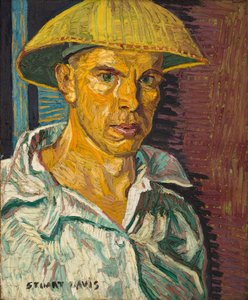
1892–1964, アメリカ合衆国
スチュアート・デイヴィス
スチュアート・デイビス:アメリカン・モダニズムの先駆者 1892年12月7日、ペンシルベニア州フィラデルフィアに生まれたスチュアート・デイビスは、幼少の頃から芸術的な環境の中で育ちました。彼の父、エドワード・ワイヤット・デイビスはフィラデルフィア・プレスの美術編集者であり、母、ヘレン・スチュアート・デイビスは彫刻家でした。この家族背景が、彼のかつてない視覚芸術への関心を育んだことは疑いありません。 デイビスは1909年から1912年まで、ニューヨーク市のロバート・ヘンリー・スクール・オブ・アートでロバート・ヘンリーの指導を受け、正式な訓練を受けました。この時期に、ジョン・スローン、グレン・コールマン、ヘンリー・グリントケンキャンプといった画家たちと永続的な友情を築きました。 初期キャリアとアームリー・ショー デイビスはすぐに、画期的なアームリー・ショー(1913年)で最も若い出展者の一人として認められました。彼はアッシュカン派の様式を反映した水彩画を5点発表し、彼の芸術的旅路における初期段階となりました。 芸術的発展とスタイル 1920年代を通して、デイビスは独特な成熟したスタイルを発展させました。彼は抽象的な静物画や風景画の制作を開始し、プロト・ポップアートの要素を特徴とし、タバコのパッケージやスパークプラグ広告などの現代的な主題を構成に取り入れました。 彼の作品は大胆で活気に満ちた性質で知られています。デイビスの芸術的表現は、彼が愛したジャズ音楽から大きな影響を受け、1940年代と1950年代の絵画においてますます顕著になりました。アッシュカン派運動もまた、彼の初期の美的感覚を形作る上で重要な役割を果たしました。 影響とインスピレーション ロバート・ヘンリー: 基礎的な訓練を提供し、生活の直接観察を奨励しました。 アッシュカン派: 都市リアリズムと日常の主題への彼の初期の焦点を影響を与えました。 キュビズム: 彼が抽象的な形や断片化された視点を探求するよう促しました。 ジャズ音楽: 彼の絵画のリズム感と即興性を生み出しました。 代表作 1928年に完成したOdol (Modernism)は、デイビスのユニークなスタイルの典型的な例です。この絵画は、抽象的な形と大衆文化からの認識可能なイメージを融合させる彼の能力を示しています。 他の重要な作品にはRocks, Gloucester(1915年)、The Mellow Pad、そしてTropes de Teens(1956年)があります。 遺産と歴史的意義 スチュアート・デイビスのアメリカン・モダニズムへの貢献は否定できません。彼は伝統的な芸術的慣習に挑戦し、現代的なテーマを取り入れることで、次世代のアーティストのための道を切り開きました。 抽象絵画の先駆者として、彼はより広い文脈の中で独特なアメリカの声を確立するのに役立ちました。彼の作品は今日でも多くの人々にインスピレーションを与え続け、20世紀の芸術における重要な人物としての地位を確固たるものにしています。
スチュアート・デイヴィスのその他の作品
 オドル
 Lucky Strike1924
 Sixth Avenue El1931
 Arboretum by Flashbulb
T Viewをめぐるエッセイ
 Beyond the Surface: Exploring the Emotional Depth of Cubist ExpressionismDiscover the profound emotional resonance within Cubist Expressionism. Explore how fragmented forms and geometric abstraction convey deep h…
 Dreams on Canvas: Understanding Automatist and Veristic SurrealismIn 1924, André Breton launched a movement in Paris to liberate the mind. One path used spontaneous gestures, while the other used photograp…
 Electric Chaos: Capturing the Kinetic Pulse of Urban Crowd Scenes in Pop Art and Street StyleExplore the electric pulse of urban pop art and street style through expert analysis. Dive into the chaos of the city's vibrant movement no…