プリント版に切り替え
 詳細を表示
詳細を表示







































 いずれかの辺が105 cm(約41インチ)を超えるアートワークまたは複製画の場合、フレームは分解されたキットの状態でお届けいたします。この方法は、輸送中の破損を防ぎ、安全に配送するために採用しております。


A Window Into Domestic Tranquility: Gabriel Metsu’s “A Woman Seated at a Window”
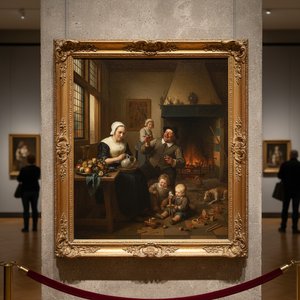
Gabriel Metsu's "A Woman Seated at a Window," painted circa 1660, stands as a quintessential example of Dutch Golden Age genre painting—a niche-piece meticulously crafted to capture the subtle beauty and contemplative spirit of everyday life. More than just a depiction of a woman indoors, this artwork is laden with symbolic resonance, reflecting prevailing artistic sensibilities and humanist ideals of the era. Gerrit Dou’s influence is palpable in Metsu's masterful illusionistic technique, mirroring the architectural form of a window recess—a stylistic choice that elevates the scene beyond mere representation into an immersive experience for the viewer.Composition & Illusionism: The Art of Mimicking Reality
The painting’s composition immediately draws attention to its central figure – a woman gracefully posed at a windowsill bathed in diffused light. Metsu skillfully employs linear perspective, creating depth within the room and guiding the eye towards the focal point. Supporting this central element are carefully arranged objects—a bowl brimming with fruit, scattered books, and a grapevine climbing upwards—each contributing to the overall atmosphere of serene domesticity. The arched window frame itself reinforces this illusionistic effect, harking back to Dou’s pioneering use of nisstuk format, where artists aimed to convincingly reproduce architectural spaces as if they were actual windows.Color Palette & Texture: Subtle Harmonies and Precise Rendering
The color palette is restrained yet impactful, dominated by muted browns and blacks that establish a grounding backdrop for the scene. However, Metsu introduces warmer hues—primarily reds and yellows within the fruit bowl—and splashes of blue-green from the grapevine, creating visual interest without overwhelming the viewer’s gaze. Crucially, Metsu demonstrates exceptional brushwork, achieving smooth transitions between light and shadow and meticulously rendering textures – from the folds of the woman's dress to the delicate surface of the fruit. This dedication to realism underscores the artist’s commitment to capturing not just what is seen but also how it feels.Symbolism: Beyond Appearance—Psalm 128 and The New Eve
“A Woman Seated at a Window” transcends its visual beauty through layered symbolism rooted in biblical references. The apple held by the woman serves as an allusion to “The New Eve,” representing Mary, symbolizing fertility and divine grace – a motif prevalent in Dutch art during this period. Simultaneously, the birdcage and hearth evoke images of happiness and comfort, echoing Psalm 128’s blessing upon those who cultivate their homes with diligence. These elements collectively convey a humanist vision of domestic life as a cornerstone of spiritual fulfillment.Concluding Impression: A Legacy of Quiet Elegance
Gabriel Metsu's “A Woman Seated at a Window” remains an enduring testament to the Dutch Golden Age’s artistic prowess—a masterpiece that continues to inspire admiration for its meticulous realism, subtle symbolism, and evocative portrayal of human experience. Its quiet elegance speaks volumes about the era’s preoccupation with portraying everyday life with dignity and grace, cementing Metsu's place as one of the most celebrated artists of his time.Q&A
「A Woman Seated at a Window」は、ガブリエル・メツのキャリアにおけるどの時期の作品でしょうか?
「A Woman Seated at a Window」は、ガブリエル・メツの画業におけるMature Periodに属します。この分類は、作品をアーティストの作風の変遷に関連付けるものです。
ガブリエル・メツ作「A Woman Seated at a Window」の輝度はどの程度ですか?
ガブリエル・メツ作「A Woman Seated at a Window」 の輝度は Dark です。輝度とは、色がどれほど光を反射しているかを表す指標です。
ガブリエル・メツ作「A Woman Seated at a Window」は、どのような主題と情緒を融合させているのでしょうか?
「A Woman Seated at a Window」にはdomesticity, symbolism, interior scene, fruit bowl, genre painting, illusionistic format, psalm 128, window nicheが描かれており、その情緒はSereneと表現されています。
More about this painting
 設置イメージを表示
 シェアする
シェアする シェアする
シェアする
 詳細を見る
詳細を見る ガイドを表示

 ダウンロード
 似ている作品
 X線調査
X線調査 スライドショーを表示
 Q&A
Q&A 統計情報
統計情報