
 プレビュー
プレビュー
 プリントを購入
 シェアする
シェアする シェアする
シェアする
 詳細を見る
詳細を見る

 ダウンロード
 似ている作品
 X線調査
X線調査 スライドショー
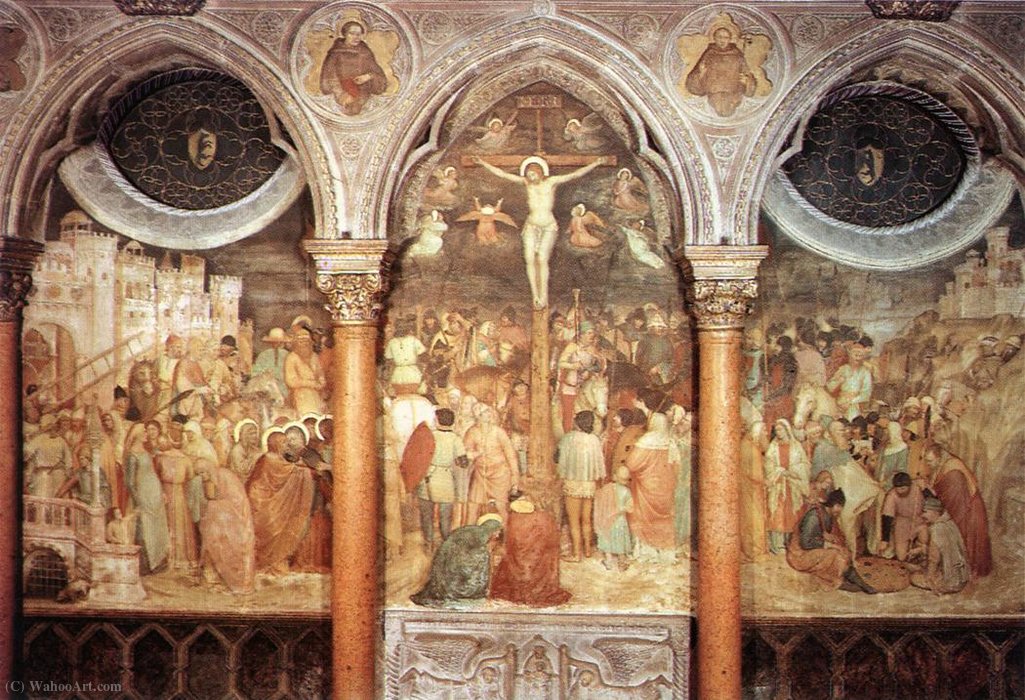
Crucifixion

 詳細を見る
詳細を見る




P118B $10

P118H $10

P118W $10

P438Z $10

P508JH $12

P508YH $12

P805H $10

P805Z $10

P919BZ $10

P919G $10

P919XJ $10

P959ZH $10

P968JZ $12

W106C $8

W218G $10

W218JH $8

W218Y $10

W307PJ $10

W316G $10

W316PJ $8

W316Y $10

W398PJ $8

W4111J $10

W500HY $15

W500JH $15

W692G $12

W849H $8

W940BG $15

W953PJ $8




作品のオリジナル比率に合わせた、当店の規定サイズからお選びください。

特定のフレームやスペースに合わせて、ご希望のサイズをご入力いただけます。選択されたサイズが元の画像の比率と異なる場合、アートワークをトリミングするか、手描きで要素を追加して絵画を拡張いたします。デジタルモックアップ を制作し、制作開始前にご確認(承認)をいただきます。
画面上のプレビューは、実際のトリミングや拡張を正確に反映しているものではありません。最終的な構図は、モックアップによってのみ正確にご確認いただけます。
カスタムサイズもご利用いただけますが、元の比率を維持するためには、あらかじめ用意されたリストからサイズを選択することをお勧めいたします。
ご注文後、OriginalUniqueArt.com チームより詳細な指示をお送りするとともに、仕上がりイメージ(モックアップ)をご提供いたします。


 ガラスオプションは、110cm未満のサイズでのみご利用いただけます。

Crucifixion
複製技法
複製画のサイズ
-


合計金額
$ 300
アーティストの略歴
The Master of Veronese Gothic: The Life and Legacy of Altichiero da Zevio
In the twilight of the fourteenth century, as the rigid structures of the Byzantine tradition began to soften under the influence of a new, more humanistic vision, there emerged a painter whose brushwork would define the soul of the Veronese School. Altichiero da Zevio, born near the quiet town of Zevio in Verona around 1330, was not merely a chronicler of sacred events but a pioneer of the Venetian Gothic style. While the biographical shadows surrounding his early years remain somewhat dense, the vibrant frescoes he left behind act as a luminous window into his creative spirit. Scholars often trace the lineage of his genius back to Florence, suggesting that he breathed the same artistic air as Giotto. This connection, likely forged through an intimate study of Giotto’s pupils like Taddeo Gaddi, allowed Altichiero to infuse his work with a profound sense of volume, weight, and narrative clarity that was revolutionary for his time.
The evolution of Altichiero’s artistry is best understood through his monumental contributions to the civic and religious landscapes of Verona and Padua. His early ascent to prominence was marked by the prestigious commission for the Sala del Podestà within the della Scala palace. Here, around 1364, he embarked on an ambitious cycle depicting scenes from Josephus's Wars of the Jews. This project was far more than a decorative endeavor; it was a masterclass in historical storytelling. Through these frescoes, Altichiero demonstrated an uncanny ability to organize complex, multi-layered compositions, transforming cold stone walls into theatrical stages where history and drama converged. His mastery of the narrative fresco established him as a premier storyteller of the Trecento, capable of guiding the viewer's eye through intricate battle scenes and emotional confrontations with seamless grace.
A Symphony of Color and Devotion in Padua
As his reputation expanded beyond the borders of Verona, Altichiero’s journey led him to the intellectual and artistic heart of Padua. It was here that his collaboration with Jacopo d'Avanzi reached its zenith, producing some of the most breathtaking examples of late Gothic art in existence. In the chapel of Saint James at the Basilica of Sant’Antonio, the duo breathed life into the hagiography of Saint James the Elder. These works are characterized by a unique visual dynamism, where religious iconography is wedded to an emerging interest in naturalism and emotional depth. The frescoes do not merely depict saints; they inhabit a world of palpable atmosphere, where the drapery of robes and the expressions of the faithful suggest a reality that is both divine and deeply human.
Perhaps even more intimate is his contribution to the Oratorio di San Giorgio. Often whispered about in the same breath as the Scrovegni Chapel, this small, sacred space serves as a testament to Altichiero’s ability to scale his monumental vision down to a poignant, personal level. Working within this family mausoleum, he and his workshop created a vibrant tapestry of devotion that continues to transport modern visitors back to the dawn of the Renaissance. His work in Padua represents a crucial bridge in art history—a moment where the decorative elegance of the Gothic era began to embrace the structural innovations and psychological complexity that would soon define the Italian Renaissance.
The Enduring Echo of a Venetian Pioneer
Though Altichiero da Zevio passed away around 1390, his influence did not fade with his final breath. He left behind a legacy etched into the very architecture of Northern Italy, providing a foundation upon which future generations of Venetian and Veronese painters would build. His significance lies in his role as a transitional figure; he took the inherited language of the Middle Ages and began to rewrite it with a new vocabulary of space, movement, and human emotion. To study Altichiero is to witness the slow, beautiful metamorphosis of European art, moving away from the static icons of the past toward a more breathing, living world.
The enduring importance of his oeuvre can be summarized through several key artistic pillars:
- Narrative Innovation: His ability to transform historical and biblical texts into sweeping, cinematic fresco cycles.
- Stylistic Synthesis: The successful blending of Florentine Giottesque naturalism with the decorative elegance of the Venetian Gothic.
- Architectural Integration: A profound mastery of using fresco to expand the perceived space of chapels and civic halls.
- Foundational Legacy: Establishing the Veronese School as a distinct and powerful force in the Italian artistic landscape.

altichiero da zevio
1330 - 1390 , Italy
基本情報
- Artistic Movement Or Style: Gothic Art
- Artists Or Movements Influenced By This Artist: Veronese School
- Artists Who Influenced This Artist: Giotto
- Date Of Birth: c. 1330
- Date Of Death: c. 1390
- Full Name: Altichiero da Zevio
- Nationality: Italian
- Notable Artworks:
- Scenes from the Life of St James
- Crucifixion
- Adoration of the Magi
- Place Of Birth: Zoveo bei Verona, Italy
関連記事
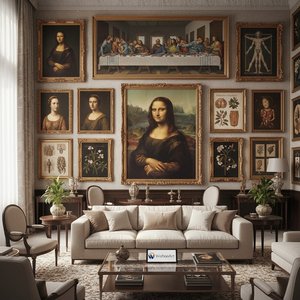
レオナルド・ダ・ヴィンチ:至高の25選 - 芸術、科学、そして不朽の名作の世界
レオナルド・ダ・ヴィンチの至宝25選。モナリザ、最後の晩餐…ルネサンス美術を代表する名画の世界へ。芸術史、技法、そして感動の物語を紐解き、お部屋に飾る高級複製画で特別な空間を。OriginalUniqueArt.comで全コレクションをご覧ください。
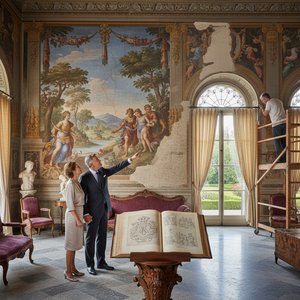
家族の遺産を壁画で彩る:伝統技法が紡ぐ、時を超越する美と記憶
古代から現代までの壁画の歴史と技法を解説。日本の壁画文化やカスタムオーダーによる家族の遺産表現、保存・修復技術まで網羅。専門家が時を超越する美と記憶を紡ぐ芸術的価値をご案内します。
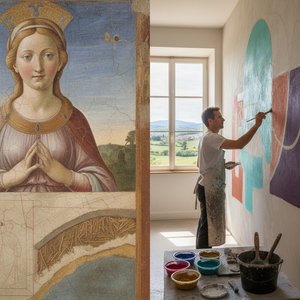
The Enduring Legacy of Fresco Painting: Techniques, History & Contemporary Relevance
Explore the rich history & enduring artistry of fresco painting – from Giotto to Michelangelo! Discover techniques, conservation efforts, & modern applications. Learn how OriginalUniqueArt brings this timeless art form to your home.

The Enduring Legacy of Fresco: Technique, History & Artistic Expression Across Cultures
Explore the rich history & enduring legacy of fresco painting! Discover ancient techniques, Giotto's masterpieces, and modern applications. Expert insights for art lovers & professionals.

The Enduring Legacy of Fresco: Technique, History & Artistic Expression
Explore the rich history & enduring artistry of fresco painting. Discover techniques from Giotto to Michelangelo, conservation efforts, & modern applications. Learn how OriginalUniqueArt brings this timeless art form to your home.

