Passa alle stampe
 Espandi i dettagli







































 Per opere d'arte o riproduzioni con un lato superiore a 105 cm (circa 41 pollici), la cornice verrà spedita in forma di kit smontato. Questo metodo garantisce una consegna sicura e previene danni durante il trasporto.


A Tapestry of Autumnal Splendor
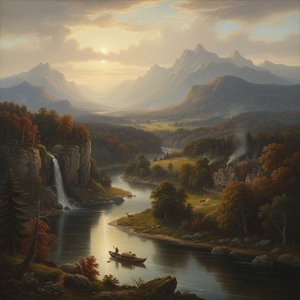
To gaze upon William Trost Richards' Forest Interior in Autumn is to step through a veil into a moment suspended between seasons—a breathtaking immersion into the heart of nature’s magnificent transition. This painting does more than merely depict woods; it captures the very breath of fall itself. The air seems thick with the scent of decaying leaves and damp earth, while the light filters through the canopy in shafts of liquid gold. Richards masterfully orchestrates a scene where every element, from the vibrant crimson foliage to the gentle murmur of the stream, contributes to an overwhelming sense of serene grandeur.
The Artistry of Observation: Technique and Detail
Richards’ approach to landscape painting is marked by a commitment to meticulous observation, a hallmark that distinguishes his work within the tradition of American landscape art. While the emotional resonance of the scene speaks to Romantic sensibilities, the execution reveals an almost scientific fidelity to detail. Observe how the artist renders the texture of bark on the foreground trees, or the delicate scattering of fallen leaves upon the forest floor. The composition itself is a study in balance; the central stream acts as a visual artery, drawing the eye deeper into the painting's depths, while the varied placement of trees creates a natural rhythm that guides the viewer’s gaze effortlessly from the immediate foreground to the hazy distance.
Historical Echoes and Emotional Resonance
Created in 1865, this work emerges from a period when American artists were deeply engaged with defining a national identity through its unparalleled natural beauty. For Richards, nature was not just a backdrop; it was a subject worthy of profound study. The inclusion of the solitary figure near the center adds a poignant human element. This person is not merely placed within the scene; they are absorbed by it, serving as an emotional anchor for the viewer—a silent witness to the cyclical beauty that both comforts and reminds us of time's passage. Autumn, in art, has always symbolized change, maturity, and beautiful decay.
Bringing the Forest Home: For Collectors and Designers
For those who seek to infuse a space with the timeless poetry of the wilderness, a reproduction of this piece offers an unparalleled opportunity. The warm palette—the deep reds, burnt oranges, and rich umbers—possesses an inherent warmth that can transform any room, whether it be a formal drawing-room or a cozy study nook. Its enduring appeal lies in its perfect marriage of vibrant color and profound tranquility. Owning this artwork is not just acquiring a painting; it is curating a permanent portal to the quiet majesty of an autumn day in the American woods.
Domande e risposte
William Trost Richards, autore di "Forest Interior in Autumn", è conosciuto con altri nomi?
Altri nomi registrati per William Trost Richards, autore di "Forest Interior in Autumn", includono W. Trost Richards.
Che posto occupa "Forest Interior in Autumn" all'interno della produzione artistica di William Trost Richards?
All'interno della produzione di William Trost Richards, "Forest Interior in Autumn" si inserisce nello stile Hudson River School, affiancandosi ai temi di hudson river school influence, nature's beauty captured vividly, meticulous detail focus, american landscape tradition.
È disponibile una scheda informativa su "Forest Interior in Autumn" di William Trost Richards per gli studenti?
La pagina Schede didattiche di "Forest Interior in Autumn" di William Trost Richards offre una scheda informativa stampabile su due fogli: l'opera d'arte con la sua tabella identificativa, una linea temporale decennale che la colloca nel periodo di vita dell'artista, altre opere dello stesso autore, la tavolozza dei colori misurata e citazioni pronte da copiare in quattro stili diversi.
 Anteprima in scala reale
 Invia
Invia Condividi
 Dettagli opera
 Guida
Guida

 Scarica
 Simili
 Radiografia
 Slideshow
 Q&A
Q&A Statistiche