

 Anteprima in scala reale
 Condividi
 Condividi
 Dettagli
 Guida stampabile

 Scarica
 Articoli simili
 Radiografia
 Slideshow
 Statistiche
Mariana
 Olio su tela
- Opere da parete
- Pre-Raphaelite Brotherhood
 1851
1851 49.0 x 59.0 cm
 Tate Britain
 Leggi tutto
Riproduzione a olio fatta a mano
Olio su tela dipinto a mano nelle tue dimensioni e con la tua cornice, realizzato su ordinazione dai nostri artisti. ( Passa alle stampe Passa all'immagine digitale)




P118B €10

P118H €10

P118W €10

P438Z €10

P508JH €12

P508YH €12

P805H €10

P805Z €10

P919BZ €10

P919G €10

P919XJ €10

P959ZH €10

P968JZ €12

W106C €8

W218G €10

W218JH €8

W218Y €10

W307PJ €10

W316G €10

W316PJ €8

W316Y €10

W398PJ €8

W4111J €10

W500HY €15

W500JH €15

W692G €12

W849H €8

W940BG €15

W953PJ €8




Scegli tra le nostre dimensioni predefinite, che rispettano le proporzioni originali dell'opera d'arte.

Inserisci la larghezza e l'altezza di cui hai bisogno, per adattarle alla tua cornice o alla tua parete. Trattandosi di un'opera dipinta a mano, in caso di dimensioni con una forma differente, l'artista può dipingere un po' più oltre i bordi dell'immagine o ritagliare leggermente — la scelta spetta a te. Ti invieremo un mockup digitale da approvare prima che la pittura abbia inizio. L'immagine mostrata in questa pagina non rappresenta il risultato reale — solo il mockup lo fa.
Dopo l'ordine, il team di OriginalUniqueArt.com contatterà il cliente via e-mail per ricevere le istruzioni e fornirà un'anteprima del mockup
Consegna in tutto il mondo () in 3/4 settimane anziché nelle normali 5 settimane. (22 Ottobre). Nessun compromesso sulla qualità.

Spedizione espressa gratuita in tutto il mondo

Tela in lino di alta qualità

Assicurazione completa sulla spedizione

Garanzia di rimborso dei dazi doganali

Garanzia di perfetta fedeltà cromatica

Politica di reso entro 100 giorni (solo per difetti di fabbricazione)

Garanzia di rimborso al 100%

Sconto per acquisti multipli
 L'opzione vetro è disponibile solo per dimensioni inferiori a 110 cm

Mariana
Tecnica di riproduzione
Dimensioni della riproduzione
-


Prezzo totale
€ 263
The Enigmatic Figure of Mariana
John Everett Millais’s “Mariana,” painted in 1851, isn't merely a portrait; it’s an exquisitely rendered distillation of Victorian melancholy and the quiet desperation of a woman caught between longing and resignation. The painting immediately draws the viewer into a small, intimate chamber, dominated by a figure draped in a luminous blue gown – a color that simultaneously suggests both serenity and profound sadness. This isn't a scene of dramatic action or vibrant celebration; instead, Millais masterfully captures a moment of suspended animation, a pregnant pause within a life seemingly defined by waiting.
The subject, identified as Mariana from Shakespeare’s “Measure for Measure,” is positioned near a window adorned with stained glass panels depicting the Annunciation. This subtle detail introduces a layer of religious symbolism – the promise of divine grace juxtaposed against the woman's earthly sorrow. Her posture, with one hand resting on her hip and the other supporting a table laden with wine glasses and a vase, speaks volumes about her state of mind: poised between activity and inertia, engagement and detachment. The carefully arranged objects around her—the embroidery hoop, the fallen leaves, the scattered fruit – contribute to a sense of domesticity tinged with decay and loss.
Pre-Raphaelite Detail and Atmospheric Rendering
Millais’s technical skill is breathtakingly evident in every brushstroke. He employed the Pre-Raphaelite style—a movement characterized by an obsessive attention to detail, a reverence for nature, and a rejection of academic conventions—to create an image that feels both hyperrealistic and intensely emotional. The embroidery itself is rendered with astonishing precision, each stitch painstakingly depicted, inviting the viewer to contemplate the labor and perhaps the loneliness associated with such meticulous work. The use of light is particularly noteworthy; it’s diffused and soft, bathing the scene in a melancholic glow that enhances the painting's overall mood.
- Color Palette: Dominated by blues, greens, and browns, creating a sense of muted elegance.
- Brushwork: Loose and expressive, particularly evident in the rendering of the foliage and the texture of the fabrics.
- Composition: Carefully balanced, with the figure occupying a central position within the confined space.
Symbolism and Victorian Longing
“Mariana” is rich in symbolic meaning, reflecting the anxieties and sensibilities of Victorian society. The woman’s posture—stretching her back, seemingly burdened by an unseen weight—represents the constraints placed upon women during that era. Her gaze towards the window, a space offering both beauty and distance, symbolizes her yearning for something beyond her immediate circumstances. The fallen leaves suggest the passage of time and the inevitability of loss, while the stained-glass windows hint at a spiritual longing that remains unfulfilled.
Furthermore, the reference to Tennyson’s poem adds another layer of interpretation. Mariana's story is one of abandonment and despair, yet Millais transforms this tragic narrative into a poignant meditation on beauty, solitude, and the enduring power of human emotion. The painting isn’t simply about a woman in distress; it’s about the universal experience of longing—a feeling that transcends time and circumstance.
A Timeless Portrait of Human Emotion
“Mariana” remains one of Millais's most celebrated works, captivating viewers with its haunting beauty and profound emotional resonance. It stands as a testament to the Pre-Raphaelite movement’s commitment to capturing the complexities of human experience—a poignant reminder that even in moments of quiet solitude, the heart can still ache with longing and unfulfilled desires. Reproductions of this masterpiece offer an opportunity to bring its evocative atmosphere into any space, serving as both a work of art and a window into the soul.
Domande e risposte
Qual è l'atmosfera generale di "Mariana" di Sir John Everett Millais?
"Mariana" ha un'atmosfera Serenità.
In che anno è stata creata "Mariana" di Sir John Everett Millais?
"Mariana" di Sir John Everett Millais è stata creata nel 1851.
Dove posso trovare opere d'arte simili a "Mariana" di Sir John Everett Millais?
Le opere simili a "Mariana" di Sir John Everett Millais sono raccolte nella pagina Opere simili dell'opera.
Biografia dell'artista
La Vita e l'Educazione di Sir John Everett Millais
Sir John Everett Millais, un rinomato pittore e illustratore inglese, nacque l'8 giugno 1829 a Southampton, in Inghilterra. Fin da bambino prodigio, divenne lo studente più giovane ad entrare alle Royal Academy Schools all’età di undici anni.La Fondazione della Fratellanza Preraffaellita
Nel settembre del 1848, Sir John Everett Millais, insieme a William Holman Hunt e Dante Gabriel Rossetti, fondò la Fratellanza Preraffaellita nella sua casa di famiglia in Gower Street, Londra. Questo movimento mirava a rivivere lo stile del primo Rinascimento italiano.Opere Principali
Alcune delle opere più notevoli di Sir John Everett Millais includono:- Cristo nella casa di suoi genitori (1849-1850), un'opera controversa che presentava la sua realistica rappresentazione di una famiglia umile.
- Un Ugonotto (1851-1852), che raffigurava una giovane coppia sul punto di essere separata a causa dei conflitti religiosi.
- Ofelia (1851-1852), un dipinto che mostrava le sue superfici pittoriche dense ed elaborate, spesso concentrandosi sulla bellezza e la complessità del mondo naturale.
- Mariana (1850-1851), basata sull'opera teatrale Misura per Misura di William Shakespeare e sulla poesia omonima di Alfred, Lord Tennyson.
Influenze e Sviluppo Successivo
Le opere successive di Sir John Everett Millais furono influenzate da sua moglie, Effie, che era stata precedentemente sposata con il critico John Ruskin. Il suo stile si evolse verso una forma più ampia di realismo, inizialmente condannato da Ruskin ma successivamente riconosciuto come un contributo significativo al mondo dell'arte.Musei e Collezioni
Alcune opere di Sir John Everett Millais possono essere ammirate in vari musei, tra cui:- Tate Britain, Londra, che espone L'Ordine del Rilascio (1853) e Ofelia (1852).
- Ashmolean Museum, Oxford, che espone Il ritorno della colomba alla cattedra (1851).
Eredità
L'eredità di Sir John Everett Millais si estende oltre la sua arte. Fu un pioniere del movimento preraffaellita e una figura significativa nello sviluppo dell'arte britannica.- Scopri di più su Sir John Everett Millais su OriginalUniqueArt.com.
- Esplora la Fratellanza Preraffaellita e la sua influenza sull'arte britannica su Wikipedia.

Sir John Everett Millais
1829 - 1896 , Regno Unito
Informazioni rapide
- Artisti Influenti:
- William Holman Hunt
- Dante Gabriel Rossetti
- Artisti Influenzati:
- Movimento Estetico
- Simbolismo
- Data Di Nascita: 8 giugno 1829
- Luogo Di Nascita: Southampton, Regno Unito
- Movimento Artistico: Preraffaellismo
- Nazionalità: Britannico
- Nome Completo: Sir John Everett Millais
- Opere Notevoli:
- Cristo nella casa dei genitori
- Un Ugonotto
- Ofelia
- Mariana
Articoli correlati
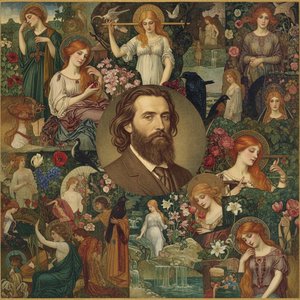
Dante Gabriel Rossetti: I 25 Capolavori che Definiscono un Maestro del Simbolismo
Esplora i 25 capolavori di Dante Gabriel Rossetti, pittore preraffaellita simbolo del romanticismo vittoriano. Scopri storie, tecniche e colori unici delle sue opere più famose. Trova riproduzioni d'arte di alta qualità per la tua casa su OriginalUniqueArt.com

I 10 Dipinti Più Famosi Dominati dal Blu Ardesia: Storia, Arte e Decorazioni Raffinate
Esplora i 10 dipinti più iconici dominati dal blu ardesia! Scopri la storia, gli artisti e le tecniche dietro capolavori impressionisti e moderni. Trova riproduzioni artistiche di alta qualità per decorare casa con .

The Pre-Raphaelite Brotherhood: Rediscovering Beauty, Romance, and Medieval Magic in Victorian Art
Embark on a journey through the Pre-Raphaelite Brotherhood. Discover the romantic symbolism, medieval magic, and radical beauty of Rossetti and Burne-Jones in this expert exploration of Victorian art history.

I Preraffaelliti: Ribellione Estetica e Dettaglio Narrativo nell'Inghilterra Vittoriana
Esplora il movimento preraffaellita con OriginalUniqueArt. Analisi approfondite di Millais, Rossetti e Hunt, tecniche innovative e l'impatto rivoluzionario sull'arte vittoriana. Scopri la bellezza e i dettagli narrativi delle opere più iconiche.

Pre-Raphaelite Romanticism: A Guide to Vivid Detail and Medieval Beauty in Victorian Art
Explore the vivid detail and medieval beauty of Pre-Raphaelite Romanticism. Discover the history of masters like Rossetti and Millais through our expert guide to Victorian art, perfect for collectors and professionals seeking authentic, museum-quality reproductions.


