Dimensione testo

() ·

Un dipinto creato per te, a mano

Cymon and Iphigenia

Riproduzione a olio fatta a mano

Olio su tela dipinto a mano nelle tue dimensioni e con la tua cornice, realizzato su ordinazione dai nostri artisti. ( Passa alle stampe Passa all'immagine digitale)

Descrizione del reperto

Experience Frederic Leighton's 'Cymon and Iphigenia,' a captivating Victorian masterpiece depicting love & transformation. Explore the painting’s rich details, symbolism, and artistic legacy at the Leighton House Museum.

Biografia dell'artista

Scopri Frederic Leighton (1830-1896): pittore e scultore britannico noto per opere accademiche, storiche e classiche come 'Clytie'. Esplora la sua arte al Leighton House Museum!

da ·

Capitolo 1

Di che dimensioni dovrebbe essere?

Scorri per cambiare la dimensione; l'immagine a sinistra mostra la cornice nella sua larghezza reale. Le proporzioni dell'originale vengono mantenute.

Formato standard
su misura
CM
INCH

Scegli tra le nostre dimensioni predefinite, che rispettano le proporzioni originali dell'opera d'arte.

larghezza
altezza

Inserisci la larghezza e l'altezza desiderate, per adattarle alla tua cornice o alla tua parete. Trattandosi di un'opera dipinta a mano, in caso di dimensioni con un formato differente, l'artista può estendere leggermente il dipinto oltre i bordi dell'immagine o ritagliare una piccola parte — la scelta spetta a te. Ti invieremo un mockup digitale da approvare prima che la realizzazione abbia inizio. L'immagine mostrata in questa pagina non rappresenta il risultato finale — solo il mockup lo fa.

Capitolo 2

Come desideri che venga consegnato?

Scegli il tipo di bordo per la tela tesa

Scegli la tua cornice

Corner sample of the WhiteWrap canvas edge finish, stretched on legno massello bars
Bianco €1
Corner sample of the BlurSideWrap canvas edge finish, stretched on legno massello bars
Bordi sfumati €1
Corner sample of the ExtendedWrap canvas edge finish, stretched on legno massello bars
Bordi estesi €1
Corner sample of the P118B picture frame: polistirene stampato, 5 cm wide and 3 cm thick
P118B €10
Corner sample of the P118H picture frame: polistirene stampato, 5 cm wide and 3 cm thick
P118H €10
Corner sample of the P118W picture frame: polistirene stampato, 5 cm wide and 3 cm thick
P118W €10
Corner sample of the P438Z picture frame: polistirene stampato, 5.5 cm wide and 3.5 cm thick
P438Z €10
Corner sample of the P508JH picture frame: polistirene stampato, 7 cm wide and 3.5 cm thick
P508JH €12
Corner sample of the P508YH picture frame: polistirene stampato, 7 cm wide and 3.5 cm thick
P508YH €12
Corner sample of the P805H picture frame: polistirene stampato, 5 cm wide and 3.5 cm thick
P805H €10
Corner sample of the P805Z picture frame: polistirene stampato, 5 cm wide and 3.5 cm thick
P805Z €10
Corner sample of the P919BZ picture frame: polistirene stampato, 7 cm wide and 3.5 cm thick
P919BZ €10
Corner sample of the P919G picture frame: polistirene stampato, 7 cm wide and 3.5 cm thick
P919G €10
Corner sample of the P919XJ picture frame: polistirene stampato, 7 cm wide and 3.5 cm thick
P919XJ €10
Corner sample of the P959ZH picture frame: polistirene stampato, 5 cm wide and 3 cm thick
P959ZH €10
Corner sample of the P968JZ picture frame: polistirene stampato, 6 cm wide and 4 cm thick
P968JZ €12
Corner sample of the W106C picture frame: legno massello, 5 cm wide and 3 cm thick
W106C €8
Corner sample of the W218G picture frame: legno massello, 5 cm wide and 3 cm thick
W218G €10
Corner sample of the W218JH picture frame: legno massello, 5 cm wide and 3 cm thick
W218JH €8
Corner sample of the W218Y picture frame: legno massello, 5 cm wide and 3 cm thick
W218Y €10
Corner sample of the W307PJ picture frame: legno massello, 6 cm wide and 3 cm thick
W307PJ €10
Corner sample of the W316G picture frame: legno massello, 6 cm wide and 3 cm thick
W316G €10
Corner sample of the W316PJ picture frame: legno massello, 6 cm wide and 3 cm thick
W316PJ €8
Corner sample of the W316Y picture frame: legno massello, 6 cm wide and 3 cm thick
W316Y €10
Corner sample of the W398PJ picture frame: legno massello, 5 cm wide and 3 cm thick
W398PJ €8
Corner sample of the W4111J picture frame: legno massello, 6.5 cm wide and 3.5 cm thick
W4111J €10
Corner sample of the W500HY picture frame: legno massello, 7 cm wide and 5 cm thick
W500HY €15
Corner sample of the W500JH picture frame: legno massello, 7 cm wide and 5 cm thick
W500JH €15
Corner sample of the W692G picture frame: legno massello, 8 cm wide and 4 cm thick
W692G €12
Corner sample of the W849H picture frame: legno massello, 5 cm wide and 3 cm thick
W849H €8
Corner sample of the W940BG picture frame: legno massello, 7.5 cm wide and 4.5 cm thick
W940BG €15
Corner sample of the W953PJ picture frame: legno massello, 6 cm wide and 3.5 cm thick
W953PJ €8
Corner sample of the H24-GOLD picture frame: legno intagliato e gessato, 10 cm wide and 6 cm thick
H24-GOLD €30
Corner sample of the H24-SILVER picture frame: legno intagliato e gessato, 10 cm wide and 6 cm thick
H24-SILVER €30
Corner sample of the H36-GOLD picture frame: legno intagliato e gessato, 15 cm wide and 6.5 cm thick
H36-GOLD €45
Corner sample of the H36-SILVER picture frame: legno intagliato e gessato, 15 cm wide and 6.5 cm thick
H36-SILVER €45
Anteprima cornice
Con cornice

Cornice: . Dimensioni complessive con cornice: .

Capitolo 3

Chi lo dipinge, e dovrebbe cambiare qualcosa?

Esempi di ciò che può essere modificato: Sostituire il volto con la foto del cliente; Aggiungere un animale domestico (ad es. sostituire il gatto con un cane); Inserire un messaggio nascosto nello sfondo; Cambiare il paesaggio o gli elementi dello sfondo.
Dopo l'ordine, il team di OriginalUniqueArt.com invierà un'e-mail al cliente per le istruzioni e fornirà un'anteprima del mockup

Consegna in tutto il mondo () in 3/4 settimane anziché nelle normali 5 settimane. (3 Novembre). Nessun compromesso sulla qualità.

Capitolo 4

Le ultime rifiniture

Una targhetta, come quella di un museo?

Dettagli della targhetta in bronzo inciso

This elegant plaque features the artist's name and the title of the artwork, finely engraved for a timeless presentation.

It is made from bronze with a refined, elegant finish. The text is precisely laser-engraved for a sharp and permanent result. Measuring 9x2 cm, the plaque is compact yet easy to read. It's built to be durable and scratch-resistant, offering a professional, museum-quality look. Mounting is simple thanks to the included adhesive backing.

Dettagli della targhetta in acrilico trasparente

The plaque includes essential engraved details such as the artist's name, the title of the artwork, the date it was created, the type of media used-like oil on canvas or watercolor-a brief description of the piece, and a QR code that links to the complete artwork information.

It is crafted from clear acrylic, offering a sleek, modern appearance. The text is UV-engraved in black to ensure strong visual contrast. With a size of 10x15 cm, it ensures optimal readability. It comes equipped with two metal hooks for secure wall mounting. The plaque is designed to be weather-resistant, making it suitable for various environments, and it includes interactive features that work seamlessly with smartphone scanning.

Dettagli della targhetta in acrilico nero

This elegant plaque includes engraved information such as the artist's name, the title of the artwork, the date it was created, the type of media used (like oil on canvas or watercolor), a short description of the artwork, and a QR code for quick access to more information.

The plaque itself is made from refined black acrylic with a premium finish. The text is laser-engraved in white for high contrast and readability. Its size is 10x15 cm, designed to be easy to read. It comes with two metal hooks for professional mounting. The design is sleek and fits any interior style. It is also weather-resistant and durable, with built-in digital integration for mobile compatibility.

Una vernice protettiva?

Quando ti serve?

Capitolo 5

Il tuo dipinto, esattamente come lo hai ordinato

Cymon and Iphigenia

Tecnica di riproduzione

Dimensioni riproduzione

-

Artisti di alto livello

Maggiore dettaglio, finezza e tempi di produzione dedicati

-

Cornice per riproduzione

-

-

Per opere d'arte o riproduzioni con un lato superiore a 105 cm (circa 41 pollici), la cornice verrà spedita in forma di kit smontato. Questo metodo garantisce una consegna sicura e previene danni durante il trasporto.

Montaggio professionale richiesto - non è un prodotto fai-da-te.
Il kit deve essere assemblato e la tela tesa da un esperto cornice professionista, utilizzando colla per legno (non inclusa), una pinza per tendere la tela e morsetti per mantenere i listelli in squadra durante l'asciugatura della colla. Un montaggio errato o una tensione non uniforme della tela possono danneggiare permanentemente l'opera d'arte e non sono coperti dalla nostra garanzia.

  • Tutte le barre in legno massello sono incluse, tagliate con precisione alle dimensioni corrette.

  • Da assemblare con le viti fornite e con la colla per legno per gli incastri degli angoli, che non è inclusa e dovrà essere reperita dal vostro corniceio.

  • Sono necessari strumenti professionali non inclusi: una pinza tendicanvas (tenditore) e dei morsetti per mantenere i listelli in squadra durante l'asciugatura della colla.

Importante:
Gli incastri d'angolo richiedono colla per legno, i listelli devono essere mantenuti in posizione con dei morsetti finché la colla non è completamente asciutta, e il tensionamento della tela sulla cornice assemblata richiede una pinza per tendere la tela. Nessuno di questi strumenti è incluso nel kit. Si prega di consultare un incorniciatore professionista esperto prima di ordinare questa misura.

Didascalia

-

-

Vernice protettiva

Vernice lucida (esalta i colori, protegge da luce e umidità)

-

Personalizza la mia opera

Esempi di personalizzazione: sostituire il volto con una foto del cliente; aggiungere un animale domestico (ad esempio, sostituire un gatto con un cane); inserire un messaggio nascosto nello sfondo; cambiare il paesaggio o gli elementi dello sfondo.

-

Consegna rapida

Consegna in tutto il mondo () in 3/4 settimane anziché nelle normali 5 settimane. (3 Novembre). Nessun compromesso sulla qualità.

-

Spedizione espressa

Spedizione in tutto il mondo () in 5 settimane. (10 Novembre).

Spedizione inclusa

Prezzo finale calcolato

€ 268

Prezzo totale € 268

L'opzione vetro è disponibile solo per dimensioni inferiori a 110 cm

Incluso in ogni ordine

  • Spedizione espressa gratuita in tutto il mondo
  • Tela in lino di alta qualità
  • Assicurazione completa sulla spedizione
  • Garanzia di rimborso dei dazi doganali
  • Garanzia di fedeltà cromatica assoluta
  • Politica di reso entro 100 giorni (solo per difetti di fabbricazione)
  • Garanzia di rimborso al 100%
  • Offerta per acquisti multipli

A Vision of Ideal Beauty: Frederic Leighton’s “Cymon and Iphigenia”

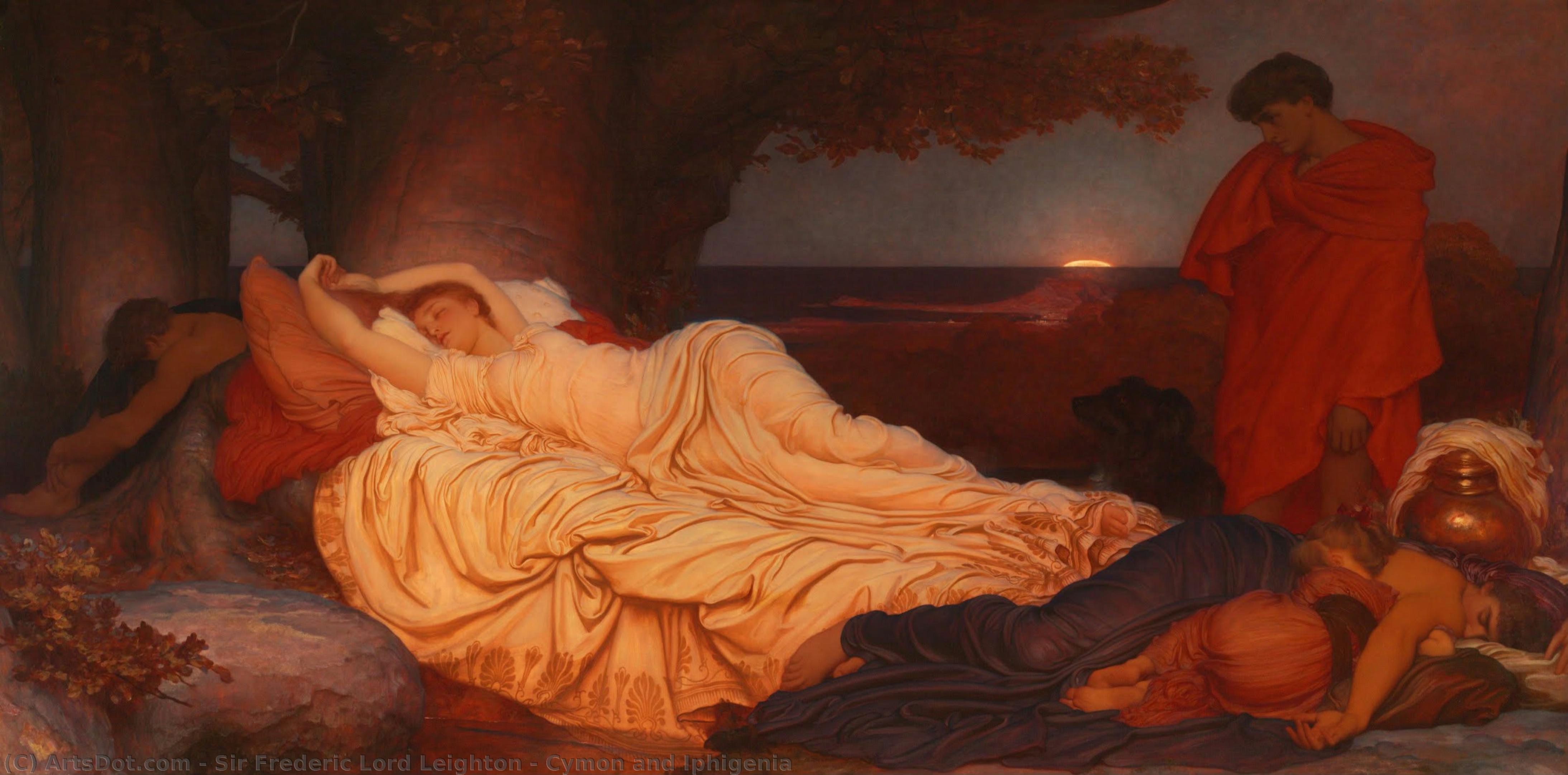
Frederic Leighton's "Cymon and Iphigenia," painted in 1884, isn’t merely a depiction of Greek myth; it’s a carefully constructed tableau of Victorian ideals – a testament to beauty, virtue, and the transformative power of love. Leighton, already established as a Royal Academician and a master of historical painting, sought to elevate the narrative beyond its original source material, weaving in elements of Pre-Raphaelite sensuality and classical restraint into a scene brimming with quiet drama. The painting immediately draws the eye to Iphigenia, lying gracefully on a mossy bank beneath an ancient tree – her pose suggesting both languor and vulnerability. Her golden hair cascades around her face, illuminated by dappled sunlight that filters through the leaves, while her eyes are closed in peaceful slumber. The artist’s meticulous attention to detail is evident in every curve of her body, every ripple of fabric, and the delicate rendering of the foliage surrounding her.

A Story of Awakening and Moral Ascent

The myth underpinning “Cymon and Iphigenia” originates from Boccaccio’s *Decameron*, a collection of tales set in Florence during the Black Death. The story recounts how the brutish youth Cymon, initially characterized by his rudeness and lack of refinement, encounters the beautiful Iphigenia. Through her presence, he undergoes a profound transformation, shedding his coarse manners and embracing intellectual pursuits – becoming a man of virtue and learning. Leighton cleverly captures this pivotal moment in the narrative, not through overt action but through subtle gestures and expressions. Cymon stands before her, gazing at her with an expression of rapturous admiration, while Iphigenia’s serene repose suggests that she has already initiated his moral awakening. The inclusion of a young slave girl, Lena, adds another layer to the scene, representing innocence and serving as a visual reminder of the transformative power of beauty.

Technique and Aesthetic Choices

Leighton's mastery is evident in his masterful use of color and light. He employs a muted palette dominated by earthy greens, browns, and golds, creating an atmosphere of tranquility and timelessness. The lighting is particularly noteworthy – it’s diffused and atmospheric, casting long shadows and highlighting the textures of the foliage and Iphigenia's garments. The artist meticulously rendered every detail with painstaking precision, utilizing a smooth, polished technique that reflects his academic training. He drew heavily on classical sculpture for inspiration, evident in the idealized forms of the figures and the careful arrangement of the composition. The background landscape is deliberately vague, allowing the viewer’s attention to remain focused on the central figures. The use of a dark, almost velvety moss beneath Iphigenia further emphasizes her vulnerability and purity.

Symbolism and Victorian Ideals

“Cymon and Iphigenia” is deeply rooted in the artistic and social conventions of Victorian England. The painting embodies several key ideals prevalent during that era: the celebration of beauty, the pursuit of virtue, and the reverence for classical antiquity. Leighton’s choice to depict a mythological scene rather than a contemporary subject allowed him to explore these themes within a framework of idealized beauty and moral instruction. The image speaks to the Victorian fascination with both Greek mythology and the concept of “moral education,” where art was seen as a tool for shaping virtuous citizens. Furthermore, the painting reflects Leighton’s own personal interests – his love of classical sculpture and his desire to create works that were both aesthetically pleasing and morally uplifting. The overall effect is one of serene contemplation, inviting viewers to reflect on the timeless themes of beauty, virtue, and transformation.

A Legacy of Beauty: Reproductions and Inspiration

Today, “Cymon and Iphigenia” remains a beloved masterpiece, admired for its exquisite detail, evocative atmosphere, and profound symbolism. High-quality reproductions capture the painting’s luminous quality and intricate details, making it accessible to a wider audience. Its themes continue to resonate with art lovers and interior designers alike, who appreciate its timeless beauty and its ability to evoke a sense of tranquility and contemplation. When selecting a reproduction, consider the scale and framing options to best complement your space – allowing this iconic work of art to grace your home and inspire generations to come.

Domande e risposte

In quale stanza si consiglia di collocare "Cymon and Iphigenia" di Sir Frederic Lord Leighton, considerando i suoi colori?

I colori Scuri di "Cymon and Iphigenia" di Sir Frederic Lord Leighton si armonizzano con l'ambiente consigliato: un/una Zona living.

Che tipo di opera è "Cymon and Iphigenia"?

"Cymon and Iphigenia" è un'opera in Opere da parete.

Quali tecnica e stile caratterizzano "Cymon and Iphigenia" di Sir Frederic Lord Leighton?

"Cymon and Iphigenia" è realizzata in Olio su tela, nello stile Academic Romanticism.

Maggiori informazioni su questo dipinto

Anteprima in scala reale Anteprima in AR Passa alle stampe Passa all'immagine digitale Invia
Dettagli opera Guida Aggiungi ai preferiti Scarica Simili Radiografia Slideshow Domande e risposte Statistiche

In numeri

  • 1884l'anno in cui è stata dipinta
  • 29cornici tra cui scegliere
  • dimensioni standard, nelle proprie proporzioni
  • 5settimane per la realizzazione e la consegna
Sir Frederic Lord Leighton

Sir Frederic Lord Leighton

1830 - 1896, Regno Unito

Informazioni rapide su Sir Frederic Lord Leighton

  • Artisti Influenti:
    • Eduard von Steinle
    • Giovanni Costa
    • Ingres
  • Artisti Influenzati: ['New Sculpture britannica']
  • Data Di Nascita: 3 dicembre 1830
  • Luogo Di Nascita: Scarborough, Regno Unito
  • Movimento Artistico: Academicismo, Pre-Raffaellita
  • Nazionalità: Britannico
  • Nome Completo: Sir Frederic Lord Leighton
  • Opere Notevoli:
    • Athlete Wrestling with a Python
    • Clytie 1
    • Invocazione

Biografia dell'artista

La Vita e l'Educazione di Sir Frederic Lord Leighton

Sir Frederic Lord Leighton, pittore, disegnatore e scultore britannico rinomato, nacque il 3 dicembre 1830 a Scarborough, nel Regno Unito. La sua famiglia godeva di una notevole ricchezza, derivante dalla carriera del suo nonno come medico dei zar russi, che gli permise di dedicarsi alle arti senza preoccupazioni finanziarie. Ricevette la sua prima educazione presso l'University College School di Londra e successivamente affinò le sue abilità artistiche nel continente europeo sotto la guida di Eduard von Steinle e Giovanni Costa. All’età di 17 anni, incontrò il filosofo Arthur Schopenhauer a Francoforte, immortalando il suo ritratto in una matita e gouache – l'unico studio a figura intera conosciuto di Schopenhauer realizzato dal vivo.

L'Ascesa Artistica e lo Stile

I viaggi di Leighton influenzarono profondamente la sua opera. Lunghi periodi trascorsi a Roma, Parigi e altre città europee plasmarono il suo stile artistico, caratterizzato da soggetti storici, biblici e classici in un’impronta accademica. La sua capacità di catturare movimento ed energia è evidente in opere come *Clytie 1* (156 x 137 cm, Leighton House Museum), un esempio magistrale di academicismo su tela. La scultura *Athlete Wrestling with a Python* (1888-1891) in marmo bianco, segnò l'inizio di una rinascita nella scultura britannica contemporanea, definita come "New Sculpture". Leighton rappresentò la Gran Bretagna alla Grande Esposizione di Parigi del 1900, consolidando la sua reputazione come artista di spicco.

Influenze e Sviluppo Artistico

Leighton fu influenzato da una vasta gamma di artisti e movimenti artistici. Il suo stile si evolse gradualmente, combinando elementi del Neoclassicismo con un'attenzione per il dettaglio e la resa naturalistica che anticipava l’estetismo. Studiò le opere degli antichi maestri italiani e francesi, tra cui Ingres e Delacroix, assorbendo le loro tecniche e i loro principi compositivi. La sua capacità di fondere elementi classici con un'interpretazione romantica lo rese unico nel panorama artistico vittoriano. La sua opera *Cimabue’s Celebrated Madonna is Carried in Procession through the Streets of Florence* dimostra la sua abilità nell'ambientare scene storiche con grande accuratezza e atmosfera, prefigurando l'estetica dei Preraffaelliti.

Eredità e Vita Privata

Leighton rimase scapolo per tutta la vita, circondato da voci riguardanti la sua vita privata, tra cui speculazioni su un figlio illegittimo con una delle sue modelle e potenziali relazioni omosessuali. Queste affermazioni non sono supportate da fonti primarie. La relazione con il poeta Henry William Greville, incontrato a Firenze nel 1856, è ben documentata, ma la natura del loro legame rimane oggetto di dibattito. La sua eredità artistica si estende oltre le sue opere pittoriche; Leighton fu un pioniere nella scultura britannica e il suo stile influenzò generazioni di artisti successivi. La sua casa-museo a Londra, Leighton House Museum, testimonia la sua passione per l'arte e la cultura, offrendo una finestra sulla vita e sul lavoro di questo straordinario artista.

Opere Chiave e Riconoscimenti

Riconoscimenti: Leighton fu insignito di numerosi premi e onorificenze durante la sua carriera, tra cui la nomina a Sir nel 1878 e al titolo di Baronetto nel 1886. Nel 1896, divenne il primo Lord Leighton, un titolo che si estinse alla sua morte lo stesso anno. Fu anche Presidente della Royal Academy dal 1896 fino alla sua scomparsa.