Anteprima in scala reale
 Invia
Invia Condividi
 Dettagli opera
 Guida
Guida

 Scarica
 Simili
 Radiografia
 Slideshow
 Q&A
Q&A Statistiche
Self-Portrait

- 99.0 x 79.0 cm


 Espandi i dettagli
Giclée / Stampe d'arte
Stampa giclée o su tela di qualità museale, con produzione rapida e diverse opzioni di finitura. ( Acquista il dipinto realizzato a mano Passa all'immagine digitale)




P118B €10

P118H €10

P118W €10

P438Z €10

P508JH €12

P508YH €12

P805H €10

P805Z €10

P919BZ €10

P919G €10

P919XJ €10

P959ZH €10

P968JZ €12

W106C €8

W218G €10

W218JH €8

W218Y €10

W307PJ €10

W316G €10

W316PJ €8

W316Y €10

W398PJ €8

W4111J €10

W500HY €15

W500JH €15

W692G €12

W849H €8

W940BG €15

W953PJ €8




Scegli tra le nostre dimensioni predefinite, che rispettano le proporzioni originali dell'opera d'arte.

Inserisci la larghezza e l'altezza desiderate, per adattarle alla tua cornice o alla tua parete. Una stampa può essere solo ritagliata, mai resa più grande dell'immagine originale; pertanto, un formato con una forma differente comporterà la perdita di una parte dell'opera. Ti invieremo un mockup digitale da approvare prima di procedere con la stampa. L'immagine mostrata in questa pagina non rappresenta il ritaglio reale — solo il mockup lo mostra.
Consegna in tutto il mondo () in 2 settimane invece delle normali 4/5 settimane. (1 Novembre)

Spedizione espressa gratuita in tutto il mondo

Tela in lino di alta qualità

Assicurazione completa sulla spedizione

Garanzia di rimborso dei dazi doganali

Garanzia di fedeltà cromatica assoluta

Politica di reso entro 100 giorni (solo per difetti di fabbricazione)

Garanzia di rimborso al 100%

Offerta per acquisti multipli
 L'opzione vetro è disponibile solo per dimensioni inferiori a 110 cm

Self-Portrait
Giclée / Stampe d'arte
Dimensioni riproduzione
-


Prezzo finale calcolato
€ 71
Salvator Rosa’s Self-Portrait: A Window into Baroque Thought
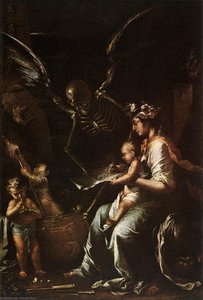
Salvator Rosa’s “Self-Portrait,” painted circa 1645, stands as a testament to the burgeoning spirit of philosophical inquiry within the Baroque period. More than just a likeness of the artist himself—Francesco Maria Rosa—the painting delves into themes of contemplation and intellectual pursuit, reflecting Rosa's profound engagement with humanist ideals prevalent during his time.
- Subject Matter: The central figure is depicted in a studio setting, meticulously engaged in sketching or writing on a spherical object – likely a globe. This deliberate choice isn’t merely decorative; it symbolizes Rosa’s ambition to map out the universe of knowledge and understanding, mirroring the broader intellectual currents of the era.
- Style & Technique: Executed in oil paint on canvas, Rosa employs a masterful blend of chiaroscuro—the dramatic interplay of light and shadow—characteristic of Baroque art. This technique amplifies the emotional impact of the portrait, highlighting Rosa’s face and hand as points of focus against a dark, indistinct background.
- Historical Context: Painted during Rosa’s formative years, “Self-Portrait” aligns with the philosophical debates surrounding Pythagoras—the Greek mathematician and philosopher who championed harmony and proportion. Rosa's inclusion of this figure underscores his fascination with rational thought and its role in shaping human experience – a core concern for artists and intellectuals alike.
A Study in Baroque Composition & Texture
Rosa’s brushwork is visible throughout the portrait, particularly in the depiction of Rosa's hair and clothing. This meticulous attention to detail lends texture and realism to the image, conveying a sense of immediacy and capturing the physicality of the artist. The composition itself directs the viewer’s gaze downwards towards Rosa’s work, emphasizing his concentration and embodying the humanist ideal of active engagement with intellectual pursuits.
- Color Palette: Primarily muted earth tones—browns, ochres, and grays—create a subdued yet dignified atmosphere. These colors contribute to the overall mood of introspection and seriousness, aligning perfectly with Rosa’s philosophical interests.
- Lighting & Shadow: The dramatic lighting emphasizes Rosa's face and hand, casting deep shadows that heighten the sense of depth and drama – a hallmark of Baroque painting techniques designed to evoke emotion and convey spiritual significance.
Symbolism Beyond Appearance
"Self-Portrait" transcends mere visual representation; it speaks to the artist’s inner life and intellectual convictions. The globe serves as a powerful symbol of Rosa's desire to comprehend the cosmos—both literally and metaphorically—reflecting the humanist preoccupation with understanding humanity’s place in the universe. Furthermore, Rosa’s posture conveys a quiet dignity and unwavering commitment to his craft, embodying the Renaissance artist’s belief in the transformative power of art.
- Emotional Impact: The portrait invites contemplation and encourages viewers to consider the role of reason and observation in shaping human understanding. It captures not only Rosa's physical likeness but also hints at his personality and profession through the act of creation he undertakes – a gesture that resonates with the humanist spirit of the Baroque era.
A reproduction of Salvator Rosa’s “Self-Portrait” offers an exceptional opportunity to bring this seminal artwork into your home or studio. Its masterful technique, evocative symbolism, and profound philosophical undercurrents continue to inspire admiration and provide insight into the intellectual landscape of seventeenth-century Italy.
Domande e risposte
Qual è la tonalità dominante di "Self-Portrait" di Salvatore Rosa?
La tonalità dominante di "Self-Portrait" di Salvatore Rosa è Golden Yellow Range, un colore che costituisce il tono di fondo dell'intera tavolozza.
È possibile visualizzare un'anteprima di "Self-Portrait" di Salvatore Rosa prima dell'ordine?
La pagina di Anteprima in ambiente di "Self-Portrait" ti permette di visualizzare un'anteprima dell'opera prima dell'ordine.
Dove posso acquistare una stampa di "Self-Portrait" di Salvatore Rosa?
"Self-Portrait" è disponibile come una stampa fine art su tela di cotone o carta canvas d'archivio. È possibile effettuare l'ordine nella pagina Stampa Fine Art, scegliendo la dimensione che preferisci.
Biografia dell'artista
La Vita e la Formazione
Salvator Rosa, pittore barocco italiano, poeta e incisore, nacque ad Arenella, Napoli, il 20 giugno o il 21 luglio del 1615. Sua madre, Giulia Greca Rosa, proveniva da una delle famiglie greche della Sicilia. Nonostante i desideri di suo padre che lo volesse avvocato o sacerdote, Salvator dimostrò fin dalla giovane età una predilezione per le arti.La Carriera Artistica
La carriera artistica di Salvator Rosa fu segnata da uno stile non convenzionale ed eccentrico, che lo distingueva dai suoi contemporanei. Fu attivo a Napoli, Roma e Firenze, e la sua opera fu influenzata dal naturalismo di Ribera e dal classicismo di Poussin. Tuttavia, rifiutò di essere vincolato a qualsiasi particolare stile o movimento.- Pitagora che emerge dagli Inferi (Kimbell Art Museum, Fort Worth, Stati Uniti), uno dei suoi lavori più famosi, mette in mostra il suo insolito connubio tra temi filosofici e artistici.
- Il Battesimo dell'Eunuco (Chrysler Museum of Art, Norfolk, Stati Uniti) dimostra la sua capacità di infondere dramma anche nelle storie bibliche meno importanti.
Influenze e Sviluppo Stilistico
Rosa sviluppò uno stile unico che combinava elementi del naturalismo, del classicismo e del barocco, ma con una forte impronta personale. La sua pittura si caratterizza per l'uso di colori intensi, forti contrasti chiaroscurali e composizioni dinamiche. I suoi paesaggi, spesso selvaggi e inospitali, riflettono un interesse per la natura incontaminata e il sublime. La sua opera mostra una progressiva evoluzione verso temi più oscuri e drammatici, con figure solitarie immerse in paesaggi desolati che esprimono sentimenti di malinconia e inquietudine.Significato Storico e Legacy
L'opera di Salvator Rosa ebbe un impatto significativo sullo sviluppo dell'arte barocca. La sua influenza può essere vista nelle opere di artisti successivi, come Luca Giordano, che continuarono a spingere i confini dell'espressione artistica. Rosa è considerato un precursore del Romanticismo per la sua attenzione alla natura selvaggia e ai sentimenti intensi. Il suo stile anticonformista e ribelle ha ispirato generazioni di artisti e appassionati d'arte, consolidando il suo posto negli annali dell'arte barocca. Importanti link: Profilo di Salvator Rosa su OriginalUniqueArt Wikipedia: Salvator Rosa Pitagora che emerge dagli Inferi su OriginalUniqueArtConclusione
La vita e l'opera di Salvator Rosa continuano ad affascinare gli amanti dell'arte e gli storici. Il suo stile non convenzionale e la sua perpetua ribellione contro le norme del suo tempo hanno cementato il suo posto negli annali dell'arte barocca. Come pittore, poeta e incisore, rimane una figura enigmatica, e la sua opera continua a ispirare nuove generazioni di artisti e appassionati d'arte.
Salvatore Rosa
1615 - 1673 , Italia
Dettagli rapidi
- Artistic Movement Or Style: Barocco
- Artists Or Movements Influenced By This Artist:
- Luca Giordano
- Romanticismo
- Artists Who Influenced This Artist:
- Ribera
- Poussin
- Date Of Birth: 20 giugno/21 luglio 1615
- Date Of Death: 15 marzo 1673
- Full Name: Salvator Rosa
- Nationality: Italiana
- Notable Artworks:
- Pitagora che emerge dal mondo infero
- Il battesimo dell'eunuco
- Place Of Birth (City And Country): Arenella, Italia
Articoli correlati

I 10 Capolavori Barocchi che Hanno Definito un'Epoca | Arte e Decorazioni di Lusso
Esplora i 10 capolavori barocchi di Caravaggio, Bernini e Rembrandt che hanno rivoluzionato l'arte. Scopri storie, tecniche e colori iconici. Trova riproduzioni d'arte di alta qualità per la tua casa su !

Chiaroscuro & Emotion: Capturing the Dramatic Soul of Baroque Art
Explore the profound drama of Baroque art. Discover how masters used chiaroscuro and intense emotion to capture the soul of the 17th century through light, shadow, and spiritual grandeur in this expert art history guide.

Baroque Classicism: The Grandeur of Order and Drama in 17th-Century Art History
Explore the profound elegance of Baroque Classicism. Discover how 17th-century masters synthesized dramatic emotion with classical order through the lens of the Counter-Reformation and the works of legends like Carlo Maratta and Andrea Sacchi.

Segreti del Barocco: Luce, Dramma ed Emozione nell'Arte del XVII Secolo
Scopri i segreti del Barocco tra luce e dramma con un'analisi esperta di Caravaggio e Barocci. Immergiti nella storia dell'arte ora.
I Capolavori del XVII Secolo: Arte, Storia e Stile per la Tua Casa
Esplora i 10 capolavori del XVII secolo: Caravaggio, Rembrandt e Velázquez. Scopri la storia, le tecniche e l'impatto di questi dipinti iconici. Trova riproduzioni d'arte di alta qualità per decorare la tua casa su OriginalUniqueArt.com