Post-Impressionism · 1890
Boy Resting (Paul Cézanne, 1890)
Paul Cézanne (1839–1906) ha realizzato Boy Resting. Risale al 1890. Fa parte del movimento Post-Impressionism. È realizzato in Olio su tela. È conservata presso il Museo dell'Arte del Martello a Los Angeles, Stati Uniti d'America.
- 1890
- Olio su tela
- Museo dell'Arte del Martello, Los Angeles

 Anteprima in scala reale

 Dipinto a olio fatto a mano
 Invia
 Condividi
 Scheda didattica


 Scarica
 Simili
 Radiografia
 Slideshow
 Domande e risposte

 Statistiche
Boy Resting, in breve
- Titolo
- Boy Resting
- Artista
- Paul Cézanne (1839–1906)
- Artista nato a
- Aix-en-Provence, Francia
- Date
- 1890
- Tecnica
- Olio su tela
- Dove vederlo
- Museo dell'Arte del Martello, Los Angeles, Stati Uniti d'America
- Movimento
- Post-Impressionism
- Epoca
- Età Moderna
- Soggetto
- landscape, boy, resting, trees, water, emotion
Cosa raffigura Boy Resting?
Paul Cézanne: A Pioneer of Modern Art
Paul Cézanne (1839–1906) stands as an undeniable cornerstone of the artistic landscape transitioning from Impressionism to Cubism, marking a pivotal moment in European art history. His unwavering dedication to exploring new visual languages profoundly influenced subsequent generations of artists and cemented his legacy as “the father of us all,” a title bestowed upon him by luminaries like Henri Matisse and Pablo Picasso. Cézanne’s artistic journey began amidst the vibrant energy of Impressionism, where he initially absorbed the techniques championed by Monet and Renoir—capturing fleeting moments of light and color with loose brushstrokes—yet swiftly rejected their limitations in favor of a more ambitious pursuit: to represent objects as they truly exist, not merely as perceived.- Early Influences: Cézanne’s formative years were steeped in Romanticism and the Barbizon school, where he honed his observational skills amidst landscapes imbued with atmospheric depth and tonal variation. Artists like Jean-François Millet captivated him with their depictions of rural life and their commitment to portraying subjects with unflinching realism.
- The Barbizon School: Cézanne’s exposure to the Barbizon school instilled in him a profound appreciation for capturing the essence of nature—its textures, colors, and contours—without resorting to idealized representations. This influence would permeate his entire oeuvre, shaping his distinctive approach to composition and color palettes.
- Impressionistic Roots: Cézanne’s initial foray into Impressionism allowed him to experiment with techniques like plein air painting—working outdoors directly from observation—and layering colors to achieve luminous effects. However, he quickly recognized that Impressionism's focus on capturing transient impressions fell short of conveying the underlying structure and solidity of objects.
Revolutionizing Representation: Cézanne’s Unique Style
Cézanne’s artistic breakthrough arrived with his embrace of a revolutionary style characterized by repetitive, exploratory brushstrokes—a technique that would become synonymous with his name—and an unwavering insistence on depicting objects as they appear to the eye, rather than as they are conventionally rendered. He meticulously dissected forms into geometric planes—cylinders, cones, and cubes—creating compositions that prioritized spatial relationships over linear perspective. This approach challenged the conventions of academic art, which demanded meticulous accuracy in portraying three-dimensional space, and paved the way for Cubism’s radical fragmentation of visual reality. Cézanne's method was not merely stylistic; it represented a fundamental rethinking of how artists could engage with their subjects and convey emotion.Landscapes of Sainte-Victoire: A Symbol of Persistence
Perhaps Cézanne’s most iconic series—the monumental depictions of Mont Sainte-Victoire—became an emblem of his artistic vision and a testament to his unwavering dedication to capturing the sublime beauty of Provence. These canvases, executed over several decades, embody Cézanne's preoccupation with exploring the interplay between color and form, as well as conveying a sense of profound contemplation. The mountain itself served as a focal point for Cézanne’s artistic endeavors—a subject he revisited countless times, experimenting with different perspectives and compositional arrangements—reflecting his belief that art should strive to capture not just what is seen but also what is felt. Sainte-Victoire became more than just a landscape; it represented Cézanne's relentless pursuit of artistic truth and his unwavering commitment to conveying the emotional resonance of nature.Legacy and Influence
Cézanne’s groundbreaking style exerted an indelible influence on subsequent artists—particularly Picasso and Matisse—who embraced his exploration of geometric abstraction and his rejection of traditional perspective. His work continues to inspire admiration for its simplicity, elegance, and profound psychological depth. Cézanne's legacy extends beyond the realm of painting; he fundamentally altered the trajectory of modern art, establishing a new paradigm for representing visual reality and fostering an enduring fascination with capturing the essence of human experience—a legacy that resonates powerfully within the artistic landscape to this day.In quale museo si trova Boy Resting?
Museo dell'Arte del Martello
Los Angeles, Stati Uniti d'America
Un Santuario di Visione: L'Eterno Legato del Hammer Museum Immerso nel cuore pulsante di Los Angeles, al civico 10899 di Wilshire Boulevard, sorge il Hammer Museum: uno spazio che è molto più di un semplice deposito d'arte; è un crogiolo dinamico dove storia, espressione contemporanea e comunità convergono. Fondato nel 199 9 dall'visionario imprenditore Armand Hammer, inizialmente come vetrina per la sua straordinaria collezione personale di maestri europei, il museo ha vissuto una trasformazione straordinaria, evolvendosi in un'istituzione fieramente indipendente dedicata a promuovere il dialogo e a spingere i confini della comprensione artistica. La sua storia è indissolubilmente legata all'eredità complessa dello stesso Hammer, un uomo che navigò le acque torbide delle relazioni internazionali coltivando, al contempo, uno dei possedimenti artistici più significativi al mondo.


Immagini ad alta risoluzione di Boy Resting

Pubblico dominio: l'artista è deceduto nel 1906.
Altre dimensioni, ritagli e citazioni →Paul Cézanne, Boy Resting (1890), Museo dell'Arte del Martello. Pubblico dominio
Domande su Boy Resting, risposte
In quale museo è conservato l'originale di "Boy Resting"?
L'originale di "Boy Resting" di Paul Cézanne è conservato presso Museo dell'Arte del Martello, Los Angeles, Stati Uniti d'America. Una riproduzione permette di esporre l'opera in casa propria.
In che anno è stata realizzata l'opera "Boy Resting" di Paul Cézanne?
"Boy Resting" di Paul Cézanne è stata creata nel 1890.
Con quale tecnica è realizzata "Boy Resting" di Paul Cézanne?
"Boy Resting" è realizzata con Olio su tela.
Cosa rappresenta "Boy Resting" di Paul Cézanne?
I temi presenti in "Boy Resting" di Paul Cézanne includono landscape, boy, resting, trees, water, emotion, contemplation, elementi che insieme sintetizzano il soggetto dell'opera.
L'immagine di "Boy Resting" di Paul Cézanne può essere riprodotta liberamente?
"Boy Resting" di Paul Cézanne è di pubblico dominio - il copyright è scaduto. Questo stato determina le modalità con cui l'immagine dell'opera può essere riprodotta.
Chi è l'artista dietro "Boy Resting"?
"Boy Resting" è attribuito a Paul Cézanne.
A quale stile appartiene "Boy Resting"?
Il movimento associato a "Boy Resting" di Paul Cézanne è Post-Impressionism. Questa classificazione colloca l'opera tra artisti e opere d'arte correlati.
A quale fase della carriera di Paul Cézanne appartiene "Boy Resting"?
"Boy Resting" appartiene al Mature Period della carriera di Paul Cézanne. Questa classificazione riconduce l'opera all'evoluzione dell'artista.
Quanti anni aveva Paul Cézanne quando ha creato "Boy Resting" nel 1890?
Quando "Boy Resting" fu creata nel 1890, Paul Cézanne - nato nel 1839 - aveva 51 anni.
Informazioni sull'artista, Paul Cézanne
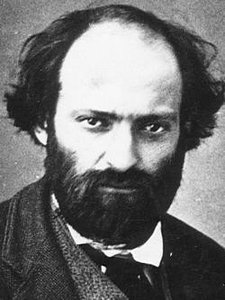
1839–1906, Francia
Paul Cézanne
La giovinezza di Paul Cézanne Nato il 19 gennaio 1839, al numero 28 di rue de l'Opéra ad Aix-en-Provence, Paul Cézanne entrò in un mondo dominato da un ordine consolidato. Suo padre, Louis-Auguste Cézanne, era un uomo di grande prestigio locale, avendone co-fondato la società bancaria Banque Cézanne et Cabassol. Questa stabilità finanziaria fornì uno scenario sicuro per la famiglia, che comprendeva Paul e le sue due sorelle minori, Marie e Rose. La quiete di un'infanzia provinciale si contrapponeva nettamente all'impulso creativo inquieto che, col tempo, avrebbe definito l'intera sua esistenza.
Altre opere di Paul Cézanne
 I Giocatori di Carte1893
 Mont Sainte-Victoire Seen from the Bibemus Quarry1897
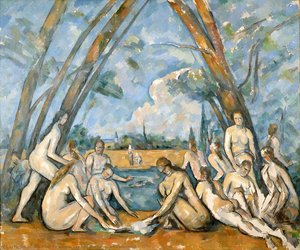 Grandi Bagnanti (Philadelphia)1905
 Cesto di Mele1895
Saggi su Boy Resting
 I 25 capolavori di Paul Cézanne che hanno rivoluzionato l'arte modernaEsplora i 25 capolavori di Paul Cézanne: un viaggio tra forme geometriche e luce post-impressionista. Scopri la storia dietro ogni opera e …
 Pittori post-impressionisti francesiScopri i capolavori di Cézanne, Gauguin e Signac. Esplora la collezione su OriginalUniqueArt.com per riproduzioni di alta qualità.
 Oltre la Prospettiva: L'Evoluzione da Cézanne al Cubismo e la Nascita dell'Arte ModernaScopri l'evoluzione dal segno di Cézanne alla rivoluzione cubista di Picasso e Braque. Esplora la nascita dell'arte moderna con noi.