Menu
CONSULENZA D'ARTE GRATUITA
PreviewPreview Acquista stampa Acquista stampaAcquista download Acquista download InviaInvia
Dettagli operaDettagli opera Aggiungi ai preferiti Aggiungi ai preferiti ScaricaScarica SimiliSimili RadiografiaRadiografia SlideshowSlideshow


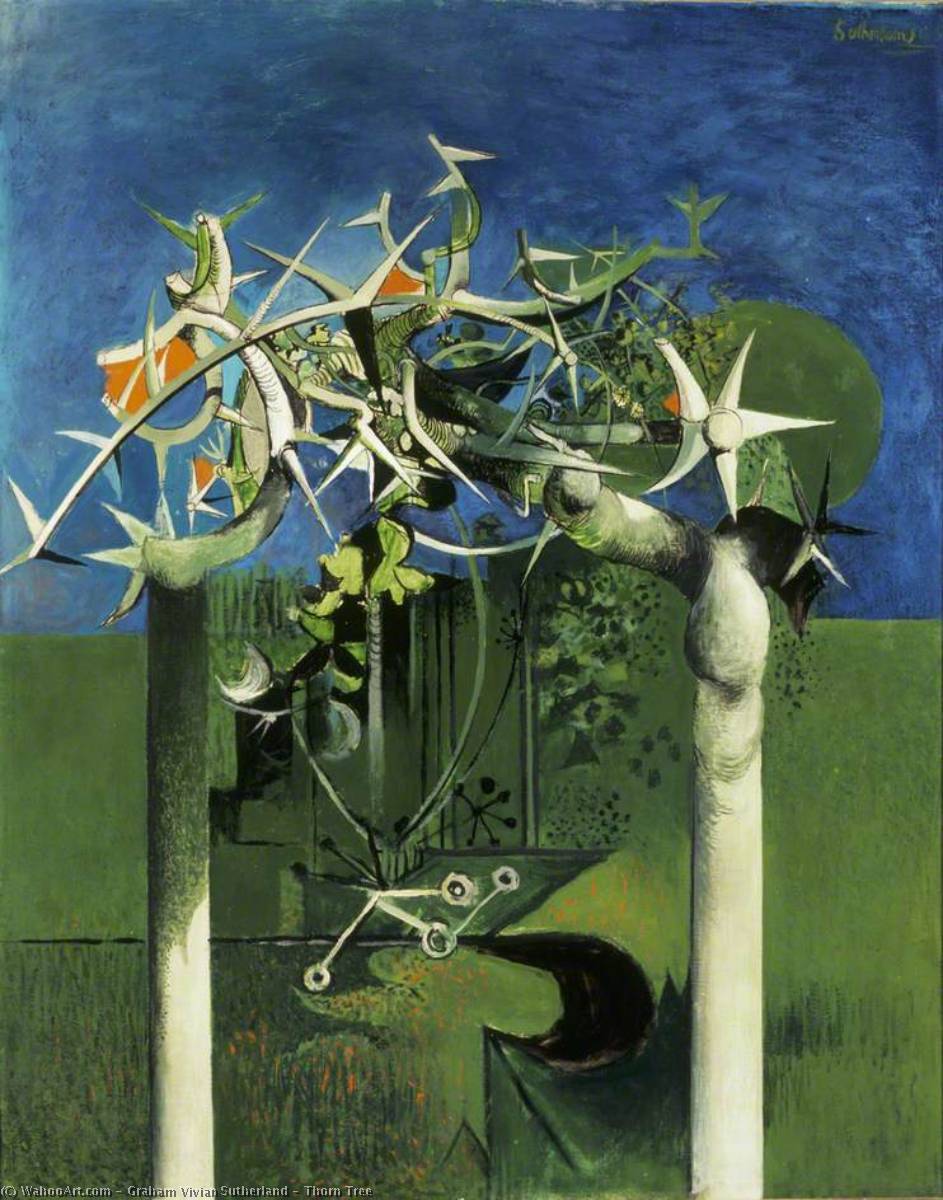
Thorn Tree

Discover 'Thorn Tree' by Graham Sutherland – a captivating oil painting of a windswept tree and birds, showcasing surreal landscapes & evocative nature scenes from 1946.

Meta Description: Graham Vivian Sutherland (1903-1980) è stato un artista britannico rivoluzionario noto per i suoi paesaggi surrealisti e simbolici, soprattutto il suo contributo alla creazione della tela di Coventry Cathedral, simbolo di riconciliazione dopo la Seconda Guerra Mondiale.

Riproduzione a olio fatta a mano

Olio su tela dipinto a mano nelle tue dimensioni e con la tua cornice, realizzato su ordinazione dai nostri artisti.

P118B $10
P118H $10
P118W $10
P438Z $10
P508JH $12
P508YH $12
P805H $10
P805Z $10
P919BZ $10
P919G $10
P919XJ $10
P959ZH $10
P968JZ $12
W106C $8
W218G $10
W218JH $8
W218Y $10
W307PJ $10
W316G $10
W316PJ $8
W316Y $10
W398PJ $8
W4111J $10
W500HY $15
W500JH $15
W692G $12
W849H $8
W940BG $15
W953PJ $8

Standard
custom
CM
INCH

Scegli tra le nostre dimensioni predefinite, che rispettano le proporzioni originali dell'opera d'arte.

larghezza
altezza

È possibile inserire dimensioni personalizzate per adattare l'opera a una cornice o a uno spazio specifico. Se la dimensione selezionata non corrisponde alle proporzioni dell'immagine originale, provvederemo a ritagliare l'opera o a estendere il dipinto con elementi aggiuntivi dipinti a mano. Un mockup digitale ti sarà inviato per approvazione prima dell'inizio della produzione.
Si prega di notare che l'anteprima a schermo non riflette il ritaglio o l'estensione effettivi. Solo il mockup mostrerà accuratamente la composizione finale.
Sebbene siano disponibili dimensioni personalizzate, consigliamo di selezionare una dimensione dall'elenco predefinito per preservare le proporzioni originali.

Esempi di modifiche possibili: sostituire il volto con una foto del cliente; aggiungere un animale domestico (ad esempio, sostituire un gatto con un cane); inserire un messaggio nascosto sullo sfondo; modificare il paesaggio o gli elementi dello sfondo.
Dopo l'ordine, il team di OriginalUniqueArt.com invierà un'e-mail al cliente per le istruzioni e fornirà un'anteprima del mockup

Consegna in tutto il mondo () in 3/4 settimane anziché nelle normali 5 settimane. (26 Luglio). Nessun compromesso sulla qualità.

why_choose_icon
Spedizione espressa gratuita in tutto il mondo
why_choose_icon
Tela in lino di alta qualità
why_choose_icon
Assicurazione completa sulla spedizione
why_choose_icon
Garanzia di rimborso dei dazi doganali
why_choose_icon
Garanzia di fedeltà cromatica
why_choose_icon
Politica di reso entro 60 giorni (solo per difetti)
why_choose_icon
Garanzia di rimborso al 100%
why_choose_icon
Sconto per acquisti multipli

Prezzo totale

-

reproduction

Thorn Tree

Tecnica di riproduzione

Dimensioni riproduzione

-

Prezzo totale finale

-

Informazioni rapide

  • Artistic style: Landscape painting
  • Year: 1946
  • Dimensions: 127 x 102 cm
  • Location: Albright-Knox Art
  • Influences:
    • Surrealism
    • Expressionism
  • Title: Thorn Tree
  • Artist: Graham Sutherland

Quiz d'arte

Per ogni domanda è presente una sola risposta corretta.

Domanda 1:
What is the primary subject matter of Graham Vivian Sutherland’s painting, ‘Thorn Tree’?
Domanda 2:
In what year was ‘Thorn Tree’ painted?
Domanda 3:
Which artistic movement is most closely associated with Graham Vivian Sutherland’s style as exemplified in ‘Thorn Tree’?
Domanda 4:
The painting 'Thorn Tree' was created by Graham Vivian Sutherland, who is known for his work in which medium besides painting?
Domanda 5:
What does the presence of ‘thorns’ in the painting likely symbolize?

Descrizione dell'opera

A Vision of Verdant Mystery: Graham Vivian Sutherland’s “Thorn Tree”

Graham Vivian Sutherland's "Thorn Tree," painted in 1946, isn’t merely a landscape; it’s an immersion into the heart of Pembrokeshire’s rugged beauty, filtered through the uniquely perceptive eye of one of Britain’s most significant modern artists. This oil on canvas work transcends simple representation, offering instead a deeply layered exploration of nature's inherent strangeness and the quiet drama of the natural world. Sutherland, a master of Neo-Romanticism, skillfully blends the traditional English landscape tradition with the subtle influences of Surrealism and Expressionism – a combination that resulted in powerfully evocative and often unsettling images.

The painting immediately draws the viewer into a dense, almost claustrophobic woodland scene. Towering trees dominate the composition, their branches intertwining to create a complex network of shadows and light. The leaves themselves are rendered with meticulous detail, yet they possess an unnerving quality – not quite realistic, but hinting at something beyond the purely botanical. Birds, perched precariously amongst the foliage, add to the sense of unease and suggest a hidden life within this seemingly still landscape. Sutherland’s use of color is particularly striking; predominantly greens—ranging from deep emerald to muted olive—create an atmosphere of both lushness and melancholy. Subtle hints of brown and grey ground the scene, anchoring it in the earth while simultaneously emphasizing its isolation.

The Painter's Process: Technique and Style

Sutherland’s technique is characterized by a remarkable sensitivity to light and texture. He employed a broken brushstroke method, layering thin washes of paint to build up form and create a shimmering effect that captures the dappled sunlight filtering through the trees. The canvas itself appears almost alive with movement – not in a frenetic way, but rather through the careful manipulation of color and tone. The painting’s surface is rich with impasto—thickly applied paint—particularly around the branches and leaves, giving them a tangible presence. This tactile quality invites the viewer to reach out and touch the scene, blurring the line between observation and participation.

Notably, Sutherland's work during this period reflects his deep connection to Pembrokeshire, a region he revisited repeatedly throughout his career. He wasn’t simply documenting the landscape; he was attempting to capture its essence—its mood, its mystery, and its inherent sense of solitude. The painting embodies a shift in artistic focus away from purely representational art towards a more subjective interpretation of reality.

Symbolism and Interpretation

“Thorn Tree” is rich with symbolic potential. The thorns themselves are a potent motif—representing both defense and pain, beauty and danger. They suggest a world where nature isn’t always benevolent, but rather holds its own secrets and challenges. The birds, often associated with freedom and spirituality, seem trapped within the dense foliage, hinting at a longing for escape. The overall composition can be interpreted as an allegory of the human condition—a struggle to find meaning and connection in a world that is both beautiful and unsettling.

Furthermore, the painting’s creation coincided with post-war Britain, a period marked by uncertainty and social upheaval. Sutherland's exploration of nature’s complexities can be seen as a reflection of this broader sense of disorientation—a search for stability and meaning amidst chaos. The painting’s enduring appeal lies in its ability to resonate with viewers on multiple levels, prompting contemplation about the relationship between humanity and the natural world.

A Timeless Masterpiece: Reproduction and Display

"Thorn Tree" is a captivating work that would be an exceptional addition to any art collection or interior space. Reproductions of this painting capture much of its original power, offering a way to bring Sutherland’s vision into your home. When selecting a reproduction, consider the quality of the print and the canvas material—a fine-art giclée on archival canvas will best preserve the artwork's colors and detail. The painting’s evocative atmosphere would complement a variety of interior styles, from modern minimalist spaces to more traditional settings. Its subtle color palette and complex composition create a focal point that invites contemplation and adds a touch of understated elegance to any room.


Biografia dell'artista

Graham Vivian Sutherland (1903–1980): A Visionary Landscape Painter

Graham Vivian Sutherland OM (24 August 1903 – 17 February 1980) was a prolific English artist, celebrated for his distinctive style that bridged various artistic approaches. He fused the English tradition of painting by the light of nature with European avant-garde movements like Surrealism and Expressionism, establishing himself as one of Britain’s most influential modern artists. Sutherland's oeuvre encompassed printmaking, tapestry design, glass art, and portraiture, yet his landscapes—particularly those depicting the rugged beauty of Pembrokeshire—remain his signature achievement. ### Early Life and Education Graham Sutherland was born in Streatham, London, the eldest child of George Humphrey Vivian Sutherland, a barrister who later served as a civil servant in the Land Registry and the Board of Education, and Elsie Sutherland (née Foster). Both parents possessed artistic inclinations, fostering Graham’s early fascination with drawing. He attended Homefield Preparatory School in Sutton and subsequently Epsom College in Surrey until 1919, gaining a solid grounding in classical education. Recognizing his innate talent for visual arts, Sutherland pursued an apprenticeship at the Midland Railway Locomotive Works in Derby—a decision that defied expectations of his family’s legal profession—before realizing his true passion lay in artistic exploration through technical college studies. ### Artistic Development and Influences Sutherland embarked on his artistic journey with a focus on engraving and etching, honing his skills at Goldsmiths' School of Art from 1921 to 1926. His formative years were marked by exposure to Samuel Palmer’s pastoral landscapes—a connection that profoundly shaped his early aesthetic sensibilities. Sutherland’s prints reflected the burgeoning Surrealist movement, influenced by artists like René Magritte and Giorgio Morandi, demonstrating a willingness to experiment with unconventional techniques and imagery. He embraced abstractionism as a means of conveying emotion and capturing the essence of nature's complexities. ### Major Achievements: Landscape Painting and Coventry Cathedral Tapestry Sutherland’s artistic breakthrough arrived in 1938 with his visit to Pembrokeshire, Wales—a transformative experience that ignited his lifelong devotion to the region’s dramatic scenery. Inspired by Paul Nash and Edvard Munch, he produced a series of oil paintings capturing the ethereal beauty of the Welsh coastline, characterized by bold brushstrokes and evocative color palettes. These landscapes became emblematic of Sutherland's artistic vision, reflecting both psychological depth and formal innovation. Perhaps his most monumental accomplishment was designing the central tapestry for Coventry Cathedral—a collaborative effort symbolizing reconciliation after the devastation of World War II. This ambitious project showcased Sutherland’s mastery of textile art and cemented his legacy as a cultural icon. ### Portraiture and Later Years Sutherland continued to produce striking portraits throughout his career, notably Winston Churchill—a controversial depiction that sparked considerable debate about artistic interpretation and historical representation. He taught engraving at Chelsea School of Art and Goldsmiths College, nurturing the talents of aspiring artists and disseminating his knowledge of artistic principles. In 1955, Sutherland purchased a villa near Nice, embracing a life abroad that allowed him to reconnect with his artistic inspiration. Despite facing criticism for some of his later works—particularly those exploring religious themes—Sutherland remained steadfast in his commitment to artistic exploration until his death in 1980, leaving behind an enduring body of work celebrated for its originality and emotional resonance.
Graham Vivian Sutherland

Graham Vivian Sutherland

1903 - 1980 , Regno Unito

Dati rapidi

  • Artistic Movement Or Style: Surrealismo
  • Artists Or Movements Influenced By This Artist: ['Samuel Palmer']
  • Artists Who Influenced This Artist: ['Paul Nash']
  • Date Of Birth: 24 agosto 1903
  • Date Of Death: 17 febbraio 1980
  • Full Name: Graham Vivian Sutherland
  • Nationality: Britannico
  • Notable Artworks:
    • Flying Bomb Depot
    • Entrance to a Lane
  • Place Of Birth: Londra, Inghilterra
Esplora opere d'arte organizzate per temi, stili e caratteristiche.