

 Anteprima in scala reale
 Condividi
 Condividi
 Dettagli
 Guida stampabile

 Scarica
 Articoli simili
 Radiografia
 Slideshow
 Statistiche
The Chief

 Leggi tutto
Giclée / Stampe d'arte
Stampa giclée o su tela di qualità museale, con produzione rapida e diverse opzioni di finitura. ( Ordina la riproduzione dipinta a mano Passa all'immagine digitale)




































Scegli tra le nostre dimensioni predefinite, che rispettano le proporzioni originali dell'opera d'arte.

È possibile inserire dimensioni personalizzate per adattare l'opera a una cornice o a uno spazio specifico. Se la dimensione selezionata non corrisponde alle proporzioni dell'immagine originale, procederemo al ritaglio dell'opera o all'estensione dell'immagine con un bordo specchiato o a tinta unita. Un mockup digitale ti verrà inviato per approvazione prima dell'inizio della produzione.
Si prega di notare che l'anteprima a schermo non riflette il ritaglio o l'estensione effettivi. Solo il mockup mostrerà accuratamente la composizione finale.
Sebbene siano disponibili dimensioni personalizzate, si raccomanda di selezionare una dimensione dall'elenco predefinito per preservare le proporzioni originali.
Consegna in tutto il mondo () in 2 settimane invece delle normali 4/5 settimane. (25 Settembre)

Spedizione espressa gratuita in tutto il mondo

Tela in lino di alta qualità

Assicurazione completa sulla spedizione

Garanzia di rimborso dei dazi doganali

Garanzia di perfetta fedeltà cromatica

Politica di reso entro 100 giorni (solo per difetti di fabbricazione)

Garanzia di rimborso al 100%

Sconto per acquisti multipli
 L'opzione vetro è disponibile solo per dimensioni inferiori a 110 cm

The Chief
Giclée / Stampe d'arte
Dimensioni della riproduzione
-


Prezzo totale
$ 80
A Glimpse into Native American Spirituality: "The Chief" by Eanger Irving Couse
- Artist: Eanger Irving Couse (1866-1936)
- Date: 1909
- Medium: Oil on Canvas
- Style: American Impressionism
“The Chief” is a captivating portrait by Eanger Irving Couse, a prominent figure in the Taos Society of Artists. This artwork offers a poignant glimpse into Native American spirituality and leadership within its cultural context. The painting depicts a dignified chief standing on slightly elevated ground, his posture suggesting reverence or introspection. His hands are gently placed over his chest, conveying a sense of quiet contemplation or prayer. Behind him unfolds a sprawling landscape—tipis dot the horizon, horses graze peacefully, and figures gather around a campfire, creating a scene of community and daily life within the American Southwest.
Composition, Color & Technique: An Impressionistic Vision
Couse masterfully employs composition to draw the viewer's eye. The chief’s figure establishes a strong vertical axis, guiding the gaze upwards while the expansive landscape behind him creates depth and context. The placement of tipis and figures in the background reinforces the sense of community. The color palette is dominated by earthy tones—warm reds and browns for the chief’s clothing and skin contrast with greens and yellows in the landscape. Accents of blue and white in the sky add visual interest and a touch of atmospheric perspective.
Couse's technique aligns with American Impressionism, characterized by loose brushstrokes and an emphasis on capturing fleeting moments. There are no sharp lines; instead, colors blend seamlessly to create atmosphere. This blending softens contours and contributes to the overall sense of tranquility. The lighting is diffused and soft, illuminating the chief’s face and upper body without harsh shadows, further enhancing the contemplative mood.
Symbolism & Historical Context: Respectful Representation
“The Chief” transcends a simple portrait; it explores themes of leadership, spirituality, and connection to nature. The chief's posture is symbolic of reverence and introspection, emphasizing his importance as a leader within his community. The surrounding landscape evokes a sense of vastness and freedom, reflecting the traditional Native American relationship with the natural world.
Historically, Couse’s work emerged during a period when attitudes towards Native Americans were evolving in the United States. While earlier depictions often portrayed them as savage or primitive, artists like Couse sought to capture their dignity and cultural richness. However, it's important to acknowledge that even well-intentioned representations can be influenced by prevailing societal perspectives. Couse’s work reflects a desire to document and celebrate Native American culture at a time when it was rapidly changing due to westward expansion and assimilation policies.
Emotional Impact & Lasting Legacy
“The Chief” evokes a sense of quiet dignity, reverence, and connection to the land. The painting’s soft colors, diffused lighting, and loose brushstrokes create an atmosphere of tranquility and contemplation. It invites viewers to reflect on themes of leadership, spirituality, and the importance of preserving cultural heritage.
As a founding member and first president of the Taos Society of Artists, Eanger Irving Couse played a significant role in shaping American art history. “The Chief” stands as a testament to his skill as an artist and his commitment to portraying Native American life with respect and sensitivity. Owning a reproduction of this iconic artwork allows you to bring a piece of American Impressionism and a poignant cultural narrative into your home or office.
Biografia dell'artista
Primi Anni e Formazione
- Nato: 3 settembre 1866, Saginaw, Michigan
- Morto: 26 aprile 1936
- Origine: Saginaw, Stati Uniti d'America
- Un precoce interesse per le culture dei nativi americani si sviluppò crescendo vicino alle tribù Chippewa.
- Frequentò brevemente l'Art Institute di Chicago e poi la National Academy of Design a New York City.
- Studiò all'École des Beaux-Arts e all'Académie Julian sotto William-Adolphe Bouguereau a Parigi per dieci anni. Dipingeva principalmente paesaggi della costa normanna.
Carriera Artistica e Sviluppo
- Dopo essere tornato negli Stati Uniti, trascorse del tempo a New York City ed estati dipingendo in varie località.
- Iniziò a trascorrere le estati a Taos, nel Nuovo Messico, intorno al 1898.
- Studiò e dipinse la vita e la cultura dei nativi americani di Taos.
- Divenne membro fondatore e primo presidente della Taos Society of Artists nel 1915.
- Sviluppò uno stile distintivo che ritraeva la vita dei nativi americani, spesso enfatizzando scene pacifiche e idilliache.
- Il suo lavoro fu influenzato dalla sua formazione accademica a Parigi e dalle sue osservazioni della cultura dei nativi americani.
Opere Principali e Riconoscimenti
- Elk-foot of the Taos Tribe: Considerata la sua opera maestra, acquistata per la collezione nazionale d'arte degli Stati Uniti.
- The Captive: Primo lavoro che raffigura un soggetto nativo americano, esposto al Salon di Parigi nel 1892.
- Numerosi dipinti commissionati dalla Santa Fe Railway tra il 1914 e il 1936, utilizzati come materiale pubblicitario.
- Ricevette premi da varie istituzioni tra cui la National Academy of Design (Altman Prize), Salmagundi Club (Isidor Prize), Pennsylvania Academy of Fine Arts (Lippincott Prize).
- Le sue opere sono conservate in molti musei negli Stati Uniti e a livello internazionale.
Significato Storico e Eredità
- Ha contribuito significativamente allo sviluppo dell'arte occidentale americana, in particolare le rappresentazioni dei nativi americani.
- Ha contribuito a stabilire Taos come un importante centro artistico.
- La sua raffigurazione della vita dei nativi americani ha offerto una prospettiva diversa dalle rappresentazioni più stereotipate comuni all'epoca.
- La Eanger Irving Couse House and Studio—Joseph Henry Sharp Studios è elencata nel National Register of Historic Places, preservando la sua eredità per le generazioni future.
- Il suo lavoro continua a essere esposto e studiato, fornendo spunti sulla storia dell'arte americana e sulla rappresentazione culturale.
Vita Personale
- Sposò Virginia Walker nel 1889.
- Ebbe un figlio, Kibbey Couse.
- Virginia svolse un ruolo significativo a sostegno della sua carriera artistica e fornendo feedback critici.
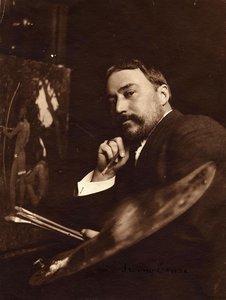
Eanger Irving Couse
1866 - 1936 , Stati Uniti d'America
Informazioni rapide
- Artistic Movement Or Style: Impressionismo, Western Art
- Artists Who Influenced This Artist:
- William-Adolphe Bouguereau
- Tony Robert Fleury
- Date Of Birth: 3 settembre 1866
- Date Of Death: 26 aprile 1936
- Full Name: Eanger Irving Couse
- Nationality: Americano
- Notable Artworks:
- Elk-foot of the Taos tribe
- The captive
- Coastal Scene, Etaples
- Place Of Birth: Saginaw, Stati Uniti
Articoli correlati
Eanger Irving Couse: Un Ponte tra Tradizione e Modernità nell'Arte del Sud-Ovest Americano
Scopri Eanger Irving Couse, figura chiave dell'arte del Sud-Ovest americano e fondatore della Taos Society of Artists. Analisi approfondita del suo stile, opere iconiche e l'eredità artistica che continua a ispirare.
James Otto Lewis: Navigating American Modernism Through Regional Identity & Stylistic Innovation
Explore the captivating portraits of James Otto Lewis, a pivotal figure bridging 19th-century realism & American Modernism. Discover his groundbreaking work documenting Native American culture and regional identity.

Realismo Americano: 10 Capolavori che Hanno Definito un'Epoca | OriginalUniqueArt
Esplora i 10 capolavori del Realismo Americano con OriginalUniqueArt. Scopri Andrew Wyeth, Edward Hopper e George Bellows. Quadri iconici, storie uniche e riproduzioni di alta qualità per la tua casa. Esplora la collezione online!

Grant Wood e il Regionalismo Americano: Identità, Mito e Paesaggio Rurale
Esplora il Regionalismo Americano con Grant Wood e i suoi capolavori. Analisi approfondita di 'American Gothic', contesto storico, influenze artistiche e l'eredità di questo movimento iconico. Scopri la vera essenza dell'arte rurale americana.
Joseph Henry Sharp: Capturing the Spirit of the Plains – Life, Art & Legacy
Explore the life & art of Joseph Henry Sharp, a founding member of the Taos Society of Artists renowned for his realistic depictions of Native American culture and Western landscapes. Discover his legacy with OriginalUniqueArt.

