Early Life & Artistic Foundations: From Ohio Roots to European Training
Joseph Henry Sharp’s journey toward becoming one of the most celebrated painters of the American West began not amidst the sweeping vistas and vibrant cultures he would later immortalize, but in the quiet landscapes of Bridgeport, Ohio. Born in 1859, Sharp experienced a childhood marked by an early loss – profound hearing impairment curtailed his formal education, yet paradoxically unlocked a heightened sensitivity to visual perception. This sensory shift proved pivotal, directing him toward the world of art at the remarkably young age of fourteen when he enrolled at the McMicken School of Design in Cincinnati. His parents, recognizing and nurturing this nascent talent, laid the foundation for a career that would ultimately bridge two worlds: the established traditions of European artistic training and the untamed beauty of the American frontier.
Sharp’s commitment to his craft led him across the Atlantic three times between 1881 and 1893. These sojourns in Europe were not merely about acquiring technical skill; they represented a deep immersion into the artistic currents of the time. He studied at the Antwerp Academy, honing his skills in realist portraiture and history painting – disciplines that would later inform his meticulous depictions of Native American life. Subsequent travels to Germany, Italy, and particularly Spain exposed him to the masters—Velázquez, El Greco, Goya—whose dramatic use of light and shadow, and profound psychological insight, subtly permeated his evolving style. However, it was in Paris, amidst the burgeoning Impressionist movement, that Sharp began to absorb a new sensibility: a focus on capturing fleeting moments, atmospheric effects, and the subjective experience of color.
The Allure of the West: Sharp’s Initial Encounters with Native American Culture
 White Paint Mountain - Taos Indian
Explore 'White Paint Mountain' by Joseph Henry Sharp – a realistic portrait of a Taos Native American man. Oil on canvas, impasto texture & earthy tones capture cultural heritage.
Despite his extensive European training, Sharp felt an undeniable pull toward the American West. His early sketches from trips in 1883 revealed a fascination with the indigenous peoples he encountered—a subject matter largely overlooked by mainstream art circles at the time. These initial explorations weren’t simply about documenting appearances; they were driven by a genuine curiosity and respect for cultures vastly different from his own. He traveled through pueblos in New Mexico, Santa Fe, Albuquerque, and along the Pacific coast, meticulously recording details of dress, ceremony, and daily life.
These early works, though less polished than his later paintings, demonstrate a nascent talent for capturing character and an emerging understanding of the unique challenges—and rewards—of portraying Native American subjects. While still influenced by academic conventions, Sharp began to move away from idealized representations toward a more authentic depiction of individuals and their surroundings. This shift was not immediate; it required years of dedicated observation and immersion in the cultures he sought to understand.
A Founding Father of Taos Society of Artists: Collaboration and a Unique Vision
 Joseph Henry Sharp
Joseph Henry Sharp (1859-1953) was a Taos Society of Artists founder known for realistic Native American portraits & Western scenes. Commissioned by Roosevelt, his art captures Indigenous culture with striking detail.
The summer of 1893 proved transformative for Sharp, marking his first extended stay in Taos, New Mexico. Commissioned by Harper’s Weekly, he arrived with the intention of illustrating life in the region, but quickly found himself captivated by the pueblo communities and their enduring traditions. It was here that he encountered Ernest Blumenschein and Bert Phillips—artists who would become lifelong friends and collaborators. Sharp shared his knowledge of Taos, sparking a mutual passion for the area’s artistic potential.
In 1915, Sharp became a founding member of the Taos Society of Artists, an organization dedicated to promoting the art of the Southwest. This collective was more than just a professional association; it represented a shared commitment to portraying the region with authenticity and respect. The society provided a platform for artists to showcase their work, attract collectors, and establish Taos as a significant artistic center. Sharp’s role within the group extended beyond his own painting—he served as a mentor to younger artists, fostering a spirit of collaboration and innovation.
Roosevelt's Commission & The Crow Agency Years: Documenting a Vanishing Way of Life
 Indian Tepees, (painting)
Explore 'Indian Tepees' by Joseph Henry Sharp – a monochrome 19th-century Western landscape depicting Native American life. A unique print showcasing frontier art.
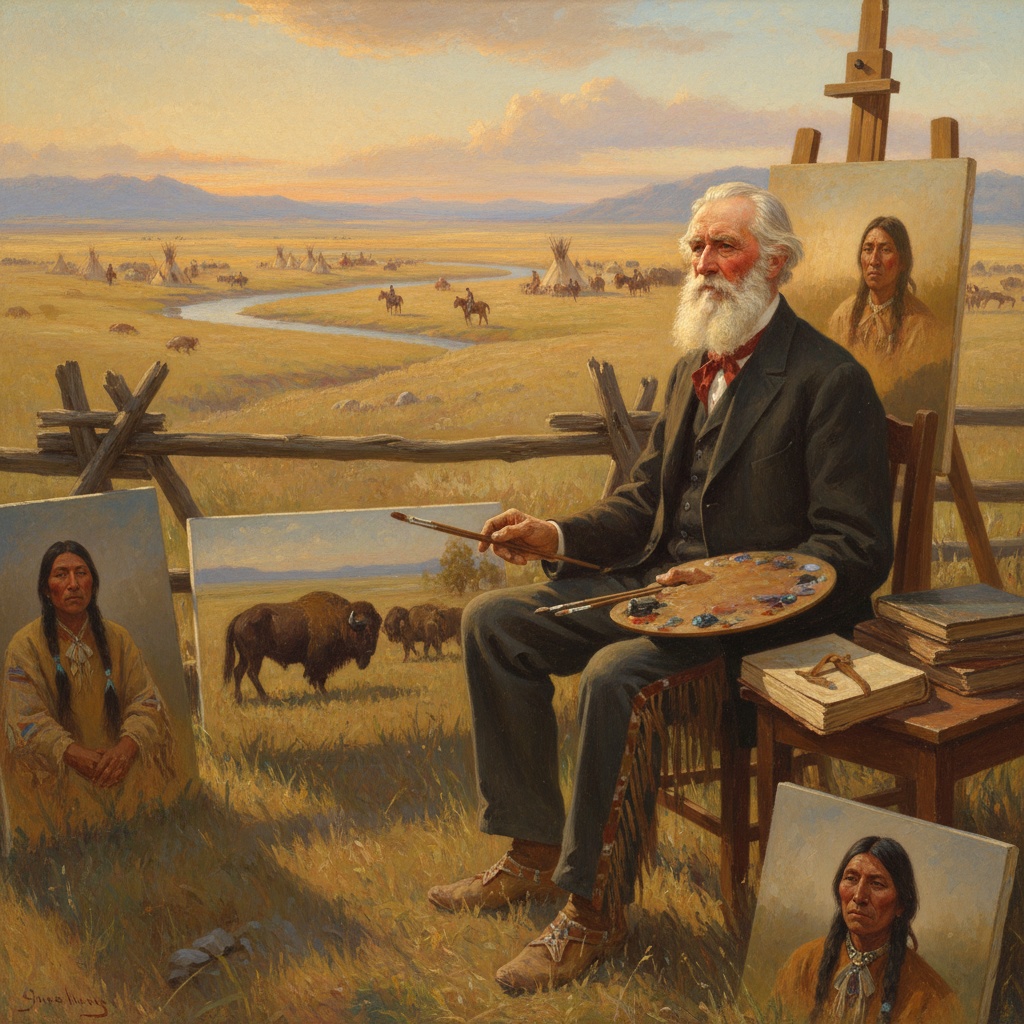
Perhaps the most significant chapter in Sharp’s career began with a commission from President Theodore Roosevelt. Recognizing the importance of preserving a visual record of Native American life, Roosevelt tasked Sharp with painting portraits of 200 Crow warriors who had survived the Battle of the Little Bighorn. This undertaking led Sharp to establish a permanent residence on the Crow Agency reservation in Montana around 1903.
The years spent among the Crow people were profoundly influential, allowing Sharp unprecedented access to their culture and traditions. He built Absarokee Hut, becoming deeply integrated into the community—learning their language, customs, and stories. These portraits are not merely likenesses; they are intimate studies of individual character, capturing the dignity, resilience, and spiritual depth of a people facing immense challenges. The commission was more than just an artistic endeavor; it was a testament to Roosevelt’s commitment to preserving Native American history—and Sharp’s dedication to portraying it with sensitivity and accuracy.
Sharp’s Artistic Style & Techniques: Realism, Impressionism, and Cultural Sensitivity
Joseph Henry Sharp’s artistic style is characterized by a unique blend of realism and impressionistic techniques. His meticulous attention to detail—evident in the accurate rendering of clothing, weaponry, and facial features—reflects his European training. However, he moved beyond mere photographic accuracy, employing loose brushwork, vibrant colors, and atmospheric effects to capture the essence of his subjects.
Impasto texture is a hallmark of Sharp’s work, adding depth and dimensionality to his canvases. He often worked *en plein air*, capturing the fleeting qualities of light and shadow—a technique he learned during his time in Paris. But perhaps the most defining characteristic of Sharp’s style is his cultural sensitivity. Unlike many artists of his era who romanticized or stereotyped Native Americans, Sharp sought to portray them with dignity and respect. His portraits are not ethnographic studies; they are intimate glimpses into individual lives—capturing their character, spirit, and enduring humanity.
Legacy and Enduring Influence: Joseph Henry Sharp in the Landscape of American Art
Joseph Henry Sharp’s legacy extends far beyond his prolific output of paintings. He is remembered as a pioneer who helped to establish a uniquely American artistic voice—one that celebrated the beauty and diversity of the West. His work challenged prevailing stereotypes, fostering a greater understanding and appreciation for Native American cultures.
As a founding member of the Taos Society of Artists, Sharp played a pivotal role in transforming Taos into a thriving art colony. His influence can be seen in the works of countless artists who followed in his footsteps—artists who shared his commitment to portraying the West with authenticity and respect. Today, Sharp’s paintings are held in major museums across the country, including the Smithsonian American Art Museum and the Buffalo Bill Center of the West, ensuring that his vision continues to inspire generations of art lovers.
At OriginalUniqueArt.com, we are proud to offer high-quality reproductions of Joseph Henry Sharp’s masterpieces, allowing you to experience the beauty and power of his work firsthand. Explore our collection today and discover the enduring legacy of this remarkable artist.