

 Anteprima in scala reale
 Condividi
 Condividi
 Dettagli
 Guida stampabile

 Scarica
 Articoli simili
 Radiografia
 Slideshow
 Statistiche
Pavilion
 Oil On Canvas
- WallArt
- Bengal School of Art
 23.0 x 16.0 cm
 Victoria Memorial Hall
 Leggi tutto
Giclée / Stampe d'arte
Stampa giclée o su tela di qualità museale, con produzione rapida e diverse opzioni di finitura. ( Ordina la riproduzione dipinta a mano Passa all'immagine digitale)




P118B €10

P118H €10

P118W €10

P438Z €10

P508JH €12

P508YH €12

P805H €10

P805Z €10

P919BZ €10

P919G €10

P919XJ €10

P959ZH €10

P968JZ €12

W106C €8

W218G €10

W218JH €8

W218Y €10

W307PJ €10

W316G €10

W316PJ €8

W316Y €10

W398PJ €8

W4111J €10

W500HY €15

W500JH €15

W692G €12

W849H €8

W940BG €15

W953PJ €8




Scegli tra le nostre dimensioni predefinite, che rispettano le proporzioni originali dell'opera d'arte.

Inserisci la larghezza e l'altezza desiderate, per adattarle alla tua cornice o alla tua parete. Una stampa può essere solo ritagliata, mai resa più grande dell'immagine originale; pertanto, un formato con una forma differente comporterà la perdita di una parte dell'opera. Ti invieremo un mockup digitale da approvare prima di procedere con la stampa. L'immagine mostrata in questa pagina non rappresenta il ritaglio reale — solo il mockup lo mostra.
Consegna in tutto il mondo () in 2 settimane invece delle normali 4/5 settimane. (25 Ottobre)

Spedizione espressa gratuita in tutto il mondo

Tela in lino di alta qualità

Assicurazione completa sulla spedizione

Garanzia di rimborso dei dazi doganali

Garanzia di perfetta fedeltà cromatica

Politica di reso entro 100 giorni (solo per difetti di fabbricazione)

Garanzia di rimborso al 100%

Sconto per acquisti multipli
 L'opzione vetro è disponibile solo per dimensioni inferiori a 110 cm

Pavilion
Giclée / Stampe d'arte
Dimensioni della riproduzione
-


Prezzo totale
€ 70
Abanindranath Tagore’s “Pavilion”: A Bridge Between East and West
The artwork presented here, Abanindranath Tagore's "Pavilion," isn’t merely a depiction of a building; it’s a carefully constructed visual poem, a pivotal moment in the history of Indian art. Painted in 1907, during a period of intense nationalistic fervor and artistic experimentation, this work represents Tagore’s audacious attempt to synthesize traditional Indian aesthetics with Western influences – a strategy that fundamentally reshaped the landscape of modern Indian painting. It's a piece brimming with symbolism, inviting viewers to contemplate themes of spirituality, identity, and the evolving relationship between tradition and modernity.
Tagore, deeply influenced by the Japanese aesthetic—particularly its emphasis on calligraphy and flattened perspective—and inspired by the Mughal and Rajput miniature traditions, sought to create an art form that resonated with Indian sensibilities. He deliberately rejected the academic realism prevalent in Western art schools, which he viewed as cold and devoid of spiritual depth. Instead, he drew upon the rich visual vocabulary of ancient India – its vibrant colors, stylized forms, and symbolic imagery—and infused it with a distinctly modern sensibility. “Pavilion” exemplifies this approach perfectly; it’s not a photographic representation but rather an evocative interpretation, prioritizing mood and feeling over strict adherence to reality.
A Symphony of Color and Symbolism
The painting immediately captivates the eye with its rich palette—a deliberate departure from the muted tones favored by Western artists. Deep blues and greens dominate the composition, evoking a sense of tranquility and spirituality, while bursts of crimson, gold, and saffron inject vibrancy and energy. These colors aren’t simply decorative; they carry profound symbolic weight. Blue represents the heavens and spiritual realms, red signifies passion and life force, and gold embodies divinity and enlightenment. The use of these hues is deeply rooted in Hindu iconography and reflects Tagore's desire to reconnect with India’s ancient spiritual heritage.
The pavilion itself—a structure reminiscent of Mughal palaces but imbued with a distinctly Indian character—is rendered with a flattened perspective, echoing the style of Japanese woodblock prints. The arched doorway, framed by intricate floral motifs and stylized clouds, serves as a focal point, drawing the viewer’s eye into the heart of the composition. Notice the deliberate simplification of forms – a hallmark of both Mughal and Japanese art—which contributes to the painting's serene and contemplative atmosphere. The figures depicted within the pavilion are not realistically rendered but rather presented as stylized silhouettes, further emphasizing the work’s symbolic nature.
Historical Context and Artistic Significance
“Pavilion” was created during a crucial period in Indian history—the early 20th century—a time marked by growing nationalist sentiment and a desire to reclaim India's cultural identity after centuries of colonial rule. Tagore’s art played a significant role in this movement, providing a visual language for expressing Indian values and traditions. He founded the Bengal School of Art, which championed a distinctly Indian style of painting that drew inspiration from both ancient and contemporary sources. This school challenged the dominance of Western artistic styles and paved the way for a new generation of Indian artists.
Tagore’s work wasn't without its critics. Some accused him of diluting traditional Indian art by incorporating Western elements, while others praised his innovative approach to blending Eastern and Western aesthetics. However, “Pavilion” remains a testament to Tagore’s artistic vision—a bold and ambitious attempt to create an art form that was both deeply rooted in India's cultural heritage and open to new influences. It stands as a pivotal work in the development of modern Indian painting, demonstrating the power of art to shape national identity and express complex ideas.
A Timeless Masterpiece for Your Space
Reproduced on high-quality canvas or paper, Abanindranath Tagore’s “Pavilion” offers a captivating glimpse into India's rich artistic heritage. Its serene composition, vibrant colors, and evocative symbolism make it an ideal addition to any home or office space. Whether you are drawn to its spiritual depth, its historical significance, or simply its aesthetic beauty, this artwork is sure to inspire contemplation and add a touch of timeless elegance to your surroundings. Consider commissioning a hand-painted reproduction from OriginalUniqueArt.com for a truly authentic experience.
Domande e risposte
I colori di "Pavilion" di Abanindranath Tagore sono saturi o desaturati?
"Pavilion" di Abanindranath Tagore è registrato con una saturazione Balanced Soft.
È disponibile un download per "Pavilion"?
È disponibile un download per "Pavilion": la pagina Scarica dell'opera offre download di un'immagine digitale ad alta risoluzione.
Quali sono la tecnica e le dimensioni di "Pavilion" di Abanindranath Tagore?
L'originale "Pavilion" di Abanindranath Tagore è un'opera in Oil On Canvas di dimensioni 23 x 16 cm. La tecnica e le dimensioni si riferiscono all'oggetto originale.
Biografia dell'artista
Primi Anni e Formazione
- Nascita: 7 maggio 1861, Joransanko, Calcutta, India britannica
- Morte: 5 dicembre 1951
- Famiglia: Membro della distinta famiglia Tagore; nipote di Rabindranath Tagore. Il nonno paterno era Girindranath Tagore e il padre Gunendranath Tagore.
- Istruzione: Studiò al Sanskrit College, Kolkata negli anni '80 e successivamente frequentò la Calcutta School of Art.
Sviluppo Artistico e Influenze
- Primi Studi: Apprese i pastelli da O. Ghilardi e la pittura a olio da Charles Palmer alla Calcutta School of Art.
- Stili Mughal e Rajput: Cercò di modernizzare questi stili, rifiutando i modelli occidentali.
- Valori Swadeshi: Incorporò valori Swadeshi nella sua arte, promuovendo le tradizioni indiane.
- Estetismo di Whistler: Influenzato dai principi estetici di Whistler.
- Influenza Giapponese: In seguito incorporò tradizioni calligrafiche cinesi e giapponesi nel suo stile dopo aver incontrato gli artisti Tikan e Hesida.
Opere Principali e Contributi Artistici
- Rohini II: Un'opera notevole che mostra la sua abilità artistica.
- La Passione di Shajahan: Un altro dipinto significativo che riflette il suo stile.
- Fiore Stagionale in un Vaso: Dimostra la sua padronanza della tecnica e del soggetto.
- Serie delle Mille e una Notte (1930): Considerata uno dei suoi più grandi successi, utilizza le storie delle Mille e una Notte per esplorare il Calcutta coloniale.
- Bharat Mata: Un dipinto significativo che simboleggia Madre India.
- Fondatore della Bengal School of Art: Ha svolto un ruolo fondamentale nella formazione della pittura indiana moderna e nella promozione dell'arte nazionalistica.
- Indian Society of Oriental Art (1907): Fondò questa società per promuovere le forme d'arte tradizionali indiane.
Eredità e Significato Storico
- Pioniere della Pittura Indiana Moderna: Riconosciuto come una figura chiave nello sviluppo dell'arte indiana moderna.
- Influenza su Artisti Successivi: Ha fatto da mentore a notevoli artisti come Nandalal Bose, Asit Halder, Kshitindranath Majumdar e Jamini Roy.
- Rinascita delle Forme d'Arte Tradizionali: Ha sostenuto un ritorno alle tecniche e agli stili indiani tradizionali.
- Impatto sulla Letteratura per Bambini Bengalese: Scrisse libri per bambini influenti come Rajkahini, Budo Angla, Nalak e Khirer Putul.
- Tesori Artistici Nazionali: Le sue opere sono considerate Tesori Artistici Nazionali.

Abanindranath Tagore
1871 - 1951 , India
Informazioni rapide
- Artisti Influenti:
- Whistler
- Mughal artisti
- Rajput artisti
- Artisti Influenzati:
- Nandalal Bose
- Kshitindranath Majumdar
- Jamini Roy
- Data Di Nascita: 7 maggio 1871
- Luogo Di Nascita: Jorasanko, India
- Movimento Artistico: Bengal School of Art
- Nazionalità: Indiano
- Nome Completo: Abanindranath Tagore
- Opere Notevoli:
- Rohini II
- Passaggio di Shah Jahan
- Fiore stagionale
Articoli correlati

Raja Ravi Varma: Bridging Tradition & Modernity in 19th-Century Indian Art
Explore the life & art of Raja Ravi Varma, a pioneer who fused European techniques with Indian iconography. Discover his iconic paintings, lasting legacy, and influence on modern Indian art at OriginalUniqueArt.
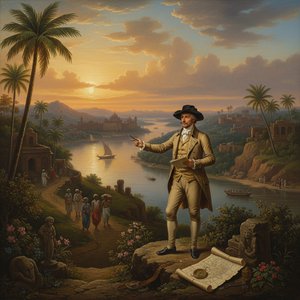
Thomas Daniell: Navigating Light, Landscape & Cultural Exchange in Early 19th-Century India
Explore the captivating landscapes of Thomas Daniell, a pioneering artist who documented India's beauty in the 19th century. Discover his 'Oriental Scenery,' aquatint technique & lasting legacy. Hand-painted reproductions available at OriginalUniqueArt.
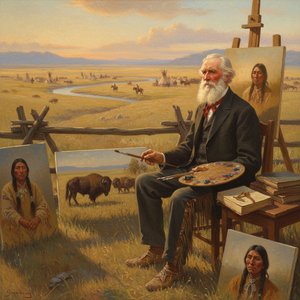
Joseph Henry Sharp: Capturing the Spirit of the Plains – Life, Art & Legacy
Explore the life & art of Joseph Henry Sharp, a founding member of the Taos Society of Artists renowned for his realistic depictions of Native American culture and Western landscapes. Discover his legacy with OriginalUniqueArt.
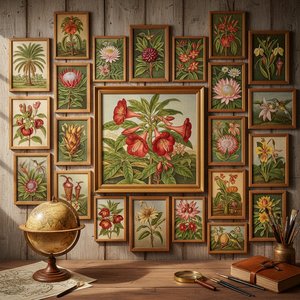
Marianne North: I 25 Capolavori di una Pittrice Esploratrice | OriginalUniqueArt
Scopri i 25 capolavori di Marianne North, pittrice vittoriana e botanica appassionata. Ammira paesaggi esotici, fiori dipinti con colori vivaci e la sua arte unica. Riproduzioni artistiche su OriginalUniqueArt.com per decorare casa con stile.
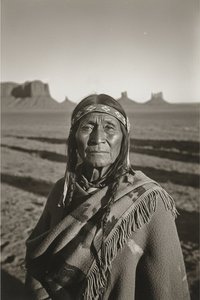
Shadow Catcher: Edward S. Curtis & the Ethnographic Portraiture of a Vanishing West
Explore the life & work of Edward S. Curtis, the 'Shadow Catcher,' and his groundbreaking photographic documentation of Native American cultures. Discover iconic images from *The North American Indian* and a critical look at his lasting legacy.

