Előnézet
 Megosztás
 Megosztás
 Részletek
 Útmutató

 Letöltés
 Hasonló darabok
 X-ray felvétel
 Diavetítés
 Statisztika
St Jerome and the Angel
 Oil On Canvas
- WallArt
- Baroque Painting
 1622
1622 145.0 x 180.0 cm
 Nemzeti Galéria
 Tovább olvasom
Giclée / Műnyomat
Múzeumi minőségű giclée vagy vászonnyomat, gyors gyártással és rugalmas finomítási lehetőségekkel. ( Kézzel festett másolat vásárlása Áttérés digitális képre)




P118B Ft10

P118H Ft10

P118W Ft10

P438Z Ft10

P508JH Ft12

P508YH Ft12

P805H Ft10

P805Z Ft10

P919BZ Ft10

P919G Ft10

P919XJ Ft10

P959ZH Ft10

P968JZ Ft12

W106C Ft8

W218G Ft10

W218JH Ft8

W218Y Ft10

W307PJ Ft10

W316G Ft10

W316PJ Ft8

W316Y Ft10

W398PJ Ft8

W4111J Ft10

W500HY Ft15

W500JH Ft15

W692G Ft12

W849H Ft8

W940BG Ft15

W953PJ Ft8




Válasszon előre meghatározott méreteink közül, amelyek megfelelnek a műalkotás eredeti arányainak.

Írja be a keretének vagy a falának megfelelő szélességet és magasságot. A nyomatot csak le lehet vágni, soha nem tehető nagyobbá, mint az eredeti kép, így egy eltérő alakú méretnél a kép egy része elveszik. Mielőtt bármit kinyatintanánk, küldünk egy digitális próbamodellt jóváhagyásra. Az oldalon látható kép nem tartalmazza a valós levágást — ezt csak a próbamodell mutatja meg.
Világszerte történő kiszállítás területére mindössze 2 hét alatt, a szokásos 4-5 hét helyett. (23 október)

Ingyenes globális expressz szállítás

Prémium minőségű len vászon

Teljes körű szállítási biztosítás

Vámvisszatérítési Garancia

Tökéletes színarányosság garancia

100 napos visszaküldési garancia (csak gyártási hibás termékek esetén)

100% pénzvisszatérítési garancia

Több darab vásárlásakor kedvezmény
 Az üvegkeretes opció csak 110 cm alatti méretben érhető el

St Jerome and the Angel
Giclée / Műnyomat
Reprodukció méretei
-


Összesített ár
Ft 25565
St Jerome and the Angel: A Dialogue of Faith and Light
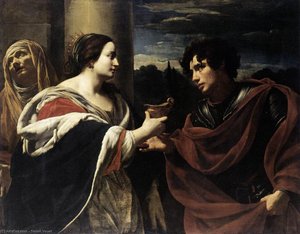
Simon Vouet’s “St. Jerome and the Angel,” painted in 1622, is more than just a depiction of a biblical scene; it's a carefully constructed meditation on divine guidance, spiritual contemplation, and the interplay between earthly and celestial realms. This masterful work, housed within the National Gallery of Art in Washington D.C., exemplifies the burgeoning Baroque style’s embrace of dramatic lighting, nuanced emotion, and a heightened sense of realism that distinguished it from the preceding Mannerism. The painting immediately draws the viewer into a scene brimming with quiet intensity – a moment of profound communication between the venerable Saint Jerome, known for his dedication to prayer and translation of the Bible, and the radiant angel who appears before him.
Vouet’s technical prowess is evident in every brushstroke. He skillfully employs *chiaroscuro*, a technique borrowed from Caravaggio, to create a dramatic contrast between light and shadow. The angel, bathed in an ethereal glow, stands in sharp relief against the darker, more muted tones of Jerome's robe and the shadowed background. This deliberate use of light isn’t merely aesthetic; it serves to emphasize the angel’s divine presence and the transformative nature of his message. The composition is carefully balanced – Jerome, a figure of venerable age and contemplative posture, occupies the lower portion of the canvas, while the dynamic angel dominates the upper register, creating a visual hierarchy that underscores their roles in the narrative.
A Renaissance Vision with Baroque Flair
Painted during Vouet’s extended sojourn in Rome, “St. Jerome and the Angel” reflects the profound influence of Italian art on French painting at the time. Vouet had immersed himself in the works of masters like Caravaggio, Paolo Veronese, and the Carracci brothers, absorbing their techniques and philosophies. However, he didn’t simply mimic these artists; instead, he synthesized their innovations with his own distinctive style, creating a uniquely French interpretation of the Baroque aesthetic. The painting showcases a move away from the stylized poses and flattened perspectives of Mannerism towards a more naturalistic approach to form and space – a hallmark of the emerging Baroque style.
The historical context is crucial to understanding the work’s significance. The early 17th century was a period of intense religious fervor in Europe, fueled by the Counter-Reformation. Paintings like this one were often commissioned by the Catholic Church as didactic tools – intended to inspire piety and reinforce orthodox doctrine. The scene of St. Jerome receiving divine guidance speaks directly to this purpose, offering a visual representation of faith, humility, and the promise of salvation.
Symbolism and Emotional Resonance
Beyond its religious subject matter, “St. Jerome and the Angel” is rich in symbolic detail. The book held by Jerome represents his life’s work – the translation of the Bible into Latin. The angel's outstretched hand and pointing finger symbolize divine instruction and revelation. The cup at the center of the image may represent the Holy Spirit or a symbol of spiritual nourishment. Notably, the angel is depicted not as a majestic, imposing figure but as a youthful, almost mischievous presence – suggesting that divine guidance can be both challenging and joyful.
The emotional impact of the painting is profound. The quiet intensity of Jerome’s expression, combined with the radiant beauty of the angel, evokes a sense of reverence and wonder. The scene invites viewers to contemplate their own relationship with faith and the possibility of receiving divine guidance in their lives. It's a moment suspended in time – a dialogue between man and God, rendered with exquisite skill and profound sensitivity.
A Legacy of Light and Shadow
Simon Vouet’s “St. Jerome and the Angel” stands as a testament to his artistic genius and his pivotal role in shaping the course of French painting. It exemplifies the transition from Mannerism to Baroque, showcasing the innovative techniques and stylistic choices that defined this transformative period. Today, reproductions of this captivating work continue to inspire artists and collectors alike, offering a glimpse into a world where faith, beauty, and light converge in a timeless tableau.
Gyakran Ismételt Kérdések
Hány éves volt Vouet Simon, amikor megalkotta a "St Jerome and the Angel" című alkotást?
Amikor a "St Jerome and the Angel" alkotása 1622-ben készült, Vouet Simon – aki 1590-ben született – 32 éves volt.
Milyen orientációban készült a „St Jerome and the Angel”, Vouet Simon alkotása?
A "St Jerome and the Angel" formátuma Landscape. Ez hasznos, amikor tervezünk, hogy a reprodukciót hová helyezzük el.
Hogyan találkoznak a korszak és a mű stílusa „St Jerome and the Angel”, Vouet Simon alkotása alkotásban?
„St Jerome and the Angel”, Vouet Simon alkotása alkotásművében a Baroque Painting irányzat találkozik a Korai modern kor korszakkal.
A művész életrajza
Simon Vouet: A Francia Barokk Festészet Úttörője
Simon Vouet neve szorosan összefonódik a francia festészet átalakulásával, a manierizmustól a barokk felé vezető úton. 1590-ben Párizsban született, egy művészcsaládban – apja, Laurent Vouet is festő volt, és testvére, Aubin szintén a művészetet választotta –, ami kedvező alapot teremtett számára a későbbi sikerekhez. Unokája, Ludovico Dorigny továbbviszi a család művészi hagyományát. A 17. századi francia udvar és arisztokrácia ízlését tükröző Vouet munkássága ma is lenyűgöző erejével hat ránk.
Korai Évek és Olasz Hatások (1608-1627)
Vouet festői karrierje a portréfestéssel kezdődött, hamarosan megmutatva tehetségét. Már 14 évesen Angliába utazott egy megbízásnak köszönhetően, ahol portrét kellett festenie, ami bebizonyította a növekvő hírnevét. 1611-ben csatlakozott Baron de Sancy francia követ küldöttségéhez az Oszmán Birodalomba, ismét portréfestési megbízásokra. Ez a kalandos utazás Konstantinápolyon át vezetette őt Velencébe, 1612-ben. A római időszak (1614-1627) azonban igazi fordulatot hozott életében. Tizenhány évet töltött Rómában, a virágzó barokk művészeti szcéna közepén.
Olaszországban Vouet számos hatás forrása közül merített. Caravaggio drámai megvilágításának technikáját tanulmányozta, magára ötvözve az olasz manierizmus elemeit, és alaposan vizsgálta Paolo Veronese által alkalmazott színpalettákat és a di sotto in su (felülnéző perspektíva) eljárást. Carracci, Guercino, Lanfranco és Guido Reni művészete is inspirálta, amelyeket egyedi művészi látásmódjába integrált.
A Sajátos Stílus Kidolgozása
Római sikerei csúcspontja a híres Accademia di San Luca elnöki tisztségének megszerzése volt (1624), ami bizonyította a római művészeti világban szerzett elismerését. Vouet stílusa azon képességéről tanúskodott, hogy képes befogadni és átalakítani a különböző művészi befolyásokat. Nem csupán másolt, hanem ezek az elemek egy koherens, distinctly olasz barokk esztétikába olvadtak. Franciaországba való visszatérése (1627) után kulcsszerepet játszott az olasz barokk stílus bevezetésében a francia festészetbe, jelentősen befolyásolva az ország művészeti táját.
Főbb Eredmények és Örökség
Vouet Premier peintre du Roi (a király első festője) cím elnyerése hatalmas presztízst és befolyást biztosított számára. Nagy, aktív műhelyt tartott fenn, számos művészt képezve ki, akik a következő generáció francia festőit formálták. Legkiemelkedőbb tanítványai közé tartozott Charles Le Brun (aki később a versailles-i dekoratív festészetet szervezte), Valentin de Boulogne, Charles Alphonse du Fresnoy, Pierre Mignard, Eustache Le Sueur és Claude Mellan. Vouet hatása nem csupán saját műveire korlátozódott; tanítványai stílusát és technikáit Franciaországban terjesztették, létrehozva egy distinct barokk festészeti iskola.
Történelmi Jelentősége
Simon Vouet öröksége abban rejlik, hogy sikeresen hidat épített az olasz és a francia művészet között. A dinamizmus és pompa olasz barokkját Franciaország ízléséhez igazította, ami a királyi udvar és az arisztokrácia kedveltségét nyerte el. Hatása vitathatatlan a 17. századi francia festészet fejlődésében, és hozzájárulásai ma is elismerik a művészettörténészek.

Vouet Simon
1590 - 1649 , Franciaország
Gyors információk
- Halálozási Dátum: 1649. június 30.
- Művészek, Akik Hatottak Rá:
- Caravaggio
- Paolo Veronese
- Carracci
- Guercino
- Lanfranco
- Guido Reni
- Művészek/Mozgások, Amiket Befolyásolt:
- Charles Le Brun
- Valentin de Boulogne
- Francia barokk festészet
- Művészeti Irányzat: Barokk festészet
- Nemzetiség: Francia
- Születési Dátum: 1590. január 9.
- Születési Hely: Párizs, Franciaország
- Teljes Név: Simon Vouet
Kapcsolódó cikkek

Celestial Messengers: A Comprehensive Exploration of Angelic Representation in Art History
Explore the captivating history of angels in art! Discover symbolism, iconic Renaissance masterpieces & renowned artists. Expert insights for art lovers & collectors at OriginalUniqueArt.
Simon Vouet: A Baroque Master's Journey from Italian Influence to French Classicism
Explore the life & art of Simon Vouet, a pivotal French Baroque painter who introduced Italian styles to France. Discover his masterpieces and lasting influence on 17th-century art.

Barokk dráma: A nagyság és az érzelem bevonása a kortárs belső terekbe
Fedezze fel a barokk stílus nagyságát és drámáját! Ismerje meg a belsőépítészet jellegzetességeit, inspirálódjon híres enteriőrökből, és valósítsa meg álmai luxus otthonát szakértő útmutatásunkkal.
Charles Le Brun: Master of French Baroque Classicism & His Enduring Legacy
Explore the life & art of Charles Le Brun, master of French Baroque Classicism. Discover his royal commissions, influence on Versailles, and enduring legacy through detailed analysis & stunning artworks.

Celestial Messengers: Angels in Painting – A Historical & Artistic Exploration
Explore the captivating history of angels in painting! Discover symbolism, iconic Renaissance & Byzantine masterpieces, and renowned artists. Expert insights for art lovers & collectors at OriginalUniqueArt.