

 Előnézet
 Megosztás
 Megosztás
 Részletek
 Útmutató

 Letöltés
 Hasonló darabok
 X-ray felvétel
 Diavetítés
 Statisztika
Berkeley No. 57
 Acrylic On Canvas
- WallArt
- Abstract Expressionism
 1955
1955 149.0 x 149.0 cm
 San Francisco Művészetek Múzeuma
 Tovább olvasom
Kézzel készített olajfestmény reprodukció
Kézzel festett olajvastú vászon, az Ön által választott méretben és keretben, művészeink készítik meglévőre. ( Váltás nyomtatványra Áttérés digitális képre)




P118B $10

P118H $10

P118W $10

P438Z $10

P508JH $12

P508YH $12

P805H $10

P805Z $10

P919BZ $10

P919G $10

P919XJ $10

P959ZH $10

P968JZ $12

W106C $8

W218G $10

W218JH $8

W218Y $10

W307PJ $10

W316G $10

W316PJ $8

W316Y $10

W398PJ $8

W4111J $10

W500HY $15

W500JH $15

W692G $12

W849H $8

W940BG $15

W953PJ $8




Válasszon előre meghatározott méreteink közül, amelyek megfelelnek a műalkotás eredeti arányainak.

Ön megadhat saját méreteket egy adott kerethez vagy térhez igazításhoz. Ha a kiválasztott méret nem egyezik az eredeti kép arányával, akkor a műalkotást levágjuk, vagy további kézzel festett elemekkel meghosszabbítjuk a festményt. A gyártás megkezdése előtt küldünk Önnek egy digitális előnézetet jóváhagyásra.
Kérjük, vegye figyelembe, hogy a képernyőn megjelenő előnézet nem tükrözi a tényleges vágást vagy kiterjesztést. Csak az előnézet fog pontosan mutatni a végső kompozíciót.
Bár egyedi méretek állnak rendelkezésre, javasoljuk, hogy válasszon egy méretet az előre meghatározott listából az eredeti arányok megőrzése érdekében.
A rendelést követően a OriginalUniqueArt.com csapata e-mailt küld az ügyfélnek az instrukciókért, és biztosít egy előnézeti képet (mockup).
Világszerte elérhető szállítás () 3-4 hét alatt a szokásos 5 hét helyett. (26 szeptember). A minőség nem kérdőjelezhető.

Ingyenes globális expressz szállítás

Prémium minőségű len vászon

Teljes körű szállítási biztosítás

Vámvisszatérítési Garancia

Tökéletes színarányosság garancia

100 napos visszaküldési garancia (csak gyártási hibás termékek esetén)

100% pénzvisszatérítési garancia

Több darab vásárlásakor kedvezmény
 Az üvegkeretes opció csak 110 cm alatti méretben érhető el

Berkeley No. 57
Reprodukciós technika
Reprodukció méretei
-


Összesített ár
$ 300
Berkeley No. 57: A Quiet Resonance of California Light
Richard Diebenkorn’s Berkeley No. 57 stands as a cornerstone of postwar American painting, embodying the understated elegance and contemplative spirit that defined the San Francisco School. Painted in 1955, this monumental abstract expressionist canvas—measuring 149 x 149 cm—is housed at the San Francisco Museum of Modern Art (SFMOMA), where it continues to captivate audiences with its luminous palette and subtly textured surface.Style and Technique: Embracing Minimalism
Diebenkorn’s approach eschewed grand gestures or dramatic contrasts, prioritizing instead a disciplined exploration of form and color within a framework of geometric precision. He employed encaustic—a technique combining beeswax, resin, and pigment—to create an intensely durable surface that captures the nuances of light with remarkable fidelity. The resulting image is characterized by horizontal bands of muted yellow and orange interwoven with vertical streaks of blue and green, punctuated by occasional splashes of pink and red. These elements coalesce into amorphous shapes that suggest both solidity and fluidity simultaneously, mirroring the Californian landscape itself—a region known for its expansive vistas and shifting seasons.Historical Context: The Birth of California Cool
Berkeley No. 57 emerged during a period of significant artistic ferment following World War II, coinciding with the rise of Abstract Expressionism as a dominant force on the international stage. However, Diebenkorn’s vision diverged from the more overtly emotive tendencies of his contemporaries, favoring instead a quiet introspection that resonated deeply with the cultural ethos of postwar California—a movement dubbed “California Cool.” This aesthetic championed relaxed sophistication and understated beauty, rejecting ostentation in favor of refined taste and an appreciation for natural forms. SFMOMA’s acquisition of Berkeley No. 57 solidified its place within this influential artistic lineage.Symbolism: Reflections of Landscape and Inner Thought
The muted hues employed by Diebenkorn are not merely decorative; they serve as symbolic representations of the Californian environment—the golden light filtering through eucalyptus groves, the azure expanse of the Pacific Ocean. Furthermore, the geometric shapes incorporated into the composition can be interpreted as reflections of inner thought—a deliberate effort to distill complex emotions and ideas into visual form. The subtle variations in texture contribute to this sense of depth and resonance, inviting viewers to contemplate the interplay between observation and imagination.Emotional Impact: A Momentary Pause for Contemplation
Ultimately, Berkeley No. 57 transcends mere representation, offering instead a profound experience of aesthetic contemplation. Its stillness speaks volumes about Diebenkorn’s belief in the transformative power of art—a capacity to transport us beyond the everyday concerns of life and into realms of beauty and serenity. Viewing this masterpiece is akin to stepping into a sunlit grove, pausing for a moment to absorb the quiet grandeur of the natural world and allowing oneself to be carried away by its subtle emotional currents.A művész életrajza
Early Life and Artistic Foundations
Richard Diebenkorn, born in Portland, Oregon, in 1922, began his artistic journey at a remarkably young age. Even as a child, a deep-seated passion for drawing manifested itself—a clear indication of an innate talent and a lifelong dedication to visual expression. His family’s relocation to San Francisco when he was just two years old proved formative, immersing him in the light and atmosphere of California, which would become inextricably linked to his artistic vision. Early influences were diverse; he encountered the rigorous discipline of oil painting under Victor Arnautoff at Stanford University, learning classical techniques alongside the evocative realism championed by Daniel Mendelowitz, who admired the works of Edward Hopper—whose quiet introspection and masterful use of light profoundly impacted Diebenkorn’s early style. Hopper's influence is readily apparent in these initial paintings, characterized by a contemplative mood and a sophisticated understanding of shadow and form. This period laid the crucial foundation for his future artistic explorations, establishing both technical skill and an emotional depth that would become hallmarks of his work.Navigating Abstraction and Figuration
The American art world underwent a dramatic transformation following World War II, with the center of creative innovation shifting from Paris to New York. Richard Diebenkorn keenly felt this change, enrolling at the California School of Fine Arts (now the San Francisco Art Institute) and embracing abstract expressionism as his primary mode of self-expression. He was drawn to the bold experimentation with form and color exhibited by artists like Clyfford Still, Arshile Gorky, Hassel Smith, and Willem de Kooning—artists who were pushing the boundaries of artistic convention. However, Diebenkorn wasn’t simply a follower of trends; he sought to forge his own path within this dynamic landscape. Alongside Elmer Bischoff, Henry Villierme, David Park, and James Weeks, he became a leading figure in the Bay Area Figurative Movement—a deliberate return to representational painting after the dominance of abstract expressionism. This transition wasn’t abrupt; it was a gradual process of reintroducing recognizable forms into his work, blending abstraction's emotional intensity with figuration’s narrative potential. He aimed to bridge the gap between inner experience and external reality, creating paintings that were both deeply personal and universally resonant—a testament to his unique artistic vision.The Rise of Bay Area Figurative Painting
The Bay Area Figurative Movement, which Diebenkorn spearheaded, represented a significant shift in American art. Rejecting the purely abstract tendencies of some of their contemporaries, these artists sought to capture the essence of California life – its landscapes, its people, and its atmosphere – through a combination of representational forms and expressive color. Influenced by European masters like Matisse and Cézanne, as well as the work of American painters such as Hopper and Rothko, Diebenkorn developed a distinctive style characterized by lyrical abstraction and subtle emotional depth. His paintings often depicted solitary figures in evocative settings—windows overlooking vast landscapes, quiet interiors filled with light—creating a sense of introspection and longing. This movement reflected the unique cultural landscape of the Bay Area, where artistic innovation thrived alongside a deep appreciation for nature and a commitment to social justice.The Ocean Park Series: A Masterpiece of Composition
In 1967, Richard Diebenkorn embarked on what is arguably his most celebrated series—the *Ocean Park* paintings. Named after the Santa Monica neighborhood where he lived and worked, these works represent a culmination of his artistic explorations and a masterful synthesis of abstraction and representation. Unlike the gestural spontaneity of abstract expressionism or the direct depiction of earlier Bay Area Figurative paintings, the *Ocean Park* series is characterized by carefully considered composition, subtle color palettes, and a sense of serene order. These weren’t literal depictions of Ocean Park; rather, they were distillations of its light, space, and atmosphere—evocations of place through abstract form. He explored printmaking alongside his painting, beginning with drypoint in 1961 at UCLA, and forging a long-lasting collaboration with Kathan Brown at Crown Point Press from 1965 to 1992, producing numerous prints that further expanded his artistic vocabulary. The *Ocean Park* series garnered widespread critical acclaim, establishing Diebenkorn as a major force in contemporary art—a testament to his innovative spirit and unwavering commitment to artistic vision.Legacy and Lasting Influence
Richard Diebenkorn’s impact on postwar American art is undeniable. His ability to seamlessly blend abstract expressionism, lyrical abstraction, and figurative painting created a unique artistic voice that resonated with artists for decades to come. A significant retrospective at the Pasadena Art Museum in 1960—later shown at the California Palace of the Legion of Honor in San Francisco—cemented his reputation as a leading figure in the art world. He didn’t adhere to any single dogma, instead forging his own path by embracing experimentation and following his artistic intuition. His work continues to inspire artists and collectors alike, celebrated for its beauty, complexity, and emotional depth. Diebenkorn's passing in 1993 marked the end of a remarkable career, but his legacy lives on through the enduring power of his paintings—a poignant reminder of the transformative potential of art.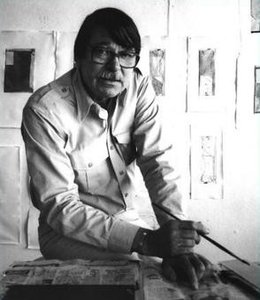
Richard Diebenkorn
1922 - 1993 , Egyesült Államok
Gyors információk
- Artistic Movement Or Style: Lyrikus absztrakt
- Artists Or Movements Influenced By This Artist: ['Bay Area Figurative']
- Artists Who Influenced This Artist:
- Edward Hopper
- Clyfford Still
- Date Of Birth: Ápril 22, 1922
- Date Of Death: 1993 március 30.
- Full Name: Richard Clifford Diebenkorn
- Nationality: Amerikai
- Notable Artworks:
- Ocean Park No. 32
- A napfényes futball
- Place Of Birth: Portland, Oroszország
Kapcsolódó cikkek

Kandinsky Mesterművei: 25 Lenyűgöző Festmény a Modern Művészet Gyöngyszemeiből | OriginalUniqueArt
Fedezze fel Wassily Kandinsky 25 legikonikusabb művét! Merüljön el az absztrakt művészet világában, ismerje meg a színek és formák lenyűgöző történetét. Prémium minőségű reprodukciók és inspiráló dekorötletek a OriginalUniqueArt.com-on.

Beyond Form & Color: Geometric Abstraction's Evolution in 20th/21st Century Art
Explore the evolution of geometric abstraction from Cubism to contemporary art. Discover key artists like Malevich & Mondrian, investment insights, and expert collecting advice at OriginalUniqueArt.

Absztrakt Expresszionizmus Mesterei: 10 alkotás, ami meghatározta a művészetet | OriginalUniqueArt.com
Fedezze fel a 10 legikonikusabb absztrakt expresszionista alkotást! Ismerje meg Jackson Pollock, Mark Rothko és más mesterek történetét. Művészeti reprodukciók prémium minőségben – OriginalUniqueArt.com.
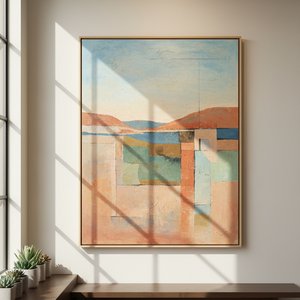
Richard Diebenkorn: A Poetics of Space & Form – Navigating Abstraction in California Modernism
Explore the evolution of Richard Diebenkorn's iconic art – from abstract expressionism to his celebrated Ocean Park series. Discover insights for collectors & enthusiasts.

Geometrikus Absztrakció Mesterei: 10 Alapvető Műalkotás a Lakberendezéshez
Fedezze fel a geometrikus absztrakció 10 legikonikusabb műalkotását! Kandinsky, Mondrian és más mesterek festményeinek története inspirálja otthona dekorációját. Múzeumi minőségű reprodukciók a OriginalUniqueArt.com-on – fedezze fel online!