
 Megtekintés
 Küldés
 Megosztás
 Részletek
 Útmutató

 Letöltés
 Hasonló darabok
 X-ray felvétel
 Diavetítés
 Q&A
Q&A Statisztika
The Visit

- 68.0 x 58.0 cm


 Összes részlet megjelenítése
Giclée / Műnyomat
Múzeumi minőségű giclée vagy vászonnyomat, gyors gyártással és rugalmas finomítási lehetőségekkel. ( Kézzel festett másolat rendelése Áttérés digitális képre)




P118B Ft10

P118H Ft10

P118W Ft10

P438Z Ft10

P508JH Ft12

P508YH Ft12

P805H Ft10

P805Z Ft10

P919BZ Ft10

P919G Ft10

P919XJ Ft10

P959ZH Ft10

P968JZ Ft12

W106C Ft8

W218G Ft10

W218JH Ft8

W218Y Ft10

W307PJ Ft10

W316G Ft10

W316PJ Ft8

W316Y Ft10

W398PJ Ft8

W4111J Ft10

W500HY Ft15

W500JH Ft15

W692G Ft12

W849H Ft8

W940BG Ft15

W953PJ Ft8




Válasszon előre meghatározott méreteink közül, amelyek megfelelnek a műalkotás eredeti arányainak.

Írja be a keretének vagy a falának megfelelő szélességet és magasságot. A nyomatot csak le lehet vágni, soha nem tehető nagyobbá, mint az eredeti kép, így egy eltérő alakú méretnél a kép egy része elveszik. Mielőtt bármit kinyatintanánk, küldünk egy digitális próbamodellt jóváhagyásra. Az oldalon látható kép nem tartalmazza a valós levágást — ezt csak a próbamodell mutatja meg.
Világszerte történő kiszállítás területére mindössze 2 hét alatt, a szokásos 4-5 hét helyett. (1 november)

Ingyenes globális expressz szállítás

Prémium minőségű len vászon

Teljes körű szállítási biztosítás

Vámvisszatérítési Garancia

Hiteles színarányosság garancia

100 napos visszaküldési lehetőség (csak hibás termékek esetén)

100% pénzvisszatérítési garancia

Több darab vásárlásakor kedvezmény
 Az üvegkeretes opció csak 110 cm alatti méretben érhető el

The Visit
Giclée / Műnyomat
Reprodukció mérete
-


Összesített ár
Ft 26198
A Moment Frozen in Delft Light
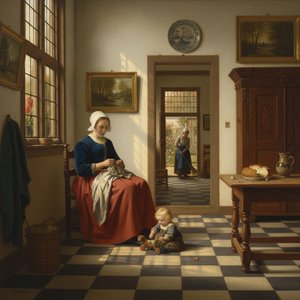
In the quiet, sun-drenched interiors of the seventeenth century, moments of profound connection were often found in the most mundane settings. Pieter de Hooch's "The Visit," painted in 1657, stands as a quintessential emblem of Dutch Baroque artistry—a deceptively simple tableau that speaks volumes about the social fabric and artistic sensibilities of its era. Captured in muted tones of ochre, ivory, and charcoal gray, this masterpiece transports us back to Delft during the zenith of the Dutch Golden Age, offering an intimate glimpse into the daily life of a bourgeois household. The painting’s enduring appeal lies not merely in its visual beauty but also in its masterful execution and subtle symbolic resonance, inviting viewers to step through a doorway into a world of domestic tranquility.
The scene unfolds with a palpable sense of realism, as de Hooch captures a group of individuals gathered around a dining table. There is a quiet drama in the way the figures are positioned; some stand while others sit, their presence suggesting a convivial conversation and shared enjoyment. The table itself is laden with details that ground the scene in reality—multiple wine glasses catch the light, hinting at a celebratory or social meal, while a book rests near one of the guests, perhaps a remnant of a shared intellectual pursuit before dinner began. Even the subtle inclusion of a clock on the wall serves as a poignant reminder of the passage of time, anchoring this fleeting social interaction within the eternal flow of history.
Mastery of Light and Texture
De Hooch's style embodies the Baroque preoccupation with illusionism and chiaroscuro—the dramatic interplay between light and shadow. Unlike the overtly theatrical compositions of his contemporaries, "The Visit" achieves grandeur through the meticulous observation of natural light filtering into a domestic interior. The artist skillfully renders textures with remarkable accuracy; one can almost feel the grain of the worn wooden bench and the crispness of the linen tablecloth. Through subtle gradations of tone, de Hooch sculpts form and conveys a profound sense of depth, drawing the viewer’s eye into the room's corners and through its architectural layers.
This technical precision makes the work an extraordinary subject for high-quality reproductions. For the art collector or interior designer, the painting offers a sophisticated palette that complements a variety of decor styles. Its monochrome-leaning tones of gray and earth colors provide a neutral yet emotionally resonant anchor for a room, bringing a sense of historical weight and calm sophistication to any space. The way de Hooich utilizes light creates an atmospheric quality that can transform a modern living area into a sanctuary of classical elegance.
A Reflection of Golden Age Prosperity
Beyond its aesthetic brilliance, "The Visit" reflects a pivotal moment in Dutch history—the burgeoning prosperity fueled by global trade and exploration. During this era, Delft was a thriving center for craftsmanship and commerce, attracting affluent families eager to establish their social standing through the cultivation of refined domestic environments. De Hooch’s depiction captures the aspirational ideal of bourgeois comfort: a world where peace, plenty, and companionship are the ultimate markers of success.
To possess a reproduction of this work is to invite the spirit of the Dutch Golden Age into one's home. It serves as more than just decoration; it is a window into a vanished era of stability and grace. Whether placed in a sunlit study or a formal dining room, "The Visit" continues to inspire awe through its ability to find the extraordinary within the ordinary, reminding us that true beauty often resides in the quietest moments of human connection.
Kérdések és válaszok
Milyen közös tulajdonságokat oszt meg a "The Visit" Pieter de Hooch további alkotásaival?
Pieter de Hooch munkásságán belül a "The Visit" a Baroque stílus képét képviseli, a baroque realism, domestic tranquility, dutch society, light’s subtle grace, artistic legacy témakörével összefüggésben.
Hogyan szerezhető be „The Visit”, Pieter de Hooch alkotása digitális fájlja?
A „The Visit”, Pieter de Hooch alkotása digitális képét a következő oldalon vásárolhatja meg: Digitális alkotás: magas felbontású digitális kép letöltése.
Ki a "The Visit" mögött álló művész?
A "The Visit" alkotója Pieter de Hooch. A mű Pieter de Hooch nevére van katalógusozva.
A művész életrajza
korai élet és képzés
pieter de hooch, a holland aranykor egyik meghatározó alakja, 1629 december 20-án született Rotterdamben, Hollandia területén. Ő volt az önt five gyermek legidősebbje, hendrick hendricksz de hooch, egy téglaépítő és annetge pieters, egy ősember anya gyermekének. Kevesen tudunk korai éveiről, de úgy vélik, hogy Rotterdamban, Delftben és Amsterdamban is tevékenykedett. De Hooch művészeti képzése Haarlemban zajlott, a tájfestő nicolaes berchem mester alatt, Jacob Ochtervelt társaságában. Ez az időszak felemezte meg azt a későbbi sikert, amelynek alapja a nyílt ajtókkal keretezett, csendes családi jelenetek festése lett.művészeti stílus és témák
de hooch munkásságát a részletek iránti odafigyelés, a naturalizmus és a fény mesteri használata jellemzi. festményei gyakran a mindennapi életet ábrázolták, tükrözve az feltörekvő polgári osztály értékeit és vágyait. ennek a stílusnak egy lenyűgöző példája "egy udvar egy házzal delftben" (1658), amely remekül mutatja be képességét, hogy képes megörökíteni az élet apró, hétköznapi részleteit. de hooch munkássága olyan témákat és kompozíciókat is megoszt emanuel de witte festészsel, azonban az emberi kapcsolatokra való fókuszált tekintete emeli ki őt a tömegből. Ez egyértelműen látható a "szoptatást asszony" (1658) és a "asszony kisbabával az öledben" (1658) című alkotásaiban is, amelyek a családi élet intim pillanataira irányuló érdeklődését bizonyítják.kiemelt művek és örökség
de hooch legemlékezetesebb alkotásai közé tartozik:- "a vidám ivó" (kb. 1650)
- "kártyázók egy napsütötte szobában" (1658)
- "egy asszony kenyeret és vajat készít egy fiúnak" (1661)
múzeumok és gyűjtemények
de hooch művei számos múzeumban megtalálhatóak, köztük a belgiumi antwerpi koninklijk museum voor schone kunsten-ban, amely az 15. és 20. század közötti európai művészet hatalmas gyűjteményét őrzi. fedezze fel tovább pieter de hooch életművét az OriginalUniqueArt oldalán: [https://AllPaintPaintingsStore.com/@/pieter-de-hooch](https://OriginalUniqueArt.com/@/pieter-de-hooch) /hu/art/show/art-d3b4kt-hu/ (fedezze fel a belgiumi koninklijk museum voor schone kunsten remekműveit)
Pieter de Hooch
1629 - 1694 , Holland
Rövid információk
- Artistic Movement Or Style: Holland Aranykora
- Artists Or Movements Influenced By This Artist: ['Jan Vermeer']
- Artists Who Influenced This Artist:
- Nicolaes Berchem
- Hendrik Sorgh
- Date Of Birth: 1629. december 20.
- Date Of Death: után 1683.
- Full Name: Pieter Hendricksz. de Hooch
- Nationality: Hollandi
- Notable Artworks:
- A Dutch Courtyard
- Woman and Child in a Courtyard
- Place Of Birth: Rotterdam, Holland
Kapcsolódó cikkek

Golden Light & Dutch Skies: The Timeless Magic of Dutch Golden Age Landscapes
Discover the breathtaking beauty of Dutch Golden Age landscapes. Explore the mastery of light, chiaroscuro, and 17th-century realism through an expert art history lens, celebrating the enduring legacy of the Dutch Masters for discerning collectors and art lovers.

Willem van de Velde the Elder: Master of Maritime Painting & Chronicler of the Dutch Golden Age
Discover the captivating maritime paintings of Willem van de Velde the Elder, a master chronicler of the Dutch Golden Age. Explore his unparalleled realism and lasting influence on naval art history.

Mastering Light & Shadow: A Journey Through the Dutch Golden Age's Luminous Legacy
Embark on a cultural journey through the Dutch Golden Age. Explore the masterful interplay of light and shadow in 17th-century masterpieces, from Rembrandt to Vermeer, and discover how this era of profound realism continues to inspire fine art collectors today.
Pieter de Hooch: Illuminating Dutch Domestic Life & Golden Age Charm
Explore the captivating world of Pieter de Hooch, a master of Dutch Golden Age painting. Discover his innovative use of light, intimate domestic scenes, and lasting influence on art history. Learn more at OriginalUniqueArt.

A Hollandi Aranykor 10 Mesterműve: Festmények, Amelyek Megváltoztatták a Világot | OriginalUniqueArt.com
Fedezze fel a Hollandi Aranykor 10 legikonikusabb műalkotását! Rembrandt, Vermeer és más mesterek festményeinek történeteit olvassa el. Barokk stílus, klasszikus művészet – inspirálódjon otthon dekorációjához a OriginalUniqueArt.com-on! Fedezze fel a teljes gyűjteményt online.

