

 Előnézet
 Megosztás
 Megosztás
 Részletek
 Útmutató

 Letöltés
 Hasonló darabok
 X-ray felvétel
 Diavetítés
 Statisztika
Paying the Hostess
 Oil On Canvas
- WallArt
- Baroque
 1670
1670 95.0 x 111.0 cm
 Metropolitan Művészeti Múzeum
 Tovább olvasom
Kézzel készített olajfestmény reprodukció
Kézzel festett olajvastú vászon, az Ön által választott méretben és keretben, művészeink készítik meglévőre. ( Váltás nyomtatványra Áttérés digitális képre)




P118B Ft10

P118H Ft10

P118W Ft10

P438Z Ft10

P508JH Ft12

P508YH Ft12

P805H Ft10

P805Z Ft10

P919BZ Ft10

P919G Ft10

P919XJ Ft10

P959ZH Ft10

P968JZ Ft12

W106C Ft8

W218G Ft10

W218JH Ft8

W218Y Ft10

W307PJ Ft10

W316G Ft10

W316PJ Ft8

W316Y Ft10

W398PJ Ft8

W4111J Ft10

W500HY Ft15

W500JH Ft15

W692G Ft12

W849H Ft8

W940BG Ft15

W953PJ Ft8




Válasszon előre meghatározott méreteink közül, amelyek megfelelnek a műalkotás eredeti arányainak.

Írja be a kívánt szélességet és magasságot, hogy illeszkedjen a keretéhez vagy a falához. Mivel ez kézzel festett alkotás, egy eltérő formájú méret esetén a művész akár festhet is valamivel többet a kép körül, vagy korolathat is belőle — az Ön döntésének megfelelően. A festés megkezdése előtt küldünk egy digitális tervezetet jóváhagyásra. Az oldalon látható kép nem tartalmazza a végeredményt — csak a tervezet mutatja meg a valódi eredményt.
A rendelést követően a OriginalUniqueArt.com csapata e-mailt küld az ügyfélnek az instrukciókért, és biztosít egy előnézeti képet (mockup).
Világszerte elérhető szállítás () 3-4 hét alatt a szokásos 5 hét helyett. (23 október). A minőség nem kérdőjelezhető.

Ingyenes globális expressz szállítás

Prémium minőségű len vászon

Teljes körű szállítási biztosítás

Vámvisszatérítési Garancia

Tökéletes színarányosság garancia

100 napos visszaküldési garancia (csak gyártási hibás termékek esetén)

100% pénzvisszatérítési garancia

Több darab vásárlásakor kedvezmény
 Az üvegkeretes opció csak 110 cm alatti méretben érhető el

Paying the Hostess
Reprodukciós technika
Reprodukció méretei
-


Összesített ár
Ft 112517
A Quiet Moment in Delft: Pieter de Hooch’s “Paying the Hostess”
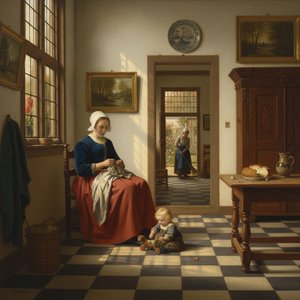
Pieter de Hooch's "Paying the Hostess," painted around 1670, isn’t merely a depiction of a transaction; it’s a masterful distillation of Dutch Golden Age life—a fleeting glimpse into the subtle social dynamics and quiet elegance of a Delft inn. The painting immediately draws the eye with its luminous quality, achieved through de Hooch's signature use of light and shadow, creating an atmosphere both intimate and subtly charged. It’s a scene brimming with unspoken narratives, inviting viewers to become silent observers of this private moment within a bustling world. De Hooch was a pivotal figure in the Delft School of painting, known for his ability to capture the essence of domestic life—not grand portraits or heroic scenes, but rather the everyday rituals and interactions that shaped the lives of the burgeoning middle class. His work stands apart through its remarkable realism, capturing not just appearances but also the nuances of human behavior and the play of light on surfaces.The Composition: A Dance of Observation
The composition itself is a testament to de Hooch’s skill. The scene unfolds within what appears to be a modest inn yard—a space simultaneously public and private. A smartly dressed gentleman, likely a wealthy merchant or official, stands poised before a young woman, presumably the hostess, as she presents him with a bill. Their hands are subtly overlapping, creating an immediate visual tension – a delicate dance of negotiation and perhaps even flirtation. The background is deliberately blurred, populated by other patrons engaged in their own conversations and activities—a lively tableau that hints at the inn’s vibrant atmosphere without distracting from the central drama. Notice how de Hooch uses architectural details—the rough-hewn beams of the barn, the simple wooden furniture, the straw bales – to ground the scene in a tangible reality. The placement of figures within the space is carefully considered, creating depth and guiding the viewer’s eye through the composition.Technique and Style: Light, Shadow, and Texture
De Hooch's technique is characterized by its meticulous attention to detail and his masterful manipulation of light. He employed a technique known as *chiaroscuro*, using strong contrasts between light and shadow to create a sense of volume and drama. The light streams in from the open doorway on the left, illuminating the figures and casting long shadows across the yard, adding depth and atmosphere. The artist’s brushwork is remarkably subtle—a delicate layering of paint that creates a rich texture without sacrificing clarity. You can almost feel the roughness of the wooden surfaces, the warmth of the straw bales, and the softness of the fabrics. This textured approach adds to the painting's realism and invites close inspection. The use of muted colors – browns, grays, and ochres – further enhances the sense of atmosphere and contributes to the painting’s overall mood.Symbolism and Context: A Glimpse into Dutch Society
“Paying the Hostess” offers a fascinating window into 17th-century Dutch society. The scene is not simply about settling an account; it's laden with symbolic meaning. The overlapping hands of the couple suggest a complex interplay of power, attraction, and social expectations. In Dutch art of this period, such interactions often carried connotations of flirtation and even illicit desire – a subtle commentary on the constraints and freedoms of the time. The presence of other guests in the background underscores the importance of social interaction within the community. The inclusion of the delivery boy with sheaves of wheat hints at the economic realities of rural life—the exchange of goods and services that underpinned the prosperity of the region. The painting reflects a shift towards a more secular, bourgeois culture, where commerce and social interactions were increasingly valued alongside religious piety.Emotional Resonance: A Moment Frozen in Time
Ultimately, “Paying the Hostess” is a profoundly evocative work of art. It’s not a grand statement or a dramatic event; it's a quiet moment—a snapshot of everyday life that captures something essential about the human condition. The painting invites us to contemplate the complexities of social interaction, the subtle nuances of human relationships, and the beauty found in the ordinary. It possesses a timeless quality, resonating with viewers across centuries because it speaks to universal themes of connection, negotiation, and the quiet dramas that unfold within our daily lives. It’s a piece that rewards careful observation and invites repeated viewing, revealing new layers of meaning with each encounter.Gyakran Ismételt Kérdések
Milyen elhelyezés illik „Paying the Hostess”, Pieter de Hooch alkotása formátumához?
A Landscape formájú, a „Paying the Hostess” című alkotás reprodukcióját egy Living Room számára javasoljuk.
Milyen viszonyban állnak egymáshoz a "Paying the Hostess" színei?
A „Paying the Hostess”, Pieter de Hooch alkotása egy Unified Palette színharmóniát mutat be.
Milyen orientációban készült a „Paying the Hostess”, Pieter de Hooch alkotása?
A „Paying the Hostess”, Pieter de Hooch alkotása Landscape formátumú alkotás. A formátum a kompozíció arányait határozza meg.
A művész életrajza
korai élet és képzés
pieter de hooch, a holland aranykor egyik meghatározó alakja, 1629 december 20-án született Rotterdamben, Hollandia területén. Ő volt az önt five gyermek legidősebbje, hendrick hendricksz de hooch, egy téglaépítő és annetge pieters, egy ősember anya gyermekének. Kevesen tudunk korai éveiről, de úgy vélik, hogy Rotterdamban, Delftben és Amsterdamban is tevékenykedett. De Hooch művészeti képzése Haarlemban zajlott, a tájfestő nicolaes berchem mester alatt, Jacob Ochtervelt társaságában. Ez az időszak felemezte meg azt a későbbi sikert, amelynek alapja a nyílt ajtókkal keretezett, csendes családi jelenetek festése lett.művészeti stílus és témák
de hooch munkásságát a részletek iránti odafigyelés, a naturalizmus és a fény mesteri használata jellemzi. festményei gyakran a mindennapi életet ábrázolták, tükrözve az feltörekvő polgári osztály értékeit és vágyait. ennek a stílusnak egy lenyűgöző példája "egy udvar egy házzal delftben" (1658), amely remekül mutatja be képességét, hogy képes megörökíteni az élet apró, hétköznapi részleteit. de hooch munkássága olyan témákat és kompozíciókat is megoszt emanuel de witte festészsel, azonban az emberi kapcsolatokra való fókuszált tekintete emeli ki őt a tömegből. Ez egyértelműen látható a "szoptatást asszony" (1658) és a "asszony kisbabával az öledben" (1658) című alkotásaiban is, amelyek a családi élet intim pillanataira irányuló érdeklődését bizonyítják.kiemelt művek és örökség
de hooch legemlékezetesebb alkotásai közé tartozik:- "a vidám ivó" (kb. 1650)
- "kártyázók egy napsütötte szobában" (1658)
- "egy asszony kenyeret és vajat készít egy fiúnak" (1661)
múzeumok és gyűjtemények
de hooch művei számos múzeumban megtalálhatóak, köztük a belgiumi antwerpi koninklijk museum voor schone kunsten-ban, amely az 15. és 20. század közötti európai művészet hatalmas gyűjteményét őrzi. fedezze fel tovább pieter de hooch életművét az OriginalUniqueArt oldalán: [https://AllPaintPaintingsStore.com/@/pieter-de-hooch](https://OriginalUniqueArt.com/@/pieter-de-hooch) /hu/art/show/art-d3b4kt-hu/ (fedezze fel a belgiumi koninklijk museum voor schone kunsten remekműveit)
Pieter de Hooch
1629 - 1694 , Holland
Gyors információk
- Artistic Movement Or Style: Holland Aranykora
- Artists Or Movements Influenced By This Artist: ['Jan Vermeer']
- Artists Who Influenced This Artist:
- Nicolaes Berchem
- Hendrik Sorgh
- Date Of Birth: 1629. december 20.
- Date Of Death: után 1683.
- Full Name: Pieter Hendricksz. de Hooch
- Nationality: Hollandi
- Notable Artworks:
- A Dutch Courtyard
- Woman and Child in a Courtyard
- Place Of Birth: Rotterdam, Holland
Kapcsolódó cikkek

Golden Age Reflections: Dutch Baroque Painting & Cultural Innovation
Explore the Dutch Golden Age of painting! Discover key artists like Vermeer & ter Borch, their innovative techniques, and the rich cultural context behind these Baroque masterpieces. Learn about collecting & appreciating this iconic art period.

Goya Mesterművei: A Spanyol Lélek 25 Legikonikus Képe – OriginalUniqueArt
Fedezze fel Goya 25 leglenyűgözőbb mesterművét! Ismerje meg a spanyol festő életművét, portréit és ikonikus képeit. Vásároljon prémium minőségű reprodukciókat a OriginalUniqueArt.com-on, és teremtsen egyedi otthoni dekorációt klasszikus művészettel! Explore the full collection online.
Pieter de Hooch: Illuminating Dutch Domestic Life & Golden Age Charm
Explore the captivating world of Pieter de Hooch, a master of Dutch Golden Age painting. Discover his innovative use of light, intimate domestic scenes, and lasting influence on art history. Learn more at OriginalUniqueArt.

Willem van de Velde the Elder: Master of Maritime Painting & Chronicler of the Dutch Golden Age
Discover the captivating maritime paintings of Willem van de Velde the Elder, a master chronicler of the Dutch Golden Age. Explore his unparalleled realism and lasting influence on naval art history.

A Hollandi Aranykor 10 Mesterműve: Festmények, Amelyek Megváltoztatták a Világot | OriginalUniqueArt.com
Fedezze fel a Hollandi Aranykor 10 legikonikusabb műalkotását! Rembrandt, Vermeer és más mesterek festményeinek történeteit olvassa el. Barokk stílus, klasszikus művészet – inspirálódjon otthon dekorációjához a OriginalUniqueArt.com-on! Fedezze fel a teljes gyűjteményt online.

