

 Megtekintés
 Küldés
 Megosztás
 Részletek

 Letöltés
 Hasonló darabok
 X-ray felvétel
 Diavetítés
Parting century


 Összes részlet megjelenítése
Giclée / Műnyomat
Múzeumi minőségű giclée vagy vászonnyomat, gyors gyártással és rugalmas finomítási lehetőségekkel. ( Kézzel festett másolat rendelése Kép letöltése)




P118B $10

P118H $10

P118W $10

P438Z $10

P508JH $12

P508YH $12

P805H $10

P805Z $10

P919BZ $10

P919G $10

P919XJ $10

P959ZH $10

P968JZ $12

W106C $8

W218G $10

W218JH $8

W218Y $10

W307PJ $10

W316G $10

W316PJ $8

W316Y $10

W398PJ $8

W4111J $10

W500HY $15

W500JH $15

W692G $12

W849H $8

W940BG $15

W953PJ $8




Válasszon előre meghatározott méreteink közül, amelyek megfelelnek a műalkotás eredeti arányainak.

Megadhat saját méreteket is egy konkrét kerethez vagy helyszínhez igazítva. Amennyiben a kiválasztott méret nem egyezik az eredeti kép arányokkal, a műalkotást le fogjuk vágni, vagy kiegészítjük a képet tükrözött vagy egyszínű szélekkel. A gyártás megkezdése előtt egy digitális tervezetet küldünk jóváhagyásra.
Kérjük, vegye figyelembe, hogy a képernyőn látható előnézet nem tükrözi a tényleges levágást vagy kiegészítést. Csak a tervezet mutatja pontosan a végső kompozíciót.
Bár az egyedi méretek is elérhetőek, az eredeti arányok megőrzése érdekében azt javasoljuk, hogy válasszon a előre meghatározott listából származó méretet.
Világszerte történő kiszállítás területére mindössze 2 hét alatt, a szokásos 4-5 hét helyett. (27 augusztus)

Ingyenes globális expressz szállítás

Prémium minőségű len vászon

Teljes körű szállítási biztosítás

Vámvisszatérítési Garancia

Hiteles színpontosság garancia

60 napos visszaküldési lehetőség (csak hibás termékek esetén)

100% pénzvisszatérítési garancia

Több darab vásárlása esetén kedvezmény
 Az üvegkeretes opció csak 110 cm alatti méretben érhető el

Parting century
Giclée / Műnyomat
Reprodukció mérete
-


Összesített ár
$ 80
Nicholas Roerich’s “Parting Century” – A Portrait of Reflection and Spiritual Seeking
“Parting Century,” painted in 1905 by the visionary artist Nicholas Roemerich, is more than a simple portrait; it's a profound meditation on time, memory, and the enduring human spirit. The artwork depicts an elderly man, his face etched with wisdom and perhaps a touch of melancholy, rendered with the characteristic meticulous detail that would become synonymous with Roerich’s oeuvre. He stands before a breathtaking landscape – a carefully constructed vista hinting at both earthly beauty and spiritual significance – embodying a quiet dignity that transcends mere physical representation.
- Subject Matter: The central figure, an aged man, immediately evokes themes of mortality and the passage of time. His posture, with his gaze directed downwards, suggests introspection and perhaps a contemplation of past experiences.
- Landscape as Symbol: The backdrop is not merely decorative; it’s imbued with symbolic weight. The rolling hills, the distant buildings, and the expansive sky all contribute to a sense of vastness and timelessness, mirroring the man's own perceived journey through life.
Roerich’s Distinctive Style and Technique
Roerich’s artistic style in “Parting Century” is firmly rooted in the traditions of Russian realism, yet infused with a deeply personal spiritual sensibility. He employed a technique characterized by smooth, blended brushstrokes – a hallmark of his later work – creating an almost luminous quality to the figure and the landscape. The use of color is particularly noteworthy; muted tones of blue, grey, and brown dominate, conveying a sense of solemnity and age, while subtle highlights suggest a lingering inner light. His meticulous attention to detail, evident in the rendering of the man’s beard, clothing, and the textures of the landscape, demonstrates his commitment to capturing not just appearance but also the essence of his subject.
- Brushwork: Smooth, blended strokes create a luminous effect.
- Color Palette: Muted tones evoke solemnity and age.
- Detail: Meticulous rendering emphasizes the subject's character.
Historical Context and Roerich’s Spiritual Quest
“Parting Century” was created during a pivotal moment in Roerich’s artistic development, coinciding with his increasing interest in esoteric philosophies and spiritual symbolism. Born in 1874, Roerich spent much of his life exploring connections between art, science, and spirituality, influenced by theosophy and other mystical traditions. This influence is subtly present in the painting's composition – the landscape can be interpreted as a representation of a sacred space, a realm beyond the material world. The year 1905 was also a time of significant social and political upheaval in Russia, adding another layer of complexity to the artwork’s interpretation.
Roerich believed that art possessed the power to bridge cultural divides and promote universal understanding. This conviction fueled his lifelong dedication to artistic creation and his advocacy for peace and cultural preservation.Emotional Impact and Artistic Legacy
“Parting Century” possesses a quiet, contemplative power that continues to resonate with viewers today. The painting’s melancholic beauty invites reflection on themes of aging, loss, and the search for meaning in life. It is a testament to Roerich's ability to capture not just physical likeness but also the profound emotional depth of his subjects. As a hand-painted reproduction, this artwork offers an unparalleled opportunity to experience the full richness and nuance of Roerich’s vision – a timeless masterpiece that speaks to the enduring human condition.
A művész életrajza
A Life Immersed in Art and Spirit
Nicholas Roerich, born October 9, 1874, in the vibrant cultural heart of Saint Petersburg, Russia, was a figure whose life transcended the boundaries of artistic expression. He wasn’t merely a painter; he was an archaeologist, a writer, a philosopher, and a tireless advocate for peace and cultural preservation. His upbringing, steeped in both intellectual rigor – his father was a notary public – and artistic appreciation thanks to his mother, laid the foundation for a remarkably multifaceted career. Roerich simultaneously pursued studies in law and art at St. Petersburg University and the Imperial Academy of Arts beginning in 1893, demonstrating an early commitment to a broad understanding of the world. This dual path wasn’t contradictory for him; rather, it reflected a belief that artistic vision needed grounding in historical context and intellectual discipline. He received his artist designation in 1897 and completed his law degree the following year, setting the stage for a life dedicated to both creative exploration and reasoned action.The Allure of Symbolism and Theatrical Innovation
Roerich’s artistic development was profoundly shaped by the currents of Russian Symbolism, a movement that sought to evoke emotional and spiritual depths through evocative imagery and suggestive forms. He quickly became involved with Sergei Diaghilev's influential “World of Art” society, eventually assuming its presidency from 1910 to 1916. This association proved pivotal, exposing him to a network of innovative artists, composers, and thinkers who were redefining the landscape of Russian art. His early work revealed a fascination with archaeology and stage design, leading to groundbreaking collaborations with Diaghilev’s Ballets Russes. Roerich's designs for productions like Alexander Borodin's *Prince Igor* (1909) and, most famously, Igor Stravinsky’s revolutionary *The Rite of Spring* (1913), were not simply backdrops; they were integral components of the theatrical experience. He blended meticulous historical research with a bold imaginative vision, creating visually stunning environments that amplified the emotional power of the music and choreography. These designs weren't merely decorative; they were attempts to evoke primordial forces and ancient rituals, reflecting the Symbolist interest in myth and spirituality. His work was also influenced by apocrypha and medieval sectarian writings like the Dove Book, adding layers of esoteric meaning to his artistic creations.A Journey Towards Mysticism and Himalayan Visions
As Roerich’s career progressed, his paintings underwent a significant transformation, increasingly embracing mystical and spiritual themes. This shift was fueled by his growing interest in Theosophy and Eastern religions, philosophies that emphasized the interconnectedness of all things and the pursuit of inner wisdom. His *Architectural Studies* series (1904–1905) showcased not only his architectural skill but also a deep commitment to preserving cultural heritage, foreshadowing his later advocacy for protecting art during times of conflict. Recurring motifs began to emerge in his work: majestic landscapes, ancient cities shrouded in mystery, and figures imbued with spiritual significance like St. Panteleimon and Kuan Yin. He embarked on extensive travels throughout Central Asia, conducting archaeological research and documenting ancient cultures, experiences that deeply informed his artistic vision and reinforced his belief in the importance of cultural understanding. The Himalayas became a central subject in his paintings, representing not just a geographical location but a realm of profound spiritual power and enlightenment.Key Works & Continuing Relevance
- Saint Nicholas: A detailed monochrome mural showcasing medieval art and heraldic symbolism.
- City: Evocative depictions of ancient urban landscapes, reflecting his archaeological interests.
- Lake of the Nagas: A tempera painting blending symbolism and nature, exemplifying his unique artistic vision.
A Pioneer of Cultural Preservation
Beyond his artistic achievements, Nicholas Roerich was a passionate advocate for the protection of cultural treasures. Recognizing the devastating impact of war on art and architecture, he dedicated much of his life to promoting international cooperation in safeguarding these invaluable legacies. He spearheaded the creation of the Roerich Pact in 1935 – an international treaty designed to prevent the destruction of cultural objects during armed conflicts. This initiative garnered him widespread recognition and numerous nominations for the Nobel Peace Prize, underscoring his profound humanitarianism and commitment to a world where culture is valued and protected. His tireless efforts stand as a testament to the belief that art and heritage are essential components of human civilization, deserving of our utmost care and respect.
Roerich, Nicholas
1874 - 1947 , Oroszország
A művészről röviden
- Artistic Movement Or Style: Szimbolizmus, Spirituális művészet
- Artists Or Movements Influenced By This Artist: ['Orosz szimbolizmus']
- Artists Who Influenced This Artist:
- Diaghilev
- Stasov
- Date Of Birth: 1874. okt. 9.
- Date Of Death: 1947. dec. 13.
- Full Name: Nicholas Roerich
- Nationality: Orosz
- Notable Artworks:
- Szent Miklós
- Város
- Nagas-tavaszi tó
- Place Of Birth: Szentpétervár, Oroszország
Kapcsolódó cikkek

Nicholas Roerich: Mysticism, Mountains & the Search for Ageless Wisdom in Art
Explore the captivating art of Nicholas Roerich – a visionary painter whose Himalayan landscapes blend spiritual mysticism with cultural preservation. Discover his legacy & symbolism.

Ivan Bilibin: A Synthesis of Folklore, Modernism & National Identity in Russian Illustration
Explore the enchanting world of Ivan Bilibin, a master Russian illustrator who synthesized folklore, Art Nouveau & national identity. Discover his iconic fairy tale illustrations and legacy with OriginalUniqueArt.

Victor Vasnetsov: Myth, Nationalism & the Revival of Russian Fairy Tale Painting
Explore the captivating world of Victor Vasnetsov, a co-founder of Russian folklorist painting. Discover his iconic works, influence on national identity, and lasting legacy in this expert guide.

Vladimir Makovsky: Realism, Social Commentary & Russian Life in Late 19th-Century Painting
Explore the captivating world of Vladimir Makovsky, a leading Russian realist painter. Discover his insightful depictions of 19th-century life, social commentary & legacy with OriginalUniqueArt.
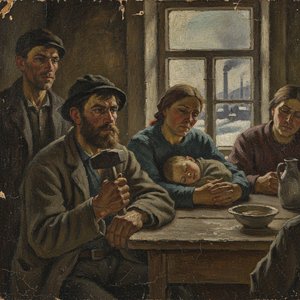
Beyond the Surface: The Raw Power and Grit of Russian Realism
Explore the raw power of Russian Realism. From the rebellious Peredvizhniki to Surikov’s epic histories, discover how this visceral movement captures truth through texture and grit. Perfect for history lovers seeking museum-quality, hand-painted masterpieces for modern interiors.



