

 Megtekintés
 Küldés
 Megosztás
 Részletek

 Letöltés
 Hasonló darabok
 X-ray felvétel
 Diavetítés
 Statisztika
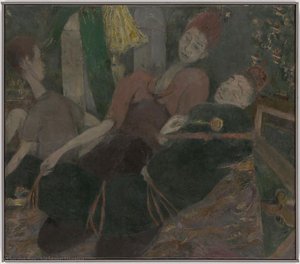
Untitled
 2010
2010 153.0 x 117.0 cm
 Összes részlet megjelenítése
Vásároljon nagy felbontású, javított digitális képet, amely minőségében messze felülmúlja az online előnézetet.
Minden fájlt szakembereink a legmodernebb eszközök és precíz, kézi retusálás segítségével készítenek el aprólékosan. Gondoskodunk arról, hogy minden kép kivételes tisztasággal, pontos színhelyességgel és részletgazdag finomsággal rendelkezzen.
A végleges fájl 72 órán belül e-mailben megérkezik, professzionális, szerkesztői és nyomtatási környezetbe optimalizálva az azonnali használathoz. Ez ugyanaz a minőség, amelyben a legmeghatározóbb tervezőstúdiók, kiadók és galériák is megbízhatnak.
Digitális kép
Töltsön le nagy felbontású fájlt személyes kiállításokhoz, nyomtatáshoz és kreatív projektekhez. ( Áttérés Nyomtatványra Kézzel festett másolat rendelése)
Minden digitális kép rendeléséhez tartozó extrák
Szakértői digitális kézbesítés, garantáltan
Amikor a OriginalUniqueArt.com szolgáltatást választja, nem csupán egy képet kap – professzionálisan felmagasított digitális műalkotást kap, amely precizitással készült, és amelyet megelégsedési gwarancia tesz biztoslássá. Az alábbiakban automatikusan minden benne 】

Gyors e-mail teslimítés
A nagy felbontású digitális képmásolatát a megrendelést követő 72 órán belül e-mailben elküldjük Önnek – azonnal használható formátumban.

MI-alapú digitális fejlesztésű fájl
Műve professzionális módon kerül optimalizálásra fejlett mesterséges intelligencia eszközök és manuális szerkesztés segítségével, biztosítva a maximális részletességet, tisztaságot és színpontosságot.

Örök életű ingyenes újradelivery
Véletlenül törölted vagy elvesztetted a fájlodat? Ne aggódj – bármikor ingyen újra megküldjük neked.

Nincs importköltség – soha
Élvezze műalkotásait azonnal, vám, illeték vagy szállítási költség nélkül – a digitális letöltések mindig adamentesek.

Színpontosság garantálása
Professzionális eszközök és színkezelés segítségével garantáljuk, hogy digitális képe a lehető legpontosabban tükrözze az eredeti színeket.

100 napos elégedettségi garancia
Ha nemມີ elégedett a digitális képével, 100 napon belül felülvizsgáljuk vagy 100% visszatérítjük az amountot – kérdés बिना.

100% Pénzvisszatérítési garancia
Nem tetszett a vásárlás? 100 napon belül teljes visszatérítést garantálunk a digitális fájl megvételétől számítva – kérdés बिना.

Tömegrendelési kedvezmények
Vásároljon 3 képet, spóroljon 10%-et - Vásároljon 5-öt, spóroljon 15%-et - Vásároljon 10+ képet, spóroljon 20%-at. Kiváló kreatív projektekhez, galériákhoz és ügynökségekhez.
A művész életrajza
A Cartography of the Imaginary: The World of Kai Althoff
Kai Althoff, born in Cologne, Germany, in February 1966, is an artist who resists easy categorization. He isn’t simply a painter, sculptor, or video artist; rather, he's a conjurer of worlds—complex, layered environments that feel simultaneously ancient and utterly contemporary. His work operates within a fascinating tension between historical reference and deeply personal expression, creating allegorical spaces brimming with symbolism and emotional resonance. Althoff doesn’t present narratives so much as fragments of them, echoes of stories half-remembered or never fully formed, inviting the viewer to participate in their reconstruction. This deliberate ambiguity is central to his practice, fostering a sense of unease and prompting introspection.Early Influences & Artistic Development
Althoff’s artistic journey wasn't linear. Emerging from a vibrant Cologne art scene, he initially explored music alongside visual arts, forming bands like Workshop with Christoph Rath, Stefan Mohr, and Stephan Abry, and later Subtle Tease with Justus Köhncke. This immersion in sound profoundly shaped his aesthetic sensibility—a rhythmic layering of elements, a fascination with dissonance, and an embrace of the ephemeral. His early paintings already hinted at the concerns that would define his mature work: a preoccupation with Germanic folklore, religious iconography (particularly medieval and Gothic imagery), and the expressive power of German Expressionism. However, it wasn’t merely imitation; Althoff began to *reconfigure* these sources, introducing collaged techniques and a deliberately naive figuration that disrupted traditional notions of skill and mastery. He wasn't interested in replicating the past but rather excavating its emotional core, stripping away polish to reveal raw vulnerability. The influence of artists like Max Beckmann and Ernst Ludwig Kirchner is palpable, yet Althoff’s work quickly developed a unique voice—one characterized by a haunting lyricism and a refusal to adhere to any single stylistic convention.Collaborative Visions & Site-Specific Installations
A defining aspect of Althoff's career has been his embrace of collaboration. He frequently works with other artists, creating projects that blur the boundaries between individual authorship. His 2004 installation *Kolten Flynn*, created with Lutz Braun for the 4th Berlin Biennale, exemplifies this approach. The work consisted of three vitrines draped in red foil, filled with a child’s paintings, drawings, and abandoned materials—a poignant tableau evoking memory, loss, and the fragmented nature of identity. This wasn't simply an exhibition *of* objects but rather the creation of a psychological space, a miniature world charged with unspoken narratives. Similarly, his collaboration with Yair Oelbaum on *There We Will Be Buried* (2010) took the form of a dramatic play, performed live and later adapted for various venues including the Whitney Museum of American Art. The play centered around two single mothers searching for a lost daughter, exploring themes of abandonment, grief, and the complexities of familial relationships. These collaborative projects demonstrate Althoff’s interest in performance, theater, and the power of collective storytelling. *Die kleine bushaltestelle (gerüstbau)* (Little Bus Stop , 2012), performed with Isa Genzken, further cemented his reputation for absurdist humor and unconventional artistic expression.Themes & Symbolism: Allegories of Human Experience
Althoff’s work is deeply symbolic, drawing on a vast reservoir of cultural references—from religious parables to popular culture ephemera. Recurring motifs include figures with elongated limbs and distorted features, architectural fragments suggesting decaying grandeur, and landscapes that feel both familiar and alien. His characters often inhabit imaginary worlds that serve as allegories for human experience and emotion. They are not portraits in the traditional sense but rather archetypes—representations of longing, despair, or spiritual yearning. The use of collage is particularly significant, allowing Althoff to juxtapose disparate images and create unexpected associations. This technique reflects his interest in fragmentation and the subjective nature of memory. He often incorporates found objects into his work, imbuing them with new meaning and challenging conventional notions of artistic value. The overall effect is one of dreamlike disorientation, inviting viewers to question their own perceptions and interpretations. His paintings are not meant to be deciphered but rather experienced—felt on an emotional level.Historical Significance & Contemporary Relevance
Kai Althoff’s work occupies a unique position within contemporary art. He resists categorization, blending historical reference with deeply personal expression in a way that is both intellectually stimulating and emotionally resonant. His influence can be seen in the work of younger artists who are similarly interested in exploring themes of memory, identity, and the fragmented nature of experience.- His embrace of collaboration challenges traditional notions of authorship.
- His use of collage and found objects expands the boundaries of painting and sculpture.
- His exploration of symbolism and allegory invites viewers to engage with art on a deeper level.
kai althoff
1966 -
Érdekességek
- Artistic Movement Or Style: Expressionism, Multimedia
- Artists Who Influenced This Artist:
- Germanic folk traditions
- Medieval religious imagery
- Date Of Birth: February 1966
- Full Name: Kai Althoff
- Nationality: German
- Notable Artworks:
- Kolten Flynn
- There we will be buried
- Die kleine bushaltestelle
- Place Of Birth: Cologne, Germany