

 Megtekintés
 Küldés
 Megosztás
 Részletek

 Letöltés
 Hasonló darabok
 X-ray felvétel
 Diavetítés
 Statisztika
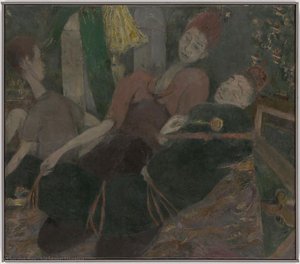
Untitled
 2010
2010 153.0 x 117.0 cm
 Összes részlet megjelenítése
Kézzel készített olajfestmény reprodukció
Kézzel festett olajvastú vászon, az Ön által választott méretben és keretben, művészeink készítik meglévőre. ( Áttérés Nyomtatványra Áttérés digitális képre)




































Válasszon előre meghatározott méreteink közül, amelyek megfelelnek a műalkotás eredeti arányainak.

Ön megadhat saját méreteket egy adott kerethez vagy térhez igazításhoz. Ha a kiválasztott méret nem egyezik az eredeti kép arányával, akkor a műalkotást levágjuk, vagy további kézzel festett elemekkel meghosszabbítjuk a festményt. A gyártás megkezdése előtt küldünk Önnek egy digitális előnézetet jóváhagyásra.
Kérjük, vegye figyelembe, hogy a képernyőn megjelenő előnézet nem tükrözi a tényleges vágást vagy kiterjesztést. Csak az előnézet fog pontosan mutatni a végső kompozíciót.
Bár egyedi méretek állnak rendelkezésre, javasoljuk, hogy válasszon egy méretet az előre meghatározott listából az eredeti arányok megőrzése érdekében.
A rendelést követően a OriginalUniqueArt.com csapata e-mailt küld az ügyfélnek az instrukciókért, és biztosít egy előnézeti képet (mockup).
Világszerte elérhető szállítás () 3-4 hét alatt a szokásos 5 hét helyett. (10 szeptember). A minőség nem kérdőjelezhető.

Ingyenes globális expressz szállítás

Prémium minőségű len vászon

Teljes körű szállítási biztosítás

Vámvisszatérítési Garancia

Hiteles színpontosság garancia

100 napos visszaküldési lehetőség (csak hibás termékek esetén)

100% pénzvisszatérítési garancia

Több darab vásárlása esetén kedvezmény
 Az üvegkeretes opció csak 110 cm alatti méretben érhető el

Untitled
Reprodukciós technika
Reprodukció mérete
-


Összesített ár
$ 300
A művész életrajza
A Cartography of the Imaginary: The World of Kai Althoff
Kai Althoff, born in Cologne, Germany, in February 1966, is an artist who resists easy categorization. He isn’t simply a painter, sculptor, or video artist; rather, he's a conjurer of worlds—complex, layered environments that feel simultaneously ancient and utterly contemporary. His work operates within a fascinating tension between historical reference and deeply personal expression, creating allegorical spaces brimming with symbolism and emotional resonance. Althoff doesn’t present narratives so much as fragments of them, echoes of stories half-remembered or never fully formed, inviting the viewer to participate in their reconstruction. This deliberate ambiguity is central to his practice, fostering a sense of unease and prompting introspection.Early Influences & Artistic Development
Althoff’s artistic journey wasn't linear. Emerging from a vibrant Cologne art scene, he initially explored music alongside visual arts, forming bands like Workshop with Christoph Rath, Stefan Mohr, and Stephan Abry, and later Subtle Tease with Justus Köhncke. This immersion in sound profoundly shaped his aesthetic sensibility—a rhythmic layering of elements, a fascination with dissonance, and an embrace of the ephemeral. His early paintings already hinted at the concerns that would define his mature work: a preoccupation with Germanic folklore, religious iconography (particularly medieval and Gothic imagery), and the expressive power of German Expressionism. However, it wasn’t merely imitation; Althoff began to *reconfigure* these sources, introducing collaged techniques and a deliberately naive figuration that disrupted traditional notions of skill and mastery. He wasn't interested in replicating the past but rather excavating its emotional core, stripping away polish to reveal raw vulnerability. The influence of artists like Max Beckmann and Ernst Ludwig Kirchner is palpable, yet Althoff’s work quickly developed a unique voice—one characterized by a haunting lyricism and a refusal to adhere to any single stylistic convention.Collaborative Visions & Site-Specific Installations
A defining aspect of Althoff's career has been his embrace of collaboration. He frequently works with other artists, creating projects that blur the boundaries between individual authorship. His 2004 installation *Kolten Flynn*, created with Lutz Braun for the 4th Berlin Biennale, exemplifies this approach. The work consisted of three vitrines draped in red foil, filled with a child’s paintings, drawings, and abandoned materials—a poignant tableau evoking memory, loss, and the fragmented nature of identity. This wasn't simply an exhibition *of* objects but rather the creation of a psychological space, a miniature world charged with unspoken narratives. Similarly, his collaboration with Yair Oelbaum on *There We Will Be Buried* (2010) took the form of a dramatic play, performed live and later adapted for various venues including the Whitney Museum of American Art. The play centered around two single mothers searching for a lost daughter, exploring themes of abandonment, grief, and the complexities of familial relationships. These collaborative projects demonstrate Althoff’s interest in performance, theater, and the power of collective storytelling. *Die kleine bushaltestelle (gerüstbau)* (Little Bus Stop , 2012), performed with Isa Genzken, further cemented his reputation for absurdist humor and unconventional artistic expression.Themes & Symbolism: Allegories of Human Experience
Althoff’s work is deeply symbolic, drawing on a vast reservoir of cultural references—from religious parables to popular culture ephemera. Recurring motifs include figures with elongated limbs and distorted features, architectural fragments suggesting decaying grandeur, and landscapes that feel both familiar and alien. His characters often inhabit imaginary worlds that serve as allegories for human experience and emotion. They are not portraits in the traditional sense but rather archetypes—representations of longing, despair, or spiritual yearning. The use of collage is particularly significant, allowing Althoff to juxtapose disparate images and create unexpected associations. This technique reflects his interest in fragmentation and the subjective nature of memory. He often incorporates found objects into his work, imbuing them with new meaning and challenging conventional notions of artistic value. The overall effect is one of dreamlike disorientation, inviting viewers to question their own perceptions and interpretations. His paintings are not meant to be deciphered but rather experienced—felt on an emotional level.Historical Significance & Contemporary Relevance
Kai Althoff’s work occupies a unique position within contemporary art. He resists categorization, blending historical reference with deeply personal expression in a way that is both intellectually stimulating and emotionally resonant. His influence can be seen in the work of younger artists who are similarly interested in exploring themes of memory, identity, and the fragmented nature of experience.- His embrace of collaboration challenges traditional notions of authorship.
- His use of collage and found objects expands the boundaries of painting and sculpture.
- His exploration of symbolism and allegory invites viewers to engage with art on a deeper level.
kai althoff
1966 -
A művészről röviden
- Artistic Movement Or Style: Expressionism, Multimedia
- Artists Who Influenced This Artist:
- Germanic folk traditions
- Medieval religious imagery
- Date Of Birth: February 1966
- Full Name: Kai Althoff
- Nationality: German
- Notable Artworks:
- Kolten Flynn
- There we will be buried
- Die kleine bushaltestelle
- Place Of Birth: Cologne, Germany