A szöveg mérete

() ·

Egy Önnek készült nyomat, gondossággal készítve

SelfPortrait

Giclée / Műnyomat

Múzeumi minőségű giclée vagy vászonnyomat, gyors gyártással és rugalmas finomítási lehetőségekkel. ( Kézzel festett másolat rendelése Áttérés digitális képre)

A gyűjtemény leírása

John Constable (1776-1837) was a Suffolk-born landscape painter who revolutionized the genre with his evocative depictions of Dedham Vale and other rural scenes. Influenced by Claude Lorrain, he established himself as a prominent Romantic artist known for capturing the essence of nature's moods.

A művész életrajza

A Stour-völgy brit romantikus tájképfestője, aki texturált impasto technikával és a természetes fényekkel dolgozott.

előbb ·

1. fejezet

On which medium should it be printed?

A vászon giclée-tintával van nyomtatva, és egy festőhözamúan feszíthető vagy keretbe foglalható; a papír síkban vagy üvegelőtt, keretben érkezik meg.

2. fejezet

Mekkora méretű legyen?

Húzza a csúszkát a méret megváltoztatásához; a bal oldali kép a keret valós szélességét mutatja. Az eredeti arányok megmaradnak.

Standard méret
egyedi méretű
CM
INCH

Válasszon előre meghatározott méreteink közül, amelyek megfelelnek a műalkotás eredeti arányainak.

szélesség
magasság

Írja be a keretének vagy a falának megfelelő szélességet és magasságot. A nyomatot csak le lehet vágni, soha nem tehető nagyobbá, mint az eredeti kép, így egy eltérő alakú méretnél a kép egy része elveszik. Mielőtt bármit kinyatintanánk, küldünk egy digitális próbamodellt jóváhagyásra. Az oldalon látható kép nem tartalmazza a valós levágást — ezt csak a próbamodell mutatja meg.

3. fejezet

Hogyan érkezzen meg?

Válaszd ki a feszített vászon széleit

Válassza ki a keretet

Corner sample of the WhiteWrap canvas edge finish, stretched on tömörfa bars
Fehér Ft1
Corner sample of the BlurSideWrap canvas edge finish, stretched on tömörfa bars
Elmosódott szélek Ft1
Corner sample of the ExtendedWrap canvas edge finish, stretched on tömörfa bars
Kiterjesztett Ft1
Corner sample of the P118B picture frame: formázott polisztirol, 5 cm wide and 3 cm thick
P118B Ft10
Corner sample of the P118H picture frame: formázott polisztirol, 5 cm wide and 3 cm thick
P118H Ft10
Corner sample of the P118W picture frame: formázott polisztirol, 5 cm wide and 3 cm thick
P118W Ft10
Corner sample of the P438Z picture frame: formázott polisztirol, 5.5 cm wide and 3.5 cm thick
P438Z Ft10
Corner sample of the P508JH picture frame: formázott polisztirol, 7 cm wide and 3.5 cm thick
P508JH Ft12
Corner sample of the P508YH picture frame: formázott polisztirol, 7 cm wide and 3.5 cm thick
P508YH Ft12
Corner sample of the P805H picture frame: formázott polisztirol, 5 cm wide and 3.5 cm thick
P805H Ft10
Corner sample of the P805Z picture frame: formázott polisztirol, 5 cm wide and 3.5 cm thick
P805Z Ft10
Corner sample of the P919BZ picture frame: formázott polisztirol, 7 cm wide and 3.5 cm thick
P919BZ Ft10
Corner sample of the P919G picture frame: formázott polisztirol, 7 cm wide and 3.5 cm thick
P919G Ft10
Corner sample of the P919XJ picture frame: formázott polisztirol, 7 cm wide and 3.5 cm thick
P919XJ Ft10
Corner sample of the P959ZH picture frame: formázott polisztirol, 5 cm wide and 3 cm thick
P959ZH Ft10
Corner sample of the P968JZ picture frame: formázott polisztirol, 6 cm wide and 4 cm thick
P968JZ Ft12
Corner sample of the W106C picture frame: tömörfa, 5 cm wide and 3 cm thick
W106C Ft8
Corner sample of the W218G picture frame: tömörfa, 5 cm wide and 3 cm thick
W218G Ft10
Corner sample of the W218JH picture frame: tömörfa, 5 cm wide and 3 cm thick
W218JH Ft8
Corner sample of the W218Y picture frame: tömörfa, 5 cm wide and 3 cm thick
W218Y Ft10
Corner sample of the W307PJ picture frame: tömörfa, 6 cm wide and 3 cm thick
W307PJ Ft10
Corner sample of the W316G picture frame: tömörfa, 6 cm wide and 3 cm thick
W316G Ft10
Corner sample of the W316PJ picture frame: tömörfa, 6 cm wide and 3 cm thick
W316PJ Ft8
Corner sample of the W316Y picture frame: tömörfa, 6 cm wide and 3 cm thick
W316Y Ft10
Corner sample of the W398PJ picture frame: tömörfa, 5 cm wide and 3 cm thick
W398PJ Ft8
Corner sample of the W4111J picture frame: tömörfa, 6.5 cm wide and 3.5 cm thick
W4111J Ft10
Corner sample of the W500HY picture frame: tömörfa, 7 cm wide and 5 cm thick
W500HY Ft15
Corner sample of the W500JH picture frame: tömörfa, 7 cm wide and 5 cm thick
W500JH Ft15
Corner sample of the W692G picture frame: tömörfa, 8 cm wide and 4 cm thick
W692G Ft12
Corner sample of the W849H picture frame: tömörfa, 5 cm wide and 3 cm thick
W849H Ft8
Corner sample of the W940BG picture frame: tömörfa, 7.5 cm wide and 4.5 cm thick
W940BG Ft15
Corner sample of the W953PJ picture frame: tömörfa, 6 cm wide and 3.5 cm thick
W953PJ Ft8
Corner sample of the H24-GOLD picture frame: faragott fa gesszóval, 10 cm wide and 6 cm thick
H24-GOLD Ft30
Corner sample of the H24-SILVER picture frame: faragott fa gesszóval, 10 cm wide and 6 cm thick
H24-SILVER Ft30
Corner sample of the H36-GOLD picture frame: faragott fa gesszóval, 15 cm wide and 6.5 cm thick
H36-GOLD Ft45
Corner sample of the H36-SILVER picture frame: faragott fa gesszóval, 15 cm wide and 6.5 cm thick
H36-SILVER Ft45

Keretprofil: . A kerettel együtt vett teljes méret: .

4. fejezet

Világszerte történő kiszállítás területére mindössze 2 hét alatt, a szokásos 4-5 hét helyett. (25 november)

Az utolsó finomhangolás

Egy felirat, mint egy múzeumban?

A gravírozott bronztábla részletei

This elegant plaque features the artist's name and the title of the artwork, finely engraved for a timeless presentation.

It is made from bronze with a refined, elegant finish. The text is precisely laser-engraved for a sharp and permanent result. Measuring 9x2 cm, the plaque is compact yet easy to read. It's built to be durable and scratch-resistant, offering a professional, museum-quality look. Mounting is simple thanks to the included adhesive backing.

Átlátszó akril tábla részletei

The plaque includes essential engraved details such as the artist's name, the title of the artwork, the date it was created, the type of media used-like oil on canvas or watercolor-a brief description of the piece, and a QR code that links to the complete artwork information.

It is crafted from clear acrylic, offering a sleek, modern appearance. The text is UV-engraved in black to ensure strong visual contrast. With a size of 10x15 cm, it ensures optimal readability. It comes equipped with two metal hooks for secure wall mounting. The plaque is designed to be weather-resistant, making it suitable for various environments, and it includes interactive features that work seamlessly with smartphone scanning.

Fekete akril tábla részletei

This elegant plaque includes engraved information such as the artist's name, the title of the artwork, the date it was created, the type of media used (like oil on canvas or watercolor), a short description of the artwork, and a QR code for quick access to more information.

The plaque itself is made from refined black acrylic with a premium finish. The text is laser-engraved in white for high contrast and readability. Its size is 10x15 cm, designed to be easy to read. It comes with two metal hooks for professional mounting. The design is sleek and fits any interior style. It is also weather-resistant and durable, with built-in digital integration for mobile compatibility.

Egy védőréteg?

Mikor lenne szüksége rá?

5. fejezet

Az Ön által megrendelt nyomat

SelfPortrait

Reprodukciós technika

Reprodukció mérete

-

Reprodukció keretezése

-

-

A bármely oldalsó méretét túlszálaló 105 cm (kb. 41 hüvelyk) meghaladó műalkotások vagy reprodukciók esetében a keret összeszerelhető készletként, szétszerelve kerül szállításra. Ez a módszer biztosítja a biztonságos szállítást, és megakadályozza a szállítás során fellépő sérüléseket.

Szakmész összeszerelést igényel – ez nem DIY (önösszeszerelhető) termék.
A készletet egy tapasztalt keretező szakembernek kell összeszerelnie és a vásznat feszítenie kell, fa ragasztó (nem tartalmazza a csomag), vásznfeszítő fogó és szorítók használatával, amelyek a ragasztó száradásáig a keretrészeket egymáshoz vuôngjba tartják. A helytelen összeszerelés vagy a nem egyenletes vásznfeszítés maradandó károsíthatja a műalkotást, és ez nem része a garanciánknak.

  • A készlet tartalmazza az összes tömörfa rudat, pontosan méretre vágva.

  • A mellékelt csavarokkal, valamint a sarokszerekhez szükséges faütő ragasztóval kell összeszerelnie (ez nem tartalmazható a csomagban), így a keretrendezőnek külön kell beszereznie.

  • A csomag nem tartalmazza a szükséges professzionális eszközöket: egy vászonfeszítőt és klipseket a rácsok vízszintes tartásához a ragasztó megszáradásáig.

Fontos:
A sarokcsatlakozásokhoz fánylagra van szükség, a keretrudakat szorítókapcsokkal kell rögzíteni, amíg a rag teljesen meg nem szárad, a kész keretre feszített vászonhoz pedig vászonfeszítő fogat szükséges. Ezek egyike sem található meg a készletben. Kérjük, rendelés előtt győződjön meg róla, hogy rendelkezik tapasztalt keretező szakemberrel.

Névtábla

-

-

Védőréteg (Lakk)

Fényes lakk (intenzívabb színek, védelem a fény és a nedvesség hatása ellen)

-

Sürgős

Világszerte szállítás () 2 héten belül a szokásos 4-5 hét helyett. (25 november)

-

Express szállítás

Világszerte szállítás területére 4-5 hét alatt. (2 december).

A szállítás díja tartalmazza

Összesített ár

Ft 26690

Összesített ár Ft 26690

Az üvegkeretes opció csak 110 cm alatti méretben érhető el

Minden rendelés mellé tartalmazva

  • Ingyenes globális expressz szállítás
  • Prémium minőségű len vászon
  • Teljes körű szállítási biztosítás
  • Vámvisszatérítési Garancia
  • Hiteles színarányosság garancia
  • 100 napos visszaküldési lehetőség (csak hibás termékek esetén)
  • 100% pénzvisszatérítési garancia
  • Több darab vásárlásakor kedvezmény

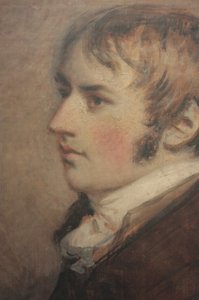
SelfPortrait: A Study in Quiet Observation

John Constable’s “SelfPortrait,” executed in 1806, transcends mere likeness; it embodies the artist's profound engagement with his surroundings and a contemplative spirit that characterizes Romantic art. This graphite or charcoal drawing on paper offers an intimate glimpse into Constable’s psyche—a visual meditation on solitude and artistic intention.

The composition prioritizes simplicity and directness, adhering to the conventions of portraiture while simultaneously conveying a sense of immediacy. Constable positions his head and shoulders in profile view, emphasizing the contours of his face and neck with meticulous detail. The gaze is subtly downward and slightly to the right, suggesting introspection rather than outward attention—a characteristic gesture that speaks volumes about the artist’s inner life.

Dominating the artwork's visual language is a masterful use of hatching and cross-hatching techniques. These tonal variations skillfully simulate skin texture and create depth within the portrait’s form, demonstrating Constable’s dedication to capturing realism through observation. Delicate lines delineate hair strands with remarkable precision, highlighting the artist’s meticulous attention to detail—a hallmark of his artistic approach.

The monochromatic palette—primarily shades of gray—serves as more than just a stylistic choice; it underscores the emotional core of the piece. Absence of vibrant color amplifies the contemplative mood and directs focus onto the subtleties of tonal gradation, mirroring Constable’s belief that “painting is but another word for feeling.” The lighting from the left side casts shadows on the right side of his face and neck, enhancing volume and creating a convincing illusion of three-dimensionality.

Constable's work stands as a pivotal moment in Romantic landscape painting. Influenced by artists like Claude Lorrain, he championed an emotive response to nature—a conviction that fueled his celebrated depictions of the Suffolk countryside. “SelfPortrait” exemplifies this artistic ethos, inviting viewers to contemplate not only Constable’s physical appearance but also his inner world and his unwavering devotion to capturing the essence of the natural environment.

This artwork’s enduring appeal lies in its ability to resonate with audiences across generations—a testament to Constable's artistic genius and his profound connection to the beauty of the English landscape.

Kérdések és válaszok

Ki készítette a(t): "SelfPortrait"?

A "SelfPortrait" alkotója John Constable. A mű John Constable nevére van katalógusozva.

„SelfPortrait”, John Constable alkotása színei tel愈tek vagy fakók?

A „SelfPortrait”, John Constable alkotása színei Muted telítettségűek. A telítettség azt mutatja meg, hogy a színek mennyire élénkek vagy fakók.

Melyik helyiségbe illik jól a "SelfPortrait" reprodukciója az otthonunkban?

A „SelfPortrait”, John Constable alkotása számára a javasolt helyszín egy Living Room. Természetesen ez az ajánlás az Ön belső terehez is igazítható.

Több információ erről a festményről

Megtekintés AR előnézet Kézzel festett másolat rendelése Áttérés digitális képre Küldés
Részletek Útmutató Kedvencekhez ad Letöltés Hasonló darabok X-ray felvétel Diavetítés Kérdések és válaszok Statisztika

Számokban kifejezve

  • 29választható keretek
  • standard méretek, saját arányokkal
  • 5hetek a festésre és a kézbesítésre
John Constable

John Constable

1776 - 1837, Egyesült Királyság

Gyors információk John Constable művészről

  • Artistic Movement Or Style: Romantika
  • Artists Or Movements Influenced By This Artist: ['Barbizonok iskolája']
  • Artists Who Influenced This Artist: ['Claude Lorrain']
  • Date Of Birth: 1776
  • Date Of Death: 1837
  • Full Name: John Constable
  • Nationality: Brit
  • Notable Artworks:
    • The Hay Wain
    • Hadleigh Castle
    • Salisbury Cathedral from the Meadows
    • Netley Abbey
  • Place Of Birth: East Bergholt, Egyesült Királyföld

A művész életrajza

A Life Rooted in the English Landscape

John Constable (East Bergholt, Suffolk, 1776. június 11. – London, 1837. április 1.) angol tájképfestő. Jelentős szerepe volt az angol romantikus tájképfestészet történetében és alkotói stílusa meghatározó befolyást gyakorolt a francia romantikus festőkre, a barbizoni iskolára és az impresszionistákra. A Királyi Művészeti Akadémia (Royal Academy of Arts, London) tagja volt.

Élete és munkássága

Suffolkban született, édesapja molnár volt. Vidéki környezetben nőtt fel, akárcsak Rembrandt. Korán elkezdett rajzolni, 21 éves korától azonban atyja munkáját kellett segítenie, majd csak 1800-ban ment el Londonba tanulni. Romantikus házasságot kötött, azaz szerelmi házasságot. A fiatal leány Maria Bicknell – evangélikus lelkész nagyapja ellenkezésére nem hallgatva – feleségül ment a festőhöz. Házasságukból született néhány gyermek, de 1828-ban a feleség tüdőbajban meghalt. Constable kiváló arcképfestő is lehetett volna, erről tanúskodik felesége képe 1816-ből. Constable sokkal fontosabbnak tartotta a tájképfestést, mint a portréfestést. Művészeti hitvallása szerint a természet közvetlen és beható tanulmányozása a legfontosabb. Próbálkozott történelmi és vallási témák feldolgozásával is pályája kezdetén, de mindig visszatért a tájképfestéshez. Pályájának kezdetén több 17. századi holland festő (Ruisdael, Koninck, Claude Lorrain (1600–1682), Rubens) és egy 18. század]i angol tájképfestő (Thomas Girtin (1775–1802) volt rá hatással. Azonban e hatások nem voltak tartósak, Constable saját megérzései és meglátásai alapján festett. Constable két jeles kortárs tájképfestővel Turnerrel és Boningtonnal indította el a 19. századi modern tájképfestészetet.

Breaking with Convention: A New Vision of Nature

Constable’s artistic development was marked by a deliberate rejection of prevailing academic conventions. Dissatisfied with the idealized and often theatrical landscapes favored by the Royal Academy, he sought instead a truthful representation of nature, imbued with personal feeling. He wasn't interested in grand historical narratives or mythological scenes; his focus remained steadfastly on the familiar countryside surrounding him. This commitment to depicting ordinary subjects – hay wains, farm buildings, village life – was initially met with resistance from critics who deemed his work too commonplace and lacking in ambition. However, Constable persevered, driven by a conviction that beauty resided in the everyday. He pioneered a technique of *plein air* painting, venturing outdoors to directly observe and capture the fleeting effects of light and weather. This direct engagement with nature allowed him to infuse his canvases with an immediacy and vitality previously unseen in British landscape art. His brushwork became increasingly loose and expressive, employing impasto – thick layers of paint – to create texture and convey a sense of movement and atmosphere. He wasn’t simply recording what he saw; he was translating his emotional response to the land into visual form.

Iconic Works and Lasting Influence

Constable's most celebrated works stand as testaments to his unique vision. The Hay Wain (1821), perhaps his most recognizable painting, depicts a quintessential rural scene on the River Stour, capturing the tranquility and harmony of agricultural life. Hadleigh Castle (1829) showcases his dramatic use of light and atmospheric effects, transforming a crumbling ruin into a powerful symbol of time’s passage. The series of paintings depicting Salisbury Cathedral from the Meadows (1831) demonstrates his ability to evoke different moods and times of day, revealing the cathedral as an integral part of the natural landscape. Netley Abbey (1824), with its evocative depiction of architectural grandeur amidst encroaching nature, exemplifies his skill in blending human creation with the wild beauty of the countryside. Despite facing initial struggles for recognition in England, Constable achieved considerable acclaim in France, where his innovative techniques and emotional depth resonated deeply with artists seeking a more naturalistic approach to landscape painting. He profoundly influenced the Barbizon School, a group of French painters who shared his commitment to *plein air* painting and direct observation of nature.

Personal Life & Final Years

Constable’s personal life was marked by both joy and sorrow. He married Maria Bicknell in 1816, and they had seven children, though sadly several did not survive infancy. His marriage provided him with emotional support but also financial strain. Elected a Royal Academician in 1829, he continued to face criticism from some quarters, particularly regarding his unconventional techniques. His later years were shadowed by Maria’s declining health and eventual death in 1828, an event that deeply affected him. Despite these hardships, Constable remained dedicated to his art, continuing to paint until his own passing on March 31, 1837. He left behind a rich artistic legacy—a testament to his unwavering commitment to capturing the beauty and emotional resonance of the English countryside. His paintings remain powerful evocations of a bygone era, inviting viewers to experience the landscape through his uniquely sensitive eyes.

Gyors információk

  • Influences: Claude Lorrain
  • Notable elements or techniques: Detailed hatching and crosshatching; Use of light to create volume.
  • Year: 1806
  • Artist: John Constable
  • Location: Tate Britain

Művészeti kvíz

Minden kérdésre csak egy helyes válasz létezik.

Kérdés 1:
What artistic movement is John Constable primarily associated with?
Kérdés 2:
The predominant color palette of ‘Self-Portrait’ utilizes:
Kérdés 3:
What technique is prominently used to create tonal variations and depth in the portrait?
Kérdés 4:
From which side does the lighting appear to originate in ‘Self-Portrait’?
Kérdés 5:
What is Constable's gaze described as in the portrait?