Romantic Landscape Painting
SelfPortrait (John Constable)
John Constable (1776–1837) megalkotta: SelfPortrait. A Romantic Landscape Painting irányzathoz tartozik. Graphite anyagból készült.
- Graphite

 Megtekintés

 Kézzel festett olajfestmény
 Küldés
 Megosztás
 Útmutató


 Letöltés
 Hasonló darabok
 X-ray felvétel
 Diavetítés
 Kérdések és válaszok

 Statisztika
SelfPortrait: alapvető információk
- Cím
- SelfPortrait
- Művész
- John Constable (1776–1837)
- A művész születési helye
- East Bergholt, Egyesült Királyság
- Műszaki adatok
- Graphite
- Mozgalom
- Romantic Landscape Painting
- Időszak
- 19th Century
- Téma
- landscape, portraiture, rural scene, romanticism, british art, constable
Mit ábrázol a SelfPortrait?
Identification of the Self-Portrait by John Constable
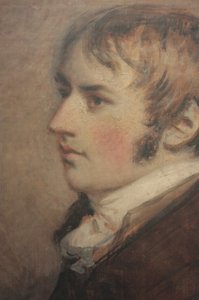
In 1806, John Constable turned his gaze inward to produce SelfPortrait. This work is a quiet study of the artist himself, captured in a moment of stillness. It functions as a visual meditation on solitude and the intent of the observer. The subject is the artist, rendered in a way that emphasizes the contours of his own face and neck.
The drawing presents a profile view of the young man. He wears a coat and cravat, his head and shoulders positioned to catch the light. This SelfPortrait by John Constable offers an intimate glimpse into a psyche shaped by observation. It is a record of a man looking toward his own inner world.
Composition and Visual Elements of the Portrait
The composition is a tight study of the head and shoulders, captured in a profile view. The subject's head is positioned off-center, a choice that breaks the symmetry of the frame and introduces a subtle tension to the arrangement. This placement directs the eye across the contours of the face and the line of the neck. The gaze is not fixed on the viewer but is directed slightly downwards and to the right, a gesture of quiet introspection.
Light enters from the left, striking the forehead and the bridge of the nose. This illumination leaves the right side of the face and the neck in shadow, carving out the physical volume of the form. The interplay of light and dark defines the structure of the features, creating a sense of three-dimensional presence within the narrow focus of the portrait. The arrangement remains intimate, keeping the viewer close to the subject's immediate presence.
Technique and Materials Used in the Work
Graphite meets the grain of the paper in a quiet, monochromatic dialogue. The artist works through a spectrum of gray, building form from the absence of color. Every stroke is a deliberate measurement of light and shadow. The palette remains strictly limited to these tonal shifts, relying on the subtle movement from pale highlights to deep, charcoal-like depths.
Precision defines the hand's movement. Meticulous detail emerges through the disciplined application of hatching and cross-hatching. These overlapping lines do more than mark the surface; they simulate the tactile reality of skin and the fine, individual strands of hair. The texture of the paper provides a foundation for this layered approach, allowing the graphite to settle into the fibers and create a sense of physical weight. The light enters from the left, casting shadows that give the profile a sculptural presence.
The drawing is a study in controlled observation. There is no excess in the line, only the necessity of the mark. The artist uses the density of the graphite to carve out the contours of the neck and the sharp edge of the collar. It is a quiet accumulation of marks that results in a steady, breathing likeness. The graphite settles into the paper, leaving only the essence of the form.
Related Works by John Constable
The artist’s hand often turned toward the faces of those closest to him. In 1816, he produced Maria Bicknell, a portrait of the woman who would become his wife. This work captures a sense of personal connection through the steady gaze of the sitter. His brush also found the quietude of the English countryside in other years. He painted The Hay Wain in 1821, a scene that reflects his deep attachment to the river and the shifting light of the Stour Valley.
Later, his focus shifted toward the architecture of the sacred and the movement of the sky. He produced Salisbury Cathedral from the Meadows in 1831, a composition where the building emerges from the landscape. Other works in the catalog include Landscape with a Double Rainbow, dated about 2026. Each piece remains a fragment of his lifelong observation of the natural world. The light continues to change.
SelfPortrait nagy felbontásban
Felfüggesztett szerzői jogok: a művész 1837-ben halt meg.
John Constable, SelfPortrait. Felfüggeszthető jogforrás
A digitális szakértő az eredeti festménnyel összehasonlítja a színeket, majd a fájlt a művész vonalvezetésének hűen retusálja.
Megveszem a nagy felbontású képetSelfPortrait kapcsán felmerülő kérdések
Mennyire harmonikusak „SelfPortrait”, John Constable alkotása színei?
A "SelfPortrait" színharmóniája úgy van rögzítve, mint Strong Color Unity.
Hogyan építhető be „SelfPortrait”, John Constable alkotása a lakberendezésbe?
A "SelfPortrait" művet Accent célokra javasoljuk, a legalkalmasabb helyszín pedig egy Living Room.
Milyen közös tulajdonságokat oszt meg a "SelfPortrait" John Constable további alkotásaival?
A "SelfPortrait" John Constable Romantic Landscape Painting korszakának alkotása, melynek témakörében romantic landscape, english tradition, rural observation, constable’s vision, nature’s reflection is feltűlik.
Szabadon reprodukálható-e a/az „SelfPortrait”, John Constable alkotása képe?
A szerzői jogokkal kapcsolatban a "SelfPortrait" mű közösségi tulajdon – a szerzői jog lejártt.
Milyen módon kapcsolódik össze a „SelfPortrait”, John Constable alkotása a Romantic Landscape Painting irányzatot a művész honcountryjához?
A Romantic Landscape Painting korszak alkotása, a "SelfPortrait", egy Egyesült Királyság-ban született művész munkája.
Van-e rozšíngtott valóság (AR) előnézete a(z) "SelfPortrait" alkotásnak?
A „SelfPortrait”, John Constable alkotása mű kiterjesztett valóság technológiával, egy kompatibilis eszközön keresztül, a mű Kiterjesztett valóság előnézet oldalán megtekinthető a saját falán is.
Milyen érzést közvetít a „SelfPortrait”, John Constable alkotása?
A „SelfPortrait”, John Constable alkotása hangulata Romantic, érzelmi tónusa pedig Reflective.
Hová sorolható a "SelfPortrait" John Constable ismétlődő témái közé?
John Constable dokumentált témái – romantic landscape, english tradition, rural observation, constable’s vision, nature’s reflection – között a „SelfPortrait” különös hangsúlyt fektet landscape, portraiture, rural scene, romanticism, british art, constable, atmospheric light-ra.
Mit ábrázol a „SelfPortrait”, John Constable alkotása, és milyen hangulatot áraszt?
A "SelfPortrait" című alkotás landscape, portraiture, rural scene, romanticism, british art, constable, atmospheric light témákat ábrázol, hangulata pedig Romantic.
A művészről: John Constable
1776–1837, Egyesült Királyság
John Constable
A Life Rooted in the English Landscape John Constable (East Bergholt, Suffolk, 1776. június 11. – London, 1837. április 1.) angol tájképfestő.
John Constable részletesen John Constable legkiemelkedőbb művei
John Constable további művei
 A Hay Wain1821
 Kilátás a Salisbury-székesegyházra a püspöki területekről1823
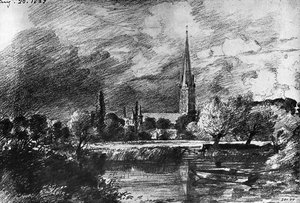 Salisbury katedráli északi tájképe
 A szénárc (részlet)1821
Esszék a SelfPortrait körül
 Mastering the English Landscape: The Top 25 Artworks by John ConstableImmerse yourself in the soul of the English countryside with our curated guide to John Constable's top 25 masterpieces. Explore the emotive…
 The Introspective Gaze: Tracing the Evolution and Psychological Depth of the Self-PortraitExplore the psychological evolution of self-portraiture from Dürer to modern masters. Trace the history of the human gaze with us.
 The Art of the Gaze: A Collector's Guide to Mastering Portrait Composition and Emotional DepthMaster the nuances of portrait composition with our expert guide for collectors. Discover how light, gaze, and texture create emotional dep…