Megtekintés
 Küldés
 Megosztás
 Részletek

 Letöltés
 Hasonló darabok
 X-ray felvétel
 Diavetítés
 Statisztika
Mujer 1

 Összes részlet megjelenítése
Kézzel készített olajfestmény reprodukció
Kézzel festett olajvastú vászon, az Ön által választott méretben és keretben, művészeink készítik meglévőre. ( Áttérés Nyomtatványra Áttérés digitális képre)




P118B $10

P118H $10

P118W $10

P438Z $10

P508JH $12

P508YH $12

P805H $10

P805Z $10

P919BZ $10

P919G $10

P919XJ $10

P959ZH $10

P968JZ $12

W106C $8

W218G $10

W218JH $8

W218Y $10

W307PJ $10

W316G $10

W316PJ $8

W316Y $10

W398PJ $8

W4111J $10

W500HY $15

W500JH $15

W692G $12

W849H $8

W940BG $15

W953PJ $8




Válasszon előre meghatározott méreteink közül, amelyek megfelelnek a műalkotás eredeti arányainak.

Ön megadhat saját méreteket egy adott kerethez vagy térhez igazításhoz. Ha a kiválasztott méret nem egyezik az eredeti kép arányával, akkor a műalkotást levágjuk, vagy további kézzel festett elemekkel meghosszabbítjuk a festményt. A gyártás megkezdése előtt küldünk Önnek egy digitális előnézetet jóváhagyásra.
Kérjük, vegye figyelembe, hogy a képernyőn megjelenő előnézet nem tükrözi a tényleges vágást vagy kiterjesztést. Csak az előnézet fog pontosan mutatni a végső kompozíciót.
Bár egyedi méretek állnak rendelkezésre, javasoljuk, hogy válasszon egy méretet az előre meghatározott listából az eredeti arányok megőrzése érdekében.
A rendelést követően a OriginalUniqueArt.com csapata e-mailt küld az ügyfélnek az instrukciókért, és biztosít egy előnézeti képet (mockup).
Világszerte elérhető szállítás () 3-4 hét alatt a szokásos 5 hét helyett. (12 szeptember). A minőség nem kérdőjelezhető.

Ingyenes globális expressz szállítás

Prémium minőségű len vászon

Teljes körű szállítási biztosítás

Vámvisszatérítési Garancia

Hiteles színpontosság garancia

100 napos visszaküldési lehetőség (csak hibás termékek esetén)

100% pénzvisszatérítési garancia

Több darab vásárlása esetén kedvezmény
 Az üvegkeretes opció csak 110 cm alatti méretben érhető el

Mujer 1
Reprodukciós technika
Reprodukció mérete
-


Összesített ár
$ 300
A Catalan Visionary’s Dance of Forms
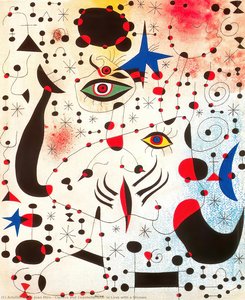
Joan Miró's "Mujer 1" (Woman 1) isn’t merely a painting; it’s an invitation to step through a portal into the artist’s intensely personal and profoundly symbolic world. Born in Barcelona in 1893, Miró wasn’t simply following artistic trends—he was forging his own path, translating the landscapes of his Catalan homeland, the memories of his childhood, and the currents of his subconscious onto canvas with an unparalleled poetic grace. This particular work, painted around 1967, exemplifies this journey, presenting a woman's face not as a realistic portrait but as a distilled essence—a luminous fragment imbued with emotion and enigmatic suggestion. The painting’s power lies in its ability to evoke a sense of timelessness, inviting the viewer to contemplate the universal themes of femininity, memory, and the hidden depths of the human psyche.
Abstract Surrealism: Bridging Worlds
Miró's style defies easy categorization, yet it’s most accurately described as abstract surrealism. He emerged from the vibrant artistic circles of Paris in the 1920s, encountering and absorbing influences from movements like Cubism, Fauvism, and Surrealism. However, he didn’t simply adopt these styles; he internalized them, transforming them into a uniquely Miróesque language. “Mujer 1” showcases this masterful synthesis—the fragmented forms reminiscent of Cubist explorations are softened by the vibrant colors and dreamlike atmosphere characteristic of Surrealism. The painting rejects precise representation in favor of symbolic shapes, floating figures, and an overall sense of spontaneity, as if conjured directly from a subconscious landscape.
Decoding the Symbols: A Personal Mythology
Miró’s work is rich with symbolism, often drawing upon Catalan folklore, mythology, and his own personal experiences. The woman's face itself is deliberately ambiguous—her features are simplified, almost childlike, suggesting a connection to childhood memories and primal instincts. The necklace she wears, a delicate detail amidst the abstract composition, could represent adornment, protection, or perhaps even a link to a past life. The color palette – dominated by deep blues, ochres, and yellows – evokes both the Mediterranean sky and the earthy tones of the Catalan countryside. The overall effect is not one of narrative clarity but of evocative suggestion—a visual poem inviting multiple interpretations.
Technique and Texture: A Layered Approach
Miró’s technique was as unconventional as his subject matter. He frequently employed *grattage*, a method of scraping paint across the canvas to reveal underlying layers, creating a textured surface that adds depth and complexity to the image. This layering is evident in “Mujer 1,” where visible brushstrokes and traces of previous paintings contribute to the painting’s tactile quality. The use of oil paints allows for rich color saturation and blending, while his distinctive approach to composition—often employing biomorphic shapes and irregular lines—creates a sense of dynamic movement and visual interest. The deliberate imperfections and spontaneous gestures in the application of paint further enhance the feeling of immediacy and emotional intensity.
Emotional Resonance: A Timeless Portrait
“Mujer 1” isn’t simply an aesthetically pleasing image; it possesses a profound emotional resonance. It evokes a sense of wistful nostalgia, quiet contemplation, and perhaps even a touch of melancholy. The painting's ambiguity encourages viewers to project their own emotions and experiences onto the canvas, creating a deeply personal connection with the artwork. Whether viewed as a meditation on femininity, a reflection on memory, or simply an exploration of the subconscious, “Mujer 1” remains a powerful testament to Miró’s artistic vision—a timeless portrait that continues to captivate and inspire.
A művész életrajza
A Catalan Visionary: The Life and Art of Joan Miró
Joan Miró i Ferrà, born in Barcelona in 1893, stands as one of the most significant figures in 20th-century art. His journey was not merely a progression through styles but an exploration of inner worlds, translating dreams, memories, and Catalan identity onto canvas with a uniquely poetic visual language. From humble beginnings marked by illness and initial parental reservations about his artistic pursuits, Miró persevered, driven by an innate need to express the intangible—the emotions, sensations, and subconscious currents that lie beneath the surface of reality. His early life was steeped in the traditions of Barcelona, a city brimming with architectural marvels thanks to Antoni Gaudí, whose organic forms would subtly influence Miró’s later abstractions. The goldsmithing profession of his father instilled an appreciation for meticulous craftsmanship, while the rugged Catalan landscape became a recurring motif and source of inspiration throughout his career.Early Influences and the Path to Surrealism
Miró's formal artistic training began at La Llotja in Barcelona, where he honed his skills in traditional techniques. However, it was exposure to the avant-garde movements sweeping through Paris that truly ignited his creative evolution. The vibrant colors of Fauvism and the fragmented forms of Cubism resonated deeply, prompting him to move to Paris in 1920. This period proved pivotal as he encountered artists like Pablo Picasso and began experimenting with increasingly abstract compositions. Yet, Miró didn’t simply adopt these styles; he synthesized them, forging a path toward his own distinctive aesthetic. He sought to distill forms to their essence, stripping away representational details in favor of symbolic shapes and evocative colors. This exploration led him to the Surrealist group in 1924, aligning him with artists such as Max Ernst and Salvador Dalí. While embracing the Surrealist interest in the subconscious, Miró maintained a unique sensibility—his work was less about shocking imagery or Freudian symbolism than it was about creating a world of playful forms and poetic suggestion. He rejected the prevailing artistic conventions of his time, prioritizing intuition and imagination over rational representation.The Language of Symbols: Key Works and Artistic Innovations
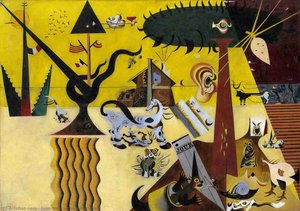
Throughout the 1920s and 30s, Miró developed his signature visual vocabulary—a universe populated by biomorphic shapes, floating forms, and vibrant colors. The Farm (1922), often considered a cornerstone of his oeuvre, exemplifies this transition. It’s not merely a depiction of rural life but an evocation of Catalan identity and a symbolic representation of the natural world. The painting utilizes bold hues—primarily yellows and reds—to convey a sense of energy and vitality, mirroring the dynamism of the Catalan landscape. Miró's technique involved layering paint onto canvas in multiple passes, creating textured surfaces that contribute to the overall atmosphere of dreamlike wonder. His collaborative spirit led to innovative techniques like *grattage*, pioneered with Max Ernst in 1926 for designs intended for Sergei Diaghilev's ballet, where textures were revealed by scraping paint across canvas. The Dutch Interiors (1928) series demonstrated his ability to reinterpret the Old Masters through a distinctly modern lens, transforming domestic scenes into dreamlike abstractions. He skillfully employed geometric shapes—circles and squares—to juxtapose with organic forms, creating visual tension that reflects the complexities of human experience. Painting (1933), with its striking palette and simplified compositions, encapsulates Miró’s exploration of the subconscious and his rejection of conventional artistic boundaries. This monumental canvas embodies his belief in art as a vehicle for conveying profound emotional truths. Beyond painting, Miró fearlessly experimented with sculpture, ceramics, and printmaking, expanding his creative horizons and demonstrating a remarkable versatility.Legacy and Enduring Influence
Joan Miró's impact on 20th-century art is undeniable. He wasn’t simply a painter; he was a visionary who challenged the very definition of artistic expression. His work paved the way for abstract expressionism and continues to inspire artists across disciplines. He established two foundations—the Fundació Joan Miró in Barcelona (1975) and the Fundació Pilar i Joan Miró in Palma de Mallorca (1981)—ensuring that his legacy would endure, providing spaces for artistic exploration and education. Throughout his long career, he remained committed to pushing boundaries, questioning conventions, and exploring the depths of human imagination. Miró’s art is a testament to the power of abstraction, symbolism, and poetic expression—a vibrant celebration of life, dreams, and the enduring spirit of Catalan culture. His work continues to resonate with audiences worldwide, inviting us to enter a world where anything is possible and the boundaries between reality and fantasy blur into a captivating dance of color and form. He died in Palma de Mallorca in 1983, leaving behind an unparalleled body of work that remains a beacon of artistic innovation and imaginative vision.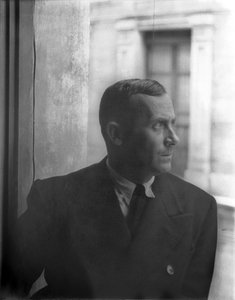
Joan Miró
1893 - 1983 , Spanyolország
A művészről röviden
- Artistic Movement Or Style: Szürrealizmus
- Artists Who Influenced This Artist:
- Van Gogh
- Cézanne
- Date Of Birth: 1893
- Date Of Death: 1983
- Full Name: Joan Miró i Ferrà
- Nationality: Spanyolország
- Notable Artworks:
- Háza a pálmalébennel
- Nude with Mirror
- A Tűzeső a Flamboyant Tollak
- Place Of Birth: Barcelona, Spanien
Kapcsolódó cikkek
Beyond the Lines: Mastering the High-Impact World of Contemporary Abstraction
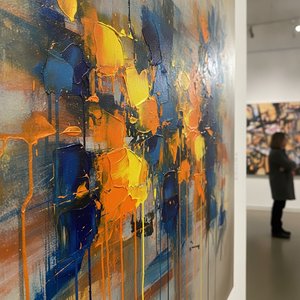
Master the high-impact world of contemporary abstraction. Discover how bold colors, textures, and modern movements like Abstract Expressionism can transform your space with premium, high-energy art curated for the design-conscious professional.
A szürrealizmus 10 legikonikusabb műalkotása – OriginalUniqueArt.com
Fedezze fel a szürrealizmus 10 legmeghatározóbb műalkotását! Salvador Dalí, René Magritte és más mesterek álomképei – történetükkel és inspirációjukkal. Vászonkép, falikép otthonába? OriginalUniqueArt.com - a minőségi reprodukciók galériája.

Absztrakt Expresszionizmus Mesterei: 10 alkotás, ami meghatározta a művészetet | OriginalUniqueArt.com
Fedezze fel a 10 legikonikusabb absztrakt expresszionista alkotást! Ismerje meg Jackson Pollock, Mark Rothko és más mesterek történetét. Művészeti reprodukciók prémium minőségben – OriginalUniqueArt.com.
Joan Miró 25 Mesterműve: Katalán álomképek a faladra | OriginalUniqueArt.com
Fedezze fel Joan Miró 25 legikonikusabb műalkotását! Ismerje meg a katalán szürrealizmus mesterét, festményeinek történetét és inspiráló színeit. Művészeti reprodukciók prémium minőségben – OriginalUniqueArt.com.

Geometrikus Absztrakció Mesterei: 10 Alapvető Műalkotás a Lakberendezéshez
Fedezze fel a geometrikus absztrakció 10 legikonikusabb műalkotását! Kandinsky, Mondrian és más mesterek festményeinek története inspirálja otthona dekorációját. Múzeumi minőségű reprodukciók a OriginalUniqueArt.com-on – fedezze fel online!